Melissano sits on the flat limestone shelf of the lower Salento, a village of 6,575 people where the buildings cluster around Renaissance and neoclassical churches. At fifty-nine metres above sea level, it occupies a compact urban core on the Calcare di Melissano—a white calcitic bedrock whose karst nature generates deep underground rivers that feed groundwater reservoirs. The landscape is dry and spare; history is written into stone.
The comune offers two distinct draws for those seeking the working hinterland of Puglia: a chain of sacred monuments dating from the Byzantine and Norman periods, and a direct connection to the regional wine and table-grape economy that has sustained the region for centuries. The comune sits within the Lecce province, bordered by Taviano, Racale, Matino, Casarano and Ugento—a cluster of towns that share the agricultural identity of the western lower peninsula.
The territory lies on the Calcare di Melissano, a geological formation whose name honours the village itself.
Origins and the Weight of Names
The etymology of Melissano remains contested. One hypothesis traces the name to the Latin cognomen Melitius with the possessive suffix -anus, suggesting a landed estate that once bore an owner’s name. Researchers Marinelli and Laporta favour derivation from the Latin personal name Melissus. A third line of inquiry points to the melissa plant—the aromatic herb beloved by bees—which may have been cultivated locally; this reading would explain the bee emblem on the village coat of arms and the profession of melissaro (beekeeper) that derives from the same Greek root.
A Byzantine origin story also circulates: the general Melissos, who served the emperor Basilio I against the ex-emir of Bari, Sawdān, in 886, may have left his name on the settlement after the imperial recovery of the region. That same year, Sawdān’s forces devastated the nearby city of Ugento; Basilio I then repopulated the territory with colonists from Heraclea on the Black Sea—settlers whose name lives on in neighbouring Racale.
A Feudal Journey: Norman Grants to Caracciolo Rule
The first documentary mention of Melissano appears in 1269 in Angevin registers, though the settlement likely took root in the Byzantine period when the abbey of Santa Maria del Civo stood on the tripoint of Melissano, Racale and Taviano. In the twelfth century, an inscription in the now-lost parish church of Racale recorded that the casale of Melissano belonged to Giordano Sicecte in the Swabian era.
Norman rule brought feud grants. King Tancredi d’Altavila bestowed the fief to Niccolò Amendolia. The village changed hands repeatedly: to the Della Ratta (1384), the Del Balzo (1491), the De Capua and Brayda families during the sixteenth century, and finally to the De Franchis, marquises of Taviano. In 1723, authority passed to the Caracciolo princes, who retained it until the abolition of feudalism in 1806. When the feudal system dissolved, Melissano—then numbering only five hundred souls—was absorbed into Taviano. A bid for municipal independence in 1850 failed because of the population’s extreme poverty. On 1 January 1885, the fraction separated from Taviano and joined Casarano; independent status arrived in 1922. Since 2003, Melissano has carried the title of city.
Sacred Stone: The Churches of Melissano
Chiesa della Beata Vergine del Rosario
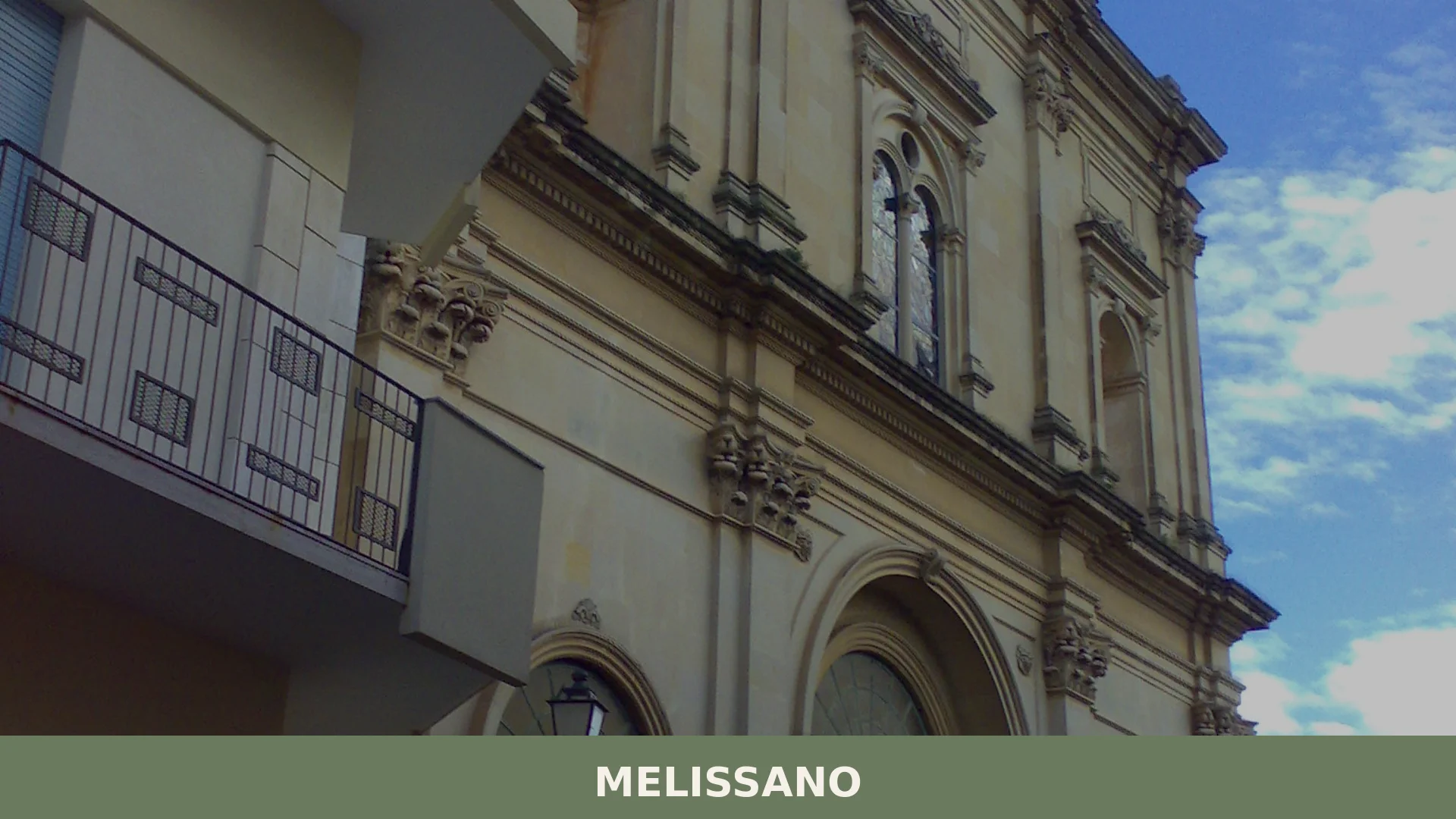
The current parish church opened on 8 February 1902, after construction began in 1885. Designed by the Lecce-based architect Ferdinando Campasena, it rises in neorenaissance style with a basilical floor plan and a two-storey façade of local limestone. Three portal doors correspond to three interior naves; the upper register features a central twin window flanked by niches, crowned by a triangular pediment. Inside, a Latin cross with a star vault houses six altars—to the Virgin of Sorrows, Saint Joseph, the Virgin of the Rosary, Saint Vito, the Deposition, and Saint Anthony of Padua. The marble high altar dates from 1901. An eighteenth-century pipe organ, salvaged from the older church, pipes above the choir; seventeenth and eighteenth-century paintings and statuary also survive from the predecessor building.
Chiesa dell’Immacolata
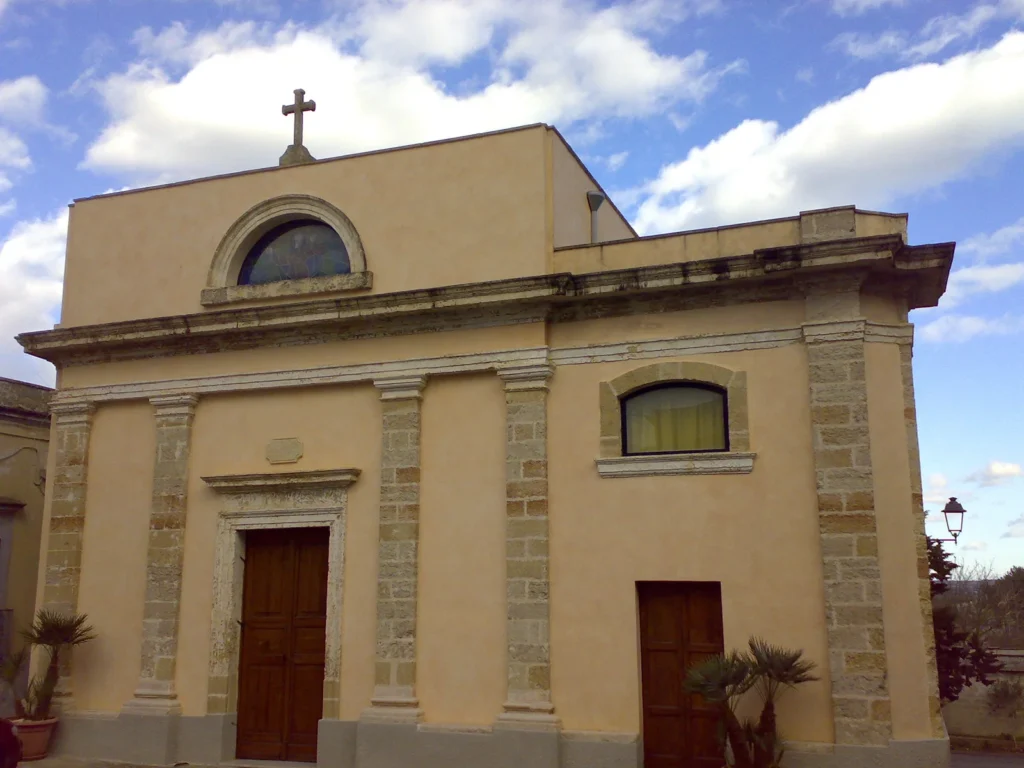
Rising above the foundations of the medieval church of San Pietro, the Immaculate dates to the second half of the seventeenth century and underwent radical renovation and expansion during the nineteenth. A modest façade articulated by four pilasters and a semicircular window opens to an interior of two communicating naves covered by a stellar vault. The high altar, carved in marble in 1816, shelters eighteenth-century canvases of the Immaculate and the Virgin and Child. Wooden and papier-mâché statues of local saints and Marian figures line the walls.
Ex chiesa di Sant’Antonio
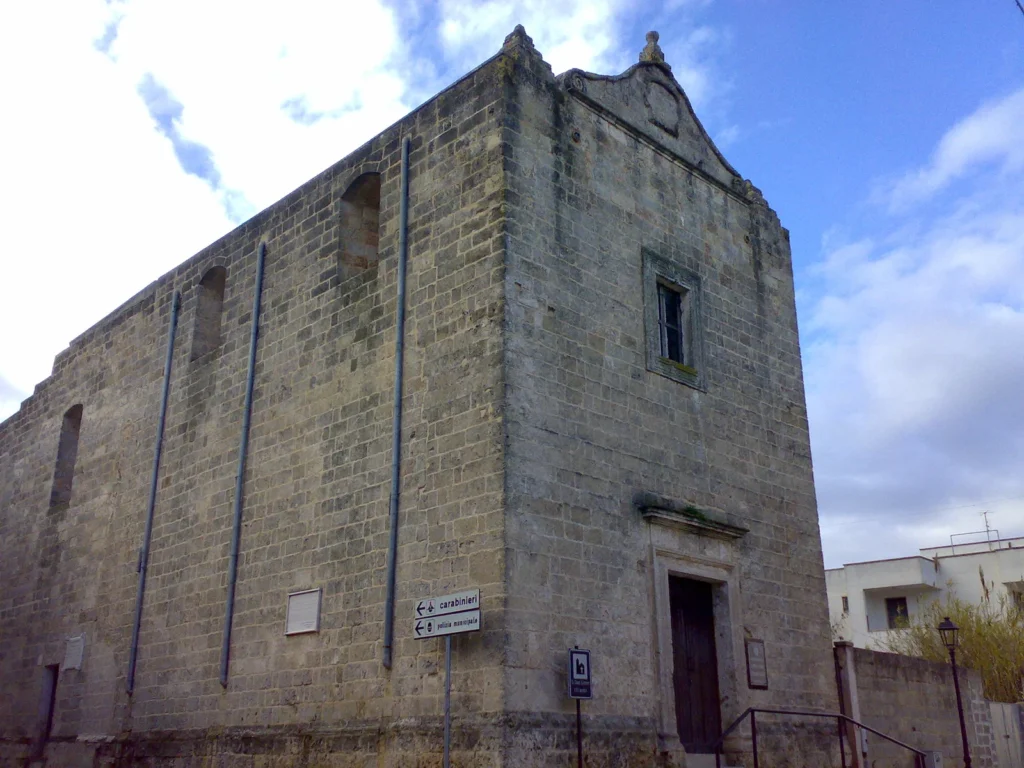
First documented in 1575 but begun in 1569, this church once stood beside the ruins of the far older San Nicola. It underwent remodelling in 1612 and again in 1778, before being deconsecrated in 1910. The single nave terminates in a semicircular presbytery beneath an elegant star vault. Five baroque altars of local limestone line the walls, decorated with carved flowers and cherubs; the altar of Saint Anthony retains artistic merit despite the loss of its original altarpiece. Two frescoes—a Saint Anthony and a Virgin and Child—survive on the entrance wall, suggesting an earlier orientation and earlier liturgical use. The building now serves as a cultural centre.
Abbazia di Santa Maria del Civo
Only scattered stones remain of what was once a significant Italo-Greek monastic house built between the eleventh and twelfth centuries. Its first recorded mention dates to 1120, when Gilberto Siniscalco—son of the Norman count of Nardò—was buried in the abbey church. By the late fifteenth century, the abbey fell into commenda (lay administration); a 1714 document describes the church of the Annunziata as a single nave with three altars, the main altar holding an image of its titular saint and flanking altars dedicated to Saint Ignatius of Loyola and the Virgin of Mercies. In the second half of the twentieth century, the building stood half-ruined; its last remains were demolished in 1973. Today, a scatter of stones and an ancient cemetery ground mark the site. The thesis research of Stefano Cortese on medieval topography identified traces of habitation spanning from the Copper Stone Age through the Roman period, culminating in the monastic settlement.
Landscape and Waters
The terrain rolls only gently across 12.42 square kilometres, with altitude ranging between forty-six and fifty-nine metres. The entire surface rests on the Calcare di Melissano, a white limestone that has given both geological and place-name identity to the region. The karst nature of the bedrock generates deep underground rivers; these feed groundwater reservoirs that occasionally break surface as small lakes.
The Laghetto Cellini, in the northern sector near the border with Taviano, is one such emergence—a modest basin of three thousand square metres, no deeper than three metres, fed by the artesian aquifer. Its waters attract frogs and goldfish; during migration seasons, waterbirds briefly settle on the reed-lined shores. The lake takes its name from a nearby family holding and represents a rare freshwater feature in an otherwise dry landscape.
Winters are mild; the average January temperature hovers around nine degrees Celsius. Summers warm to 25.1 degrees in August. Annual rainfall averages 676 millimetres, peaking in autumn and winter, lowest in spring and early summer. The lower Salento benefits from weak western winds owing to the protective barrier of the limestone ridges to the east; autumn and winter southeasterly currents bring the season’s heaviest precipitation. The comune falls in seismic zone 4 (very low seismicity) under Italian classification.
Flavours of the Lower Salento
The village sits within an agricultural territory known for wine and table grapes. The Lecce province counts several protected designations of origin: the Burrata di Andria (protected designation of origin), the Olio di Puglia (protected geographical indication), and wines such as Aleatico, Copertino, Galatina, Leverano, Matino, Nardò and Negroamaro di Terra d’Otranto. The regional tradition also encompasses liqueurs—anisetta, limoncello and the herbal amari that reflect centuries of herb cultivation and folk medicine.
The village’s economy rests on viticulture and table-grape production at the local level; at the regional scale, Melissano forms part of the footwear manufacturing cluster centred in nearby Casarano. Beyond wine and grapes, the broader Salentine pantry includes cured vegetables, dried peppers, and traditional sweets. The village tables follow the seasonal rhythms of the southern Adriatic hinterland.
Planning Your Visit
Melissano is best reached by car. The village lies on the SP366 provincial road, with straightforward road access from Lecce, Gallipoli and the coastal towns of the lower Salento. Public transport connects to Lecce via regional bus services, though a hire car offers greater flexibility for exploring the network of nearby villages and masserie (fortified farmhouses) that dot the countryside.
Spring and early autumn offer the most pleasant weather for walking the compact centre and visiting churches. Summer temperatures can be intense; many businesses observe a midday closure between 13:00 and 16:00. The feast of the patron saint, Sant’Antonio da Padova, falls on 13 June and brings local celebrations. Accommodation lies in nearby larger centres such as Lecce, Gallipoli and Salento beach towns; Melissano itself remains primarily a residential and agricultural comune without a dedicated hotel sector.
| Departure point | Distance | Travel time |
|---|---|---|
| Lecce | 32 km | 40 minutes (car) |
| Gallipoli | 28 km | 35 minutes (car) |
| Brindisi Airport | 76 km | 1 hour 10 minutes (car) |
| Taranto | 84 km | 1 hour 20 minutes (car) |
The village’s position on the western flank of the Salento makes it a natural waypoint for travellers moving between the Adriatic coast and the inland wine routes. A visit pairs well with excursions to neighbouring Alliste, Alezio and Aradeo—all within the same province and sharing the agricultural and feudal heritage of the region. For deeper exploration of Salentine wine culture, Collepasso and the DOC zones near Nardò and Copertino lie an easy drive southward.