


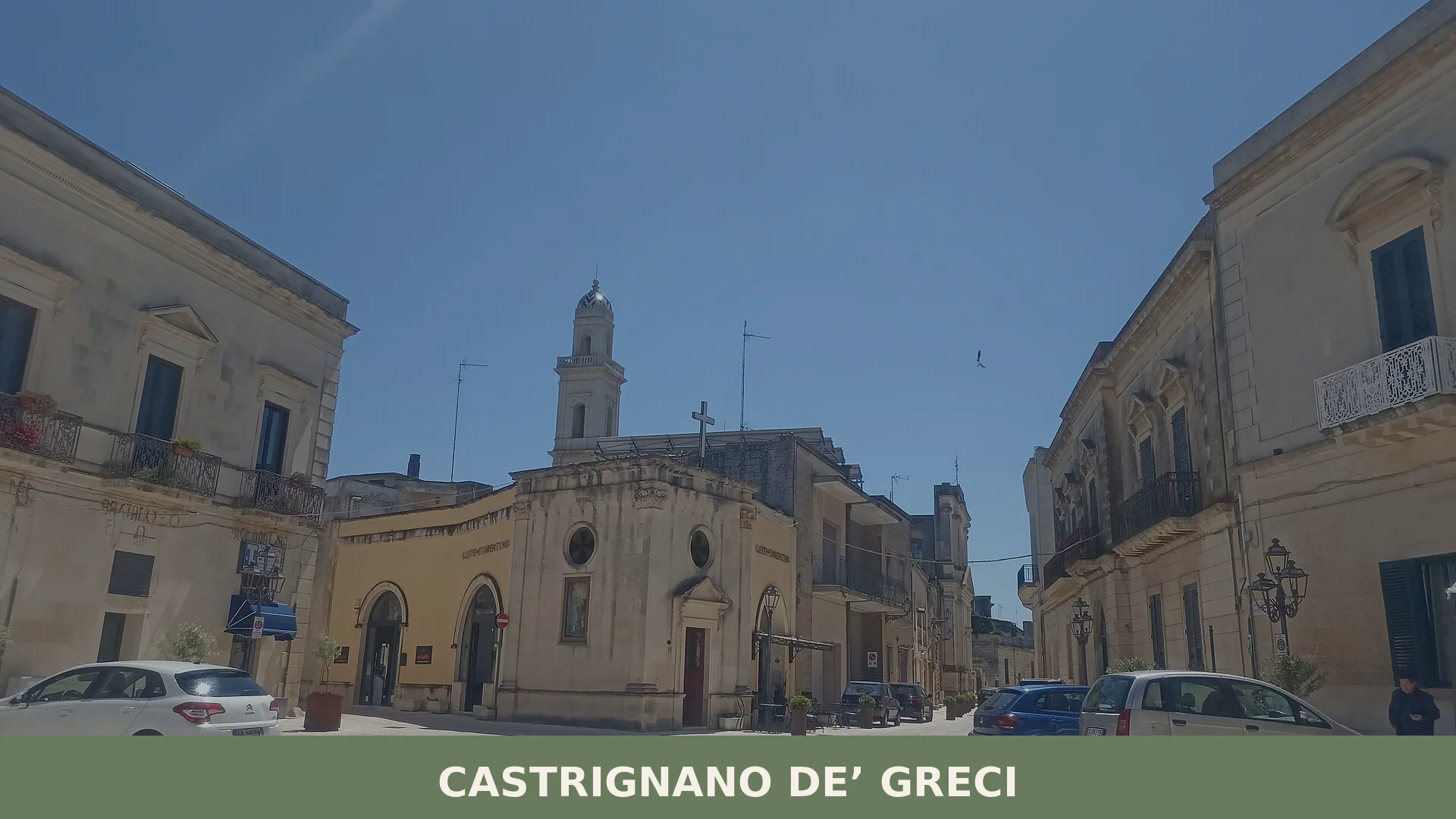
Castrignano de’ Greci
 Plains
A village of 3,631 people where ancient Greek language persists and Byzantine crypts breathe beneath baroque facades. Medieval roots and baroque innovation define its character.
Castrignano de' Greci: A Village of Greek Roots and Byzantine Shadows in the Salento
A Village Carrying Greek Words Across Centuries
Castrignano de’ Greci belongs to a rare cultural island in southern Apulia where modern Italian life brushes against an ancient linguistic and religious inheritance. The village sits at 90 metres above sea level on the flatter terrain of the Salento, surrounded by the low olive groves and stone walls typical of this limestone plain. What makes this place visibly distinct is not monuments alone but the everyday presence of the grico language—an ancient dialect of Greek origin preserved among residents and preserved in place names and local memory.
Castrignano de’ Greci village in Apulia is a comune of the province of Lecce. It draws visitors and scholars alike because it represents a living fragment of the Grecìa salentina, a linguistic and cultural zone encompassing nine municipalities in the southern Salento. The village preserves evidence of its past in the stone crypts and chapels that channel Byzantine devotion, and in the baroque churches rebuilt in the 17th and 18th centuries that reflect later prosperity and ambition.
Founding Stories and Medieval Transitions
The origins of Castrignano de’ Greci rest on competing traditions rather than a single documented event. The name may derive from the Latin castrum—a Roman military camp. Alternatively, the name may honour a Roman centurion named Castrinius, or may relate to a Greek word for castle. Local historians including Cosimo De Giorgi have traced the settlement to Greek colonists—either Cretans and Athenians or followers of the legendary figure Giapige—while other scholars point to the wider colonization of the Salento during the era of Magna Grecia. What is certain is that Byzantine influence transformed Castrignano into a fortified village and left a permanent mark on its religious practice and speech.
The Byzantine presence shaped the village profoundly. The liturgy and language of Constantinople took root here, and Castrignano maintained Greek Orthodox ritual forms until 1614. When the Normans arrived, the settlement became part of the Contea di Soleto and was granted by Tancredi d’Altavilla to Pietro Indrimi in 1190. Over the following centuries, the feudal territory passed through the hands of successive noble families—the De Persona, Prato, Acaya, Brayda, Guarini and Marescallo—before the Gualtieri family took control and held it until the abolition of feudalism in 1806. This long feudal tenure left the village marked by fortifications and palazzo architecture that still dominate its core.
The village conserved the Greek rite and language far longer than most settlements in the region, creating a living continuity between ancient practice and modern identity that few other places in Italy can claim.
Churches, Crypts and Baroque Ambition
Cripta di Sant’Onofrio
Beneath the modern village lies one of its most eloquent survivals: the Cripta di Sant’Onofrio, a hypogeum dating to the 6th century. This underground shrine—the oldest place of worship in the settlement—consists of two chambers accessed via converging staircases. Within these walls stand a block altar carved from stone, human burials, grain storage silos, a 16th-century baptismal font, and a 13th-century holy-water basin inscribed in Greek letters. Traces of frescoes survive on the walls—a Virgin with Child, an unnamed female figure, and an unidentified saint—all attributed to the 16th through 18th centuries. To visit is to walk through half a millennium of ritual and daily survival compressed into stone.
Chiesa madre dell’Annunziata
The principal church of Castrignano de’ Greci stands as a statement of 19th-century confidence and ambition. The Chiesa madre dell’Annunziata was constructed in 1878 on the foundations of a 16th-century predecessor, replacing an older structure when the growing population demanded more space. The design came from the architect Federico Elmo of Lecce, and construction was carried out by master builder Rocco Stomeo. The building follows a Latin cross plan crowned by a large dome, with three interconnected lateral chapels. The high altar in polychrome marble displays a work by the painter Saverio Altamura. An organ in wood, built by the craftsman Mentasti in 1900, occupies the choir loft. The exterior is topped by a three-storey bell tower whose dome is covered in decorative majolica tiles. A stone inscription on the main portal records the date 1575 from the earlier church, a physical link to the village’s religious past.
Chiesa dell’Immacolata
The Chiesa dell’Immacolata represents baroque elegance on a smaller, more intimate scale. Built in 1650—as confirmed by an inscription on the entrance architrave—this church displays a restrained exterior punctuated by a dignified portal surmounted by a statue of the Immaculate Virgin and crowned by a rose window with floral motifs and the letters AM (Ave Maria). The single-nave interior culminates in a remarkable baroque altar, a baroque work. The altar, gilded and finely decorated, is adorned with numerous putti and surmounted by a large oil painting of the Immaculate Madonna. Above it stands a wooden Risen Christ. Painted medallions set in stucco frames along the side walls illustrate scenes from the life of the Virgin Mary. Above the entrance stands an 18th-century wooden choir loft, a final touch of craftsmanship.
Chiesa Madonna dell’Arcona
On the periphery of the village, in the cemetery area, stands the Chiesa Madonna dell’Arcona, erected in 1731 following a miraculous event. The church was built after the discovery of a Byzantine icon of the Virgin and Child and a reported healing event in 1725. The façade is articulated by four pilasters that converge at a cornice crown, framing a richly decorated portal surmounted by a broken arch pediment inscribed with the memory of the miracle. A small window with matching vegetal ornament sits on axis with the entrance. The single-nave interior is vaulted with a barrel vault containing lunettes, and holds two altars. The principal altar, executed in baroque style with four spiral columns, is populated with angels and saints; at its centre hangs an 18th-century painting of the Virgin, while above, within an oval frame, the Byzantine fresco of the Vergine and Child—venerated as the Arcona—remains visible. A second altar honours Saint Philomena.
Castello dei Gualtieri
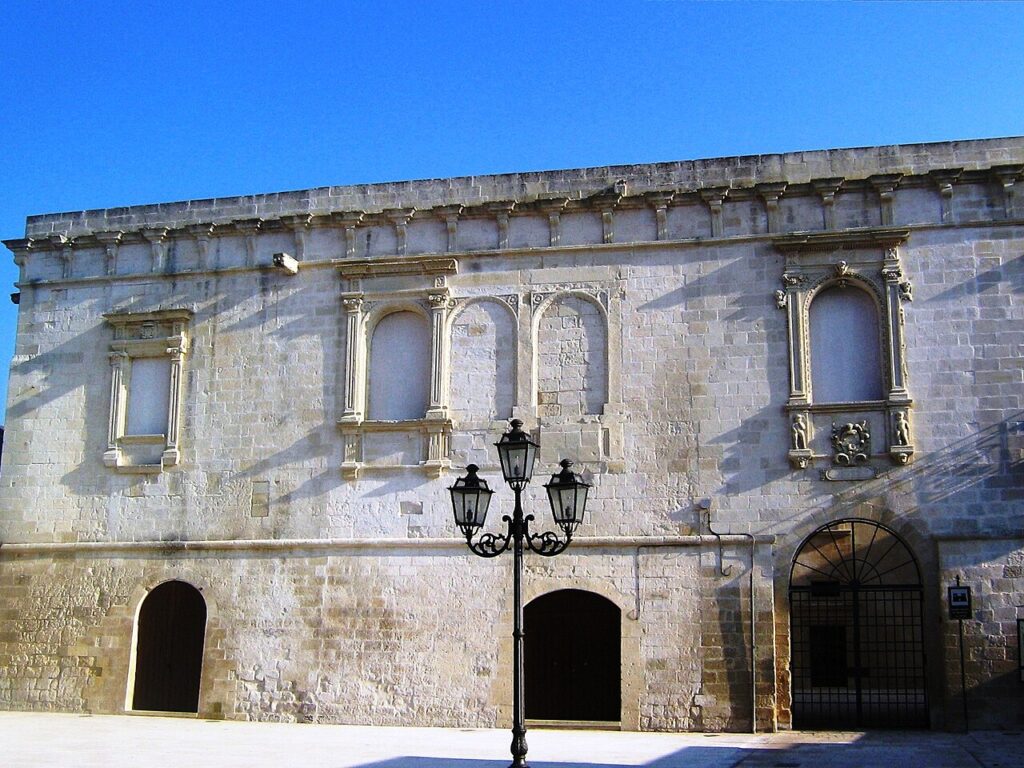
The Castello of medieval origin was rebuilt in the 16th century under the Gualtieri family, whose name appears in an inscription above the entrance portal. The fortress presents a rectangular plan with a sloped base, divided externally into two storeys by a moulded cornice. The Gualtieri invested it with defensive features: a moat (still visible in the 19th century), splayed gun ports at ground level to command the western and southern approaches. The façade bears Latin inscriptions and mottos. The ground floor originally housed stables, a bakery and storage; the piano nobile, accessed by a handsome florally-decorated portal, served the lords. Today the castle serves as a venue for public events.
The Rhythm of Seasons and Agricultural Roots
Castrignano de’ Greci sits on a wholly flat, limestone terrain that has always welcomed cultivation. Olive groves dominate the landscape, punctuated by fig, almond and grape vines that thrive in the Mediterranean climate. Winters are mild (average January temperature around 9°C) and summers warm and humid (average August around 24.7°C). The majority of rainfall is concentrated in autumn and winter, with annual precipitation averaging 626 millimetres. The local winds carry cold fronts from the Balkans and warm currents from Africa, shaping the air and the agricultural calendar alike. This is a landscape where olives, wine and dried fruit have always been the foundation of survival and commerce. The village is classified in seismic zone 4 (very low seismicity) and in climate zone C, with 1,252 heating degree-days annually.
Language, Tradition and Local Identity
What distinguishes Castrignano de’ Greci most clearly is the grico language—an ancient dialect of Greek descent that persists in family and community speech. This linguistic survival is not a tourist attraction performed on demand but an inheritance woven through daily conversation, place names and local memory. The grico represents an unbroken thread linking the modern village to Byzantine times and to the Greek settlements of antiquity. The presence of the language shapes how residents understand themselves and their territory; it appears in local terminology for natural features, traditional practices and family relationships. The village’s feast day honours Sant’Antonio da Padova on 13 June, a celebration that anchors the annual rhythm of community life. The religious calendar also preserves Byzantine elements in ritual and devotion, a blend of Latin and Orthodox practice that marks Castrignano as a place where two religious worlds have coexisted and merged.
Planning Your Visit
Castrignano de’ Greci is most easily reached by car from the Lecce area, which lies 26.3 kilometres to the northwest. If you are arriving from the coast, the seaside town of Otranto is approximately 18 kilometres away; Gallipoli, on the western coast, is 34 kilometres distant. The village itself is small enough to explore on foot once you arrive, with the castle, the main piazza and the churches all accessible within a short walk of each other. The flat terrain makes cycling a practical option for visitors with mobility. The nearest motorway access points connect to the A14 (Bologna–Taranto), with the SS613 connecting toward Lecce and Brindisi; from there, regional roads lead south and east into the Salento interior.
The best time to visit is spring (April–May) or autumn (September–October), when temperatures are moderate and the landscape is neither baked nor sodden. Summer brings heat and occasional crowds, particularly in early June around the feast of Sant’Antonio da Padova. Winter is mild but wetter; many villages in the interior reduce their services during the quieter months. There are no major hotels within the village itself, but agriturismos and small guesthouses operate in the surrounding area, including in neighbouring communities such as Bagnolo del Salento and Cannole. Lecce, 26 kilometres away, offers a full range of accommodation and serves as a natural base for exploring the wider Salento region.
| Departure point | Distance | Approximate time |
|---|---|---|
| Lecce | 26.3 km | 30 minutes by car |
| Otranto | 18 km | 20 minutes by car |
| Gallipoli | 34 km | 40 minutes by car |
| Brindisi airport | ~60 km | 70 minutes by car |
The village’s modest scale means that a full exploration of the principal churches, the crypt and the castle can be accomplished in a half-day visit. For those interested in the grico language and Byzantine religious history, or who wish to visit smaller chapels and spend time in the surrounding countryside, a full day or overnight stay allows for a more reflective engagement with the place. The official municipal website at https://www.comune.castrignanodegreci.le.it/ provides practical information on opening hours, local services and any community events.
Frequently asked questions about Castrignano de’ Greci
What is the best time of year to visit Castrignano de' Greci?
Late spring through early autumn offers the most pleasant weather for exploring the village and its surrounding olive groves. The patron saint feast of Sant'Antonio da Padova on June 13th brings local celebrations and is an excellent time to experience village traditions. Avoid the hottest weeks of July and August if you prefer cooler temperatures. Winter months are mild but quieter for tourism.
How do I reach Castrignano de' Greci by car?
The village lies in the province of Lecce in southern Apulia. From Lecce city, drive south approximately 30 kilometres using regional roads toward the Salento peninsula. The nearest motorway is the A16 serving southern Italy; exit toward Lecce and continue south. The area is accessible by car year-round on well-maintained regional highways connecting the flat Salento terrain.
What is the Grico language and where can I hear it in the village?
Grico is an ancient Greek dialect still spoken by residents of Castrignano de' Greci and eight other municipalities in the Grecìa salentina zone. You may encounter it in daily conversation among local people, particularly among older residents, and it appears in traditional place names throughout the village. Local cultural associations sometimes organize events or gatherings where the language is celebrated.
How long should I plan to spend in Castrignano de' Greci?
A day visit of four to six hours allows time to explore the village's baroque churches, medieval crypts, and main streets. An overnight stay enables a more leisurely experience, including evening walks through the community and conversations with residents. The compact size and rural setting make it ideal as a cultural stop within a broader Salento tour rather than a multi-day destination.
What archaeological or historical sites are worth visiting in the village?
Byzantine-era crypts and chapels reflecting ancient Greek religious traditions are key sites. The baroque churches, reconstructed in the 17th and 18th centuries, demonstrate later architectural ambition and prosperity. Stone walls and olive groves surrounding the village preserve the traditional agricultural landscape of the limestone Salento plain, offering insight into centuries of local life and economy.
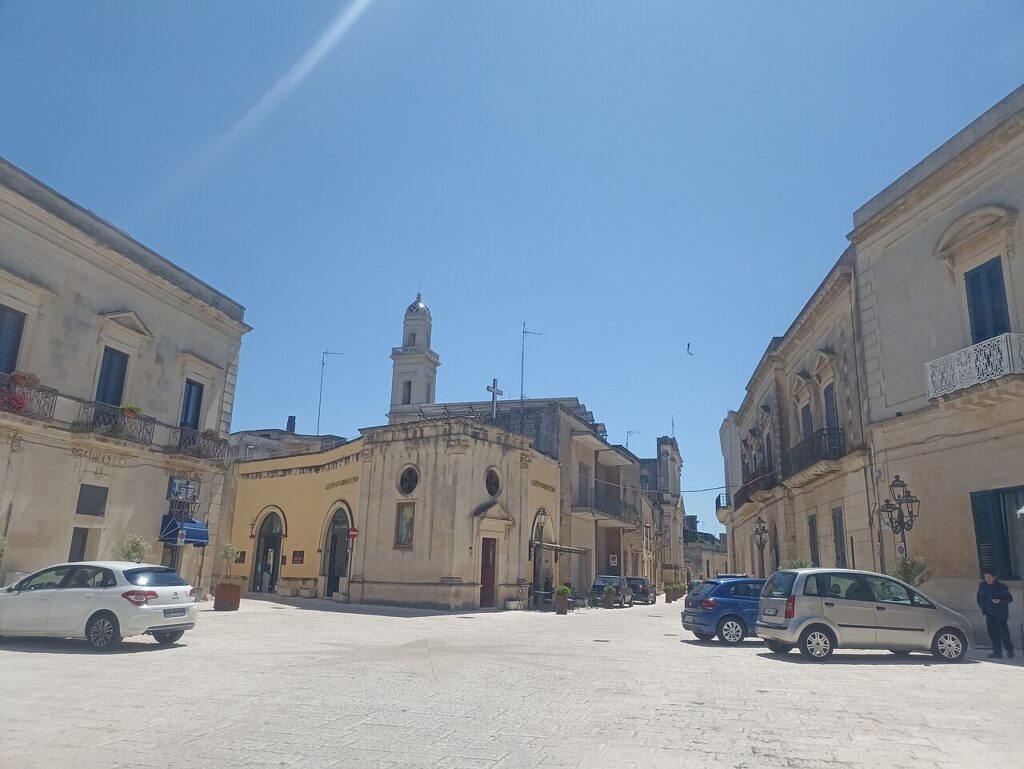
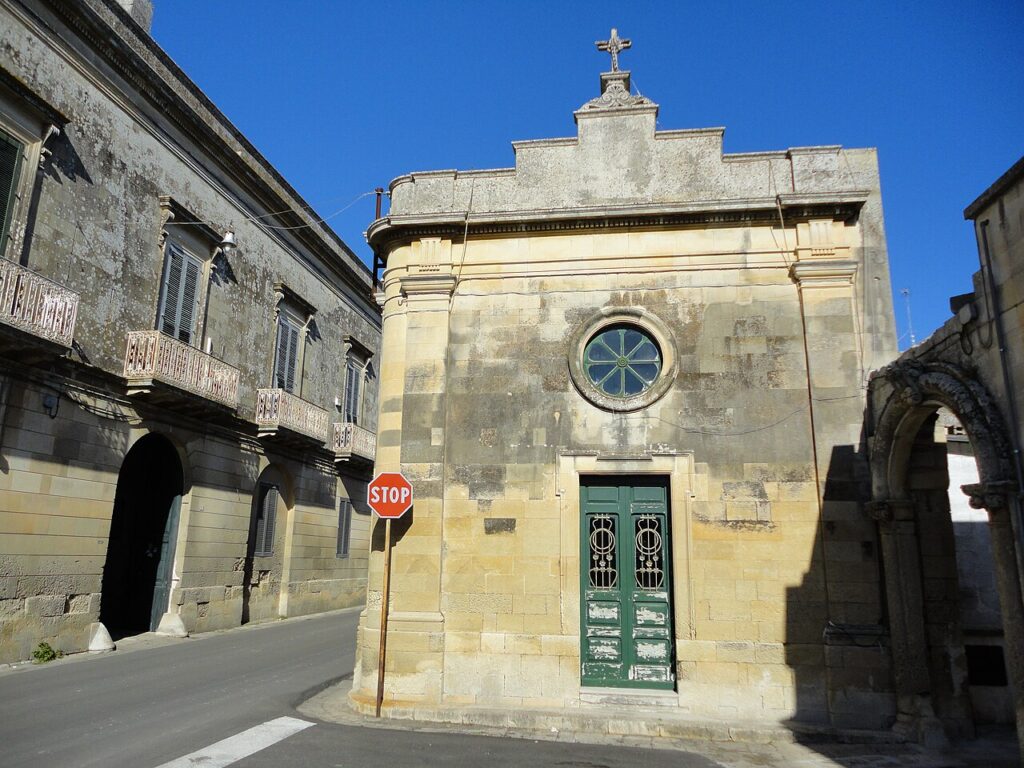
📷 Photo Gallery — Castrignano de’ Greci
In Apulia More villages to discover
Alberobello
 Hills
Hills
Alberobello, Puglia: Discover UNESCO trulli, Monti & Aia Piccola districts. Explore unique history & traditions. Plan your visit!
Corsano
 Sea
Sea
Population 5,077. Medieval feudal stronghold with nine chapels, a 17th-century baronial castle, and distinctive artisanal tie production.
Alliste
Sea
what to see ad Alliste: scopri il 6.481 abitanti. Visita chiese e masserie, assapora la cuisine salentina per un viaggio autentico.
Erchie
Plains
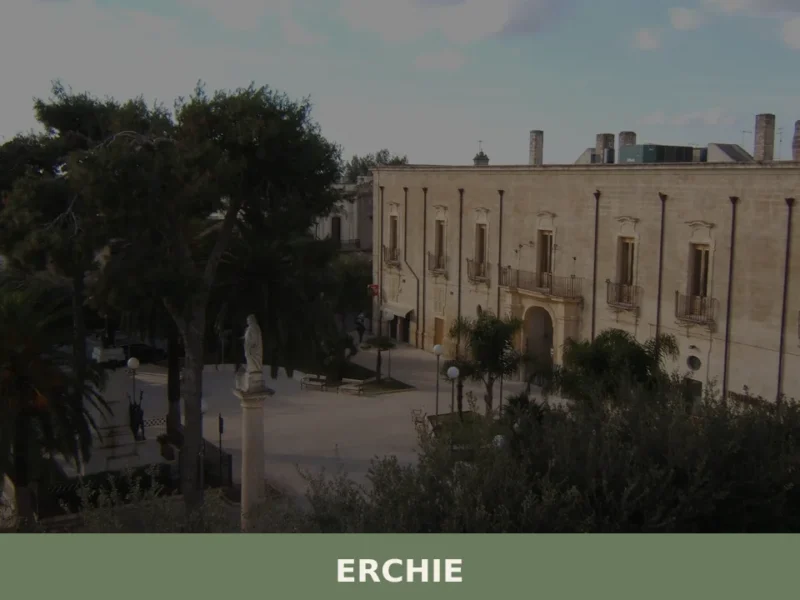
Discover what to see in Erchie, Puglia u2014 a village at the crossroads of three provinces, with Baroque churches, masserie, and authentic Salento cuisine.
Cavallino
Plains
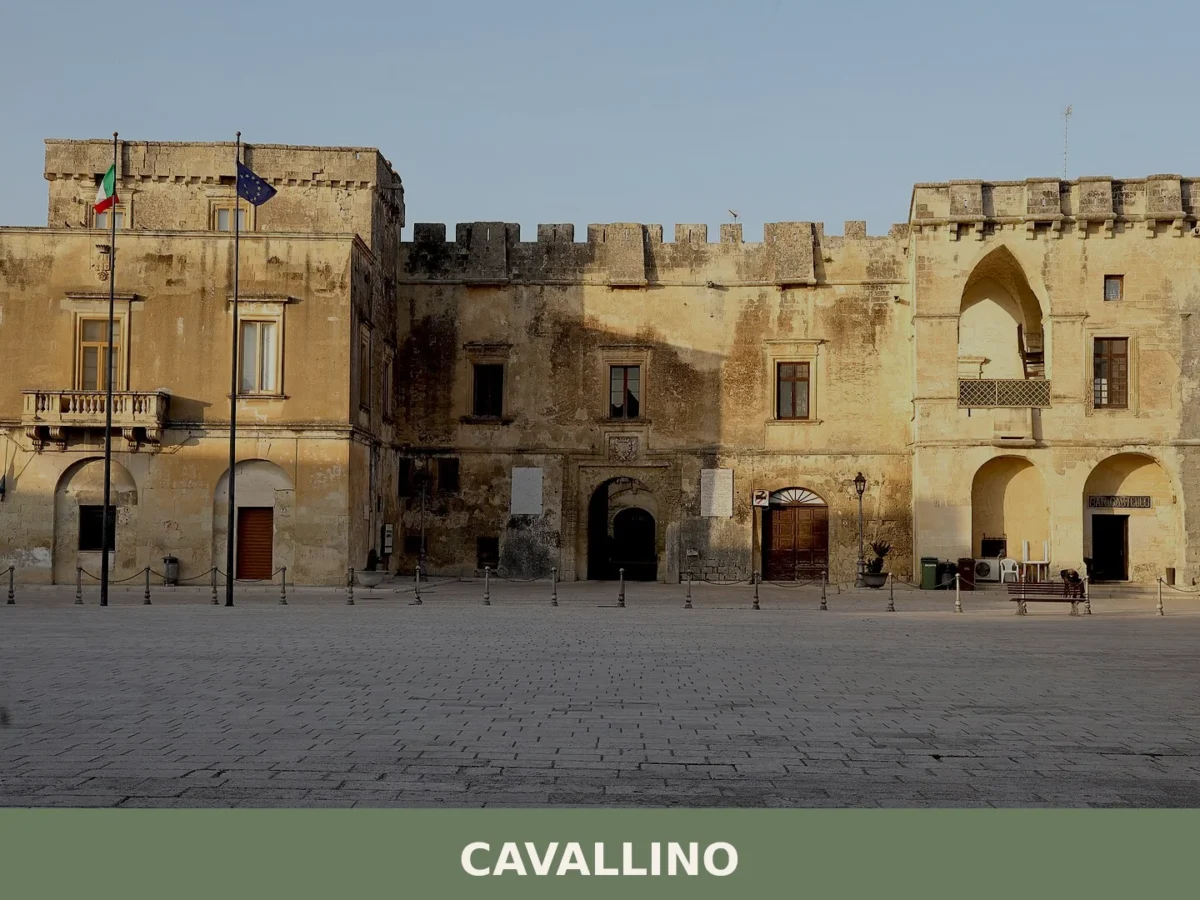
A village of 13,000 inhabitants where Messapic foundations meet Baroque stone. Visit the Dominican church, the feudal castle and a 1633 public well.
Ostuni
Sea
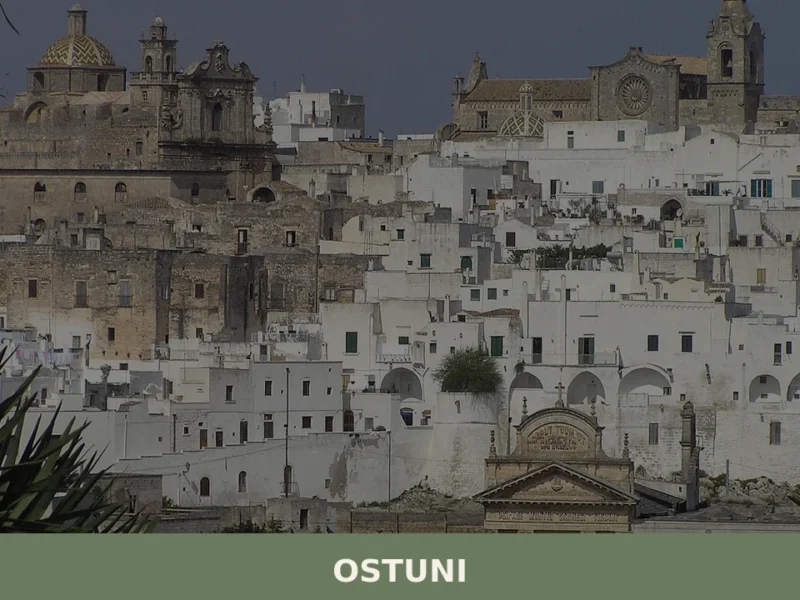
What to see in Ostuni, Italy: Discover the 'White Town' with its 30,143 residents and explore 5 key historical sights. Read our guide for top attractions and travel tips.
Biccari
Hills
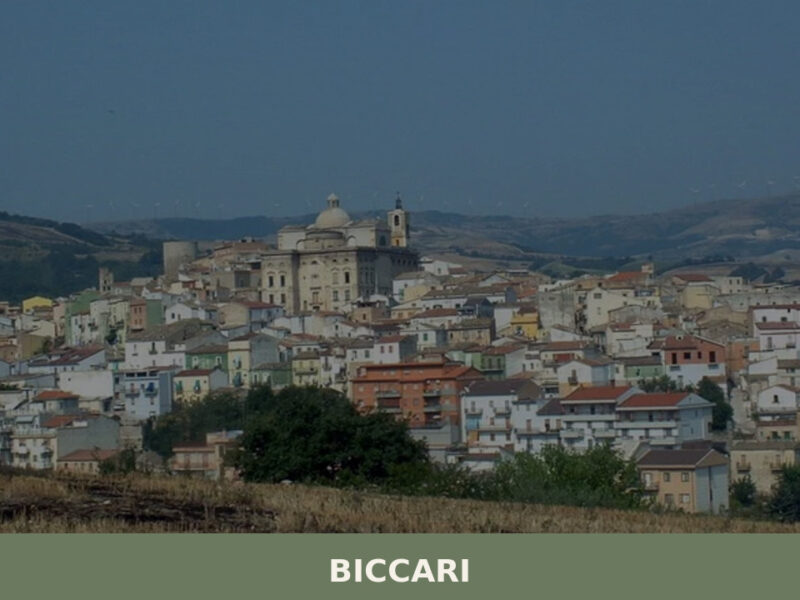
Discover Biccari, a charming hilltop village in Puglia's Daunian Mountains. Explore its Norman tower, mountain lake, forest trails, and authentic southern Italian cuisine.
San Pietro Vernotico
Sea
What to see in San Pietro Vernotico, Italy? Discover its 14th-century Torre Quadrata and the historic Chiesa Matrice. Explore this village, 36 m above sea level, for its rich past.
Toritto
Hills
What to see in Toritto, Italy: Explore almond groves and the Chiesa Madre at 240 m. Discover vibrant festivals and indulge in local cuisine.
Stornara
Plains
A quiet agricultural town on Puglia's Tavoliere plain, Stornara rewards visitors with honest rural architecture, sweeping wheat-field panoramas, and a food tradition rooted in durum wheat.
🏡 Know Castrignano de’ Greci better than we do?
If you’re a local or have been there, your knowledge matters: add what’s missing or fix a detail on this page.