


Africo
 Sea
Sea
Discover what to see in Africo, Calabria: the abandoned mountain village, Ionian coast, Aspromonte landscapes, local food and practical travel tips.
Discover Africo
Africo is a comune in the Metropolitan City of Reggio Calabria, Calabria, with a recorded population of 2,655 inhabitants. Split between two distinct settlements — the original mountain village and a coastal resettlement — it carries one of the most documented relocation histories in postwar southern Italy. Knowing what to see in Africo means understanding this double geography: ruins above, rebuilt life below, and a community that has navigated both with the kind of matter-of-fact resilience that rarely makes it into official tourism narratives.
History of Africo
The original settlement of Africo Vecchio stood at an altitude of roughly 1,100 metres in the Aspromonte massif, within a territory that had been inhabited since at least the medieval period.
The name itself is thought to derive from the Greek word Afrikon or from a corrupted Latin toponym, reflecting the deep Greek cultural substratum that characterised much of coastal and inland Calabria during the Byzantine era. Documentary references to the settlement appear in ecclesiastical records from the early modern period, when the village fell under the jurisdiction of the Diocese of Bova, one of the last bastions of the Greco-Calabrian rite in the region. The Diocese of Bova, suppressed only in 1818 when it was merged into the Diocese of Reggio Calabria, administered communities whose liturgical language remained Greek well into the eighteenth century.
Under Bourbon rule, Africo was a small but administratively recognised comune in the province of Reggio Calabria. Its economy depended almost entirely on subsistence agriculture and pastoralism — the same mountain economy that defined dozens of Aspromonte villages. During the nineteenth century, emigration began to drain the population, a process that accelerated after Italian unification and the economic marginalization of the Mezzogiorno that followed.
By the early twentieth century, the village was already fragile: isolated, poorly connected, and dependent on a single mule track for access to the outside world. The journalist and writer Corrado Alvaro, one of Calabria’s most important twentieth-century literary figures, documented the conditions of communities like Africo in his work, giving national visibility to what had been largely invisible poverty.
The decisive rupture came in 1951, when catastrophic floods and landslides made Africo Vecchio uninhabitable. The Italian state ordered the evacuation and resettlement of the entire population to a newly constructed coastal town, Africo Nuovo, built near the Ionian coast below. This forced relocation — one of several imposed on Aspromonte communities in the postwar period — was coordinated by the Cassa per il Mezzogiorno, the state agency created in 1950 to fund southern Italy’s development.
The abandoned mountain village was left largely intact, its stone houses, church ruins, and terraced fields slowly returning to scrubland. Today, Africo Vecchio is an archaeological site of recent history: a place where the physical evidence of a vanished community remains visible in the stones themselves.
What to see in Africo: the village and its two faces
Any honest account of what to see in Africo must address its fundamental duality. The municipality today encompasses Africo Nuovo on the coast and the ruins of Africo Vecchio in the mountains. These are not simply two parts of the same town — they represent two entirely different relationships with the landscape, with history, and with the idea of what a Calabrian village is.
Africo Vecchio (the Abandoned Village)
The ruins of the original mountain settlement sit at approximately 1,100 metres in the Aspromonte.
Stone walls of houses, the skeleton of the parish church, and the remnants of a structured urban layout are still readable in the landscape. Abandoned formally after the 1951 disaster, the site has been partially consolidated and is accessible by road from Africo Nuovo, offering direct physical evidence of a pre-industrial mountain community.
The Parish Church of Africo Nuovo
The main church of the resettled coastal town was built as part of the postwar urban plan for Africo Nuovo. It serves the relocated community and reflects the functional, unornamented architecture typical of state-sponsored southern Italian reconstruction in the 1950s — a style that itself documents the political and social priorities of that period as clearly as any archive.
The Ionian Coastline Below Africo
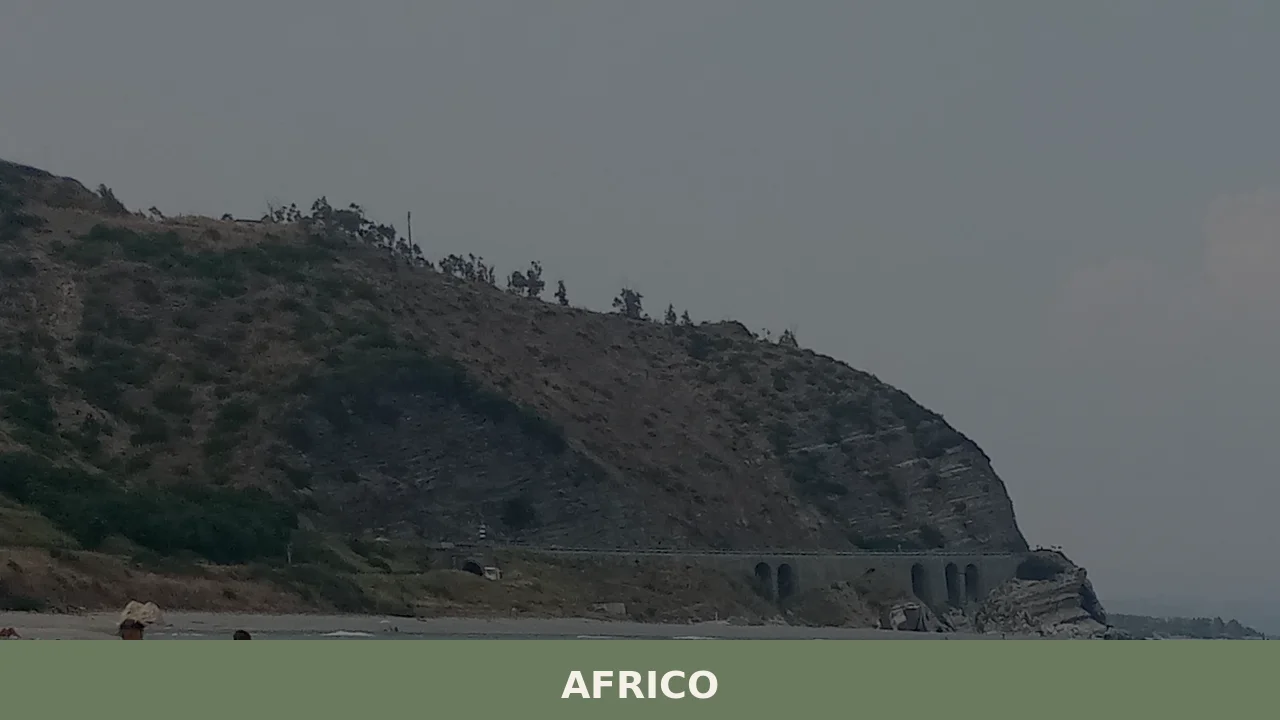
The coastal strip near Africo Nuovo borders the Ionian Sea and is characterised by wide gravel and sand beaches typical of this stretch of Calabria’s eastern coast.
The Ionian here is notably clear, with the Aspromonte rising almost directly behind the shoreline — a geographical compression that is particular to this part of Reggio Calabria’s territory and that makes the relationship between coast and mountain unusually immediate.
Aspromonte National Park Surroundings
Africo Vecchio sits within or immediately adjacent to the territory of the Aspromonte National Park, established in 1994. The park protects a landscape of beech and pine forests, river gorges, and high-altitude meadows.
The area around the old village includes mountain terrain used historically for transhumance, with paths that predate the modern road network by centuries.
The Terraced Agricultural Landscape
Around Africo Vecchio, dry-stone terrace walls built by generations of mountain farmers are still visible across the slopes. These structures — requiring extraordinary labour to construct without mechanical means — represent a form of landscape engineering that transformed steep Aspromonte terrain into productive farmland. Their gradual collapse since 1951 is one of the measurable physical consequences of depopulation.
Local food and typical products
The food traditions of Africo belong to the broader culinary culture of Aspromonte’s mountain communities, with the Ionian coastal influence now more present in Africo Nuovo. Pork-based cured meats are central: ‘nduja, the spreadable spiced salumi that has become Calabria’s most exported food product, and soppressata, a pressed and dried sausage produced in many local variants across the province of Reggio Calabria, appear regularly.
Legumes — particularly chickpeas and broad beans — are combined with pasta in preparations that reflect a mountain economy where meat was a supplement rather than a staple. Pecorino cheese from local sheep, aged to varying degrees, is another constant. On the coast, grilled swordfish and pesce spada alla ghiotta — cooked with capers, olives, and tomato — represent the Ionian kitchen.
For those exploring this part of Calabria, the regional food landscape extends well beyond individual villages. The Aspromonte territory produces bergamot — the citrus fruit whose essential oil is used in perfumery and Earl Grey tea, and which holds a DOP designation — primarily along the coast between Reggio Calabria and Locri.
While Africo itself is not a production centre for bergamot, the fruit is an inescapable presence in the local economy and culture of the wider metropolitan area. Small agriturismi in the broader Aspromonte zone offer meals based on seasonal local produce, and these remain the most reliable option for eating food that actually reflects the territory rather than a generic southern Italian menu.
Best time to visit Africo
The Ionian coast near Africo Nuovo is warmest and most accessible between June and September, with sea temperatures that make swimming genuinely comfortable from late June onwards. The summer months, however, bring heat to the coastal strip that can be significant by midday — temperatures routinely exceed 35°C in July and August along this stretch of the Ionian. The contrast with Africo Vecchio at altitude is sharp: the mountain ruins remain considerably cooler even in summer, and the drive up to the old village provides a practical escape from coastal heat.
Spring — particularly April and May — offers the most balanced conditions for exploring both the coast and the mountain terrain, with wildflowers visible across the Aspromonte slopes and the rivers still running well.
There are no large-scale festivals specific to Africo that are officially documented in sources available here, but the broader calendar of religious and civic celebrations that marks Calabrian community life — feast days tied to patron saints, summer sagre focused on local food products — applies to the municipality as it does throughout the region. Visiting in early September, when summer crowds have thinned but sea temperatures remain high, combines the practical advantages of both shoulder season and summer without the logistical pressures of August.
How to get to Africo
Africo Nuovo, the coastal settlement, sits along the SS106 — the Strada Statale Jonica — which runs the length of Calabria’s Ionian coast. This is the primary land access route. The nearest significant urban centre is Locri, approximately 30 kilometres to the north along the SS106. Reggio Calabria, the metropolitan capital, is roughly 90 kilometres to the south by road. The Africo Vecchio mountain ruins are reached via a secondary mountain road that branches inland from the coastal settlement — conditions on this route should be verified locally, particularly outside the summer months.
- By car: From Reggio Calabria, take the A2 Autostrada del Mediterraneo north to the Rosarno junction, then connect to the SS106 south-east, or approach directly along the SS106 from Reggio. From the north, the SS106 from Catanzaro Lido runs south along the Ionian coast. Journey time from Reggio Calabria: approximately 1.5 to 2 hours depending on route and road conditions.
- By train: The Reggio Calabria–Taranto railway line runs along the Ionian coast. The nearest station to Africo is Ferruzzano-Staiti or Brancaleone, both small stops on this line.
Services are infrequent; confirm timetables via Trenitalia before travelling.
- By air: The closest airport is Reggio Calabria Airport (REG), approximately 90 kilometres from Africo. Lamezia Terme International Airport (SUF), with broader flight connections, is approximately 150 kilometres north and requires crossing the peninsula by road.
Where to stay in Africo
Accommodation in Africo itself is limited, as is typical for small Calabrian comuni of this size. Africo Nuovo, as the active settlement, is the practical base. The coastal position means that holiday homes and small rental apartments — common along the SS106 Ionian strip — represent the most available option during summer months. Agriturismi in the broader Aspromonte foothills offer an alternative for those whose primary interest is the mountain territory and the old village ruins rather than the beach. These farm-stay properties, which vary considerably in comfort and facilities, are typically bookable through national platforms or directly through local tourism contacts.
For a wider selection of hotels, guesthouses, and B&Bs, the towns of Locri and Siderno — both within 30 to 40 kilometres along the SS106 — provide more infrastructure and make functional bases for day visits to Africo. Booking accommodation for summer visits well in advance is advisable, as the Ionian coast between Locri and Reggio Calabria attracts consistent seasonal demand from Calabrian and Sicilian visitors, and smaller properties fill quickly in July and August.
More villages to discover in Calabria
Calabria’s interior and coastal villages each carry their own distinct character, shaped by altitude, history, and the particular economy that sustained them.
On the Tyrrhenian coast, Amantea offers a medieval upper town and a working fishing harbour — a combination that illustrates how Calabrian coastal settlements have managed the relationship between defensive hilltop origins and sea-facing commerce across centuries. Further north along the same coast, Acquappesa is known for its thermal springs, a resource that distinguishes it economically and environmentally from its neighbours and draws a different kind of visitor than the standard beach or culture itinerary.
The inland villages of Calabria’s Pollino and Sila territories offer yet another register. Albidona, in the province of Cosenza, sits at altitude in terrain that shares the isolation and mountain economy characteristic of communities like Africo Vecchio before its abandonment — making it a useful point of comparison for anyone trying to understand how Aspromonte and northern Calabrian villages developed along parallel but distinct paths.
For a village that combines Tyrrhenian access with a documented medieval centre, Aiello Calabro, with its Norman tower and the presence of an Albanian-rite community, illustrates the ethnic and religious complexity that makes this region one of the most historically layered in southern Europe.
📷 Photo Gallery — Africo
Nearby Villages near Africo
In Calabria More villages to discover
Amato
 Hills
Hills
The enduring presence of the Arbëreshë language in Amato, a distinctive cultural marker, hints at centuries of layered history within this Calabrian village, where cultural traditions often define daily life. Its ancient foundations stretch back to a time even before Roman influence, earning mentions from revered classical figures like the Greek philosopher Aristotle and the […]
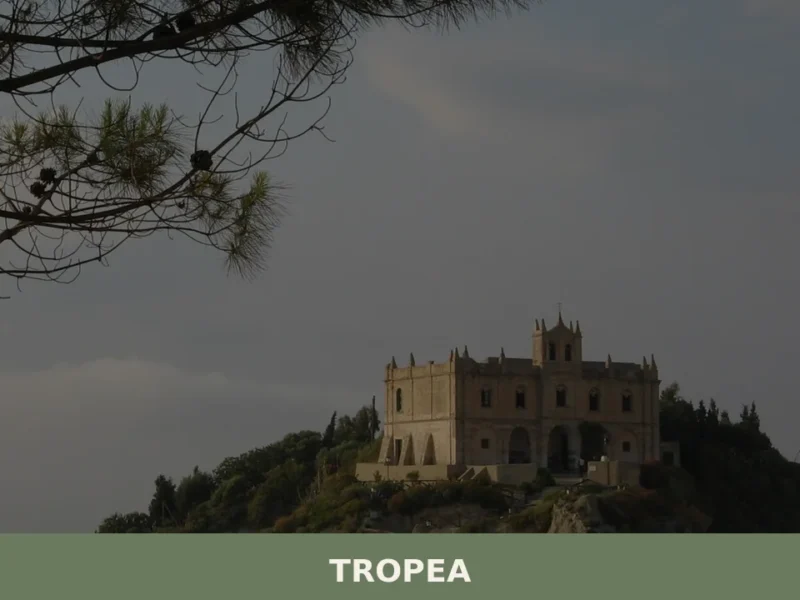
Tropea
Sea
What to see in Tropea, Calabria, Italy: explore 5 top attractions, the famous red onion, sandy beaches on the Tyrrhenian Sea. Discover how to get there.
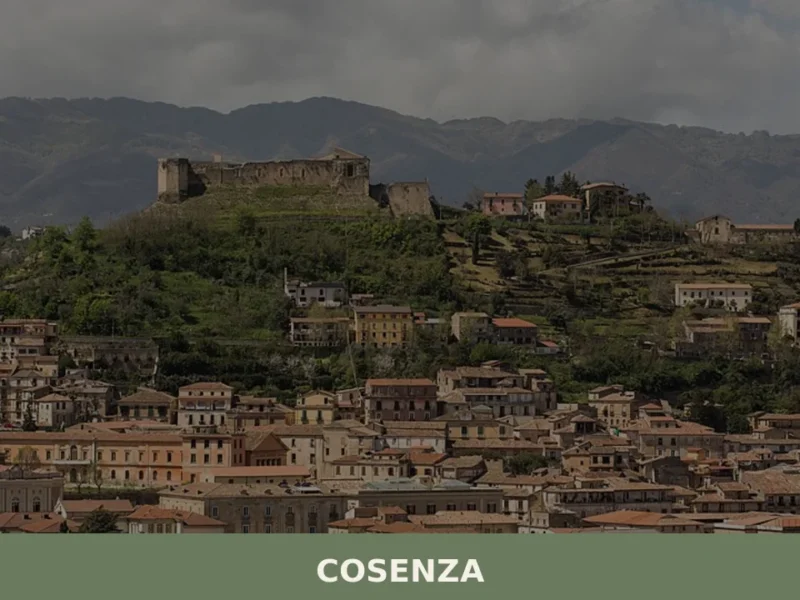
Cosenza
Hills
Cosenza rose from an 8th-century italico village to lead the Bruzi confederation. Today it balances a medieval hilltop centro storico with a modern riverbank expansion.
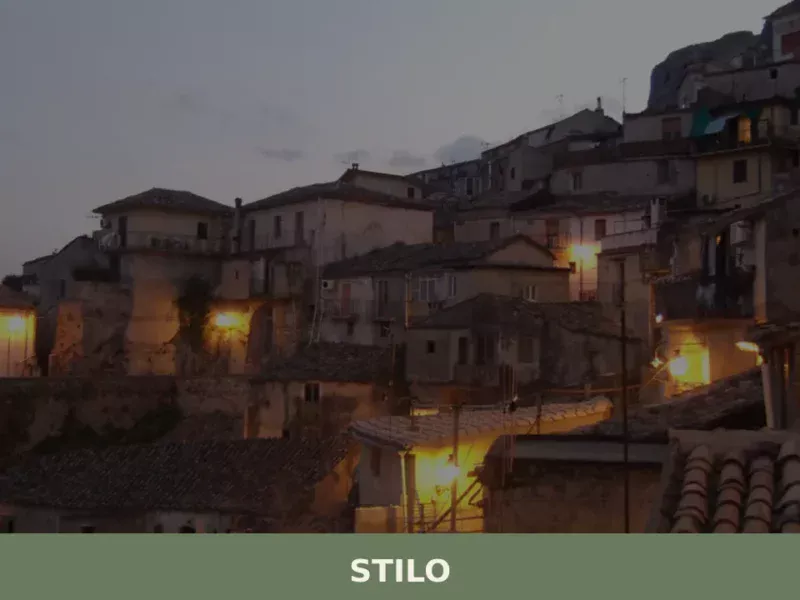
Stilo
Sea
The Cattolica church occupies a spur of rock above the rooftops, its five small domes visible from the valley floor before the rest of the village comes into focus. Below the church, the streets narrow and the stone deepens in colour, shifting from pale grey to near-black where the walls absorb the shadow. Iron and […]
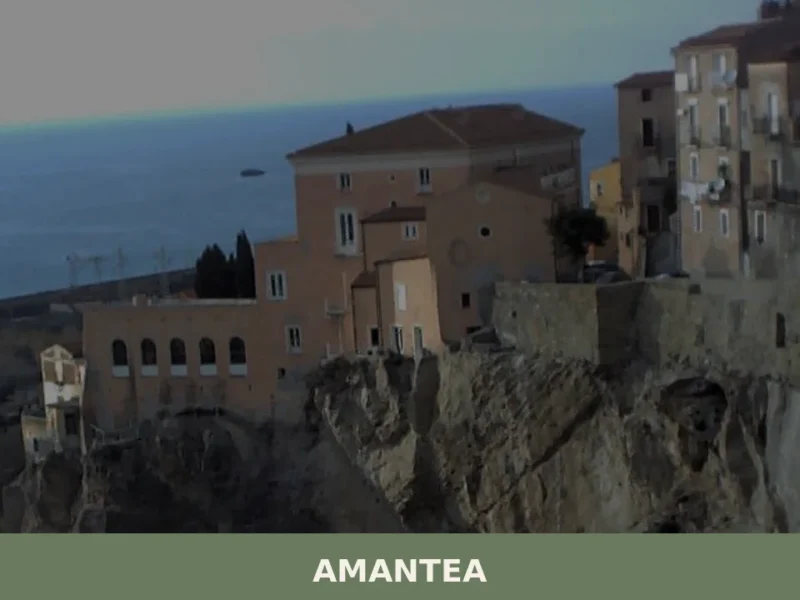
Amantea
Sea
Explore the picturesque village of Amantea Calabria. Discover its historic center, beautiful beaches, and authentic Italian charm. Plan your perfect trip to this hidden gem on the Tyrrhenian coast.

Gizzeria
Sea
5,362 residents, two faces — hilltop village and thermal-wind shore — and a documented Albanian foundation make Gizzeria one of Calabria's most layered communities.
Bonifati
Sea
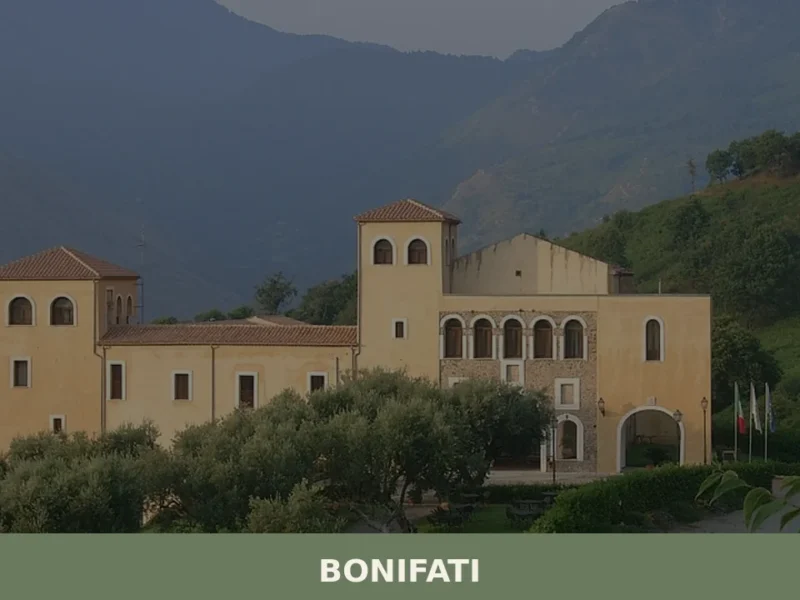
The village of Bonifati, located in the Cosenza hinterland but with a view towards the Tyrrhenian Sea, has historical roots deeply embedded in a past of fortifications and coastal defense. Already in the Middle Ages, this settlement stood out for its strategic position, an element that shaped its urban layout and identity. In this article […]
Belsito
 Mountain
At 660 meters above sea level, in the heart of the province of Cosenza, Belsito presents itself as a settlement that dominates a segment of the Calabrian landscape. Its houses are arranged on the slopes, an architecture that reflects the need to adapt to a territory ranging from 250 to 789 meters in altitude. In […]
Catanzaro
Sea
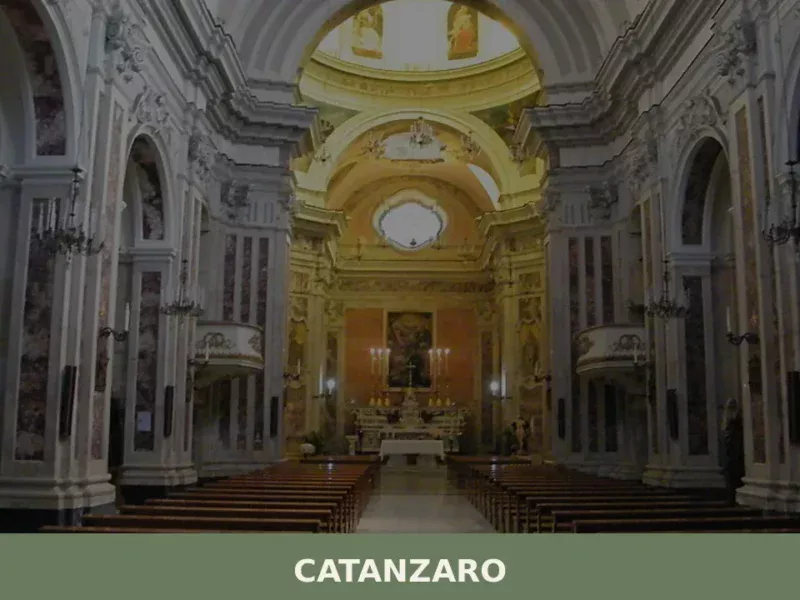
What to see in Catanzaro: from historic churches to the Morandi Bridge, discover the 5 top attractions. A complete guide to visiting the Calabrian capital.
Anoia
 Plains
What to see in Anoia? Explore the 5 main attractions of this Calabrian village. The complete guide awaits to help plan your visit. Learn more!


🏡 Know Africo better than we do?
If you’re a local or have been there, your knowledge matters: add what’s missing or fix a detail on this page.