


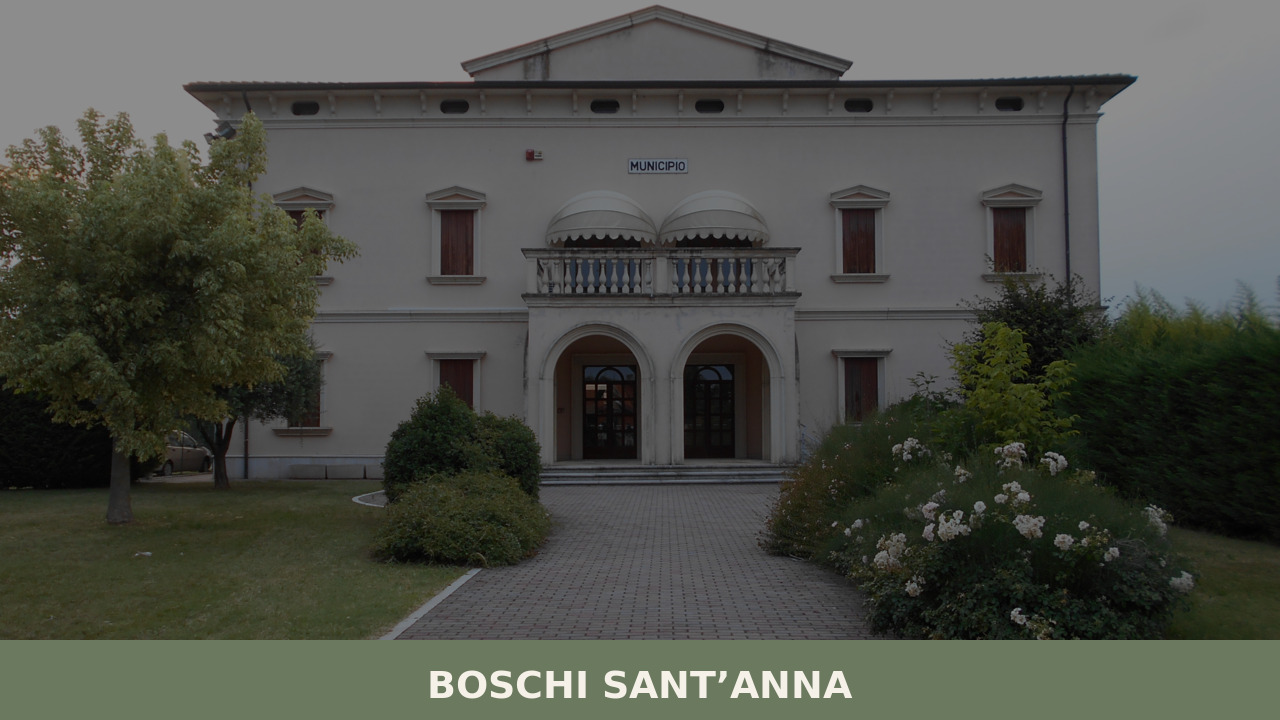

A quiet farming village of 1,359 inhabitants on the Veronese plain. Discover what to see in Boschi Sant’Anna, from its parish church to the canal-laced agricultural landscape.
Discover Boschi Sant’Anna
Morning fog lifts slowly from irrigation channels that cross flat, open farmland — the air carries dampness and the faint scent of turned earth. A church bell marks the hour from a campanile barely taller than the surrounding poplar trees. This is Boschi Sant’Anna, a municipality of 1,359 inhabitants sitting just twelve metres above sea level in the southern reaches of the Province of Verona. If you are wondering what to see in Boschi Sant’Anna, the answer begins not with monuments but with a landscape shaped by water, agriculture, and centuries of quiet persistence along the Veneto plain.
History of Boschi Sant’Anna
The name itself tells a layered story. “Boschi” — woods — recalls the dense forest cover that once blanketed this stretch of the lower Veronese plain before medieval land clearance opened it to cultivation. “Sant’Anna” invokes the patron saint to whom the parish church is dedicated, a dedication common in agrarian communities that relied on cycles of fertility and harvest. The combination points to a settlement that grew not from strategic hilltop advantage or mercantile ambition, but from the slow work of turning woodland into arable land.
Like much of the Bassa Veronese, the area fell under the influence of the Venetian Republic from the early fifteenth century onward. Venice’s interest in this flat terrain was pragmatic: the plains fed its population. Land management, canal maintenance, and grain production defined daily life here for centuries. The commune’s administrative identity consolidated over time, though it remained — as it remains today — a small rural centre, largely untouched by the industrial transformation that reshaped other parts of Veneto in the twentieth century. Church records and land registry documents from the seventeenth and eighteenth centuries trace a community of tenant farmers, parish priests, and modest landholders whose descendants still cultivate surrounding fields.
The territory also bears traces of its proximity to the Adige River system, whose periodic flooding shaped settlement patterns and necessitated drainage works that continued well into the modern era. This hydraulic engineering, often unsung, is as much a part of Boschi Sant’Anna’s history as any building or battle.
What to see in Boschi Sant’Anna: 5 must-visit attractions
1. Chiesa di Sant’Anna (Parish Church of Saint Anne)
The village’s spiritual and architectural focal point, this parish church features a simple nave structure typical of rural Veneto churches. Its bell tower rises above the flat roofline of the settlement, serving as a geographic marker visible across the surrounding farmland. Interior decorations reflect the modest devotional traditions of an agricultural parish community, with altarpieces and votive elements accumulated over several centuries of worship.
2. The Irrigation Canal Network
A web of channels and drainage ditches — some dating to Venetian-era land reclamation projects — threads through and around the village. Walking along their banks reveals a functional landscape where water management shaped every aspect of settlement and cultivation. In spring, the canals carry snowmelt from distant Alpine foothills, feeding fields of grain, maize, and tobacco that define the local agricultural calendar.
3. The Agricultural Landscape of the Bassa Veronese
Flat as a table and stretching to every horizon, the Bassa Veronese around Boschi Sant’Anna offers a terrain rarely featured in travel guides but deeply characteristic of the Po Valley. Rows of poplars line field boundaries. Farmsteads with enclosed courtyards — the traditional corte — punctuate the open land, some retaining original stone and brick elements from the eighteenth and nineteenth centuries.
4. Village Centre and Piazza
The compact centre of Boschi Sant’Anna gathers around a small piazza where the municipal building, church, and a handful of commercial premises form a modest civic core. It is a place built for function rather than display — low buildings, narrow streets, and an absence of monumental pretension that typifies villages of this size in the lower Veronese plain. The rhythm of daily life here is unhurried and legible.
5. Rural Footpaths and Cycling Routes
Flat terrain makes the area well suited to cycling and walking. Unpaved farm roads and canal-side paths lead through open countryside toward neighbouring municipalities. These routes offer uninterrupted views of the agrarian landscape and seasonal changes — from the green intensity of spring wheat fields to the amber expanse of late-summer stubble — with virtually no elevation change across kilometres.
Local food and typical products
The cuisine of Boschi Sant’Anna belongs firmly to the tradition of the Bassa Veronese and the broader Po Valley. Polenta — made from locally grown maize — remains a staple, served alongside stewed meats, lesso (boiled beef), or pearà, a bread-and-bone-marrow sauce particular to the Veronese table. Rice from the nearby paddy fields of the Isola della Scala area finds its way into risottos, while pork products, including fresh sausages and cured salami, reflect a long tradition of home butchering. Vegetables grown in kitchen gardens — radicchio, beans, cabbage — appear in soups like pasta e fagioli that sustain through cold, foggy winters.
The province of Verona also falls within the production zones for several DOP and IGP products, including Grana Padano cheese and Vialone Nano rice IGP. Local wines from the broader Veronese territory — though vineyards are more common on hillier ground to the north — accompany meals in trattorias and agriturismi scattered across the plain. Dining options in a village of this size are limited, but nearby towns offer more variety, and seasonal sagre (food festivals) in the surrounding area celebrate specific products with communal meals served at long outdoor tables.
Best time to visit Boschi Sant’Anna
The climate of the lower Veronese plain is continental: summers are hot and humid, winters cold and often foggy. Spring — from late March through May — offers the most comfortable conditions, with mild temperatures, green fields, and long daylight hours ideal for cycling or walking. Autumn brings its own appeal: the harvest season fills the air with the scent of cut grain, and the first fogs create an atmospheric quality that feels pulled from a Bertolucci film. Local sagre and parish festivals, often held between late spring and early autumn, provide occasions to experience communal traditions and regional food.
Winter visitors should be prepared for persistent fog that can reduce visibility to a few dozen metres — a defining feature of the Po Valley from November through February. While this limits outdoor exploration, it also reveals a facet of the landscape that photographs rarely capture: the silence, the muted palette, the sense of a world contracted to the nearest hedgerow. Summer, particularly July and August, can be oppressively warm, with temperatures regularly exceeding 35°C and little natural shade on the open plain.
How to get to Boschi Sant’Anna
Boschi Sant’Anna lies in the southern part of the Province of Verona, approximately 40 kilometres southeast of the city of Verona. By car, the most practical route from Verona follows the SR10 or connects via the A4 motorway (Milan–Venice) exiting at Soave or the E70 corridor heading south toward Legnago. From Padua, the distance is roughly 70 kilometres westward along the SR10 through the Bassa Padovana.
The nearest railway station with regular service is Legnago, about 10 kilometres to the northwest, connected to Verona by regional trains operated by Trenitalia. From Legnago, local bus services or a short drive reach Boschi Sant’Anna. The closest airports are Verona Villafranca (Valerio Catullo Airport), approximately 50 kilometres away, and Venice Marco Polo Airport, roughly 130 kilometres to the east. A car is strongly recommended for exploring the village and its surrounding territory, as public transport connections are infrequent.
More villages to discover in Veneto
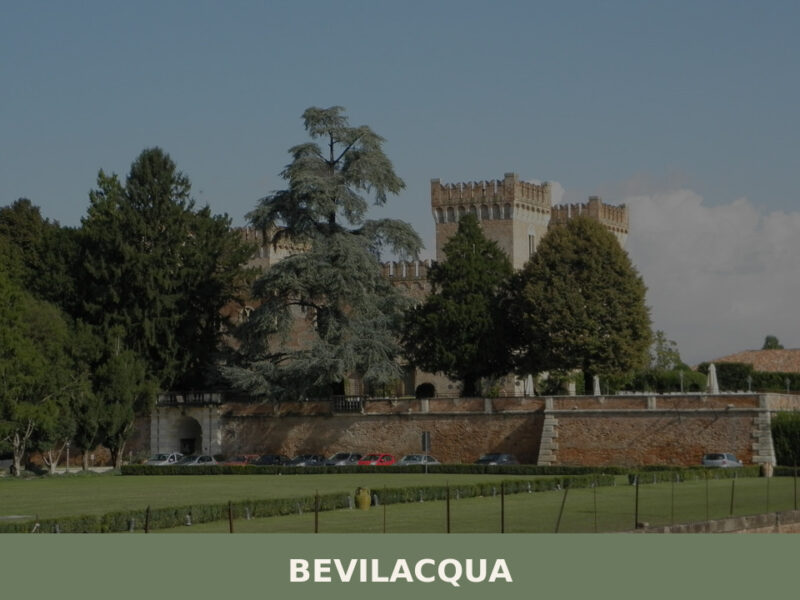
The territory surrounding Boschi Sant’Anna holds several villages worth seeking out for those drawn to the less-visited corners of the Veneto. Just a short drive to the southwest, Bevilacqua rises from the same flat plain but surprises with its remarkable medieval castle, a brick fortress complete with corner towers and a moat — an improbable apparition amid the rice paddies and maize fields of the Bassa Veronese. The castle’s architectural ambition stands in sharp contrast to the rural modesty of its surroundings, making it a compelling companion visit.
For a radically different expression of Veneto’s geographic range, consider the journey north to Cortina d’Ampezzo, the renowned mountain town in the Dolomites at over 1,200 metres above sea level. Where Boschi Sant’Anna is defined by horizontal space — flat fields meeting a low sky — Cortina is all verticality: limestone peaks, forested slopes, and Alpine light. Together, the two places illustrate the extraordinary environmental diversity contained within a single Italian region, from the fog-wrapped lowlands of the Po plain to the crystalline heights of the eastern Alps.
Frequently asked questions about Boschi Sant’Anna
When is the best time to visit Boschi Sant'Anna?
Late July is ideal for experiencing the village's authentic character. The Feast of Saint Anna, the patron saint, takes place on 26 July and brings local celebrations to the community. Summer months offer warm weather across the Veneto plain, though mornings often feature characteristic fog over the irrigation channels. Spring and autumn provide pleasant temperatures for exploring the agricultural landscape and cycling routes through the flat farmland.
What is the patron saint of Boschi Sant'Anna and when is the feast day?
Saint Anna (Sant'Anna) is the village's patron saint, and her feast day is celebrated on 26 July each year. The dedication reflects the area's agricultural heritage, as Saint Anna has long been venerated in farming communities for her association with fertility and harvest cycles. The feast remains an important local event that connects residents to their spiritual and cultural traditions.
How do I reach Boschi Sant'Anna from major cities?
Boschi Sant'Anna is located in the southern Province of Verona in the Veneto plain, approximately 12 metres above sea level. The nearest major city is Verona. Access is primarily by car via regional roads through the flat Veronese countryside. For public transport, check regional bus services connecting smaller Veneto municipalities. The village's position in the agricultural plain means it is best reached by personal vehicle for flexible exploration of the surrounding landscape.
What can visitors do in Boschi Sant'Anna?
Rather than traditional monuments, Boschi Sant'Anna's appeal lies in its rural landscape shaped by water, agriculture, and historical land clearance. Visitors can experience the characteristic Veneto plain environment with its irrigation channels, poplar-lined horizons, and working farmland. The parish church dedicated to Sant'Anna anchors the village centre. Cycling through the flat terrain and observing agricultural rhythms offers authentic insight into this quietly persistent community of 1,390 inhabitants.
What is the etymology and history behind the village's name?
The name Boschi Sant'Anna carries dual significance. 'Boschi' (woods) recalls the dense forests that once covered the lower Veronese plain before medieval land clearance transformed woodland into cultivated fields. 'Sant'Anna' refers to the patron saint honoured by the parish church, a dedication typical in agrarian communities dependent on fertility cycles and harvests. Together, the name reflects a settlement born from gradual landscape transformation rather than strategic or mercantile ambition.
Nearby Villages near Boschi Sant’Anna
In Veneto More villages to discover
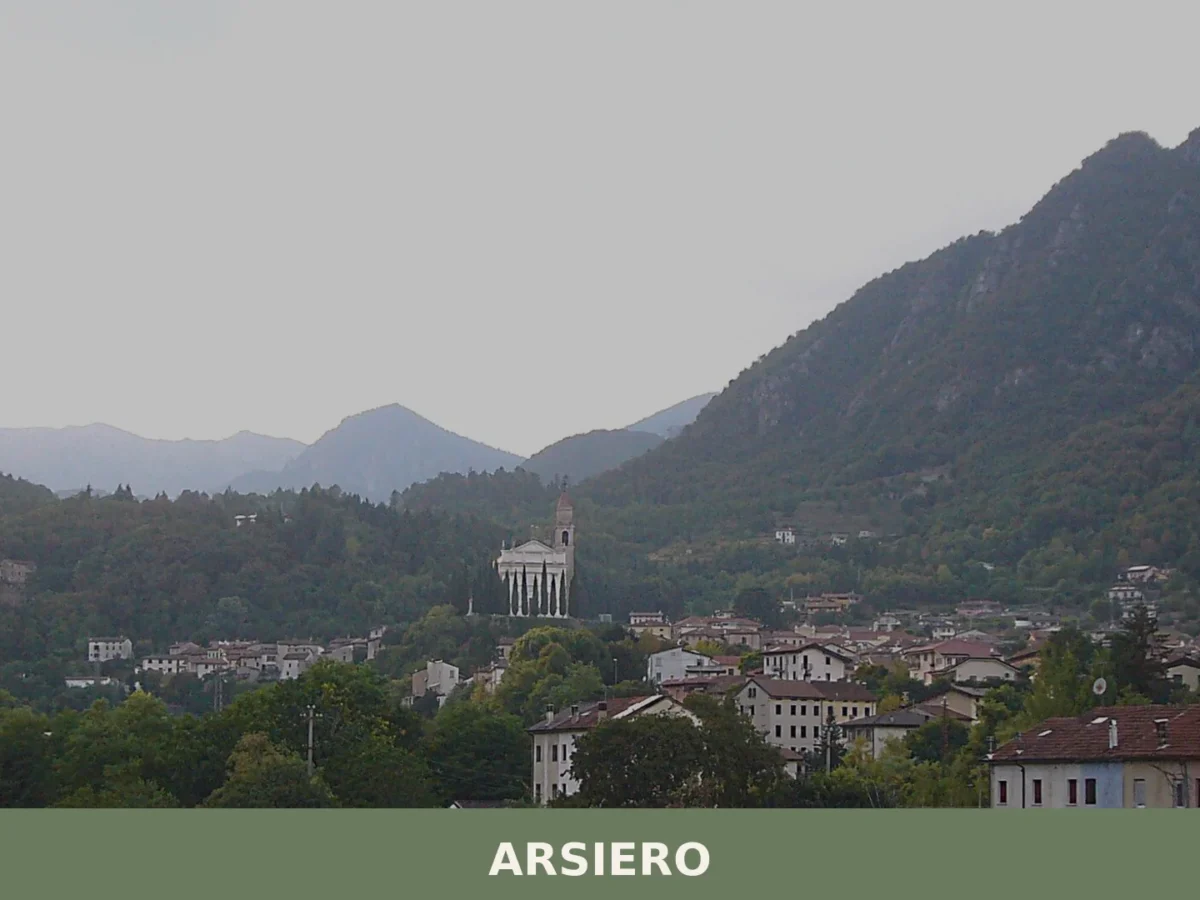
Arsiero
 Mountain
Arsiero is a mountain commune of around 3,045 inhabitants in the province of Vicenza, Veneto, set at 352 metres where the torrents Astico and Posina converge, with a documented history reaching back t
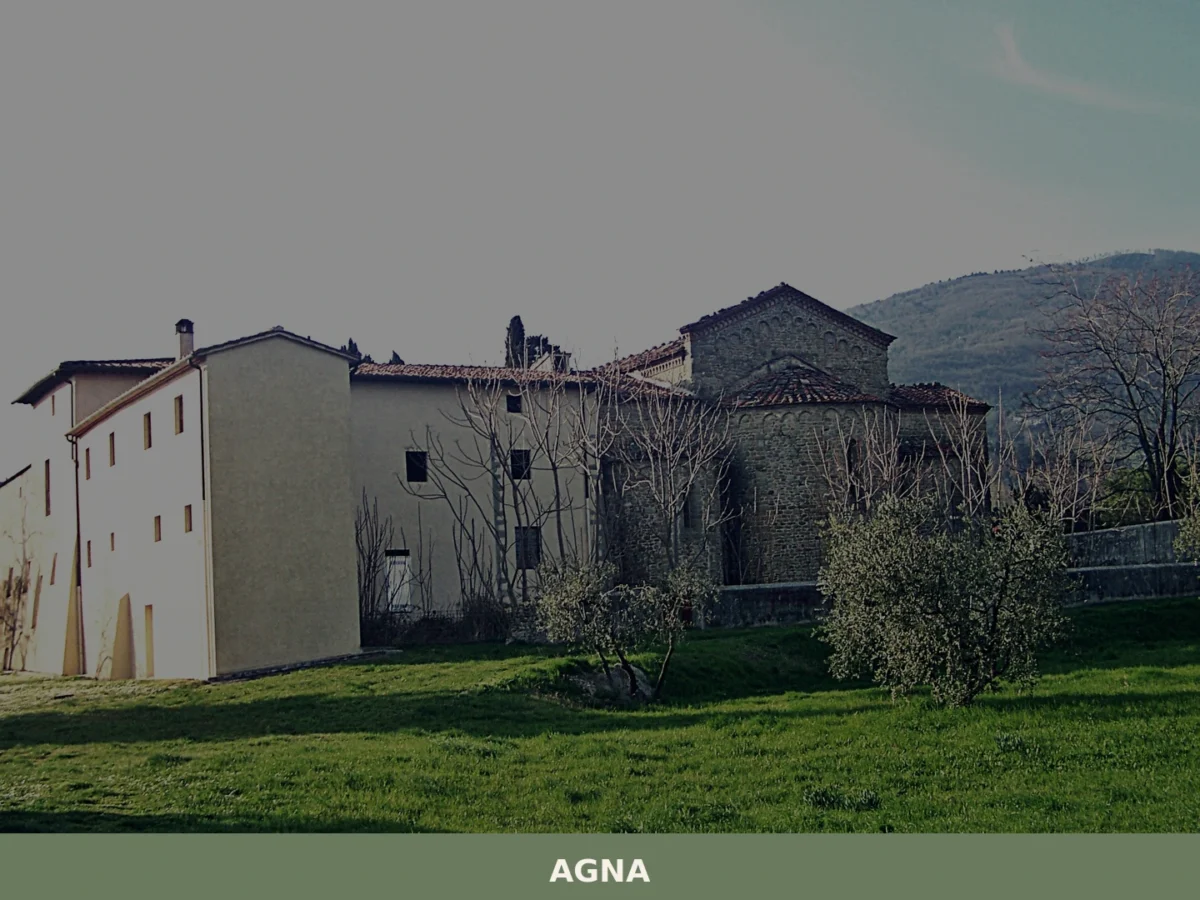
Agna
 Plains
Discover what to see in Agna, a Padova province village of 3,174 people. History, food, travel tips and the canals of the Venetian plain explained.
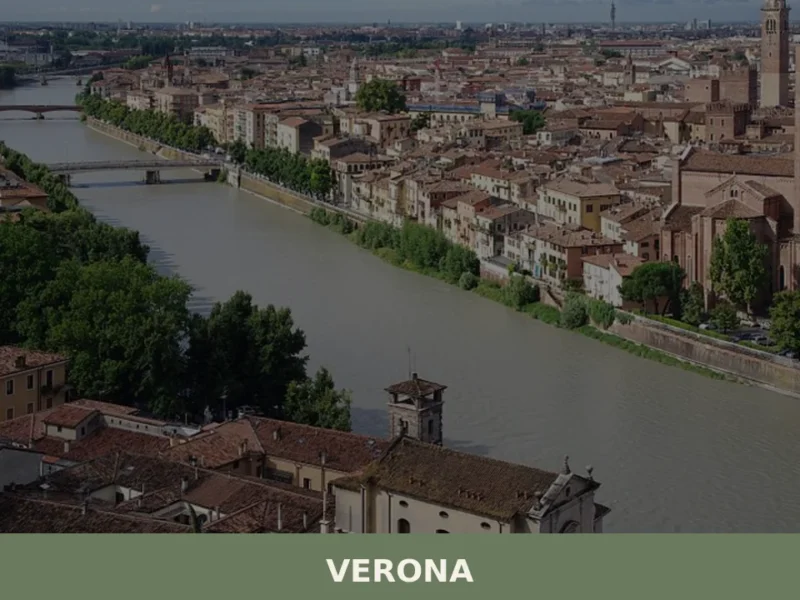
Verona
Plains
What to see in Verona, a UNESCO city of 255,000 people. Explore the Roman Arena, Juliet's House, San Zeno Basilica and local dishes like bollito and pearà. Plan your visit now.
Conegliano
 Hills
Hills
2 reasons to visit: the Renaissance cathedral housing works by native painter Cima, and hillside vineyards producing DOCG Prosecco. A crossroads between plain and mountain, 30 km from Treviso.
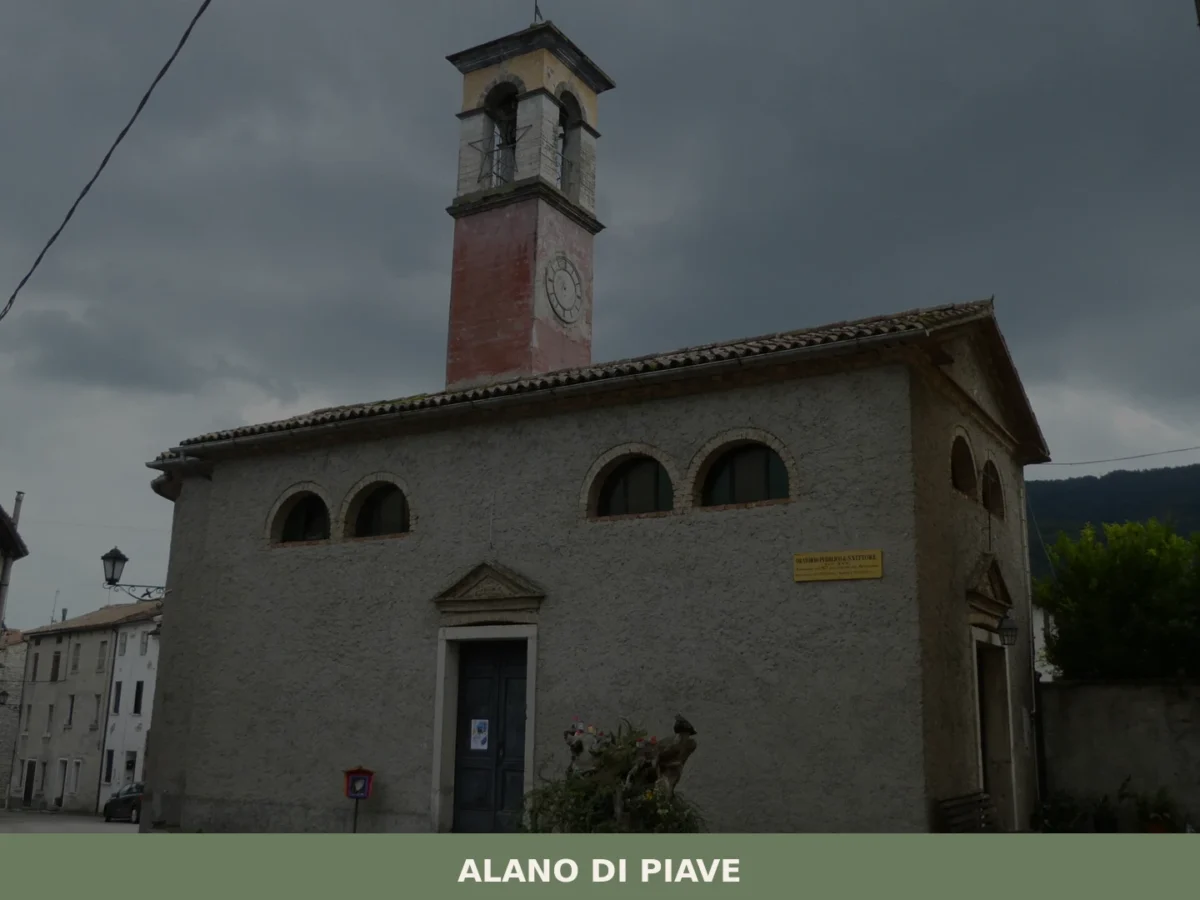
Alano di Piave
Mountain
What to see in Alano di Piave? Explore the 5 main attractions of this Venetian village, blending history and nature. Your complete guide to not miss a thing. Plan your visit!
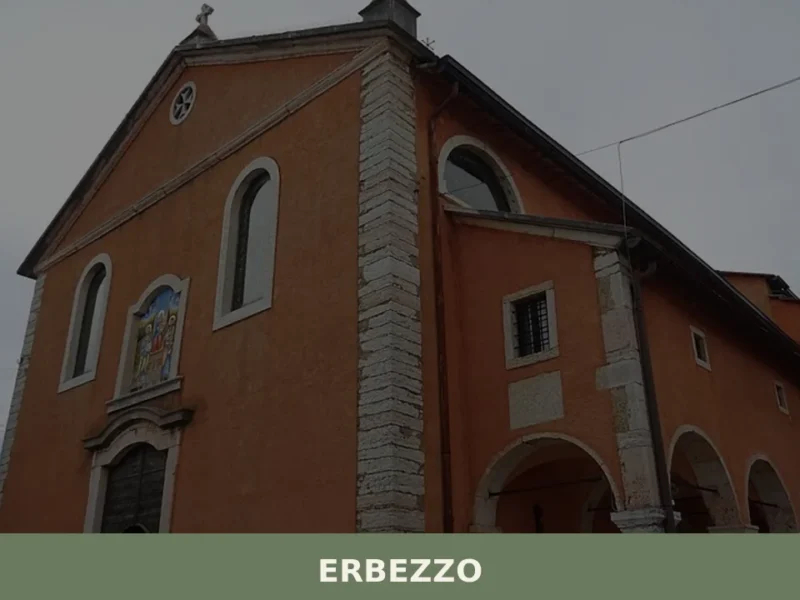
Erbezzo
Mountain
At 1,118 metres above sea level, on the eastern edge of the Veronese Lessinia, Erbezzo has 756 inhabitants spread between the municipal centre and a handful of hamlets scattered across the pastures. It is the highest municipality in the province of Verona and one of the few where the pastoral economy has never fully given […]
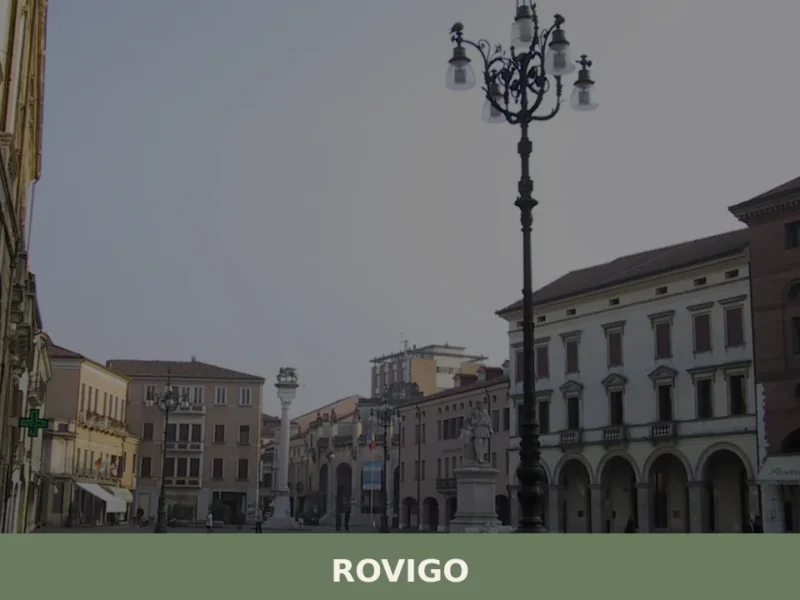
Rovigo
Plains
what to see in rovigo? Discover 5 top attractions in this city of 50,000 residents, from Rovigo Castle to La Rotonda. Explore the Polesine region.

Vittorio Veneto
Hills
Home to a decisive World War I battle and a dual medieval identity, Vittorio Veneto offers 5 exceptional monuments and a rich local food culture in Treviso province.
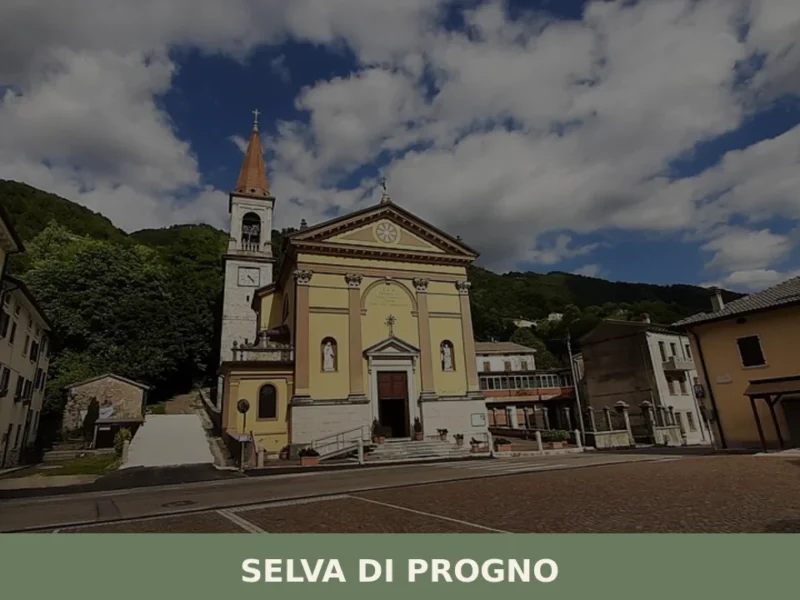
Selva di Progno
Hills
At 570 metres above sea level, where the Val d’Illasi narrows and gives way to the eastern Lessinia plateau, Selva di Progno has 923 inhabitants spread between the main settlement and the scattered hamlets on the surrounding slopes. The municipality belongs to the Comunità Montana della Lessinia and preserves in its place names and local […]
Cinto Caomaggiore
Plains
Cinto Caomaggiore is a small comune on the eastern Veneto plain, where Neolithic greenstone axes, Roman farmsteads, and flooded former quarries now thriving as a major heronry trace thousands of years



🏡 Know Boschi Sant’Anna better than we do?
If you’re a local or have been there, your knowledge matters: add what’s missing or fix a detail on this page.