


What to see in Cappelle sul Tavo, Abruzzo, Italy: discover 5 top attractions, local food traditions and how to get there. Explore this Pescara province comune.
Discover Cappelle sul Tavo
Two Gothic chapels stand on the municipal emblem of a small comune of 4,107 inhabitants in the Province of Pescara, Abruzzo, their silhouettes drawn in the same spare lines that local documents have used to name this place since the eleventh century.
The Tavo river, which gives the town its full name, runs through a stretch of northeastern Abruzzo where the Apennine foothills flatten into agricultural lowland, the horizon opening wide toward the Adriatic coast.
When to visit Cappelle sul Tavo, Italy and how to get there
Cappelle sul Tavo is easily reachable by car from Pescara via local roads. Public transport options may include regional buses. For specific directions, check local transportation services.
Records from the fourteenth century already use the toponym Cappelle, rooting this settlement in a documented medieval past that the modern emblem still carries faithfully.
Knowing what to see in Cappelle sul Tavo starts with understanding the compact scale of the place: the comune sits in the Province of Pescara, roughly 10 km (6.2 mi) north of the regional capital, and its history as an independent municipality dates only to 1905. Visitors to Cappelle sul Tavo find a settlement shaped by its river, its chapel-studded past and the agricultural character of the Pescara plain, with the wider Abruzzo landscape providing day-trip range to mountains, coast and neighbouring medieval villages. The Cappelle sul Tavo highlights include its historical emblem, the Tavo river corridor and the rural traditions of this quietly productive part of central Italy.
History of Cappelle sul Tavo
The name Cappelle appears in written records as far back as the eleventh century, making this one of the earlier documented place-names in the Pescara plain.
Scholars connect it to the presence of small chapels cappelle, devotional structures that once stood among the woodland of the area. That etymology is reinforced by the town’s own civic emblem, which depicts two Gothic chapels side by side, a deliberate heraldic choice that anchors the modern identity of the comune to its medieval origins. The fourteenth century produced further documentary evidence of the same toponym, confirming that the chapels in question were numerous enough and prominent enough to define the locality for successive generations.
For most of its recorded existence, Cappelle sul Tavo was not an independent administrative unit.
It formed part of the municipality of Montesilvano, the larger coastal comune to its southeast, and governed its affairs under that administrative umbrella. The separation came in 1905, when Cappelle sul Tavo was formally constituted as an autonomous comune, a designation that gave it its own mayor, council and civic apparatus.
That moment, relatively recent in Italian municipal terms, marks the point at which the settlement acquired the full legal identity it retains today as a comune of the Province of Pescara in the Abruzzo region of Italy.
The broader regional context matters for understanding how the village developed. The Pescara plain is a corridor of movement between the central Apennines and the Adriatic, and the Tavo river valley was historically one of the routes connecting inland communities to the coast. Villages along this axis tended to develop around agricultural production and small sacred infrastructure rather than defensive fortifications, which explains why the enduring marks on the landscape here are chapels and field systems rather than towers and walls.
The comuni of the Pescara hinterland, including Cappelle sul Tavo, share this lowland agricultural character, distinguishing them from the mountain settlements further west, such as Rocca di Cambio, which developed in entirely different topographic and strategic conditions at elevations above 1,400 m (4,593 ft).
What to see in Cappelle sul Tavo, Abruzzo: top attractions
The Municipal Emblem and the Gothic Chapel Motif
The civic coat of arms of Cappelle sul Tavo carries two Gothic chapels rendered in clean heraldic lines, a direct visual translation of the place-name that has been in use since at least the eleventh century.
Standing in the main square and looking at the institutional buildings, the emblem connects the viewer to a naming tradition documented across eight centuries. What makes this emblem notable is its specificity: the chapels are Gothic in style, not generic ecclesiastical outlines, suggesting that the original structures had a formal architectural character.
The best time to observe and photograph the emblem in detail is during morning light, when the facade of municipal buildings receives direct illumination from the east.
The Tavo River Corridor
The Tavo river defines the geography of the comune and supplies the second element of its modern name, distinguishing it from other settlements with similar chapel-derived toponyms in central Italy.
The river runs through a lowland valley that broadens as it approaches the Adriatic, creating a linear green corridor through the Pescara plain. From the banks, the view west toward the Apennine foothills gives a clear sense of the transition between mountain and coastal Italy that characterises this part of Abruzzo. Visiting in spring, when snowmelt from the mountains increases flow, gives the most complete picture of the river’s role in shaping the agricultural and ecological character of the valley.
The Historical Chapels and Devotional Landscape
The etymology of the town’s name points directly to the presence of small devotional chapels distributed among the former woodland of the area, and several of these sacred structures remain embedded in the fabric of the settlement and its surrounding fields.
These are not monumental buildings but modest constructions, typically featuring plain stone or rendered facades, that served the spiritual needs of farming communities over many centuries.
The fourteenth century documents that mention Cappelle as a toponym imply that these structures were already well established by that period, suggesting construction in the eleventh century or earlier. Walking the agricultural lanes around the town centre, the visitor encounters these chapels as working parts of a still-legible devotional landscape rather than isolated ruins.
The Pescara Plain Panorama and Agricultural Landscape
From the edges of the built area, the Pescara plain extends south and east in a flat agricultural expanse that reaches toward the Adriatic coast, approximately 15 km (9.3 mi) away. The view is one of organised agricultural land: orchards, cereal fields and market garden plots that reflect the productive use of the plain’s deep alluvial soils over many generations. To the west, the Apennine ridge forms a consistent skyline at elevations exceeding 2,000 m (6,562 ft), with snow remaining visible on the higher peaks from November through April.
This juxtaposition of flat coastal plain and high mountain backdrop is a defining visual quality of what to see in Cappelle sul Tavo and the surrounding Pescara province.
The Relationship with Montesilvano and the Pre-1905 Settlement Pattern
Before 1905, Cappelle sul Tavo was administratively part of Montesilvano, and the older settlement pattern reflects this connection, with the built fabric of Cappelle sul Tavo oriented along the routes that linked it to the larger coastal comune.
The separation into an independent municipality created a new civic identity while the physical relationship with Montesilvano remained embedded in the road network and land use pattern. For visitors interested in the administrative and urban history of the Pescara plain, tracing the pre-1905 boundary between the two comuni and reading the landscape against that former division provides a concrete way to understand how small Italian municipalities consolidated and then separated across the nineteenth and twentieth centuries.
The distance between the historic centre of Cappelle sul Tavo and the Montesilvano seafront is approximately 8 km (5 mi).
Local food and typical products of Cappelle sul Tavo
The food culture of the Pescara plain draws on the agricultural character of the lowland territory and on the broader culinary traditions of Abruzzo, a region where shepherding, cereal farming and coastal fishing have historically produced distinct but complementary food systems. The Tavo valley sits within the lowland zone, meaning that its table has traditionally been defined by vegetables, legumes, grain-based preparations and freshwater resources from the river, combined with the sheep and pig products that come down from the mountain economy to the west.
Olive oil production is significant throughout this part of the Pescara province, with groves occupying the lower hill slopes at the transition between plain and foothills. Similar agricultural patterns shape food traditions in nearby Pescara plain villages, as well as in the hill communities further east such as Castilenti, where cereal and olive cultivation have defined the local economy for generations.
Traditional dishes of the Pescara plain share structural features with the wider Abruzzo repertoire.
Maccheroni alla chitarra, egg pasta cut on a stringed wooden frame called a chitarra, is the dominant pasta format throughout the province, typically served with a slow-cooked lamb ragù or a tomato and sweet pepper sauce.
Brodetto di pesce, a firm-textured fish stew seasoned with vinegar and saffron, reflects the proximity to the Adriatic and appears on tables within easy reach of the coast. Pallotte cacio e ova, fried cheese and egg balls poached in tomato sauce, represent the resourceful cucina povera tradition of using minimal animal protein to create a substantial main course.
These dishes are prepared with hard wheat pasta, local eggs, Pecorino-type aged cheese and olive oil as the consistent base ingredients.
The Province of Pescara falls within the production zones of several Abruzzo-wide certified products, though no certification specific to Cappelle sul Tavo itself is documented in the available sources. Olio extravergine di oliva Aprutino Pescarese (DOP) covers olive oil produced in a defined area of the Pescara province, encompassing the hill municipalities at the edge of the plain.
Montepulciano d’Abruzzo (DOC) wine, produced from the Montepulciano grape across a broad Abruzzo zone, accompanies the meat-based dishes of the local table. Pecorino d’Abruzzo, an aged sheep’s milk cheese with a dry, granular texture and a fat content that deepens with maturation, is used both as a table cheese and as the grating element in egg-and-cheese preparations throughout the province.
Local food markets and seasonal fairs in the Pescara plain generally run from late spring through early autumn, with the summer months bringing the highest concentration of outdoor markets selling fresh vegetables, stone fruit and cured meats from producers across the province.
For visitors focused on food, the practical approach is to combine a visit to Cappelle sul Tavo with a stop at the weekly market in Pescara, approximately 10 km (6.2 mi) to the south, where producers from the surrounding comuni bring olive oil, cheese, dried legumes and seasonal produce directly to retail sale.
Festivals, events and traditions of Cappelle sul Tavo
The available documentation on specific festivals and patron saint celebrations in Cappelle sul Tavo is limited to the general religious and civic calendar of the Pescara plain.
The name of the comune itself points to a devotional culture organised around small chapels, and this structure historically generated a calendar of local feasts tied to individual chapel dedications rather than a single major patron saint festival.
In Abruzzo’s smaller comuni, these chapel feasts typically involve a short procession, an outdoor Mass and communal meals prepared by the local association or comitato festa, a volunteer organising committee that manages logistics and fundraising for the event.
The broader seasonal cycle of the Pescara plain includes summer agricultural fairs known as sagre, traditional food festivals at which a single local product takes the central role. These events typically run over a weekend in July or August, combining outdoor eating, folk music and craft stalls. For confirmed details of the current calendar in Cappelle sul Tavo, checking directly with the municipal offices or the Pescara provincial tourism authority before travel is the most reliable approach, as specific dates and dedications can shift from year to year depending on organiser availability and municipal funding.
When to visit Cappelle sul Tavo, Italy and how to get there
The best time to visit Cappelle sul Tavo and the surrounding Pescara plain is late spring, from April through June, when temperatures on the lowland sit between 18°C (64°F) and 26°C (79°F), rainfall is moderate and the agricultural landscape is at its most visually productive.
Early autumn, September and October, offers similar conditions with the addition of harvest activity in the olive groves and vineyards of the nearby hill municipalities.
Summer is warm and dry on the plain, with July and August temperatures regularly reaching 32°C (90°F), which is workable for visitors who plan morning activity and afternoon rest. Winter is mild by Italian standards, rarely dropping below 3°C (37°F) on the plain, but the shorter days and reduced local services make it the least practical season for a visit without a specific event in view.
Getting to Cappelle sul Tavo from Pescara is straightforward by any mode of transport. By car, the A14 Autostrada Adriatica motorway runs along the Adriatic coast, with the Pescara Nord exit approximately 8 km (5 mi) from the comune; from the exit, provincial roads connect directly to the town centre. The Trenitalia rail network serves Pescara Centrale station, from which local bus services reach the Pescara plain municipalities including Cappelle sul Tavo in under 30 minutes.
The nearest major airport is Aeroporto Internazionale d’Abruzzo at Pescara, approximately 12 km (7.5 mi) from the comune, with direct flights from several European cities.
From Rome, the A24 and A25 motorways connect to the Pescara plain in approximately 2 hours 30 minutes by car, making Cappelle sul Tavo a realistic destination for a day trip from the Italian capital. International visitors should be aware that English is not widely spoken in smaller shops and local bars; carrying some euros in cash is practical, as card terminals are not universal in this part of the Pescara province.
For visitors travelling through the inland hill country of the Pescara province, the comune of Tione degli Abruzzi offers a contrasting perspective on Abruzzo’s settlement geography, sitting at a considerably higher elevation in the Apennine interior. Those approaching from the southern Abruzzo hill belt may also find a stop at Fraine a useful way to extend a journey through the region’s varied landscape before descending toward the Pescara plain and Cappelle sul Tavo itself.
Frequently asked questions about Cappelle sul Tavo
What is the best time to visit Cappelle sul Tavo?
Spring is the most rewarding season: mild temperatures make the Tavo river corridor and surrounding agricultural landscape easy to explore on foot, and the Apennine peaks to the west still carry snow, creating a striking backdrop. The feast of the patron saint Pasquale Baylón falls on 17 May, offering a chance to experience a genuine local religious and civic celebration. Autumn brings harvest activity to the olive groves and fields of the Pescara plain. Summer is warm and dry; winter is quiet but perfectly functional as a base for day trips to the Abruzzo mountains.
What are the historical origins of Cappelle sul Tavo?
The place-name Cappelle appears in written records from the eleventh century, making it one of the earlier documented toponyms on the Pescara plain. It derives from the small devotional chapels that once stood among the woodland of the area. Further documentation from the fourteenth century confirms the same toponym. For most of its history the settlement was part of the municipality of Montesilvano; it became an independent comune only in 1905, acquiring its own mayor, council and civic apparatus at that point.
What to see in Cappelle sul Tavo? Main monuments and landmarks
The municipal coat of arms displaying two Gothic chapels is the most distinctive civic symbol and can be observed on institutional buildings in the main square — morning light from the east gives the best view for photography. The devotional chapels embedded in the agricultural lanes around the town centre are small, plain stone or rendered structures that form a still-legible sacred landscape documented since at least the fourteenth century. The Tavo river corridor offers a green linear route through the lowland, with views west toward the Apennine ridge.
What are the main natural or scenic attractions of Cappelle sul Tavo?
The Tavo river is the principal natural feature, running through a broad lowland valley that opens toward the Adriatic coast approximately 15 km to the east. Spring visits, when snowmelt increases the river's flow, give the fullest sense of its ecological character. From the edges of the built area the Pescara plain extends in a wide agricultural panorama of orchards, cereal fields and market gardens, with the Apennine ridge — snow-capped from November through April — forming a consistent skyline above 2,000 m to the west.
Where to take the best photos in Cappelle sul Tavo?
The facade of the municipal buildings in the main square offers the clearest view of the Gothic chapel heraldic motif; photograph in the morning when direct eastern light illuminates the stonework. The banks of the Tavo river provide a west-facing composition combining the river in the foreground with the Apennine foothills behind — most dramatic in spring and in the November-to-April window when snow is visible on the higher peaks. The open edges of the village looking south across the Pescara plain give a wide agricultural panorama toward the coast.
What can you do in Cappelle sul Tavo? Activities and experiences
Cappelle sul Tavo works well as a base for exploring the Pescara plain and its surroundings. Walking the agricultural lanes around the village allows visitors to encounter the historic devotional chapels that gave the town its name. The Tavo river corridor is suitable for relaxed riverside walks. The town's proximity to Pescara — roughly 10 km to the south — makes day trips straightforward, while the Apennine ski resorts and Gran Sasso massif are accessible within an hour's drive to the west. The patron feast of Pasquale Baylón on 17 May is the main annual community event.
Who is Cappelle sul Tavo suitable for? Families, couples, hikers, solo travelers?
Cappelle sul Tavo suits travellers who prefer quiet, authentic lowland Abruzzo over resort tourism. Couples and independent travellers interested in rural Italian landscapes, medieval toponymy and agricultural heritage will find it rewarding. Families benefit from the flat terrain of the Tavo valley and the short drive to both Pescara's services and the Adriatic beaches. It is not primarily a destination for mountain hikers, who are better served by villages further west, but the location makes it a practical and affordable base for combining coast, plain and Apennine excursions in a single stay.
What to eat in Cappelle sul Tavo? Local products and specialties
The table in this part of the Pescara plain follows the wider Abruzzo tradition. Maccheroni alla chitarra — egg pasta cut on a stringed wooden frame — served with slow-cooked lamb ragù or a tomato and sweet pepper sauce is the dominant pasta format. Pallotte cacio e ova, fried balls of Pecorino-type cheese and egg poached in tomato sauce, represent the local cucina povera. Brodetto di pesce, the vinegar-and-saffron fish stew of the Adriatic coast, appears frequently given the proximity to the sea. Olive oil from the lower hill slopes of the Pescara province is the consistent base fat in local cooking.
📷 Photo Gallery — Cappelle sul Tavo
Getting there
Piazza Guglielmo Marconi, 65010 Cappelle sul Tavo (PE)
Nearby Villages near Cappelle sul Tavo
In Abruzzo More villages to discover
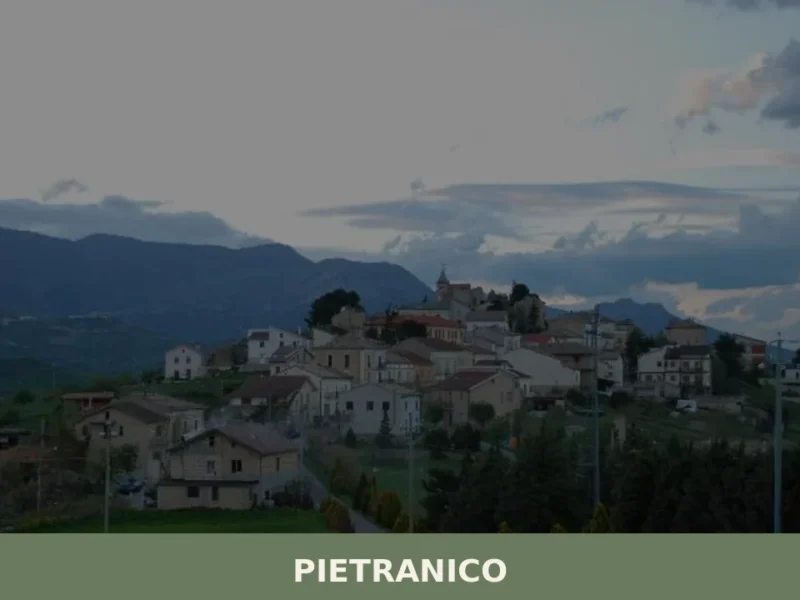
Pietranico
 Hills
Hills
What to see in Pietranico, Abruzzo, Italy: 506 inhabitants, a medieval castle site, and wind-swept hilltop views. Discover top attractions and how to get there.
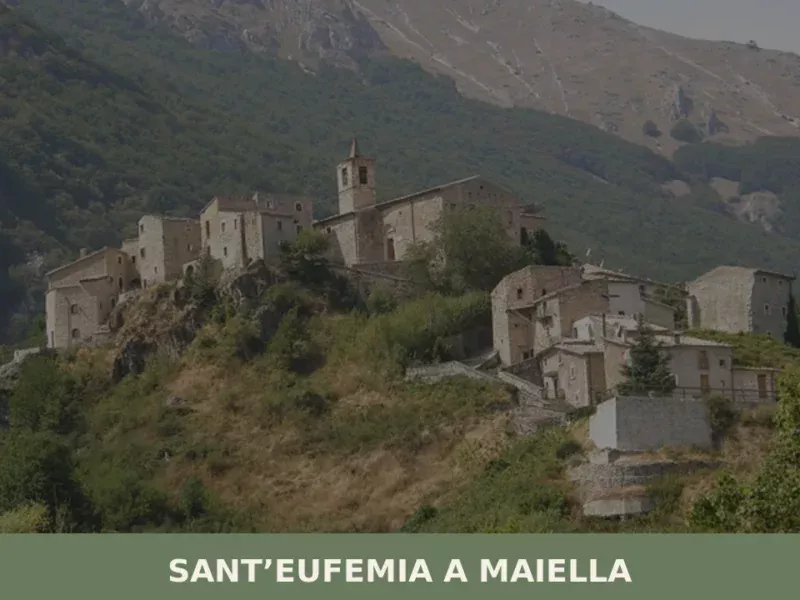
Sant’Eufemia a Maiella
 Mountain
Scopri le 5 attrazioni imperdibili di Sant'Eufemia a Maiella, un pittoresco borgo dell'Abruzzo tra natura, storia e tradizioni montane.
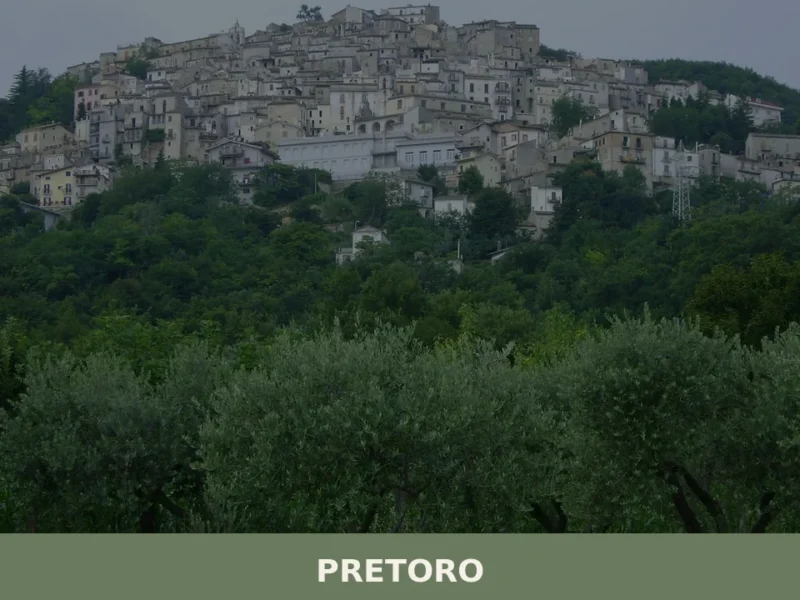
Pretoro
Hills
Pretoro is a compact medieval settlement in Chieti province, Abruzzo, clinging to the eastern face of the Maiella massif at around 539 metres above sea level.
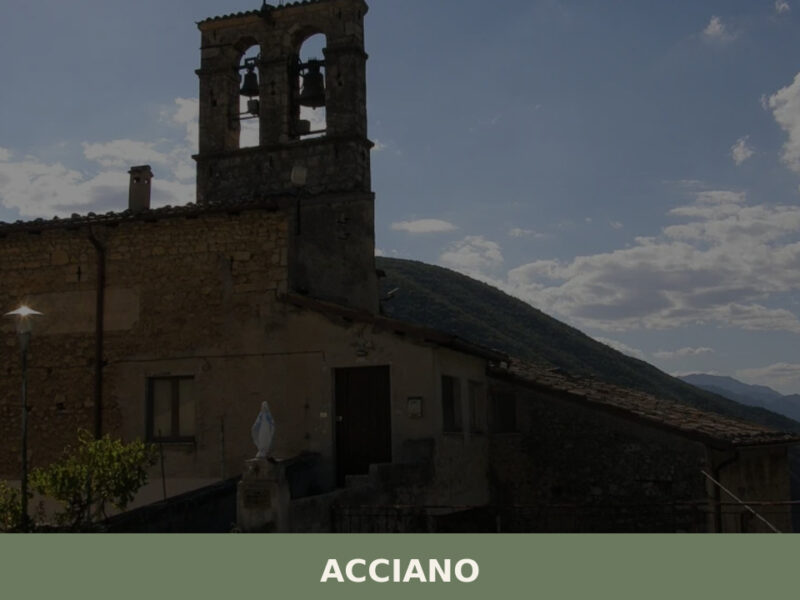
Acciano
Mountain
Morning light falls across stone walls the colour of dried wheat, and the only sound is water — a fountain somewhere below the main road, feeding a trough that has served this valley for centuries. Acciano sits in the Aterno Valley south of L’Aquila, a commune of just 339 inhabitants spread across a handful of […]
Carsoli
Mountain
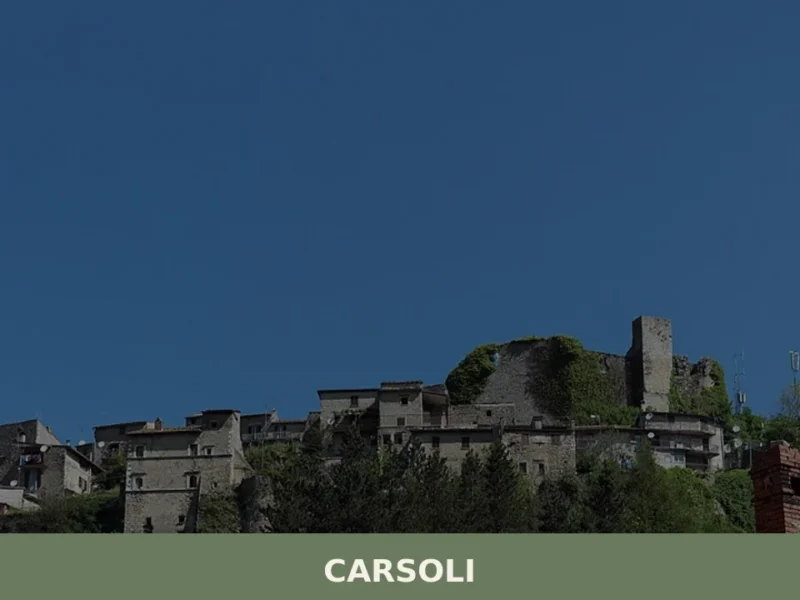
At 616 metres above sea level, along the route connecting Rome to L’Aquila across the Piana del Cavaliere, Carsoli has 5,518 inhabitants and occupies a position that over the centuries has defined its role as a junction between Lazio and the interior of the Apennines. Asking what to see in Carsoli means exploring a territory […]
Cappadocia
Mountain
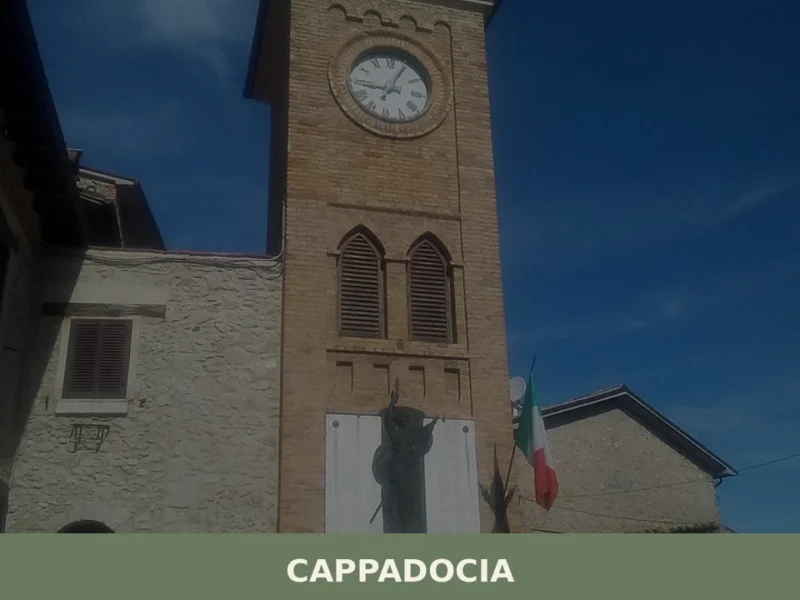
Cappadocia: discover historic churches and natural trails. Plan your visit today and experience the authenticity of this Abruzzo village.
Vicoli
Hills
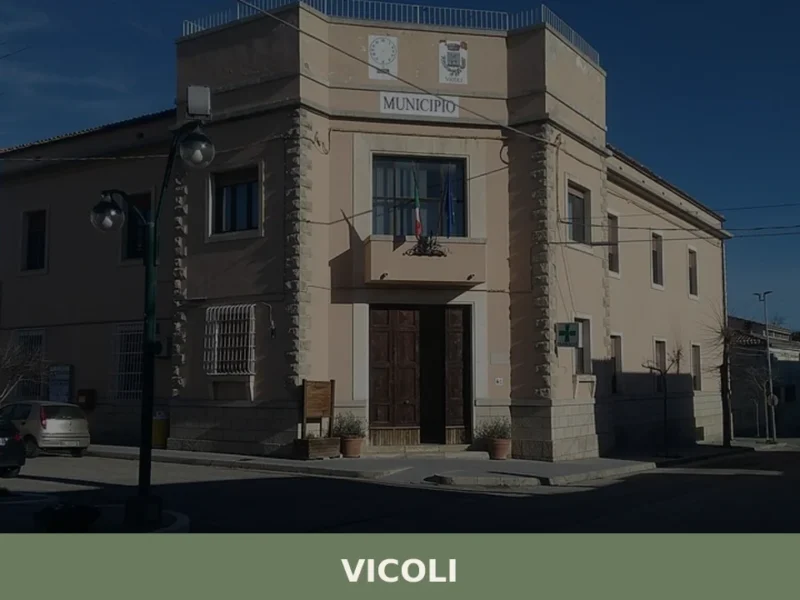
what to see in Vicoli, Italy: Discover the historical castle ruins and ancient village core of this Abruzzo comune, home to 394 inhabitants. Explore its medieval past.
Sant’Eusanio Forconese
Mountain
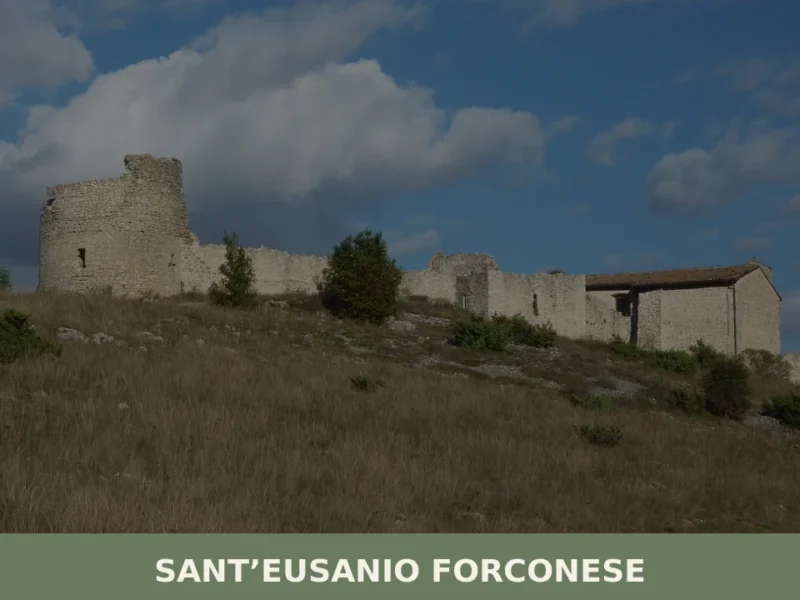
What to see in Sant’Eusanio Forconese? Explore 5 main attractions of this Abruzzo village, from the Castle to panoramic views. Plan your visit with our guide!
Villa Sant’Angelo
Mountain
What to see in Villa Santu2019Angelo? Discover 5 must-see attractions and the history of the ancient village. Plan your guided visit now!
Montefino
Hills
Montefino is a hilltop medieval borough of 919 residents at 377 metres in the Teramo province of Abruzzo, defined by its Norman-era castle, terraced vineyards and unhurried inland character.


🏡 Know Cappelle sul Tavo better than we do?
If you’re a local or have been there, your knowledge matters: add what’s missing or fix a detail on this page.