


Boville Ernica
 Hills
Hills
What to see in Boville Ernica, Lazio, Italy: 18 intact medieval towers, a mosaic attributed to Giotto, and pre-Roman walls. Discover the complete travel guide.
Discover Boville Ernica
Eighteen towers rise above the Liri, Cosa and Sacco valleys, alternating round and square forms along a circuit of medieval walls that has never been breached or dismantled. The hill on which the town stands commands three valleys at once, a position that determined every major decision its inhabitants made across more than a thousand years.
Inside the church of San Pietro Ispano, a mosaic attributed to Giotto occupies a wall of the same building that shelters an early-Christian sarcophagus and two medieval reliquaries.
The stone is old enough that its original name, Bauco, predates written Latin records of the area.
Deciding what to see in Boville Ernica means working through a concentration of pre-Roman, medieval and Renaissance layers packed onto a single hilltop at roughly 400 m (1,312 ft) above sea level, in the province of Frosinone, Lazio, Italy. Visitors to Boville Ernica find intact Pelasgic walls from the pre-Roman period, a fully preserved castle with 18 turrets and towers, and a cluster of Renaissance palaces arranged along streets that follow the original medieval grid. The town is also listed among I Borghi più belli d’Italia, the national register of Italy’s most beautiful villages, which currently numbers around 350 certified comuni across the country.
History of Boville Ernica
The oldest layer of the town’s history reaches back before any Roman documentation.
The primordial settlement carried the name Bauco, a word connected to the agricultural worship of the god Bove, a divinity associated with the ox as a symbol of fertility and agricultural labour. In the archaeological area of Monte Fico, excavations brought to light votive statuettes depicting oxen, confirming that a temple once stood on the same elevated ground where the medieval town would eventually take shape. The Pelasgic walls — massive dry-stone constructions attributed to pre-Roman Italic populations — survive in sections that remain structurally legible today.
The settlement’s position changed dramatically between the 9th and 10th centuries.
Saracen raids, followed by Hungarian incursions across the Italian peninsula, made the lower plains too exposed to defend. The population moved uphill onto Monte Fico, fortifying the site and transforming it into one of the most heavily defended towns in the region.
The castle and its ring of 18 turrets and towers date from this period of consolidation, built to withstand repeated external pressure rather than for any ceremonial purpose. The alternating round and square tower forms along the walls reflect different construction phases and functional priorities — round towers offered better deflection against projectiles, square ones provided more usable interior space.
By the Renaissance, Boville Ernica had stabilised sufficiently for its noble families to commission palaces and endow churches. The Simoncelli family, one of the town’s prominent noble lineages, held a private chapel inside the church of San Pietro Ispano. The same church accumulated a remarkable concentration of objects across different centuries: an early-Christian sarcophagus, reliquaries connected to San Pietro Ispano and Santa Lucia, a bas-relief by Sansovino, and a mosaic attributed to Giotto.
The town also produced Vincenzo Paglia, born in 1945, who went on to become a Roman Catholic bishop.
Boville Ernica’s documented continuity from pre-Roman agricultural cult through medieval fortification to Renaissance patronage makes its physical fabric unusually legible for a town of its size. Travellers interested in comparable medieval hill settlements in Lazio might also look at Arpino, which shares both the Frosinone provincial context and a similarly layered pre-Roman and medieval history.
What to see in Boville Ernica, Lazio: top attractions
The Pelasgic Walls
The Pelasgic walls are the oldest surviving structure in Boville Ernica, built from large, unworked stone blocks fitted without mortar in the dry-stone technique associated with pre-Roman Italic populations across central Italy. Their presence on Monte Fico confirms that the site was already fortified or ritually significant before any Roman administrative record of the area exists. Standing alongside them, a visitor can measure individual blocks by eye — some exceed a metre in length — and understand immediately why later medieval builders chose the same elevated ground rather than starting fresh.
The walls are best viewed in the morning, when the light rakes across the stone surface and the individual block courses are easiest to read.
The Castle and Medieval Walls with 18 Towers
The castle complex and its surrounding circuit of medieval walls define the skyline of Boville Ernica from every approach road.
The circuit incorporates 18 turrets and towers, alternating between round and square forms, all described in historical records as standing completely intact — a level of preservation rare for fortifications of this age in central Lazio. The round towers cluster at the most exposed angles of the perimeter, while square towers mark the more sheltered sections. Walking the outer edge of the walls takes roughly 30 to 40 minutes at a steady pace and reveals the full logic of the defensive system: the hill’s natural drop on three sides did most of the work, and the walls extended that advantage.
Access is on foot from the historic centre.
The Church of San Pietro Ispano
The church of San Pietro Ispano was erected in the 12th century over a natural grotto in which the patron saint is documented to have lived for a significant period of his life. The grotto itself remains visible beneath the church structure, accessible from the interior. Inside, the building holds an early-Christian sarcophagus, two reliquaries — one attributed to San Pietro Ispano, the other to Santa Lucia — and a chapel that once belonged to the noble Simoncelli family.
The most discussed object in the church is a mosaic attributed to Giotto, whose workshop was active in central Italy during the late 13th and early 14th centuries. A bas-relief by Sansovino completes the interior’s range of periods and techniques. The church remains an active place of worship, so visits during services require discretion.
The Archaeological Area of Monte Fico
Monte Fico is the elevated ground on which both the ancient cultic site and the subsequent medieval town were built, giving it a double archaeological identity.
Excavations here produced votive statuettes featuring oxen, physical evidence of the pre-Roman worship of the god Bove from which the original settlement name Bauco derives. The same area contained a temple dedicated to this divinity, whose structural remains underlie later medieval construction. For visitors interested in the sequence from pre-Roman cult to medieval fortification, Monte Fico is the place where both phases are physically superimposed. The site sits within the historic centre, so reaching it requires no separate transport — it is effectively the ground beneath the town itself.
The Renaissance Palaces
Several Renaissance palaces line the streets of Boville Ernica’s historic centre, built during the period of relative stability that followed the medieval fortification campaigns.
Their facades reflect the architectural vocabulary of 15th and 16th-century central Italian noble construction: carved stone portals, structured window surrounds, and proportioned courtyard layouts.
The Simoncelli family, documented in connection with the church of San Pietro Ispano, represent the type of local patronage that funded both palace construction and ecclesiastical endowment during this period. The palaces are best observed on foot, moving through the street grid of the historic centre, where the scale of individual buildings becomes apparent relative to the narrow lanes that separate them. Early afternoon, when the light is direct, brings out the texture of the stone facades most clearly.
Local food and typical products of Boville Ernica
The agricultural character of the territory around Boville Ernica has shaped its food culture across a long period. The town sits in the Sacco and Liri river valleys, a zone in the province of Frosinone where cereal cultivation, livestock farming and small-scale vegetable production have historically coexisted. The original settlement name Bauco, linked to the worship of the ox as a symbol of agricultural labour, is itself a reminder that farming was the foundation of every economic activity in this area for centuries.
The culinary tradition that results from this geography is practical and ingredient-focused, built around what the land produced rather than imported techniques or luxury goods.
The typical dishes of the Frosinone area, of which Boville Ernica’s table is a local expression, rely heavily on pasta, legumes, cured pork and seasonal vegetables.
Pasta e fagioli, a thick soup of egg pasta with borlotti beans, dried chilli and local olive oil, appears on tables throughout the year but is particularly associated with the colder months when the hill temperature drops significantly. Sagne e fagioli, a flat ribbon pasta cooked directly into a bean broth with rosemary and garlic, follows the same logic of minimal waste and maximum caloric density. Cured meats from pigs raised on the surrounding farms — including local salami and guanciale — provide the fat base for many sauces.
Pecorino cheese, produced from sheep grazed on the hill pastures of the province, appears both as a table cheese and grated over pasta dishes.
The sources available for Boville Ernica do not document specific certified products — such as DOP, IGP or STG designations — directly associated with the comune itself. The broader Frosinone province participates in several Lazio-wide food certifications, but attributing specific product designations to Boville Ernica without direct confirmation would go beyond what the available records support.
Visitors looking for certified local products should inquire at the municipal offices or any local food shop in the historic centre, where producers from the surrounding valleys typically supply directly.
For those visiting in the warmer months, the surrounding agricultural territory produces fresh vegetables — particularly tomatoes, peppers and courgettes — that appear in local cooking from June through September. Small family-run shops and occasional market stalls in the piazza are the most direct points of purchase for locally sourced ingredients.
Carrying cash in euros is practical here, as smaller vendors and family-run food shops in the historic centre frequently do not operate card payment systems.
Festivals, events and traditions of Boville Ernica
The patron saint of Boville Ernica is San Pietro Ispano, whose life is directly commemorated in the architecture of the town’s most significant church. The church of San Pietro Ispano was built over the grotto where the saint lived, and the reliquary attributed to him is preserved inside the building. The patronal festival follows the Catholic liturgical calendar for the saint, and the church serves as the focal point for the observance.
The two reliquaries — one for San Pietro Ispano and one for Santa Lucia — are the physical objects around which the town’s religious identity has been organised for centuries.
The broader calendar of events in Boville Ernica reflects the pattern common to hill towns of this size in central Lazio: religious observances tied to the liturgical year, periodic local markets connected to agricultural cycles, and community gatherings in the historic centre.
The borghi designation — membership of I Borghi più belli d’Italia — brings a degree of cultural tourism traffic that supports local events and temporary exhibitions during the spring and summer months, though specific dates and programmes vary by year and are best confirmed with the municipal administration before visiting.
When to visit Boville Ernica, Italy and how to get there
The best period to visit Boville Ernica falls between late April and early October, when temperatures on the hill are moderate and the surrounding valleys are fully green. Spring and early autumn offer the most comfortable walking conditions for exploring the medieval walls and the historic centre on foot — the terrain is steep in places, and summer midday heat between July and August can make extended outdoor movement tiring.
For visitors focused on the church interior and the archaeological area, the season matters less, though summer weekday mornings tend to be quieter than weekends. International visitors planning a trip around the town’s patronal festival should contact the municipality directly for the current year’s programme dates.
Boville Ernica, Lazio, Italy lies in the province of Frosinone, approximately 90 km (56 mi) southeast of Rome, making it a practical destination for a day trip from the capital.
By car, the most direct route from Rome follows the A1 motorway south toward Naples, exiting at Frosinone, then continuing east toward Boville Ernica on the provincial road network — a total drive of around 1 hour 15 minutes to 1 hour 30 minutes depending on traffic at the Rome ring road. By train, the nearest mainline station is Frosinone, served by Trenitalia regional services from Roma Termini, with a journey time of approximately 55 to 70 minutes. From Frosinone station, a local bus or taxi covers the remaining distance to Boville Ernica.
The nearest international airport is Rome Fiumicino (Leonardo da Vinci), approximately 115 km (71 mi) from the town. For those arriving by road from Rome, the hill road approaching Boville Ernica involves a final ascent that is narrow in sections — driving carefully and parking at the lower car park before entering the historic centre on foot is the most practical approach. English is not widely spoken in smaller shops and local eateries in the town, so carrying a translation app and sufficient cash in euros makes the visit more straightforward.
Travellers who want to extend their stay in the Frosinone hill-town circuit can combine Boville Ernica with a visit to Anticoli Corrado, another Lazio hill settlement listed among I Borghi più belli d’Italia, or look further north toward the Sabina hills, where Belmonte in Sabina offers a comparable scale of medieval fabric in a different geographical sub-region of Lazio.
Both are reachable from Rome without requiring an overnight stop, and pairing either with a visit to Boville Ernica makes a full-day circuit with sufficient variety in landscape and historical period to justify the combination.
Frequently asked questions about Boville Ernica
What is the best time to visit Boville Ernica?
Spring (April–June) and early autumn (September–October) offer the most comfortable conditions for exploring the hilltop historic centre at 450 m above sea level, with mild temperatures and clear views over the Liri, Cosa and Sacco valleys. Summer brings warmer days but the altitude keeps heat manageable. The most atmospheric date in the local calendar is 11 March, the feast of the patron saint San Pietro Ispano, celebrated with religious ceremonies centred on the church dedicated to him. Winter visits are quieter and the stone facades of the medieval walls and Renaissance palaces are especially photogenic on clear days.
What are the historical origins of Boville Ernica?
The settlement predates Roman records under the name Bauco, linked to agricultural worship of the god Bove, an ox deity symbolising fertility. Votive ox statuettes uncovered at Monte Fico confirm a pre-Roman cult site on the same hilltop. Pre-Roman Italic populations built Pelasgic dry-stone walls there, still visible today. Between the 9th and 10th centuries, Saracen and Hungarian raids forced inhabitants from the plains uphill, where they built the castle and circuit of 18 towers. By the Renaissance, noble families such as the Simoncelli commissioned palaces and endowed the church of San Pietro Ispano with significant artworks.
What to see in Boville Ernica? Main monuments and landmarks
The four essential sites are: the Pelasgic walls on Monte Fico (pre-Roman dry-stone blocks, best seen in morning light); the medieval castle circuit with 18 intact alternating round and square towers (a 30–40 minute walk around the perimeter, accessed on foot from the centre); the church of San Pietro Ispano, housing a mosaic attributed to Giotto, a bas-relief by Sansovino, an early-Christian sarcophagus, and the grotto where the patron saint lived; and the Renaissance palaces lining the historic street grid. The town is also listed among I Borghi più belli d'Italia. No entry fees are documented for the walls or palaces; the church is an active place of worship.
Where to take the best photos in Boville Ernica?
The most rewarding vantage points are along the outer circuit of the medieval walls, where the 18 towers frame views simultaneously over the Liri, Cosa and Sacco valleys — a triple panorama that is unique to this hilltop position. Morning light rakes across the Pelasgic wall blocks and brings out individual stone courses clearly. Early afternoon is best for the Renaissance palace facades along the narrow lanes of the historic centre, when direct sunlight reveals the carved portal stonework. The approach roads to Boville Ernica also offer classic profile shots of the tower-studded silhouette rising above the three valleys.
Are there museums, churches or historic buildings to visit in Boville Ernica?
The principal historic building is the 12th-century church of San Pietro Ispano, built over the grotto where the patron saint lived. Its interior holds a mosaic attributed to Giotto, a bas-relief by Sansovino, an early-Christian sarcophagus, and two medieval reliquaries. The church remains active, so visits during services require discretion. The castle complex and the 18-tower medieval wall circuit are structurally intact and accessible on foot. The archaeological area of Monte Fico, where pre-Roman votive statuettes were excavated, is integrated within the historic centre. Several Renaissance palaces with carved stone portals line the original medieval street grid and are observable from the public lanes.
What can you do in Boville Ernica? Activities and experiences
The most direct activity is a self-guided walking circuit of the medieval walls, which takes 30 to 40 minutes at a steady pace and connects all 18 towers. The historic centre is compact enough to cover fully on foot in a half-day, moving between the Pelasgic walls, the castle, the church of San Pietro Ispano and the Renaissance palace facades. The 11 March feast of San Pietro Ispano provides a focused cultural experience tied to the town's patron. The surrounding Sacco and Liri valley landscape, visible from multiple points along the walls, suits straightforward scenic walks in the provincial Frosinone hill territory.
Who is Boville Ernica suitable for?
Boville Ernica suits travellers with an interest in layered Italian history — pre-Roman, medieval and Renaissance phases are all physically present and legible within a single compact hilltop. Couples and independent travellers who prefer slow, off-the-beaten-path destinations over crowded sites will find the intact medieval walls and uncrowded streets appealing. Art history enthusiasts are drawn specifically by the Giotto-attributed mosaic and Sansovino bas-relief in the church of San Pietro Ispano. The terrain is hilly and the site is accessed on foot, so visitors should be comfortable with uneven stone surfaces. Families with older children interested in medieval fortifications will also find the 18-tower circuit engaging.
What to eat in Boville Ernica? Local products and specialties
The local table reflects the agricultural tradition of the Frosinone hill territory. Pasta e fagioli — thick egg pasta with borlotti beans, dried chilli and local olive oil — is a year-round staple, especially in cooler months when the hilltop temperature drops noticeably. Sagne e fagioli, flat ribbon pasta cooked directly into a bean and rosemary broth, follows the same principle of simple, calorie-dense cooking. Cured pork products including local salami and guanciale form the fat base of many sauces, and pecorino from sheep grazed on provincial hill pastures appears both as a table cheese and grated over pasta. These are area-wide specialties of the Frosinone province rather than certified DOP designations specific to Boville Ernica.
📷 Photo Gallery — Boville Ernica


Nearby Villages near Boville Ernica

In Lazio More villages to discover
Cantalupo in Sabina
Hills
What to see in Cantalupo in Sabina: a hill village at 297 m in Rieti with 1,738 residents. Explore the medieval centre, the San Biagio feast and PAT-certified guanciale. Plan your visit now.
Bagnoregio
Hills
 Lake
Lake
What to see in Bagnoregio, Lazio, Italy: explore Civita di Bagnoregio, the birthplace of St. Bonaventure, 90 km from Rome. Discover top attractions and local food.
Lubriano
Hills
Lubriano has 864 inhabitants and occupies a tuff plateau at 441 metres above sea level, separated from the more famous Civita di Bagnoregio by a calanchi valley nearly two hundred metres deep. The municipal boundary runs along the edge of a gorge that geologists classify as one of the most active in Tuscia for erosion. […]
Casperia
Hills
What to see in Casperia, a hilltop village at 397 m in Rieti province: medieval centre, 3 PAT-certified products including guanciale. Plan your visit and where to stay.
Bassano in Teverina
Hills
Standing at 304 metres above sea level, with a population of 1,260, Bassano in Teverina occupies a tuff plateau overlooking the Tiber valley in the province of Viterbo. The village owes the second part of its name to the river that flows just a few kilometres to the east — a geographical reference that distinguishes […]
Amatrice
 Mountain
What to see in Amatrice? Explore the 5 main attractions of this village in Lazio. The complete guide awaits you with useful tips. Plan your visit!
Tessennano
Hills
In the heart of Viterbo’s Tuscia region, 302 meters above sea level, lies Tessennano, a settlement with 284 residents. Its hillside location, distant from major thoroughfares, has defined its profile through the centuries. For those wondering what to see in Tessennano, the village presents a historical layering perceptible in its architecture. The settlement develops around […]
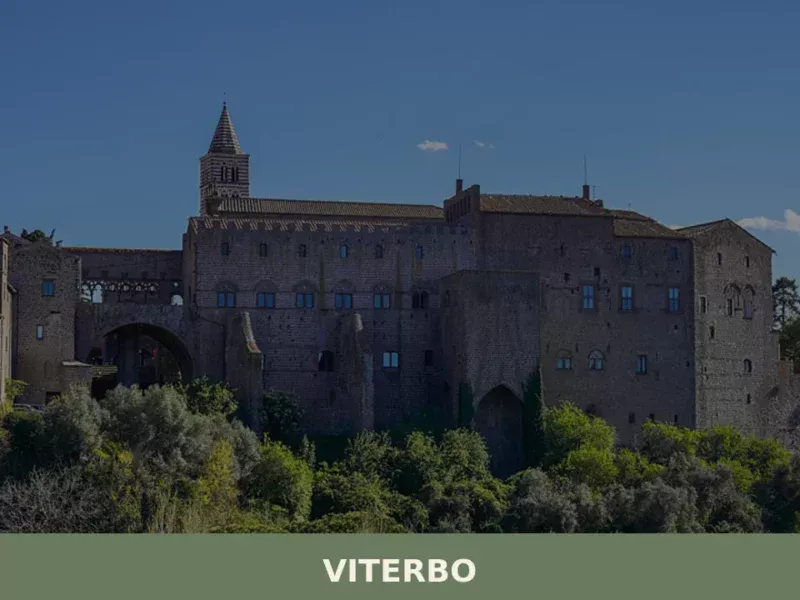
Viterbo
Hills
What to see in Viterbo: Palazzo dei Papi, San Pellegrino, Terme del Bullicame and the UNESCO festival of Santa Rosa. Practical guide with info on how to get there and when to visit.
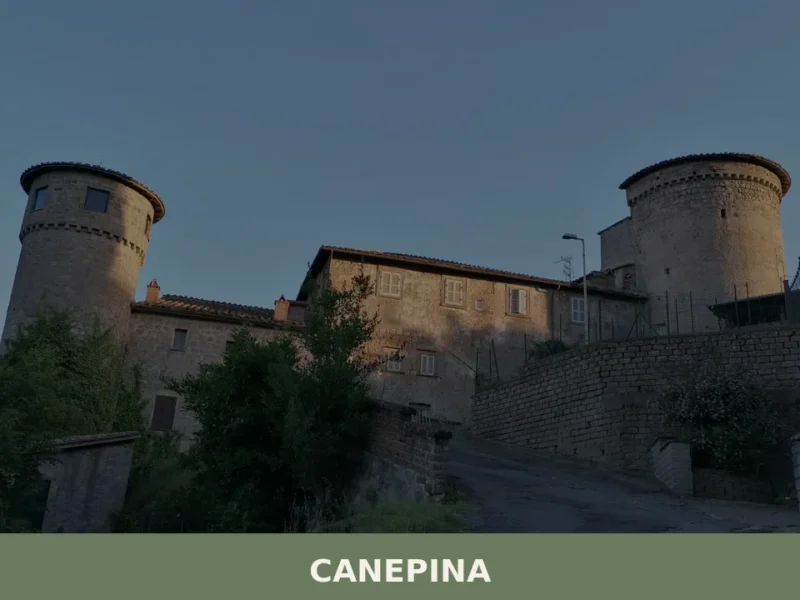
Canepina
Hills
What to see in Canepina, Lazio, Italy: explore this 3,127-inhabitant hill village 60 km from Rome. Discover its hemp heritage, patron saint feast and local cuisine.
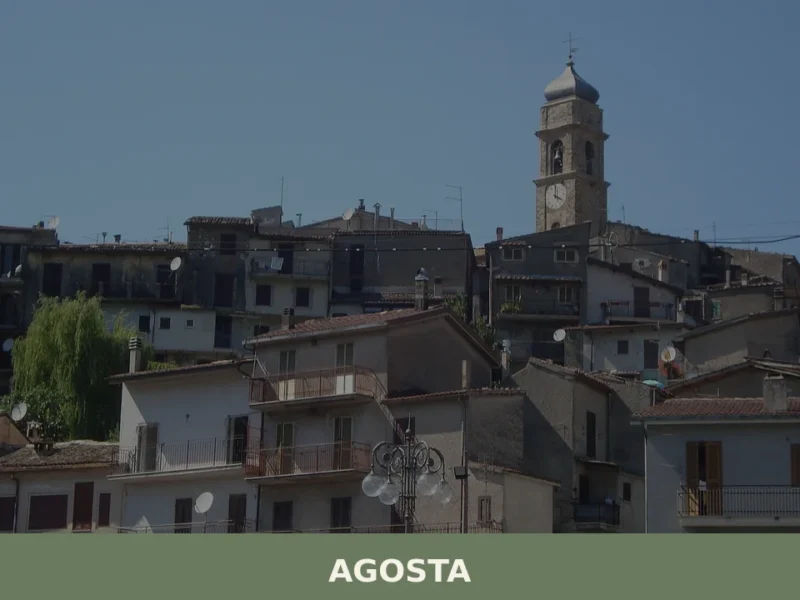
Agosta
Hills
A block of tuff rock rises above the Aniene valley in the Monti Simbruini area, and on its crown sits a tight cluster of stone buildings at 382 m (1,253 ft) above sea level. The Arch of the Cardinal still stands near the point where a bridge once crossed the Aniene river, its masonry dated […]

🏡 Know Boville Ernica better than we do?
If you’re a local or have been there, your knowledge matters: add what’s missing or fix a detail on this page.