


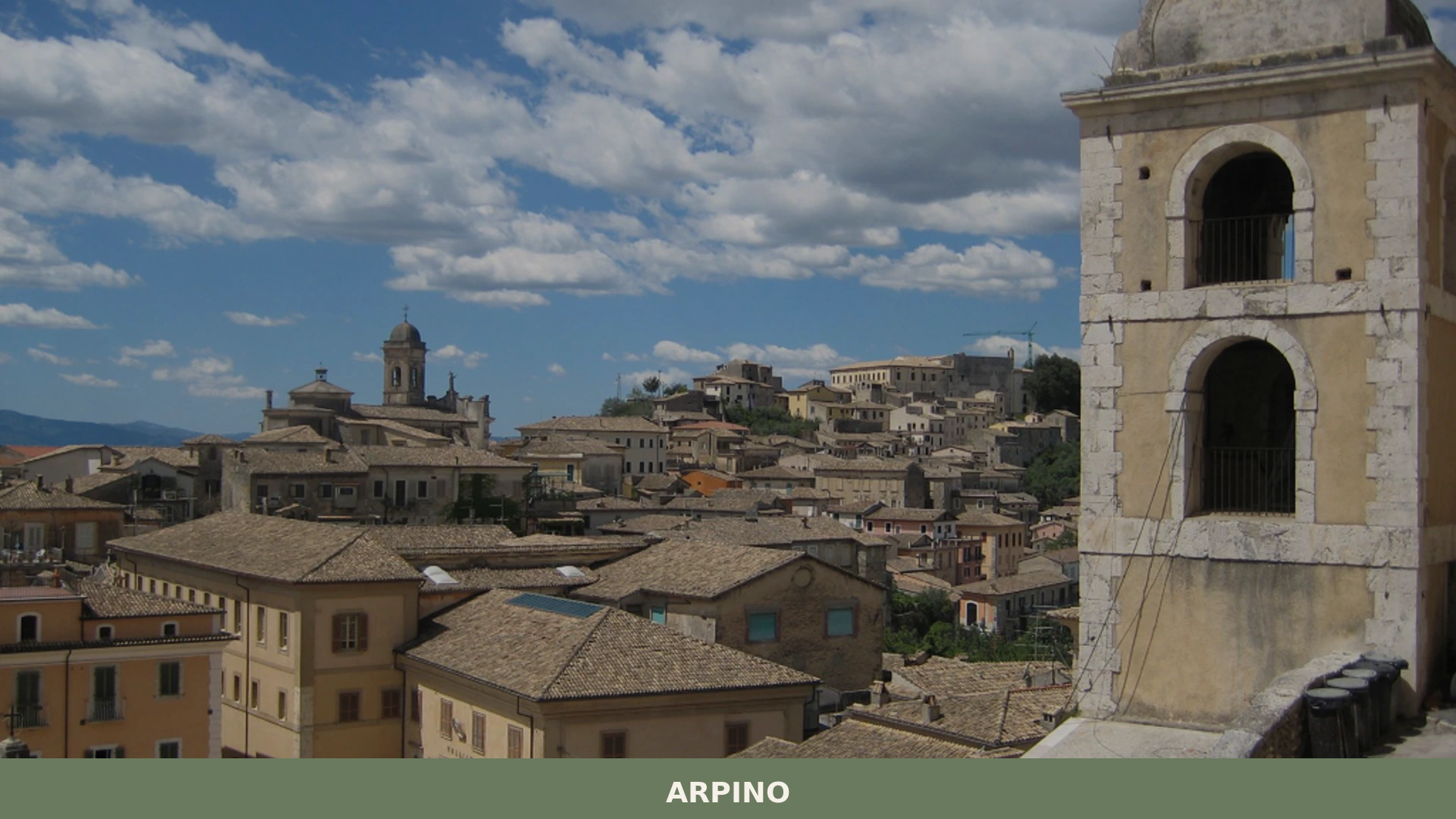

What to see in Arpino, Lazio, Italy: polygonal walls, Cicero’s birthplace, and Roman history 100 km from Rome. Discover the top attractions and how to get there.
Discover Arpino
The polygonal walls of the ancient Samnite settlement above Arpino rise to a height of roughly 3.35 m (11 ft) and span a width of about 2.1 m (7 ft). The dark grey sedimentary stone, sometimes compared to pudding-stone, was cut and fitted without mortar into interlocking blocks, a construction method the Samnite peoples used across a cluster of strongholds in what is now southern Lazio. One ogive arch survives intact within this circuit, an architectural element rare in pre-Roman Italic fortification.
Standing beside it on a clear morning, with the Liri valley spread below and the rooftops of the lower town catching the light, it is possible to read the defensive logic of the site in a single glance.
Cosa vedere ad Arpino
Deciding what to see in Arpino is easier once you understand the town’s scale: it sits roughly 100 km (62 mi) southeast of Rome, in the province of Frosinone, in Lazio, and its most concentrated sights lie within the upper historic nucleus and along the valley floor below. Visitors to Arpino find two categories of landmark: ancient fortification dating to pre-Roman and early Roman centuries, and sites tied directly to two of the most consequential figures Rome ever produced — Gaius Marius and Marcus Tullius Cicero. The circuit walls, the church of San Domenico in the Liri valley, and the surviving ogive arch define the core of any visit.
Local Food and Typical Products of Arpino
Arpino, situated in the heart of Ciociaria, offers a rich culinary tradition rooted in simple, high-quality ingredients. Local specialties include cured meats, cheeses, and dishes featuring legumes and vegetables from the fertile surrounding land. Don’t miss trying the local olive oil and wines, which perfectly complement the robust flavors of the regional cuisine.
History of Arpino
The settlement that would become Arpino — known in antiquity as Arpinum, the Latin form of the name — dates to at least the 7th century BC. Its earliest documented connections are with the Pelasgi, the Volsci, and the Samnite peoples, the last of whom left the most visible physical evidence: the polygonal stone walls and the fortified circuit that still partially encloses the upper town. The Samnites were not confined to Arpinum alone; nearby Atina and Cominium were similarly organised strongholds, and the Valle di Comino immediately to the south was a core Samnite and sub-tribal territory. The language spoken in this area before Roman assimilation was Oscan, part of the broader Indo-European language family classified under the so-called “Co” group.
Roman expansion brought Arpinum into the republic’s administrative orbit in stages.
How to Get to Arpino
Arpino can be reached by car via the A1 motorway (Autostrada del Sole), taking the Frosinone exit and continuing on provincial roads. The nearest train station is Frosinone, with bus connections available to Arpino. For international visitors, Rome’s Fiumicino (FCO) and Ciampino (CIA) airports are the most convenient points of arrival, offering rental car services or train connections to Frosinone.
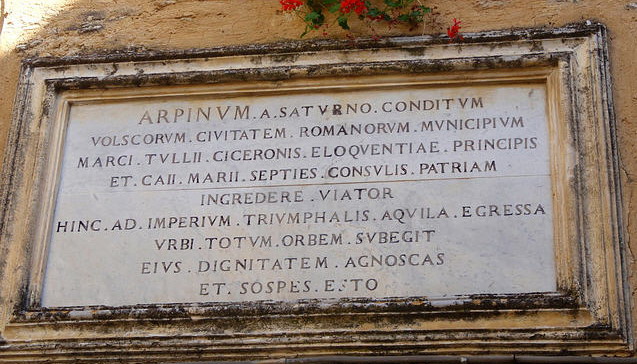
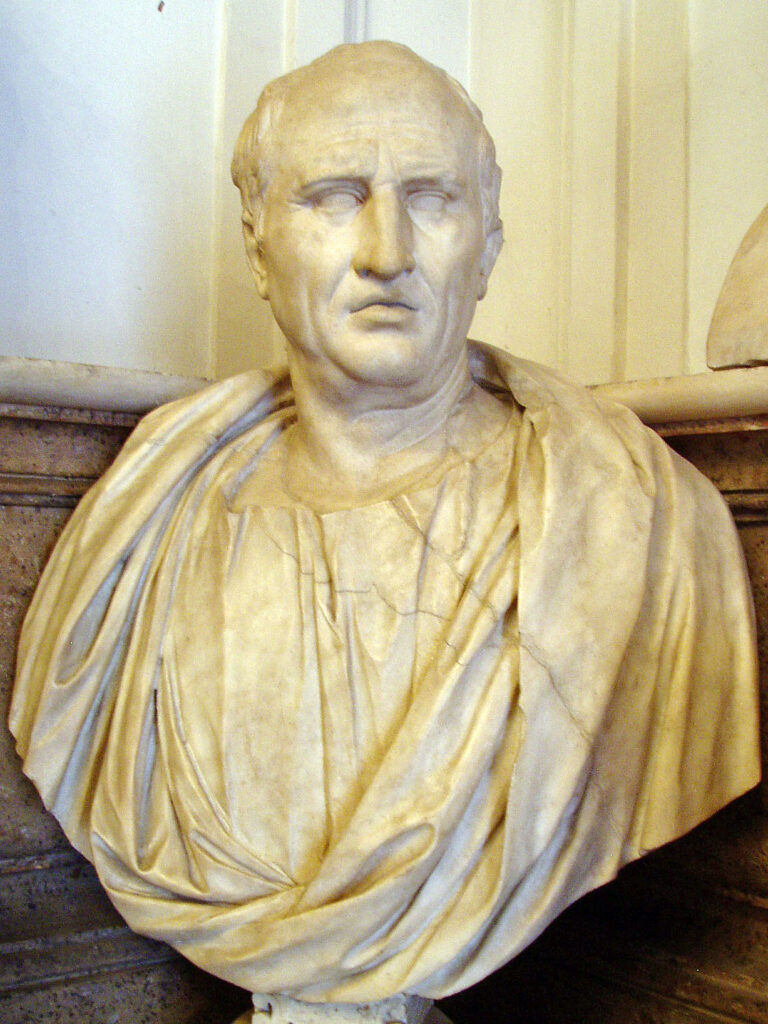
In 305 BC the city was captured and granted civitas sine suffragio — Roman citizenship without the right to vote, a form of partial incorporation used across central Italy. Full voting rights followed in 188 BC, and in 90 BC, after the Social War, Arpinum received the formal status of a municipium. It was within this context of provincial civic ambition that the town’s two most famous sons emerged. Both Gaius Marius, the general who defeated the Cimbric invaders in 101 BC, and Marcus Tullius Cicero, who later dismantled the Second Catilinarian conspiracy, were homines novi — men who reached the consulship without aristocratic lineage. Cicero himself, when attacked in Roman courts as a provincial outsider, cited Arpinum’s record: it had produced two men who saved the republic.
The medieval period brought repeated disruption. In the early Middle Ages both the Roman duchy and the Duchy of Benevento competed for control of the town’s strategic elevated position in the Latin Valley. After the 11th century, Arpino passed successively under Norman rule, then the Hohenstaufen dynasty, and finally the Papal States. The town was destroyed twice in the 13th century: first in 1229 by the Holy Roman Emperor Frederick II, and again in 1242 by Conrad IV. These destructions explain the relative scarcity of intact medieval civic fabric compared to the surviving pre-Roman walls.
One further figure born here rounds out the town’s cultural record: the castrato sopranist Gioacchino Conti, known professionally as Il Gizziello, was born in Arpino in 1714 and became one of the celebrated operatic voices of 18th-century Europe. Lazio is a region where individual towns carry disproportionate historical weight relative to their size, and Arpino illustrates that pattern with particular clarity — a comparison that holds equally for Labro, another compact Lazio settlement whose elevated position and layered history reward close attention.
What to see in Arpino, Lazio: top attractions
The Polygonal Samnite Walls and Ogive Arch
The dark grey stone blocks of the Samnite circuit walls are fitted in a technique known as polygonal masonry, each block shaped and placed so that its irregular angles lock against those of its neighbours without binding mortar. The construction dates broadly from the early Roman period back to around 400 BC, placing the oldest sections among the most ancient surviving fortification in southern Lazio.
Within the circuit, a single ogive arch remains structurally complete — an example of a form typically associated with Samnite defensive architecture. The walls reach 3.35 m (11 ft) in height at their tallest points and measure up to 2.1 m (7 ft) in width. For those who want to understand the engineering without specialist knowledge, the arch speaks plainly: the stones carry load through compression, wedged tightly enough to have survived two millennia of seismic activity in an active central Apennine zone.
The Church of San Domenico and the Site of Cicero’s Villa
Below the main town, in the Liri valley slightly north of the Isola del Liri, the church of San Domenico occupies the site identified as the location of Cicero’s villa — the property to which the orator repeatedly referred in his letters to Atticus as a place of genuine comfort and intellectual work. The church itself marks ground that was already significant in the 1st century BC, when Cicero used the Arpinum estate as a retreat from the demands of Roman public life.
Near the church stands an ancient bridge that once carried a road across the river Liris toward Cereatae, the modern locality of Casamari, identified as the birthplace of Gaius Marius. The pairing of the two sites within a short distance of each other along the valley floor gives this stretch of the Liri a documentary weight that maps directly onto the political history of the late Roman Republic. Visiting in spring, when the valley floor is green and the river level is stable, makes the walk between the two points straightforward.
The Historic Upper Town of Arpino
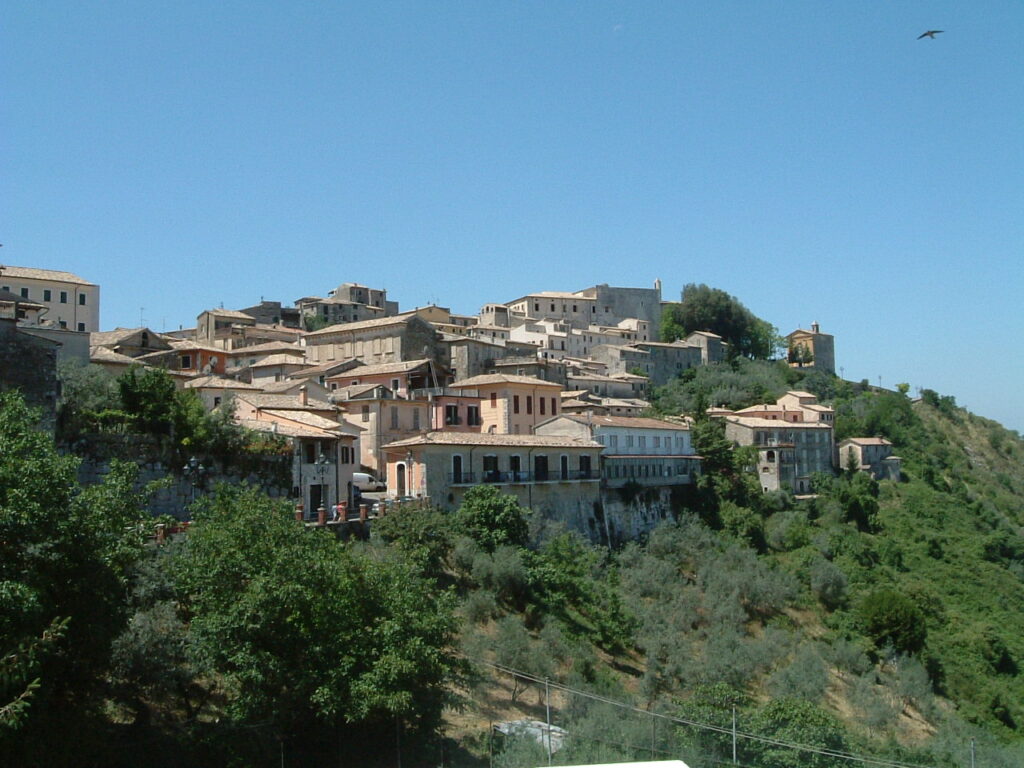
The upper nucleus of Arpino occupies a naturally defensive elevation above the Liri valley, the same position that made the Samnite stronghold viable and that later attracted Norman and Hohenstaufen administrators. The street pattern of the upper town compresses civic and residential fabric into a tight grid where the polygonal walls form both boundary and backdrop. Walking through the upper town places the visitor inside a layered sequence of construction periods: pre-Roman walls, medieval structures rebuilt after the destructions of 1229 and 1242, and later post-medieval infill.
The town’s documented connections to the consular tradition of Rome — both Marius and Cicero came from this municipal community — give even the most ordinary-looking alleyway a specific historical anchor. It is worth climbing to the highest accessible point of the upper town to read the full topography of the valley below, which the Samnites clearly understood when they chose this ridge as the basis for their fortified settlement.
The Ancient Bridge in the Liri Valley
Near the church of San Domenico, an ancient bridge survives from the period when a road crossed the river Liris connecting the territory around Arpinum to Cereatae on the opposite bank. The bridge served a road network that predates the full Roman municipalisation of 90 BC, and its function was explicitly civic and military: linking the Arpinum territory to what is now the area around Casamari, identified as the birthplace of Gaius Marius.
The structure sits at valley-floor level, which means it is accessible without significant climbing and can be reached directly from the church of San Domenico in a single visit. Its survival alongside the church site gives physical continuity to what would otherwise remain purely textual evidence — Cicero’s letters and later historical reconstructions of the Arpinum landscape.
The Broader Arpinum Archaeological Landscape
The territory around Arpino holds a wider archaeological zone that extends beyond the immediate town into the surrounding Latin Valley. The fortified remains of the earlier Samnite settlement above the present town form the most concentrated point of interest, but the full circuit of ancient walls, the valley-floor church, and the bridge together constitute a site complex rather than a single monument.
The Valle di Comino to the south, recognised as a principal Samnite territorial zone, sits within easy reach of Arpino and reinforces the regional density of pre-Roman Italic culture in this part of the province of Frosinone. For visitors with a specific interest in pre-Roman Italy, the combination of standing walls, a dateable arch, and documented literary sources makes Arpino one of the most legible Samnite-period sites accessible by public road in central Italy. Allocating a full day to cover both the upper town and the Liri valley floor is a practical minimum.
Local food and typical products of Arpino
The gastronomy of Arpino belongs to the broader culinary tradition of the Ciociaria, the inland area of the province of Frosinone that stretches between the Apennine foothills and the Liri valley. This is a cuisine built on agricultural products — legumes, cured pork, fresh pasta cut by hand, and sheep’s milk cheeses — shaped by a centuries-long reliance on what the land produced rather than on coastal or urban trade routes. The valley floor around the Liri has historically supported market gardens, while the higher ground provided pasture for sheep and pigs. This vertical geography, typical of much of southern Lazio, produced a table in which preserved and fresh ingredients are used alongside each other, varying by season.
Among the dishes most closely associated with the Ciociaria tradition, pasta e fagioli — pasta cooked in a broth of dried cannellini or borlotti beans, finished with local olive oil and a piece of pork rind — is a constant presence on menus across the province.
Sagne ‘mpastite, a broad hand-cut egg pasta served with a slow-cooked pork or lamb ragù, appears particularly in the colder months when the valley roads can be damp and the temperature drops sharply. Abbacchio alla cacciatora, young lamb braised with vinegar, rosemary, garlic, and anchovies, reflects the sheep-rearing economy of the surrounding hills. Pecorino cheeses, aged in the local style, are produced in several small operations in the province; they are sliced thin and eaten with local honey or alongside cured meats as a standard antipasto course.
The province of Frosinone produces a number of ingredients with documented regional identity, though the sources available for Arpino specifically do not include certified denomination products (DOP or IGP) tied exclusively to the town’s immediate territory. Visitors looking for local produce should focus on what appears in markets and on restaurant menus: dried legumes from Ciociaria farms, local olive oil pressed from varieties grown on the lower valley slopes, and sheep’s milk ricotta, which is produced in spring when the ewes are milking at full capacity and is best eaten fresh within two days of production.
Market days in small Ciociaria towns typically fall mid-week and draw producers from surrounding farms.
Arriving on a local market morning gives visitors direct access to seasonal produce — dried beans in autumn, fresh ricotta in spring, cured meats and aged cheeses year-round. The province of Frosinone also holds several annual sagre (traditional local food festivals dedicated to a single product or dish) in the summer and autumn months, and the area around the Liri valley tends to anchor these events in the harvest calendar.
Festivals, events and traditions of Arpino
The sources available for Arpino confirm the town’s documented cultural identity as the birthplace of both Gaius Marius and Cicero, and this dual heritage shapes the civic memory of the place in ways that extend beyond passive historical commemoration. The community has maintained an oral tradition — unconfirmed by historians but persistent — that Marcus Vipsanius Agrippa, the military architect of Augustus’s naval victories, was also born here.
Whether or not that attribution holds, it illustrates the local habit of reading Roman history through a specifically Arpinate lens. The castrato singer Gioacchino Conti, known as Il Gizziello, was born here in 1714 and represents the town’s documented contribution to Baroque musical culture, a fact that aligns Arpino with the broader south-Lazio tradition of producing performers for the major operatic stages of 18th-century Europe.
The Ciociaria region, which includes Arpino and its surrounding municipalities, maintains a calendar of seasonal religious and civic festivals tied to the agricultural year and to patron saint observances. These typically involve processions through the historic centre, the ringing of church bells at fixed hours, and communal meals based on locally grown and prepared food. Specific verified dates for Arpino’s patron saint festival are not recorded in the sources consulted for this guide; visitors planning a trip around a specific event are advised to contact the Municipality of Arpino directly for the current civic and religious event calendar before travelling.
When to visit Arpino, Italy and how to get there
The best period to visit Arpino falls between April and June and again in September and October.
In spring the Liri valley floor is green, the temperature in the town is moderate — typically between 14°C and 22°C (57°F and 72°F) — and the light on the polygonal stone walls is clear rather than harsh. Summer heat in the province of Frosinone can be considerable, with July and August regularly reaching 32°C to 35°C (90°F to 95°F), which makes extended walking in the upper town uncomfortable in the middle of the day. Autumn brings cooler conditions, autumn harvests, and reduced visitor numbers. Winter is functional but cold, and some smaller restaurants and local services operate on reduced schedules between December and February. For those whose primary interest is the Samnite walls and the valley-floor church sites, spring and early autumn give the best combination of comfortable temperatures and clear visibility across the Liri valley.
Arpino sits approximately 100 km (62 mi) southeast of Rome, making it reachable as a day trip from the capital. By car, the most direct route from Rome uses the A1 motorway (Autostrada del Sole) toward Naples, exiting at Frosinone and continuing southeast on the SS214 state road toward Isola del Liri and then Arpino, a total driving time of roughly 90 minutes to 2 hours depending on traffic on the Rome ring road. By train, the nearest serviceable station is at Isola del Liri–Castelliri on the Rome–Cassino line, operated by Trenitalia, from which Arpino is approximately 10 km (6.2 mi) by road.
The nearest international airport is Rome Fiumicino (Leonardo da Vinci), approximately 120 km (74.6 mi) from Arpino; Rome Ciampino is slightly closer at around 100 km (62 mi). Car hire at either airport is the most practical option for reaching the town directly. If you arrive by car, note that the upper historic centre has restricted traffic zones, so parking on the perimeter of the old town and continuing on foot is the standard approach. For international visitors, English is spoken inconsistently in smaller shops and restaurants in the province of Frosinone; carrying Euros in cash is advisable, as card payment terminals are not universal in smaller establishments.
Visitors arriving from the direction of Rome who have time to extend their itinerary can also consider the coastal area around Anzio, in Lazio, which lies roughly 60 km (37.3 mi) southwest of Rome and offers a contrasting coastal perspective on the region — the two towns together giving a cross-section of Lazio’s range from ancient inland hilltop settlements to the Tyrrhenian coast.
Where to stay near Arpino
Accommodation options in and around Arpino include small agriturismi (farm-stay establishments, typically offering rooms alongside local meals produced from the farm’s own land) in the Liri valley and in the surrounding Ciociaria hills, as well as bed-and-breakfast properties within the town’s historic fabric.
The province of Frosinone has invested in rural tourism infrastructure over recent decades, and the valley-floor road between Isola del Liri and Arpino passes several farm-based properties. For visitors preferring a larger town base, Frosinone city, approximately 40 km (24.9 mi) to the northwest, offers a broader range of hotel accommodation with reliable rail connections back to Rome. Booking ahead between April and June is recommended, as spring weekend availability in smaller Ciociaria properties fills quickly.
Those who want to explore a wider arc of Lazio’s inland hill towns can plan onward visits to Bomarzo, in northern Lazio, or to Latina, in the coastal plain to the west of the Lepini mountains, each of which represents a distinct facet of what to see in Arpino’s broader regional context — from Etruscan-influenced volcanic tufa landscapes in the north to the reclaimed Pontine plain in the south.
What to see in Arpino itself remains concentrated in its pre-Roman walls, its Ciceronian valley sites, and its position as the documentary origin point of two consular careers that shaped the Roman Republic at its most contested moments.
Frequently asked questions about Arpino
What is the best time to visit Arpino?
Spring (April–June) and early autumn (September–October) offer the most comfortable conditions for exploring Arpino's hillside streets and the Liri valley floor. Summer is warm but manageable at 447 m altitude. The town's patron saint, the Madonna di Loreto, is celebrated on 10 December, making early winter a rewarding time for visitors interested in local religious traditions. Avoid August midday heat if planning extended walks between the upper historic nucleus and the valley-floor sites near the church of San Domenico.
What are the historical origins of Arpino?
Arpino — ancient Arpinum — dates to at least the 7th century BC, with early connections to the Pelasgi, Volsci, and Samnite peoples. The Samnites built the surviving polygonal stone walls. Rome granted the city partial citizenship (civitas sine suffragio) in 305 BC and full voting rights in 188 BC. After the Social War it became a municipium in 90 BC. It is the documented birthplace of both the general Gaius Marius and the orator Marcus Tullius Cicero, as well as the 18th-century castrato Gioacchino Conti (Il Gizziello).
What to see in Arpino? Main monuments and landmarks
The core itinerary covers three areas. In the upper town: the Samnite polygonal walls (up to 3.35 m tall, 2.1 m wide) and the intact ogive arch, accessible on foot. In the Liri valley below: the church of San Domenico, built on the documented site of Cicero's villa, and the adjacent ancient bridge that once connected Arpinum to the birthplace of Gaius Marius at Cereatae (modern Casamari). Allow a full day to cover both the upper nucleus and the valley floor comfortably.
Where to take the best photos in Arpino?
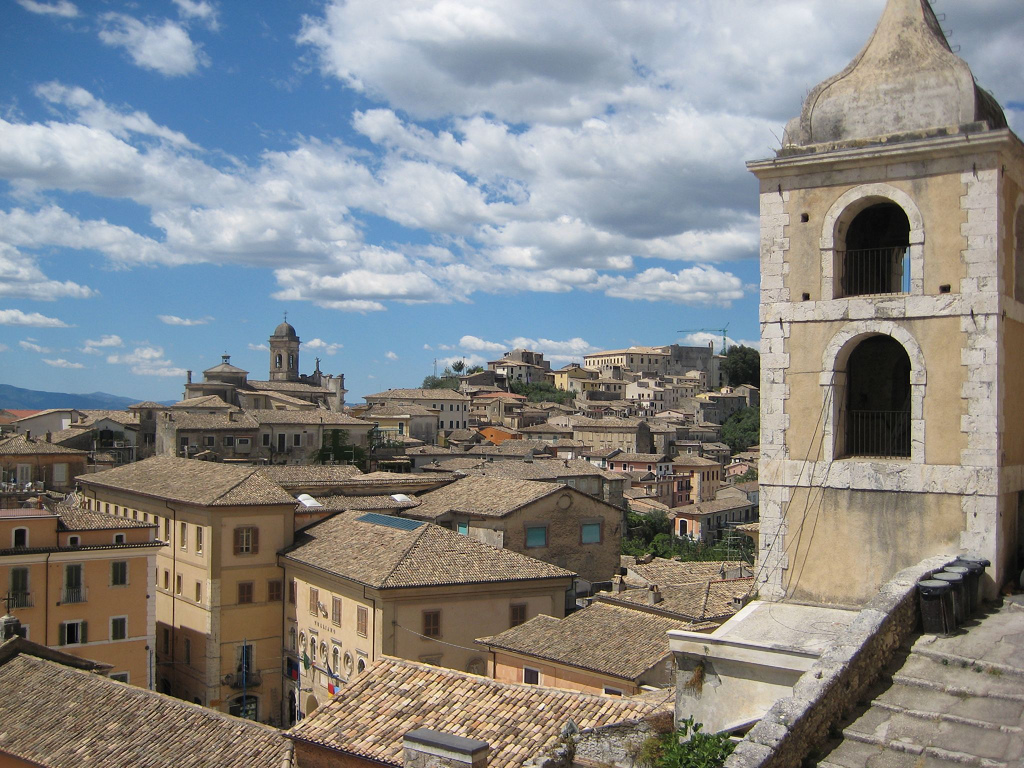
The highest accessible point of the upper historic town offers an unobstructed view over the Liri valley, with the rooftops of the lower town in the foreground — the same panorama that illustrates the Samnite defensive logic of the site. Early morning light is most favourable. The ogive arch within the polygonal wall circuit provides a striking close-up subject. At valley level, the ancient bridge near San Domenico photographs well in spring when the surrounding vegetation is green and the river is at a stable level.
Are there museums, churches or historic buildings to visit in Arpino?
The principal historic structures are the Samnite polygonal walls with their intact ogive arch in the upper town, and the church of San Domenico in the Liri valley, which occupies the identified site of Cicero's villa and stands beside an ancient Roman-era bridge. The upper town itself retains layered medieval fabric rebuilt after the destructions of 1229 and 1242 under Frederick II and Conrad IV respectively. For current opening times and any admission arrangements, checking directly with the Comune di Arpino or the local Pro Loco before visiting is advisable.
What can you do in Arpino? Activities and experiences
Arpino rewards a structured walking itinerary combining two distinct zones: the compact upper historic nucleus with its pre-Roman walls and medieval streetscape, and the Liri valley floor where the church of San Domenico and the ancient bridge form a second cluster. The Valle di Comino to the south, a recognised Samnite territorial zone, is within easy reach for those interested in the wider pre-Roman landscape of the province of Frosinone. Visitors with a specific interest in Roman Republican history will find the combination of standing archaeology and documented literary sources — Cicero's letters to Atticus — unusually legible.
Who is Arpino suitable for?
Arpino suits historically minded travellers — particularly those interested in pre-Roman Italic culture, the late Roman Republic, or classical literature — more than visitors seeking resort-style amenities. The site is well suited to couples and solo travellers who appreciate layered, walkable historic towns. Families with older children interested in archaeology will find the Samnite walls and ogive arch genuinely engaging. The terrain involves moderate uphill walking in the upper town; valley-floor sites near San Domenico are accessible without significant climbing. It works well as a day trip from Rome (approx. 100 km southeast) or as part of a wider Frosinone province itinerary.
📷 Photo Gallery — Arpino
Nearby Villages near Arpino
In Lazio More villages to discover
Arcinazzo Romano
 Mountain
Arcinazzo Romano is a mountain village in the Metropolitan City of Rome, Lazio, perched at 796 metres with 1.232 inhabitants and a history reaching back to at least the early eighth century.
Bracciano
 Hills
Hills
 Lake
Lake
What to see in Bracciano, Italy: Discover its medieval castle and volcanic lake. Located 30 km (19 mi) from Rome, explore this Lazio village for a memorable day trip.
Borgo Velino
Hills
What to see in Borgo Velino: discover 5 key attractions in this village of 996 inhabitants at 460m. Explore Palazzo Brancaleoni and taste Cacio fiore. Plan your visit now.
Agosta
Hills
Agosta is a historic municipality of 1,675 residents in the upper Aniene valley, Lazio, with continuous settlement from prehistoric times and a castle documented as early as 1051.

Roma
 Sea
Sea
The capital of Italy and the Lazio region, Roma encompasses 1287 km² and 2.7 million inhabitants, making it Europe's largest commune and a global center of political, religious and cultural influence.
Casaprota
Hills
Discover Casaprota, a charming village in Lazio, Italy. Explore its history, culture, and scenic landscapes in the heart of the Italian countryside.
Anticoli Corrado
Hills
Anticoli Corrado is a hilltop comune in the Metropolitan City of Rome, set at about 524 metres above sea level in the inner uplands of Lazio, with a civic museum of modern and contemporary art holding
Aquino
 Plains
What to see in Aquino? Discover 5 must-see historic attractions in this definitive guide to the Lazio village. Plan your visit now!
Onano
Hills
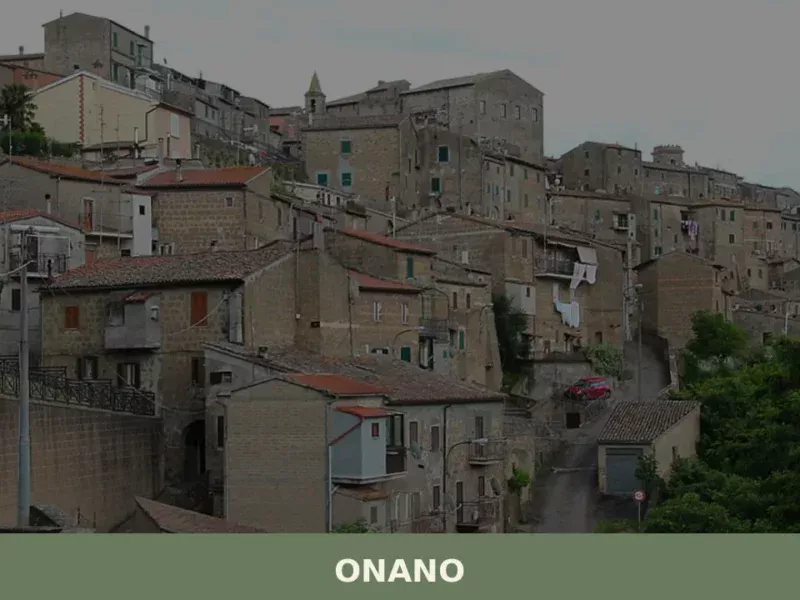
Onano has 898 inhabitants and sits at 485 metres above sea level on the southern slopes of Lake Bolsena, in the province of Viterbo. The municipal territory, stretching across lentil fields and oak groves, borders both Umbria and Tuscany — a point of triple regional convergence that has shaped the town’s economic and linguistic history. […]
Casalattico
Hills
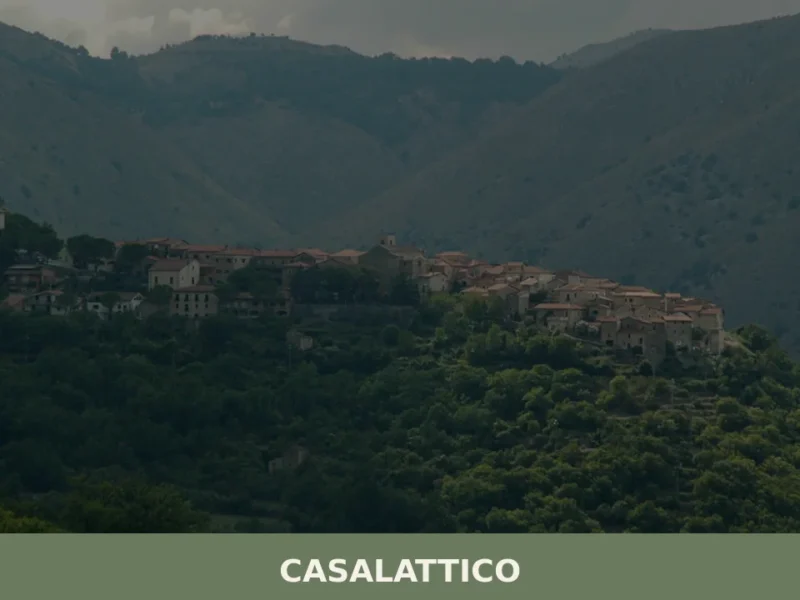
Casalattico is a mountain settlement of 519 residents in the Valle di Comino, province of Frosinone, with Samnite origins, a feudal past and a remarkable emigration heritage.


🏡 Know Arpino better than we do?
If you’re a local or have been there, your knowledge matters: add what’s missing or fix a detail on this page.