


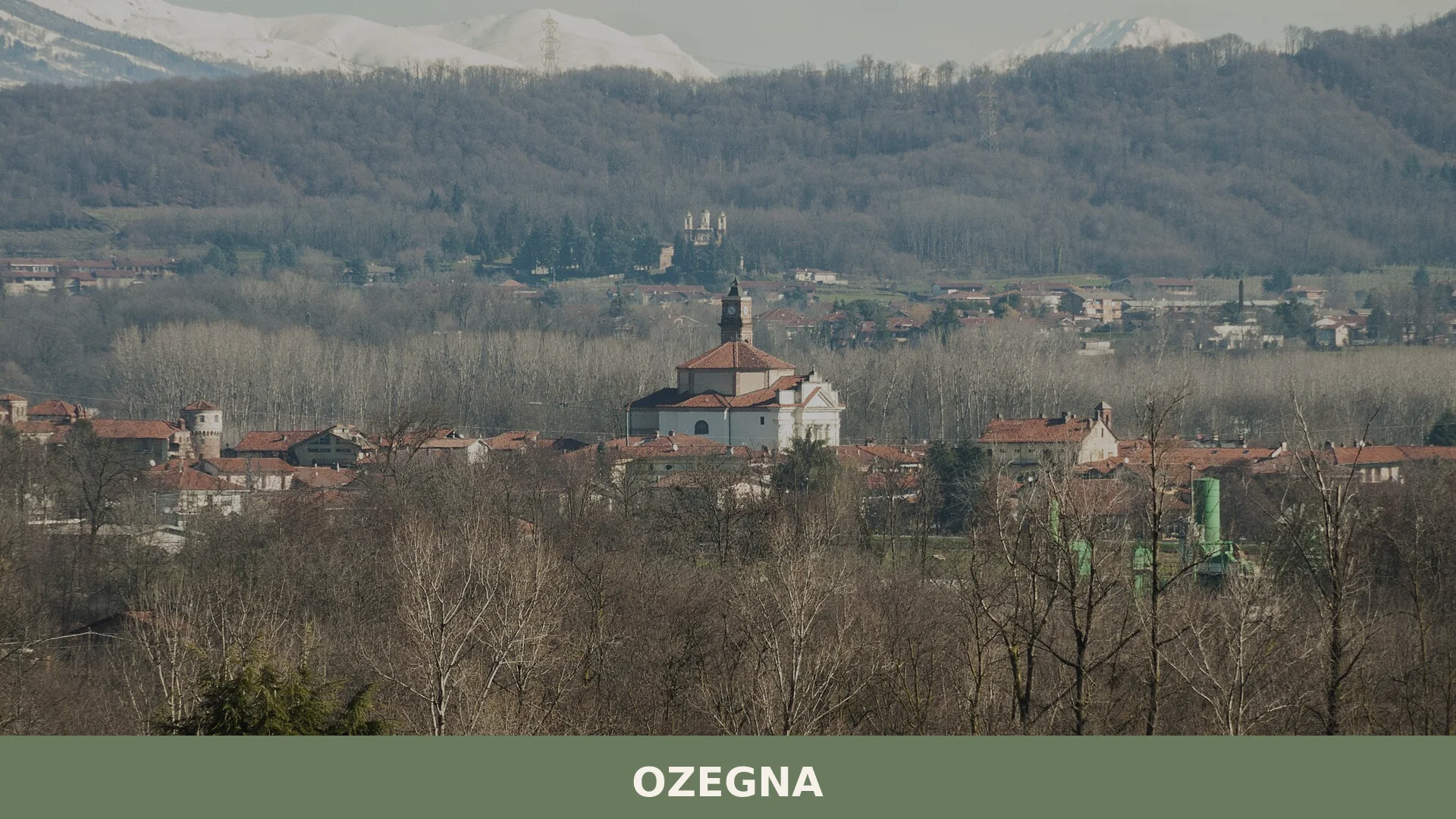
Ozegna
 Mountain
1,175 residents, one castle, one sanctuary and a medieval ricetto that once sheltered an entire community. Ozegna repays any visit with layers of Canavese history.
Ozegna: a Canavese Village Shaped by Feudal Walls and Marian Devotion
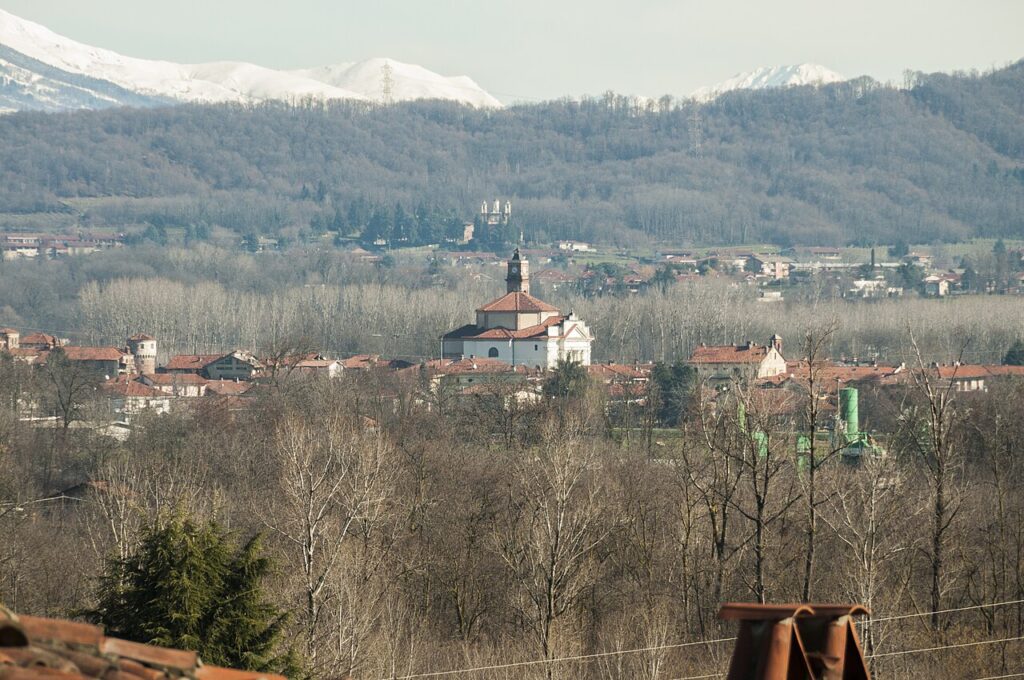
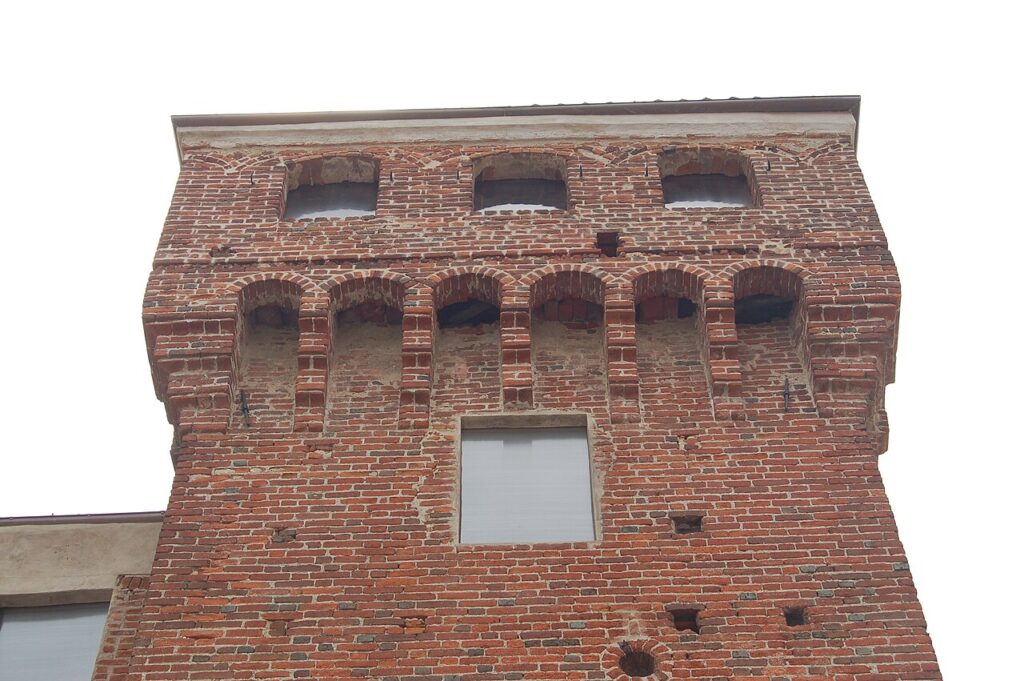
The old centre of Ozegna grew up inside a ricetto — a fortified enclosure built to protect harvests and livestock — rather than around a market square or a cathedral. The tower-gate, once equipped with a drawbridge, still marks the entrance to the village core, and the proportions of the streets inside reflect decisions made when safety mattered more than convenience. At roughly 300 metres above sea level on the eastern edge of the Canavese plain, the settlement sits where the land is flat enough for agriculture but close enough to the foothills to have always been strategically contested.
Ozegna village in Piedmont draws two kinds of visitor: those who come for the castle that a sixteenth-century count remodelled along the lines of French aristocratic residences, and those who follow the trail of a well-documented apparition that gave rise to the Santuario della Madonna del Bosco. Together, these two landmarks frame a history far more eventful than the modest population of around 1,175 suggests.
From a Late-Roman Settlement to a Fortified Village
The earliest physical evidence of habitation at Ozegna comes not from written records but from the ground itself. Around the old chapel dedicated to San Besso — a Christian soldier martyred in the Val Soana who had sought refuge there from persecution — archaeologists and local researchers have recovered coins, roof tiles, terracotta spindle whorls, wall foundations and burial remains. These finds point to a community active during the transition between the late Roman Empire and the early medieval period, occupying a site roughly a kilometre to the south-east of the present village centre. The zone was well chosen: it lay near a fordable point on the Orco torrent and along a route connecting the Roman colony of Eporedia (modern Ivrea) with Augusta Taurinorum (Turin).
The documentary record begins in 1094, when a deed records a donation by Umberto di Borgogna to the church of Santa Maria di Yporegia, listing Ozegna — then written as Ozena — among several localities. For roughly two centuries after that, the territory was governed by bishop-counts. In 1259 the church of Ivrea transferred the fief to Oberto di Rivarolo of the Counts of San Martino, beginning a long and turbulent association between Ozegna and that feudal family. The ricetto to the north-west of the original settlement had already been constructed by then, and as the Orco’s course shifted and floods became more frequent, residents began moving into it gradually. The War of the Canavese, fought from 1390 onward between the San Martino and Valperga families, accelerated that migration. By the early fifteenth century most of the population had settled permanently within the fortified enclosure.
The following decades brought further upheaval. In the mid-fifteenth century, a conflict involving Filippo Maria Visconti and the Marquis of Monferrato drew Ozegna into a wider regional confrontation. When the village refused to accept Savoyard authority, the duke sent a military force under Teobaldo d’Avanchier, who took the settlement and received it as a fief. It was under d’Avanchier that the first copy of the village statutes was compiled to regulate civic life. After his death, his sons sold the fief back to the San Martino of Aglié, and Ozegna remained in their possession from 1505 onward.
In 1623, a boy named Guglielmo Petro, rendered almost entirely mute by a severe form of aphasia, recovered his speech during haymaking work in a field to the south-west of the village, after what he and witnesses described as a vision of the Madonna accompanied by two angels. The ecclesiastical authorities investigated the accounts of the boy, his relatives and the local castellan before authorising the construction of a sanctuary on the site.
The Places That Define Ozegna
The Ricetto and the Medieval Village Core
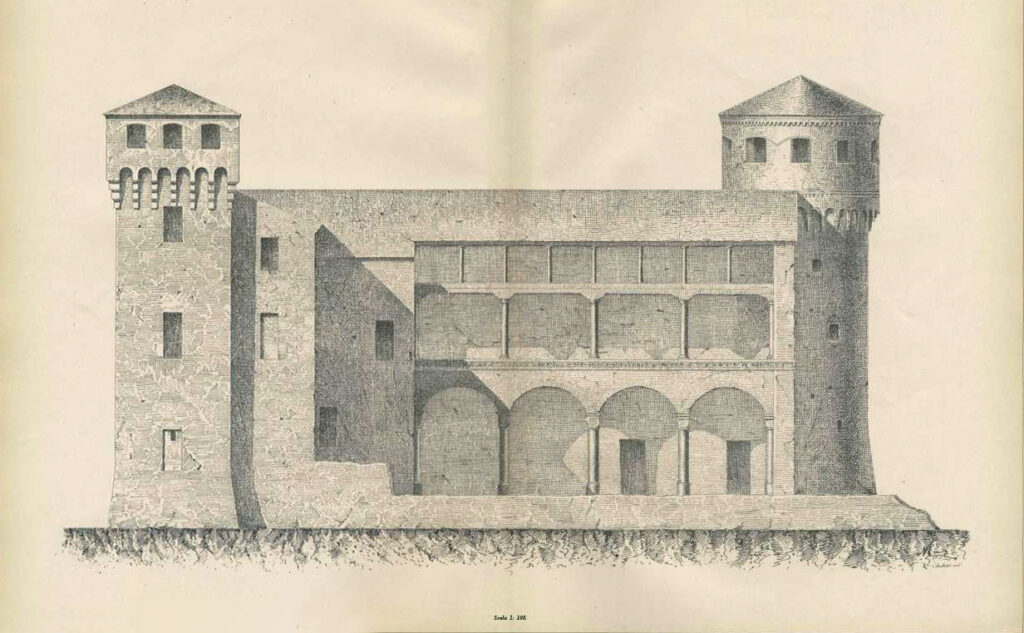
The fortified enclosure that became Ozegna’s permanent centre was built, like similar structures elsewhere in the Canavese, to shelter crops and animals during times of unrest. Over time, its storage buildings were adapted into homes, a church was added inside the perimeter, and the whole site was ringed by a defensive ditch. The tower-gate with its former drawbridge and the surviving stretches of wall still give the centre a legible medieval shape. Walking through it, you can follow the logic of a community that chose protection over openness, a practical decision that ended up defining the village’s layout for centuries.
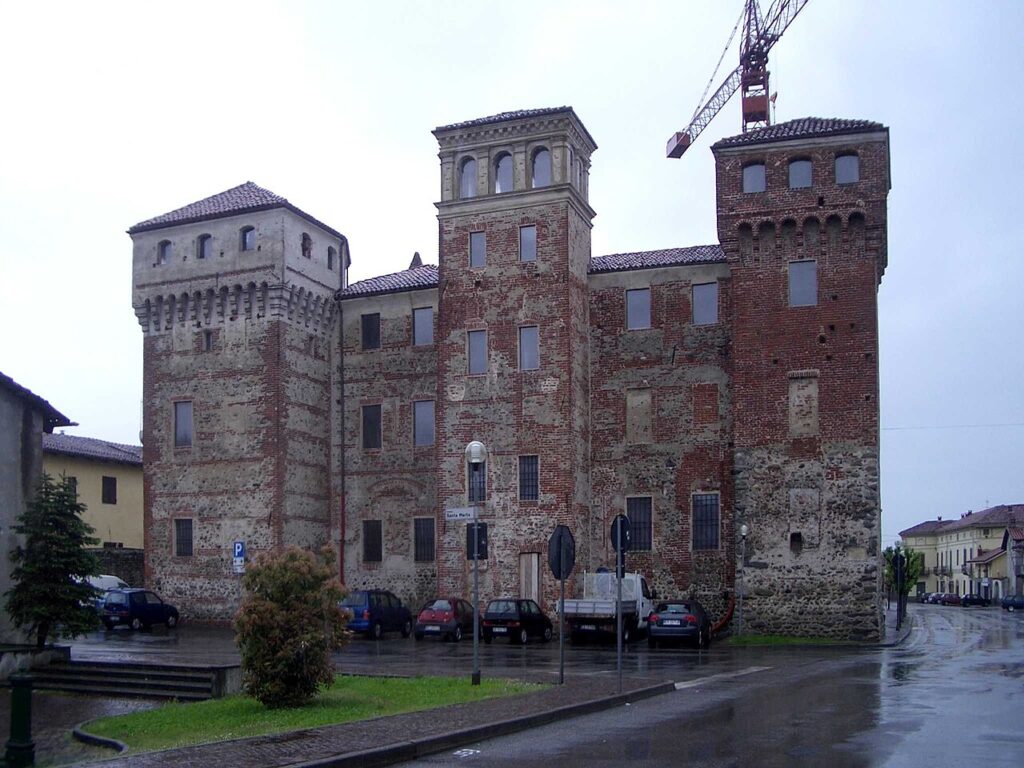
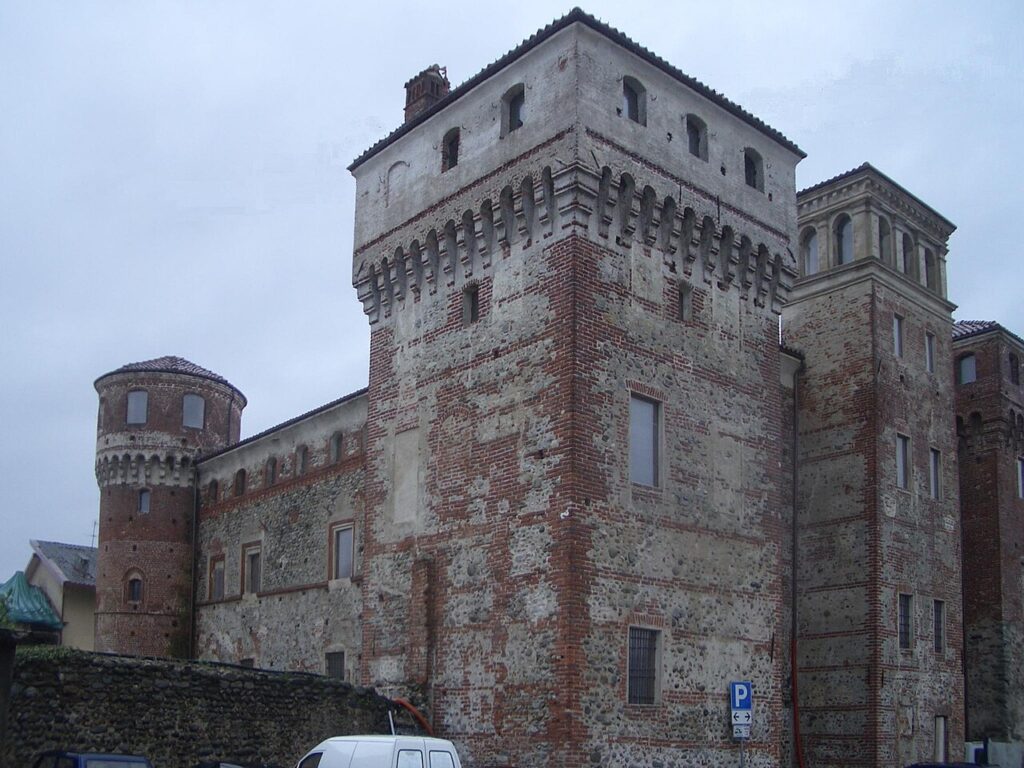
Castello di Ozegna
The Castello di Ozegna began as the fortified house of the San Martino family, embedded within the ricetto‘s perimeter. Toward the end of the sixteenth century, the count Bonifacio di San Martino di Aglié — who had served as Savoyard ambassador to the Vatican and to the French court — received the title of Count of Ozegna and set about transforming the structure. Rather than a military stronghold, he wanted a residence, and the interior remodelling drew on the French château tradition he had observed during his diplomatic years. The result was a building that reads outwardly as a Canavese fortified manor but carries, in its interior arrangement, the influence of a broader European courtly culture.
Santuario della Madonna del Bosco
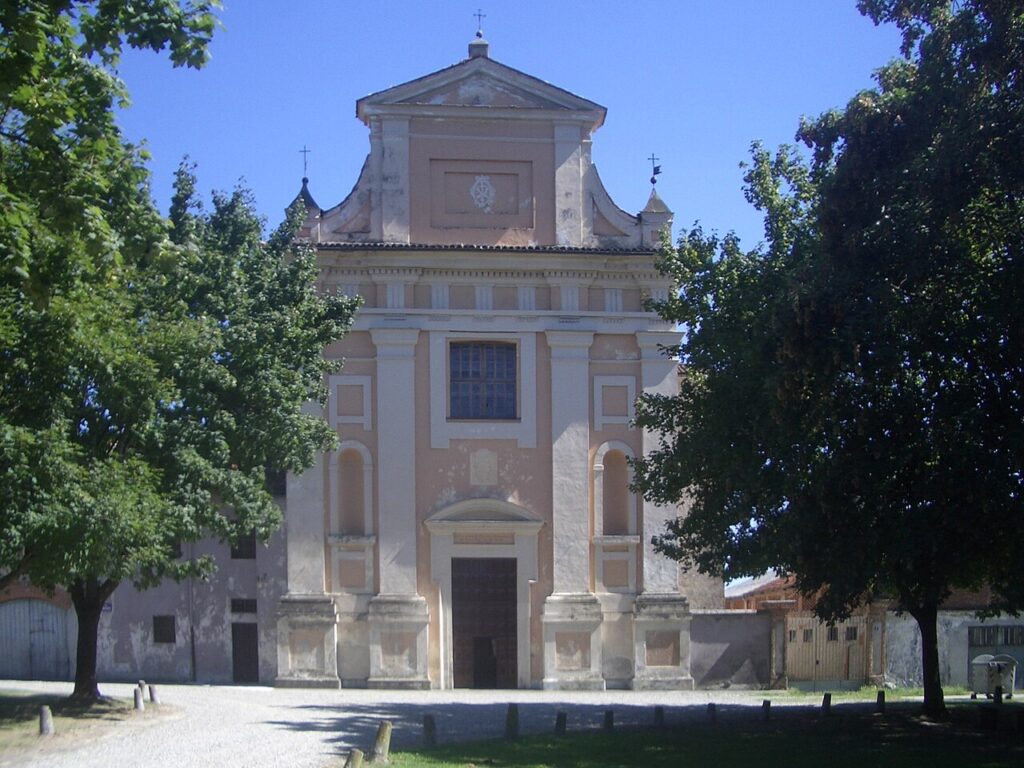
The sanctuary stands to the south-west of the village centre, on the field where the apparition of 1623 was reported. After ecclesiastical approval, a church was built on the site and a convent was attached to it, entrusted to the Franciscan Friars Minor as custodians. The complex functioned as a centre of local devotion for decades until the suppression of religious orders led to the closure of both sanctuary and convent, the expulsion of the friars and the sale of the entire property to private buyers. The sanctuary’s story is inseparable from the plague epidemic that struck Ozegna between approximately 1628 and 1630, arriving so soon after the apparition that the two events became deeply linked in local memory.
Cappella di San Besso
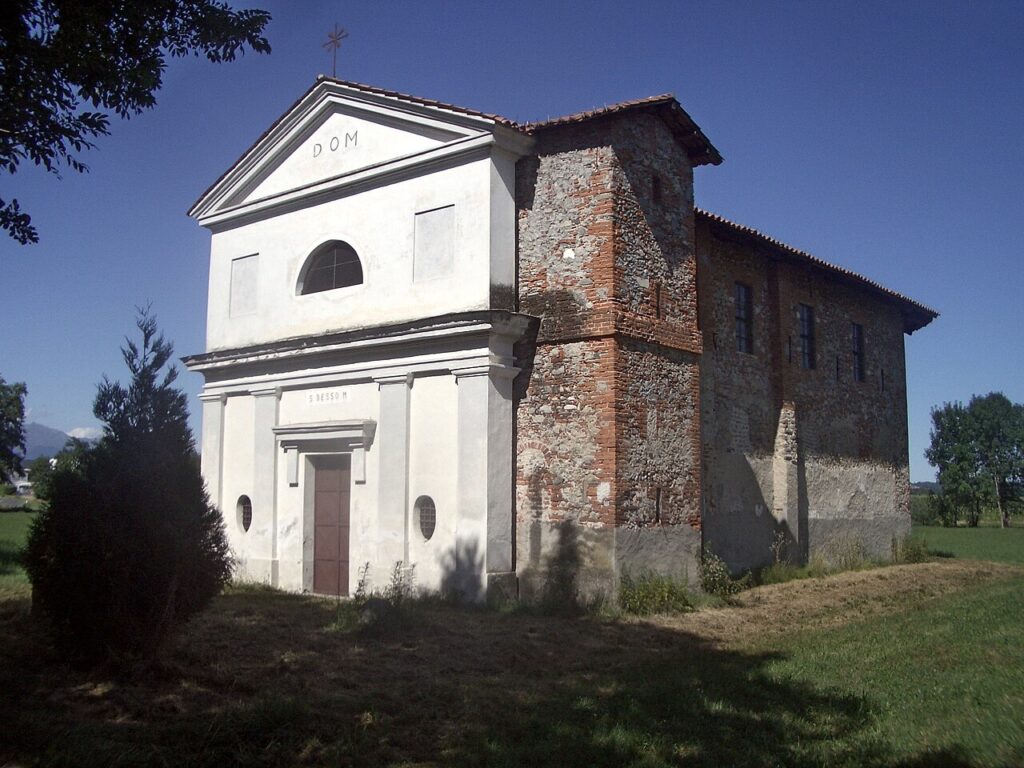
This rural chapel marks the site of what is believed to be the original settlement, roughly a kilometre to the south-east of today’s village centre. San Besso was a Roman soldier who converted to Christianity and was martyred in the Val Soana; according to local tradition, his relics were brought to Ozegna by shepherds descending from the mountain pastures in autumn, and they remained here until King Arduino arranged for their transfer to the Cathedral of Ivrea. The chapel is now a countryside landmark rather than an active place of worship, but it remains the most tangible connection to Ozegna’s earliest inhabited phase.
Hemp Cultivation and the Communal Battitoio
For centuries, hemp was central to Ozegna’s economy. The territory’s natural springs and watercourses made it suitable for the water-intensive process of retting — submerging hemp stalks in pools to separate the textile fibres. A communal battitoio (a processing mill for beating and refining the fibres) was built during the medieval period and remained a piece of communal property, first under feudal administration and then under the municipality. The memory of this industry survives in local place names: the pista where the mill stood, the neighbourhood known as Patandero from the dialect term for the battitoio, and the Gòja area to the west where retting pools were still visible into the mid-twentieth century.
Flavours of the Canavese Table
Ozegna’s agricultural identity has always been defined by the Canavese plain rather than by a single prestigious product. The area around Ivrea and the Canavese produces wines worth seeking out: Erbaluce di Caluso, a DOCG white with a distinctive mineral edge, is grown not far from the village, and the Canavese DOC covers a range of local red and white varieties. These are wines to find in the trattorie of the surrounding towns rather than in a dedicated cellar in Ozegna itself, but they provide a reliable frame for the plain cooking of the zone.
The broader provincial territory contributes well-known aged cheeses and cured meats, though none of these carry a denomination specific to Ozegna. What the village can claim, at least historically, is a deep connection to subsistence agriculture: grain, hemp, and the kitchen garden produce that supported a rural population through centuries of feudal obligation, war and epidemic. That context still shapes what appears on local tables, even if the economy has changed substantially since the late nineteenth century, when early industrialisation began to reach the Canavese without fully transforming Ozegna.
Arriving in Ozegna and Planning Your Visit
Ozegna sits within the metropolitan area of Torino, roughly 40 kilometres north of the city centre by road. The journey by car takes approximately 40 minutes under normal traffic conditions, following routes through the Canavese plain toward the Orco valley. Ivrea, the main historical and commercial centre of the eastern Canavese, is closer still — about 15 kilometres to the north-east — and makes a practical base for visitors who want to combine Ozegna with the broader area, including neighbouring villages such as Agliè, which has its own castle and Savoyard connections, or Bairo to the north.
The patron saint’s feast, the Natività di Maria Vergine, falls in September and marks the most significant point in the village’s annual calendar, with religious observance centred on the sanctuary’s history. Spring and early autumn are the most comfortable seasons for exploring the flat terrain around the village on foot or by bicycle. Visitors interested in the wider Canavese landscape can extend their stay toward Baldissero Canavese, Busano or Perosa Canavese, all within a short drive and each with its own distinct character within this historically layered corner of Piedmont.
| Departure | Distance | Time |
|---|---|---|
| Turin (city centre) | approx. 45 km | approx. 45 min |
| Ivrea (casello A5) | approx. 20 km | approx. 25 min |
| Rivarolo Canavese (stazione FS) | mandno di 10 km | approx. 15 min |
| Turin Caselle Airport | approx. 35 km | approx. 35 min |
The official municipal website at www.comune.ozegna.to.it carries current information on local events, access and any seasonal openings of historical sites. Given that Ozegna is not classified as a tourist municipality by ISTAT, advance planning pays off: opening times for the castle and sanctuary depend on local administration and religious calendars rather than on a permanent visitor infrastructure. An hour or two is enough to walk the medieval core; the surrounding countryside, the chapel of San Besso and the sanctuary each add time and a different texture to the visit.
Frequently asked questions about Ozegna
When is the best time to visit Ozegna?
September is ideal, as Ozegna celebrates its patron saint feast on September 8th, honouring the Natività di Maria Vergine (Birth of the Virgin Mary). The mountain setting offers pleasant early autumn weather. Summer months are also suitable for exploring the village and surrounding foothills. The location at 305 metres elevation provides a mild climate compared to higher Alpine areas.
What are the main attractions in Ozegna?
The village centres on two historic landmarks: a sixteenth-century castle remodelled in the French aristocratic style, and the Santuario della Madonna del Bosco, built following a documented apparition of the Virgin Mary. The ricetto—a fortified medieval enclosure with a tower-gate—defines the old village core, preserving its defensive layout and narrow streets designed for protection rather than convenience.
How do I reach Ozegna from Turin?
Ozegna lies in the Province of Turin, in the Canavese region on the eastern edge of the Canavese plain. It is accessible by car via provincial roads connecting to the Turin road network. The nearest motorway connections serve the broader Canavese area. For precise directions and public transport options, consult local Turin transport authorities or regional travel services.
What is the ricetto and why is it significant?
The ricetto is a fortified enclosure built to protect harvests and livestock—a structure unique to Piedmont. Unlike villages organised around a market square or cathedral, Ozegna developed inside this defensive perimeter. The tower-gate, originally equipped with a drawbridge, still marks the village entrance. Street proportions inside reflect medieval priorities: safety over convenience, revealing the settlement's strategically contested location.
What is the population and elevation of Ozegna?
Ozegna has a population of approximately 1,175 residents. The village sits at roughly 305 metres above sea level, positioned at the transition between the flat Canavese plain and the foothills. This elevation provides a temperate mountain climate while remaining close enough to lower altitudes for agricultural activities that historically defined the settlement.
📷 Photo Gallery — Ozegna
In Piedmont More villages to discover
Bobbio Pellice
Mountain
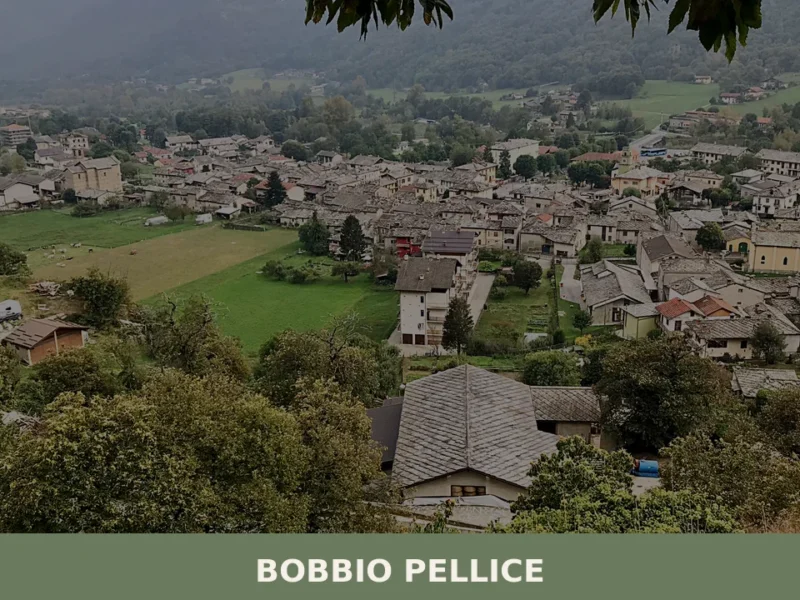
Bobbio Pellice has 536 inhabitants and lies in the Val Pellice, one of the Occitan and Waldensian valleys of southern Piedmont, in the Province of Turin. It is the highest municipality in the valley and the starting point for trails leading to the Colle Giulian and the Colle delle Traversette. Anyone looking to understand what […]
Pavone Canavese
 Plains
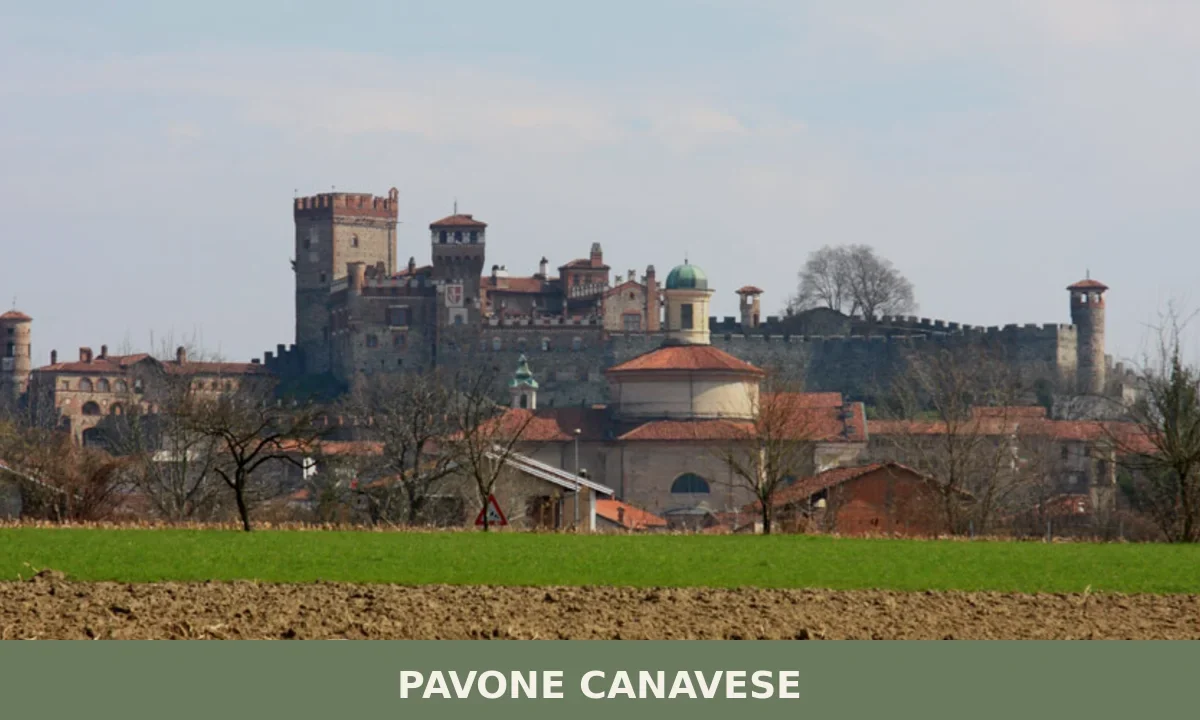
A community of around 3,600 people in the Turin metropolitan area, where a medieval castle, a nature reserve and the legacy of a pioneering restorer reward a focused visit.

Rocca Canavese
 Hills
Hills
Population 1,718. A fortified valley settlement with castle ruins, 11th-century religious architecture and a landscape of green hills rimmed by the Malone torrent.
Andrate
Mountain
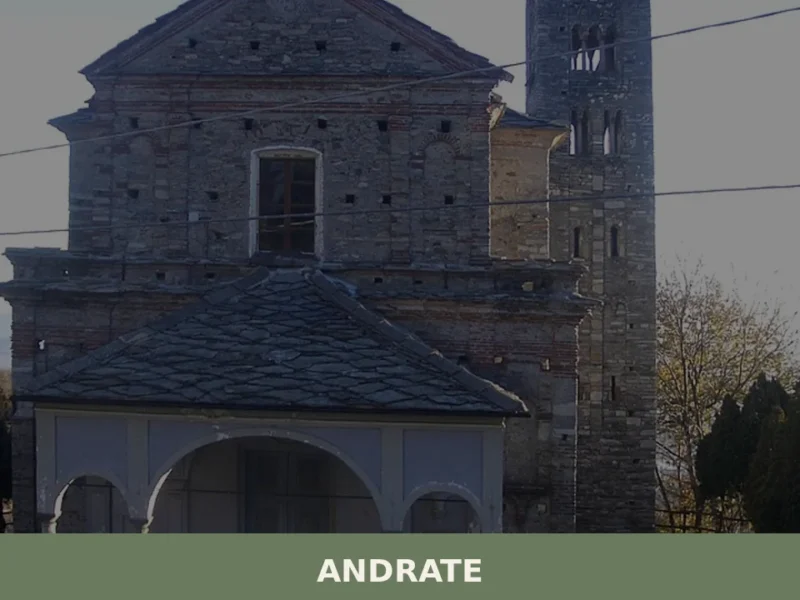
What to see in Andrate in Piedmont: panoramic views over the Serra d'Ivrea, trails, chestnut groves, Canavese cuisine. Complete guide with history and practical information.

Porte
Hills
Discover what to see in Porte, a 1,108-inhabitant comune in the Metropolitan City of Turin with Occitan heritage, foothill walks, and Piedmontese food culture.

Ostana
Mountain
87 residents, three languages and one of the most dramatic alpine backdrops in Piedmont. Ostana rewards visitors who travel slowly and look closely.

Salza di Pinerolo
Mountain
Population 61. A high-altitude Piedmont village where stone fractions cluster around alpine pasture and white fir woods; patron feast on 8 September.
Biella
Hills
what to see in biella, Italy? Explore the UNESCO Sanctuary of Oropa and Biella's historic 420m altitude Piazzo quarter. Read our guide for top attractions.

Beinasco
Plains
Beinasco traces its roots to a Roman frontier post. Discover how this small town survived plague, warfare and transformation to anchor modern metropolitan Turin.
Baldissero Torinese
Hills
Baldissero Torinese stands at 421 metres above sea level, on the eastern slope of the Turin hills, less than fifteen kilometres from the Piedmontese regional capital. With a population of 3,789, the municipality belongs to the Metropolitan City of Turin and retains an urban layout that still reflects its historical layers, from the medieval core […]





🏡 Know Ozegna better than we do?
If you’re a local or have been there, your knowledge matters: add what’s missing or fix a detail on this page.