


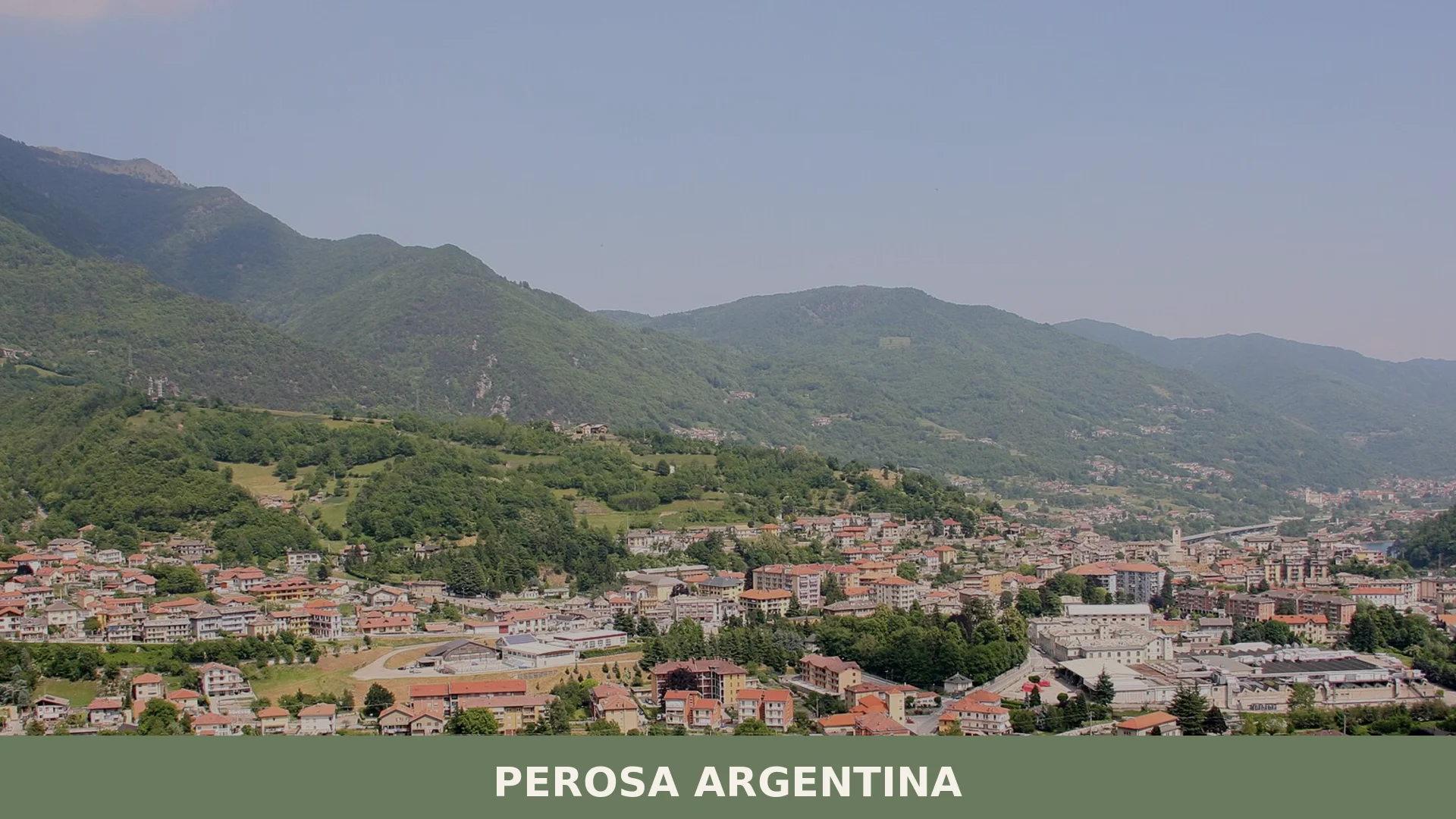
Perosa Argentina
 Mountain
Perosa Argentina is a mountain comune at 633 metres in the Val Chisone, where over nine centuries of documented history — from medieval Waldensian dissent to a landmark silk industry — unfold against
Discover Perosa Argentina
Perosa Argentina is a mountain commune of around 3106 inhabitants sitting at 608 metres above sea level in the Val Chisone, in the Metropolitan City of Turin, Piedmont, where the Germanasca stream flows into the Chisone torrent. The valley here belongs to the Cottian Alps, and the municipal territory covers just over 26.31 square kilometres of terrain classified as inner mountain zone.
Perosa Argentina village in Piedmont carries more than nine centuries of documented history: the earliest written record dates to 8 September 1064, when Countess Adelaide of Savoy set down rights over the valley in a document concerning the Benedictine abbey of S. Maria di Pinerolo, and the place has since passed through Waldensian dissent, Savoyard dukes, French sieges, and the rise of a textile industry that shaped its modern identity. Walkers, history enthusiasts, and anyone curious about industrial heritage will find the town a compact but rewarding base for exploring this stretch of the Chisone valley, roughly fifty kilometres long between Pinerolo and the Col de Sestrières.
Perosa Argentina village in Piedmont: history and origins
Perosa Argentina is a mountain settlement in the Val Chisone whose documented history stretches back to 8 September 1064, when Countess Adelaide of Savoy granted the Benedictine abbey of S. Maria di Pinerolo full feudal and property rights over the valley — making this the earliest written record of the place, then referred to as Petrosa.
Through the medieval period the village organised itself as a rural commune under the authority of the abbot of S. Maria, and that arrangement was later confirmed by the princes of Acaja, who between 1301 and 1418 ruled much of Piedmont from Pinerolo. In 1420 Amedeo VIII, the first Duke of Savoy, substantially enlarged the town’s charters and privileges. The valley was also marked by religious dissent: as early as 1297 an inquisitor was sent to Perosa to counter the Waldensian presence, and by 1387 the inquisitor Antonio di Settimo reported that many inhabitants were not only adhering to the heresy but actively spreading it to neighbouring valleys.
The sixteenth and seventeenth centuries brought repeated conflict, as Perosa found itself a contested frontier between France and Savoy. The town endured a siege in 1592 under Lesdiguières. The Savoyards built a fortress on the plateau of Ciampiano in 1628. By 1696, when the territory was returned to Savoy, the Forte di Perosa was ordered demolished in its entirety. An earlier fort at Bec Dauphin, designed by Ascanio Vittozzi, had been torn down in 1601. A Napoleonic occupation followed in 1796, and after the Restoration the town became part of the Kingdom of Sardinia, eventually joining the unified Italian state.
Between the Morainic Hill and the Industrial Heritage: Sites of Perosa Argentina
Perosa Argentina offers visitors a church on a glacial hill, the remnants of military fortifications tied to centuries of Franco-Savoyard conflict, an ecomuseum documenting the valley’s textile industry, and traces of ancient mining activity on the slopes of Monte Bocciarda.
Church of San Genesio and Its Bell Tower
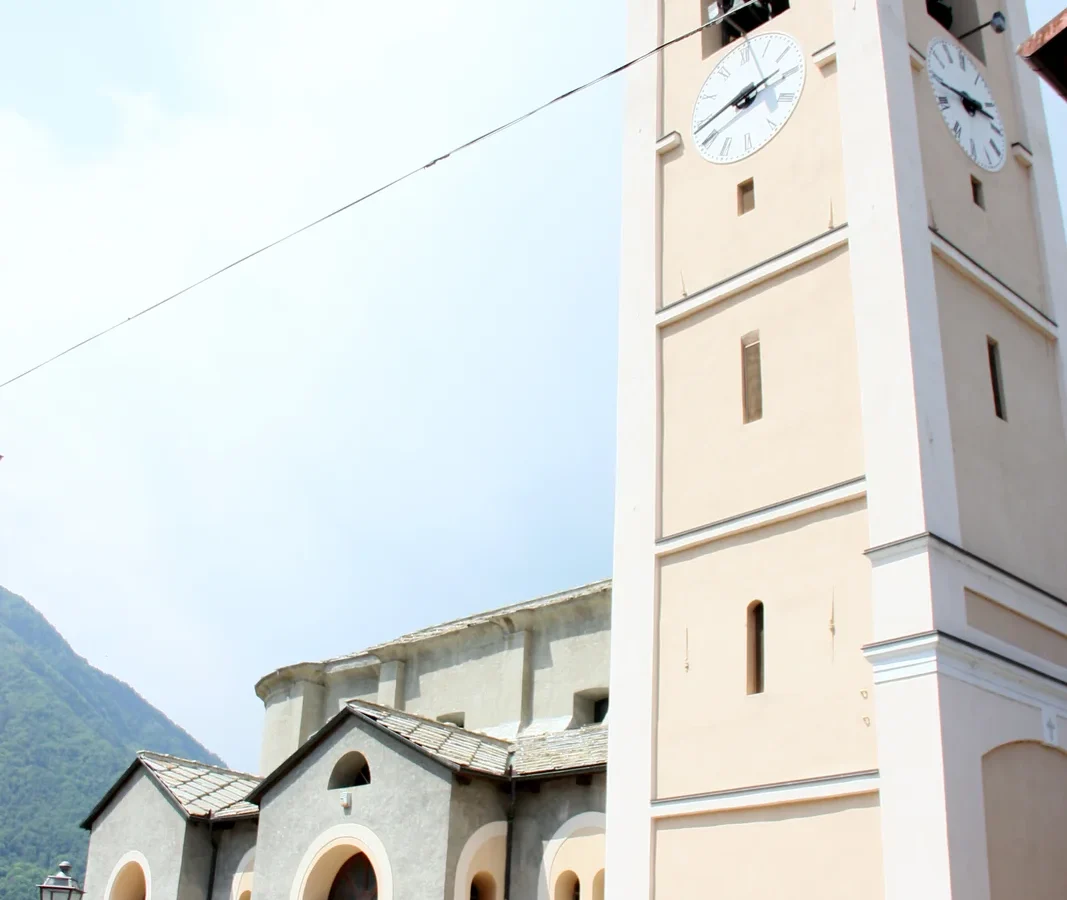
Rising on a morainic hill formed during the great glaciations of the Quaternary era, the church of San Genesio and its bell tower are visible from a considerable distance and mark the historic core of Perosa Argentina. This elevated position — described as a steep site commanding the surrounding area — corresponds to the rocky spur where a fortified settlement developed around the year one thousand. The church was already dedicated to San Genesio in the earliest documented period of the village’s history.
The Forte di Perosa
Built by the Savoy in 1628 on the plateau of Ciampiano, the Forte di Perosa reflects the strategic importance of the valley during repeated episodes of Franco-Savoyard rivalry. Its history includes the siege of 1630, conducted by French forces under Lesdiguières’s successors during the Franco-Savoyard conflict. The fort was returned to the Savoy in 1696 on the condition of the complete demolition of its citadel.
Forte di San Giovanni
An earlier fortification, designed by Ascanio Vittozzi and built on the rocky outcrop of Bec Dauphin, the Forte di San Giovanni was demolished in 1601 — only four years after its construction.
Ecomuseum of the Textile Industry
The ecomuseum documents the long industrial presence in Perosa Argentina, tracing activity back to the Bolmida silk-spinning establishment of 1835 and the more fully developed facilities of 1883: the Gütermann silk mill, which processed waste silk, and the Jenny & Ganzoni cotton mill. The museum is structured around two components: a dedicated exhibition space with panels, photographs, documents, and machinery illustrating the history of local industry and its production processes, and further elements extending the ecomuseum beyond its main premises.
Borgata Coutandin and the House Associated with Fernandel
Along the road toward Sestriere, the borgata Coutandin contains the remains of a house bearing a plaque identifying it as the possible birthplace of French actor Fernandel, whose parents were from Perosa Argentina. The structure is partially collapsed and in poor condition.
Mining Traces and Rupestrian Carvings
Flavours of the Val Chisone: What to Eat Around Perosa Argentina
The area around Perosa Argentina, sitting at around 608 metres in the Val Chisone within the province of Torino, draws on a broad Piedmontese larder rather than a single village speciality: the most relevant certified products nearby include the Marrone della Valle di Susa IGP, the prized sweet chestnut harvested from the neighbouring alpine valleys, a firm red apple grown across the wider provincial territory. Among cheeses, the Bra DOP and Grana Padano DOP appear on tables throughout the region, while charcuterie fans will find Crudo di Cuneo DOP and Mortadella Bologna IGP in local shops and markets.
For wines, the valley falls within reach of the Pinerolese DOC, the denomination most directly tied to this stretch of the Torinese foothills, alongside the sparkling Erbaluce di Caluso DOCG and the lighter reds of the Collina Torinese DOC. Broader Piedmontese classics — Barolo, Barbaresco, Barbera d’Asti and Brachetto d’Acqui among them — are within comfortable driving distance for those wishing to explore further.
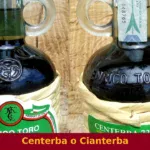
Among traditional Piedmontese preparations worth seeking out in the area are alpine herb liqueurs, ratafià, rosolio and the distinctive vermouth, all listed among regional PAT products with a long presence in mountain communities like this one.
Planning your visit and getting there
Perosa Argentina can be reached easily from the lower Val Pellice and the Turin area. The practical distances and journey times below are kept concise on purpose, so the access information stays clear and consistent.
| Departure | Distance | Time |
|---|---|---|
| Turin (city centre) | approx. 55 km | approx. 50–60 min |
| Pinerolo | approx. 18 km | approx. 20 min |
| Sestriere | approx. 35 km | approx. 40 min |
These practical reference points are enough to plan the journey without overloading the text with unstable logistics. Once on site, the village is best understood slowly, on foot and in relation to the surrounding landscape.
Frequently asked questions about Perosa Argentina
What is the best time of year to visit Perosa Argentina?
Perosa Argentina is ideal year-round for different reasons. Summer (June–September) offers mild mountain weather perfect for hiking and exploring the Val Chisone valley. Autumn brings stunning foliage and clear skies. Winter transforms the area into a snowy landscape suitable for winter sports enthusiasts. The patron saint feast of San Genesio Martire occurs on 25 August, often marking local celebrations. Spring (April–May) brings alpine wildflowers and pleasant temperatures for outdoor activities.
How do I reach Perosa Argentina by car?
Perosa Argentina is located in the Val Chisone, roughly 50 kilometres from Pinerolo in the Metropolitan City of Turin, Piedmont. From Turin, take the A6 motorway towards Cuneo and exit at Pinerolo, then follow regional roads up the Val Chisone valley towards Perosa Argentina. The drive from Turin takes approximately 90 minutes. The town sits at 633 metres elevation in a compact mountain setting suitable for car access.
What is there to see regarding industrial heritage in Perosa Argentina?
Perosa Argentina developed a significant textile industry that shaped its modern identity over centuries. The village serves as a rewarding base for exploring industrial heritage sites connected to this manufacturing history. Visitors interested in 19th and 20th-century mountain textile production will find evidence of this heritage throughout the Val Chisone valley. Guided heritage tours and local museums document this important economic and social period in the region's development.
How long should I plan to spend visiting Perosa Argentina?
A day trip of 4–6 hours is sufficient to explore the village core and nearby attractions. However, 2–3 days allows proper time for hiking the surrounding Val Chisone valley, visiting historical sites, and enjoying the alpine scenery. The Cottian Alps offer numerous documented trails accessible from Perosa Argentina as a base. Multi-day stays are recommended for serious hikers exploring the 50-kilometre stretch between Pinerolo and Col de Sestrières.
What historical events shaped Perosa Argentina's development?
Perosa Argentina's documented history spans over nine centuries. The earliest written record dates to 8 September 1064, when Countess Adelaide of Savoy established rights over the valley in a document concerning the Benedictine abbey of S. Maria di Pinerolo. The village subsequently experienced Waldensian dissent, rule by Savoyard dukes, French sieges during various conflicts, and the rise of textile manufacturing that became central to its economy and identity.
📷 Photo Gallery — Perosa Argentina
In Piedmont More villages to discover
Carema
Mountain
Scopri Carema borgo medievale: un gioiello del Piemonte tra vigneti storici, torri antiche e tradizioni millenarie. Visita questo angolo unico d'Italia!

Strambino
 Plains
6,000 residents, one castle on a hill, and a church whose floor plan mirrors a frog. Strambino offers a layered Canavese identity few visitors expect.
Caravino
Plains
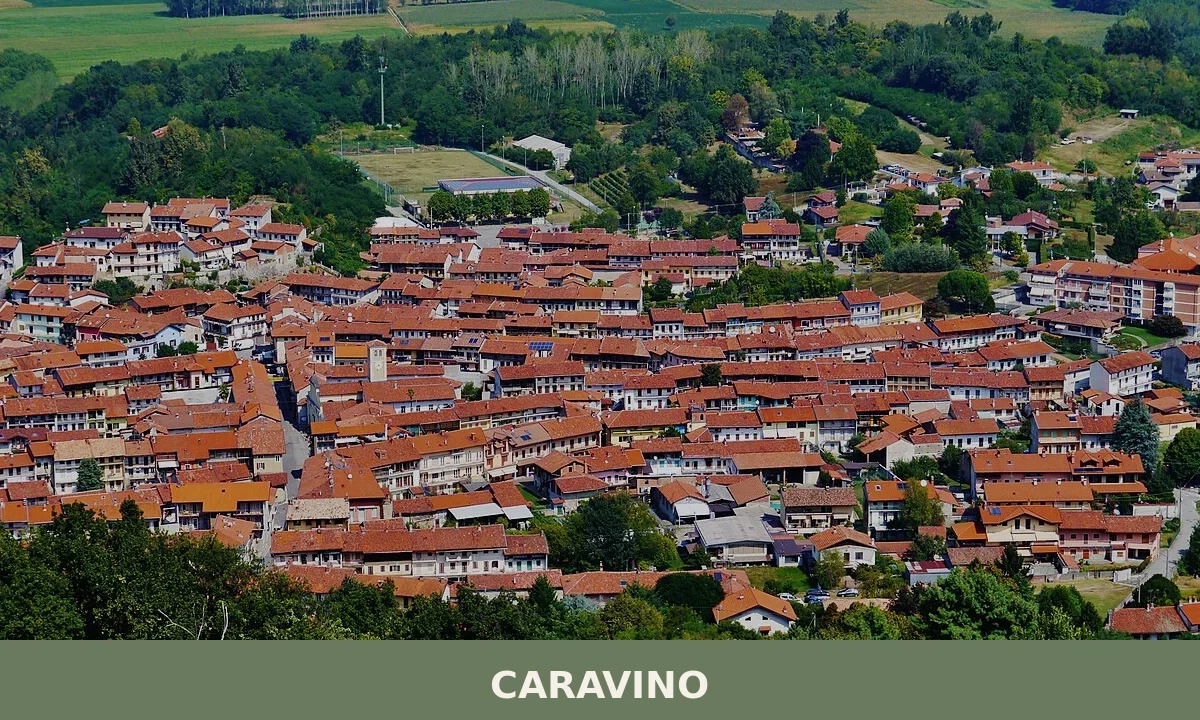
885 residents live in this hillside village of northeastern Canavese, where medieval castles and 15th-century frescoes reveal centuries of noble patronage and religious devotion.
Lanzo Torinese
Mountain
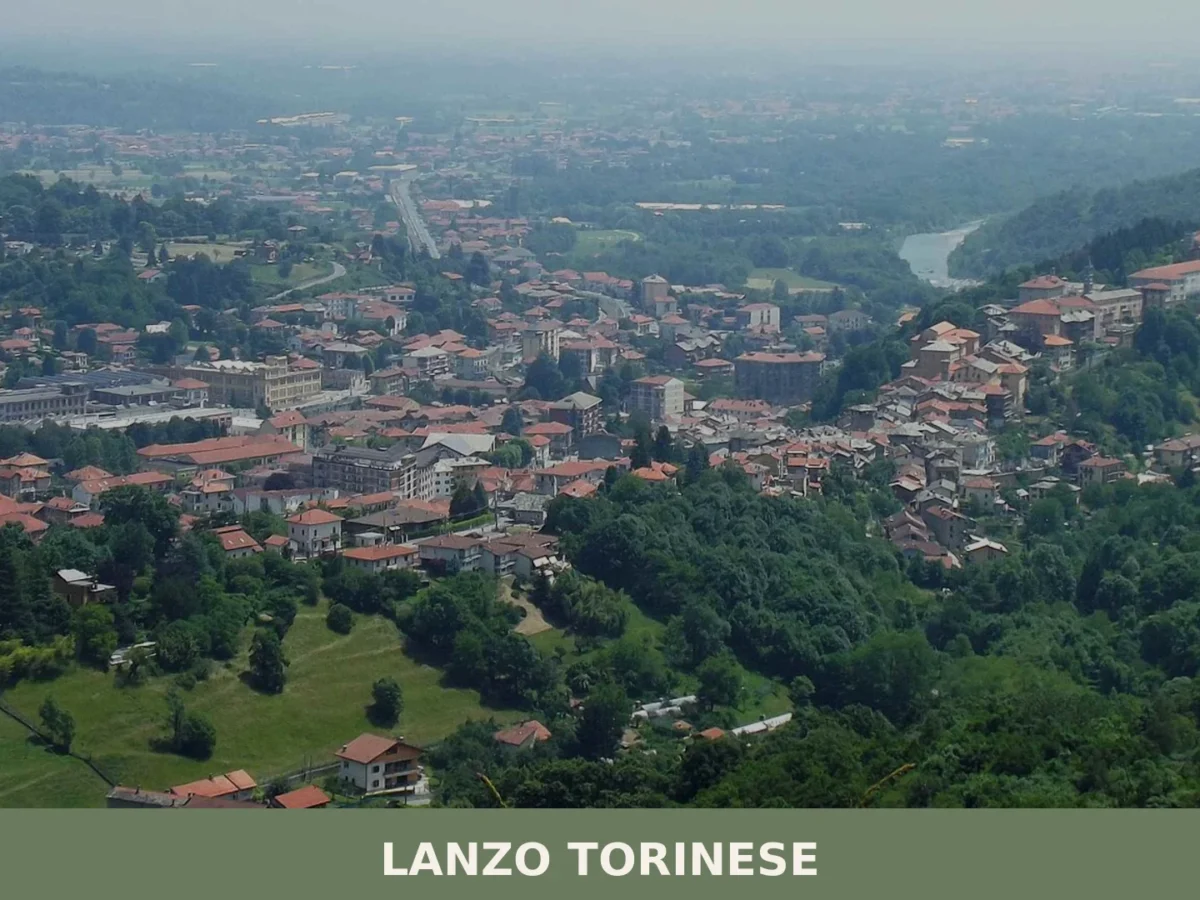
A town of nearly 5,000 residents where Alpine valleys meet industrial heritage. Medieval castle ruins and 14th-century bridge engineering define its character.
Azeglio
 Hills
Hills
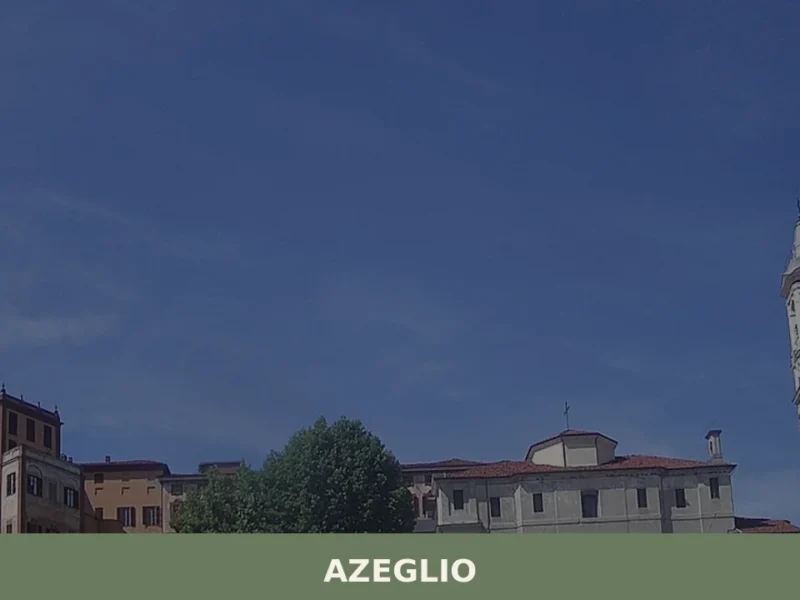
Azeglio, a small Piedmontese village on Lake Viverone: history, what to see and how to get there. Discover everything to plan your visit.
Sant’Ambrogio di Torino
Mountain
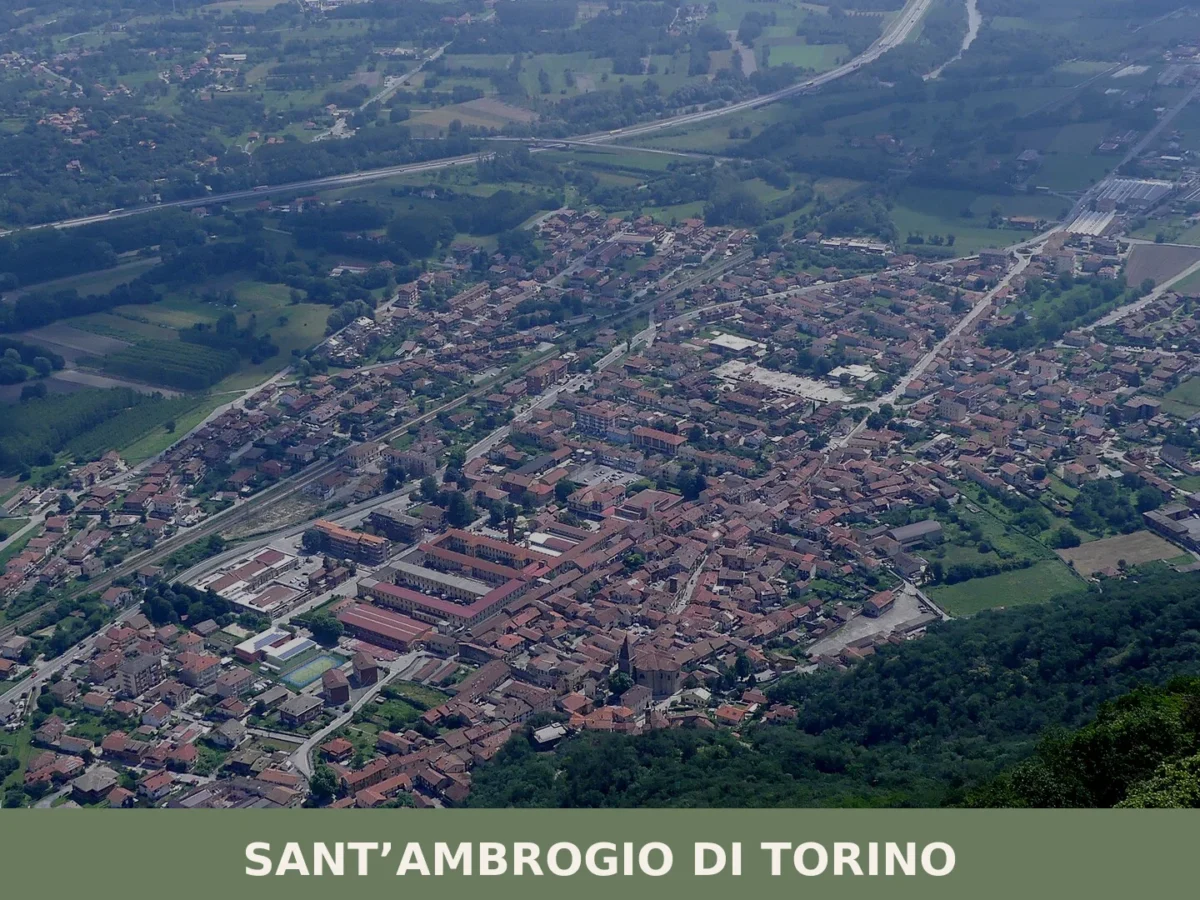
A village of 4,518 inhabitants at the threshold of the Turin foothills. Sant'Ambrogio di Torino stands on two major pilgrimage routes: the Via Francigena and the Cammino di San Michele.

Pralormo
Hills
Population 1,852. A hilltop comune marked by its 13th-century castle, a 1930s parish church sheltering Renaissance art, and a medieval tower that once guarded Asti's trade routes.

Volpiano
Plains
3 Baroque churches and a Roman centuriation grid still visible in the fields make Volpiano a rewarding stop in the Canavese between Turin and the Alps.
Argentera
Mountain
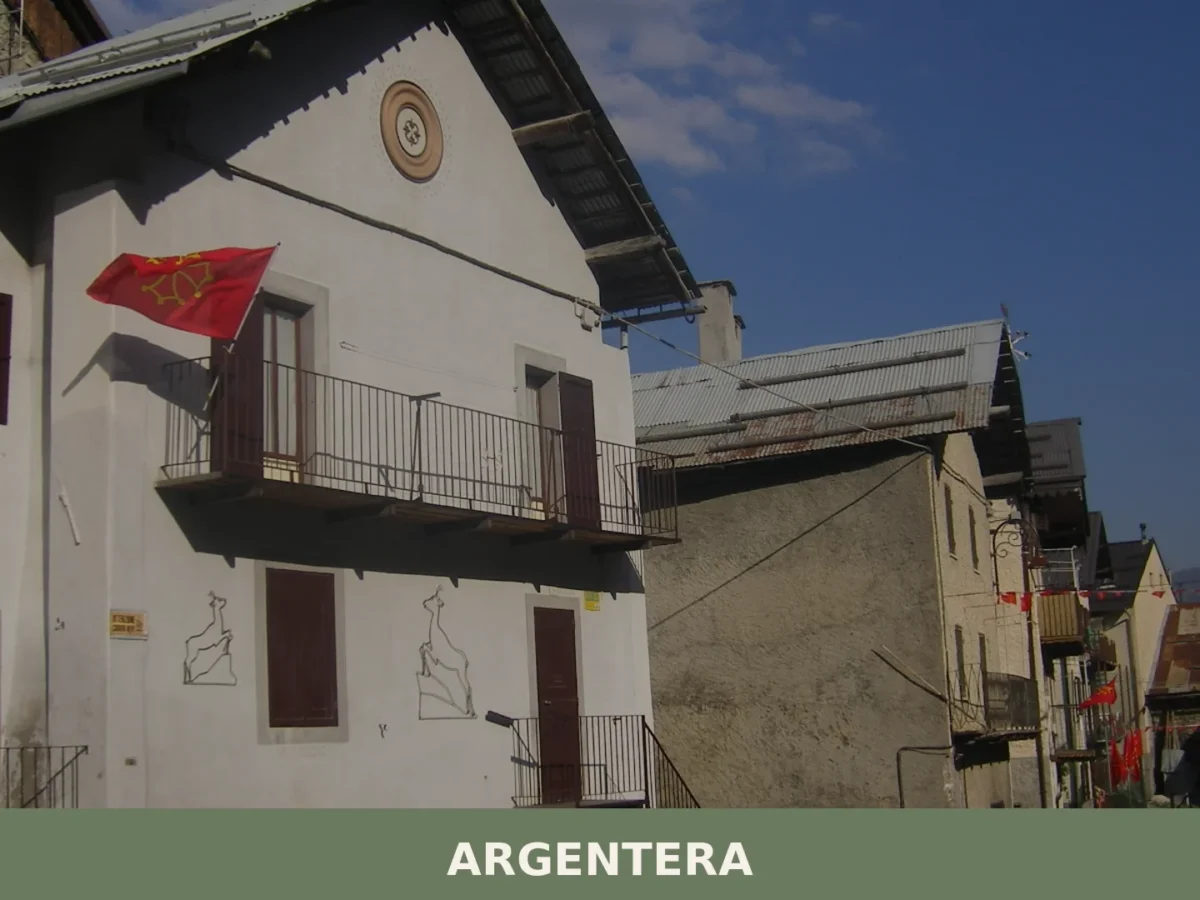
Argentera is a high-altitude mountain commune of 77 inhabitants in the upper Valle Stura di Demonte, Cuneo, at 1,618 metres above sea level, about 60 kilometres from Cuneo.

Pont-Canavese
Hills
A village of 3,020 people where two rivers meet and medieval towers dominate the skyline. Ancient churches, ethnographic collections and industrial heritage reveal centuries of mountain life.

🏡 Know Perosa Argentina better than we do?
If you’re a local or have been there, your knowledge matters: add what’s missing or fix a detail on this page.