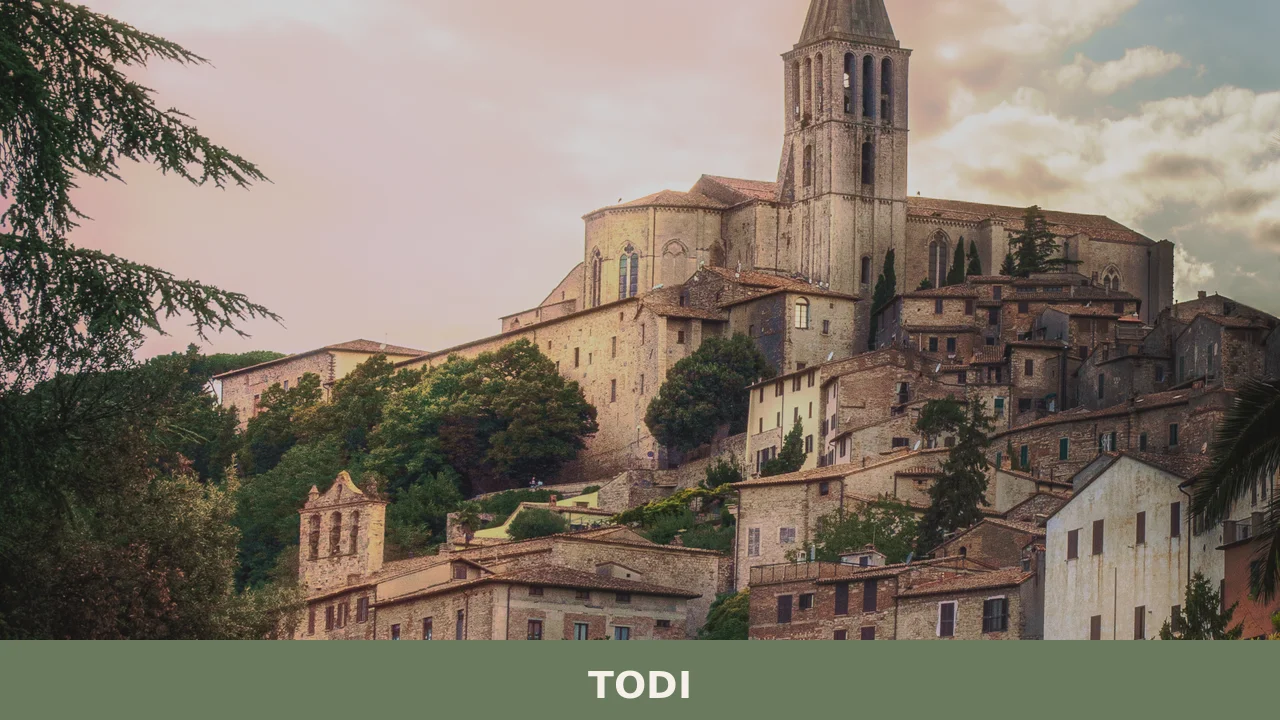
Todi clings to a limestone ridge at 400 metres above the Tiber’s middle valley, its earthen walls intact and its heart still medieval. Stone by stone, the village locks the rhythm of centuries into a grid of narrow lanes that spiral downward toward the river’s southwestern bend. The campanile of San Fortunato rises above the roofline, visible for thirty kilometres across the Umbrian plain. Light here moves differently—soft in morning, golden in late afternoon—because nothing taller than the old towers breaks the sight line to the valley floor.
Todi Umbria is not a museum village frozen in aspic. It is a functional, occupied town where residents live inside buildings that predate the Medici, where the municipal offices share a palazzo with civic art, where the Sunday market still fills the Piazza del Popolo. Visitors arrive drawn to the frescoed churches and the silhouette itself—but they stay for the texture of lived continuity, and for food rooted in Umbrian soil: guanciale aged in cellars, lentils from nearby Castelluccio, wines from the slopes of Montefalco that have been pressed for centuries.
From Border City to Medieval Commune
The name Tutere meant “city of the border,” and for good reason. Todi was founded between the 8th and 7th centuries BC by the Umbri on a defensible ridge overlooking Etruscan territory to the northwest. The river below became both frontier and lifeline. By the 5th and 4th centuries BC, Etruscan influence deepened—whether through trade, political alliance or direct annexation, the boundary between the two cultures grew permeable. The town would eventually absorb both, then Rome.
Roman citizenship came late: after 89 BC, when the Umbri received full legal standing. Within two generations, the settlement was renamed Colonia Julia Fida Tuder and dressed in civic stone—an amphitheatre, public buildings, and suburban villas rose in the age of Augustus. What mattered most, though, was hydraulic engineering: Roman cisterns were sunk beneath what is now the Piazza del Popolo, tapping the limestone aquifer. Those vaults remain, accessible to visitors today, silent witnesses to Roman municipal ambition.
The Middle Ages fractured Rome’s order, but Todi found its groove as a free commune around 1067. By the 13th century, three working-class boroughs—built by artisans and traders—had swollen the population to over thirty thousand souls (more than Rome itself at that moment). In 1244, the three districts were enclosed within walls nearly four kilometres long, studded with gates and bastions still standing. Todi lost political independence by century’s end, absorbed into the Papal States, but the walls held. The pattern—civic self-consciousness expressed in stone—became the village’s defining trait.
By 1633, the city was already so fixed in its medieval form that the printer Giacomo Lauro’s engraving shows Todi almost unchanged from the present day—a rare testimony to centuries of continuity without demolition.
Piazza del Popolo and the Civic Heart
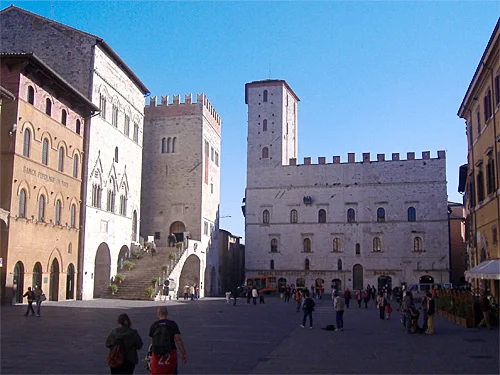
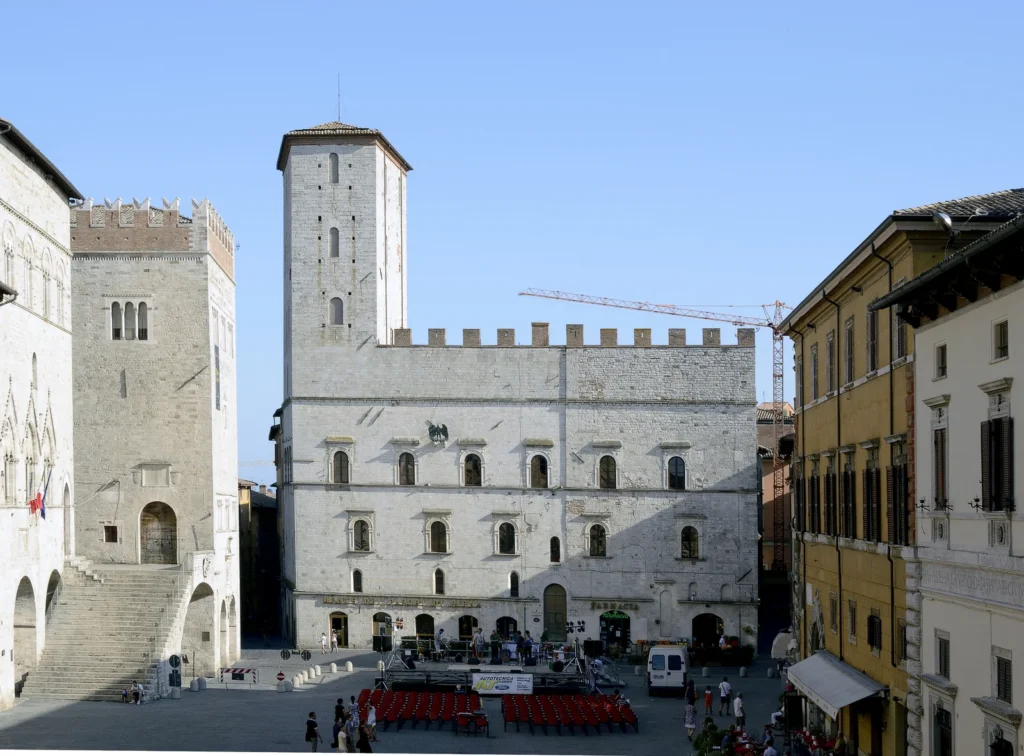
The Piazza del Popolo is the coordinate around which everything else orbits. Built on the footprint of the Roman forum, its four sides are occupied by the three major civic buildings and the cathedral, each facing inward as if to declare that power—religious, executive and popular—resided in this one square. The effect is intimate yet formal: a stage for the town’s authority, visible in stone.
The Duomo and Palazzo Vescovile
The Duomo (Concattedrale della Santissima Annunziata) rises on the western flank in Romanesque-Gothic style, its construction spanning the 12th to 14th centuries. Inside, the apse holds a monumental fresco of the Last Judgment by Ferraù da Faenza, its composition inspired by Michelangelo’s vision of divine judgment. A small museum occupies the crypt. The bishop’s palace, finished in 1593 under Bishop Angelo Cesi, stands adjacent; its principal salon was frescoed by Ferraù in 1594, and a gallery by Andrea Polinori in 1629 displays the accumulation of episcopal taste. Entering either building feels like stepping inside the machinery of medieval ecclesiastical power.
Palazzo del Capitano del Popolo
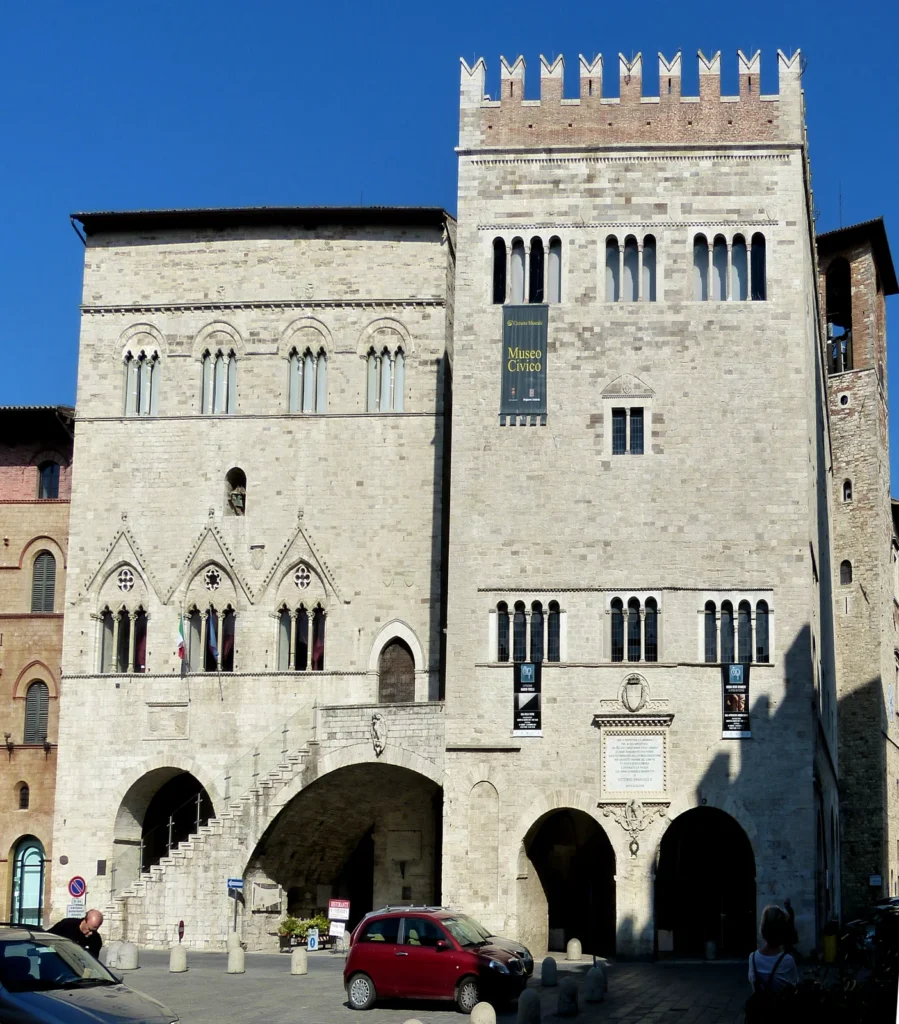
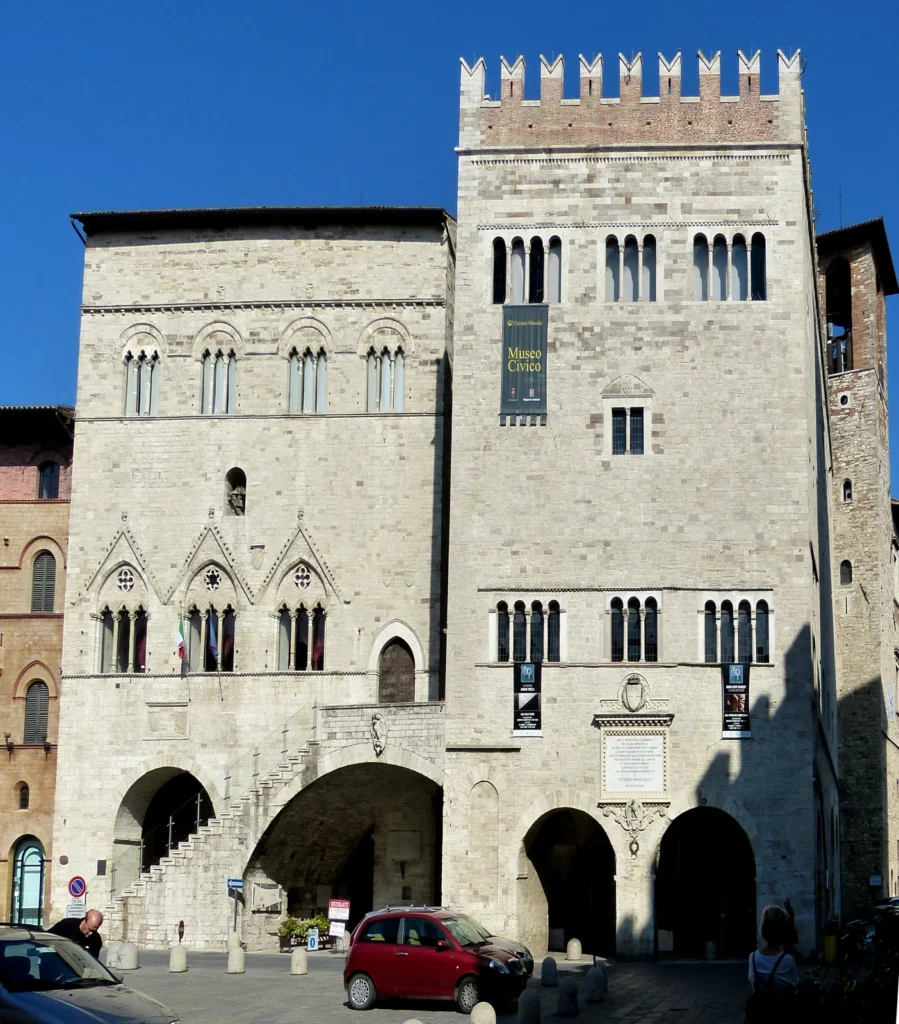
Built in 1293, the Palazzo del Capitano (also called Palazzo Nuovo) occupies the eastern edge of the piazza. Its austere Gothic facade announces executive authority. A monumental staircase links it to the adjoining Palazzo del Popolo, and together they now house the civic museum. The Capitano served as the chief magistrate—protector of the commons against noble excess—and his palazzo’s severity reflects that democratic mission. The roofline offers panoramic sightlines toward Orvieto and the Tiber valley.
Palazzo dei Priori
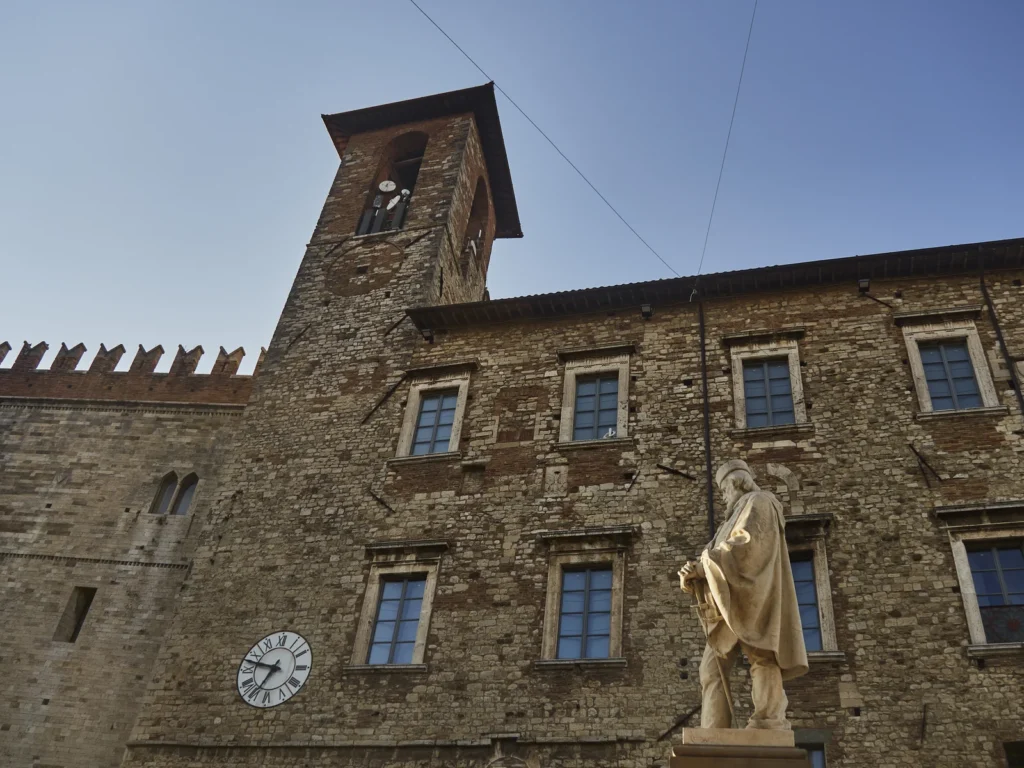
Opposite the cathedral, the Palazzo dei Priori commands the square with a trapezoidal tower and crenellated roofline. It embodies the Gothic idiom of civic strength. The building has served continuously as civic seat—a symbol of republican order that survived every regime change.
Churches, Crypts and Sacred Layers
Todi’s ecclesiastical architecture reveals layers of piety and conquest stacked across ten centuries. Beneath the modern church lie Roman cisterns; beneath Roman structures lie older Umbrian sanctuaries. Three churches merit particular attention for their artwork, their archaeology and their role in local devotion.
Church of San Fortunato
The large Gothic church dedicated to the patron saint rose in the 13th century, its facade opening toward a broad flight of steps that descend toward the river. The campanile—a 15th-century bell tower ringed with lesenes and crowned by a pyramidal spire—offers the most panoramic view of the Tiber valley and the Umbrian plain; the ascent to its summit is rewarded with sightlines that extend thirty kilometres. The crypt contains the tomb of four saints, among them San Cassiano, and preserves a frescoed oval portrait of Jacopone da Todi, the 13th-century Franciscan poet who was born in the town and composed ecstatic laudi (devotional hymns) of visionary power.
Church of San Nicolò de Criptis
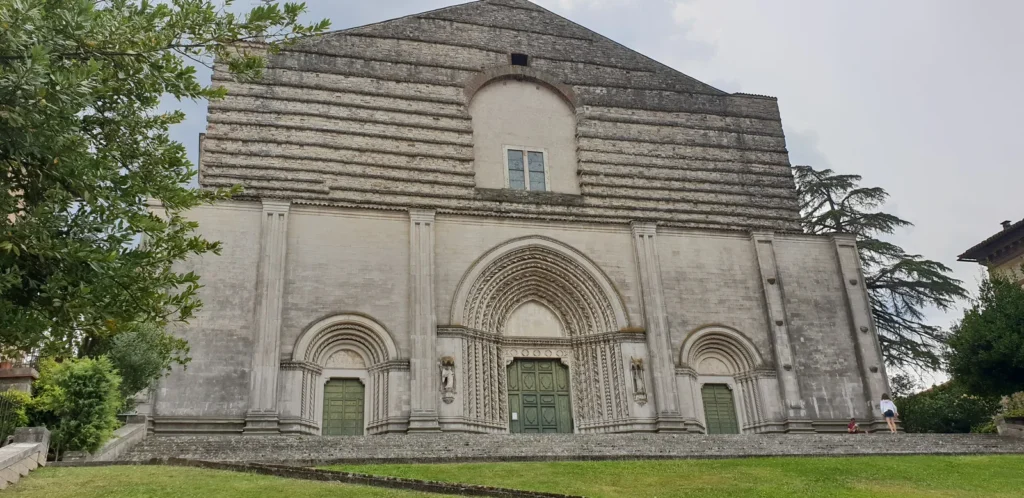
Built in 1093 directly atop the cavea and stage of a Roman amphitheatre, San Nicolò preserves the archaeological continuity of the site. Its name derives from the “crypts” (underground chambers) that honeycombed the hillside. Three doorways and a Romanesque rose window survive from the original construction. The interior now displays a careful copy of Caravaggio’s Madonna of the Pilgrims, painted by Andrea Polinori, alongside remains of quattrocento frescoes. Standing in the nave is to occupy the same space where actors once performed, where Roman crowds gathered, and where Christian worshippers have knelt for over nine centuries.
Church of San Filippo Benizi
Begun in the mid-15th century as a shrine to a miraculous image of the Virgin, the church was rebuilt between 1490 and 1507 under the patronage of the Knights of Saint John of Jerusalem. The 16th-century transfer of the relics of Saint Philip Benizi to the building led to its rededication. Inside, the 14th-century image of the Virgin and Child (the original miraculous icon) remains mounted above the altar, and the bones of the saint rest beneath it. In 1491, the painters L’Alunno and his son Lattanzio created an altarpiece for the church, of which only the predella survives (now in Palazzo Trinci, in nearby Foligno).
Underground Rome: The Cisterns
Beneath the Piazza del Popolo lie the Roman cisterns—monumental vaults of opus caementicium that collected rainwater for the settlement’s public use. Visitors can descend via narrow stairs into a warren of chambers that demonstrate the hydraulic engineering of the imperial age. The cisterns represent the major public works project visible to modern visitors, a direct connection to the municipality that existed two thousand years before the commune. The silence in these chambers—cool, echoing—communicates something no inscription can.
The Lapidarium and Rural Memory
The Museo Lapidario occupies the complex of the Lucrezie, a former charitable institution in the Nidola quarter dating to the early 15th century. The museum houses Roman inscriptions, fragments of sculpture and architectural elements recovered from the medieval layers. Adjacent space displays objects recovered in excavations. Further afield, the Museo della Civiltà Contadina (Museum of Peasant Life) sits at Bodoglie Alte, a few kilometres outside the walls. Born from the initiative of a former sharecropper turned furniture entrepreneur, the museum preserves the material culture of rural Umbrian life—tools, furnishings, photographs—a counterweight to civic grandeur.
Food and Umbrian Flavour
The territory surrounding Todi produces some of the strongest protected-designation products in central Italy. Lentils from Castelluccio, grown on a high plateau to the south, are prized for their mineral flavour and tender skin; they appear in modest soups and in restaurant preparations across the province. Prosciutto di Norcia, cured in the mountains to the southeast, carries a complexity built over months of aging in Apennine cellars. The province also yields Sagrantino wine from Montefalco, a dark, tannic red that demands food and time.
Locally, the table emphasizes guanciale (aged jowl), rendered slowly for pasta; hand-rolled pasta shapes like corzetti; porchetta, whole pig roasted in the oven or over coals; and autumn game—wild boar, hare, pheasant. Umbrian bread is dense and slightly sour, made without salt in the old style. Cheese appears simple: local pecorino, aged in caves. The rhythm of eating mirrors the rhythm of agricultural seasons, with spring vegetables giving way to autumn preserves.
Planning a Visit
Todi sits at 400 metres elevation on the southern edge of the province of Perugia, in the mid-valley of the Tiber. The village is compact—most of the historic core is walkable in under two hours—but the surrounding territory extends across rolling hills, castles and smaller hamlets. Spring (April–May) and autumn (September–October) offer warm days and clear light; summers can exceed 30°C, and winters bring occasional frost and fog from the river. The nearest airports are Perugia and Rome; the nearest train station (with connections to Florence, Rome and Umbrian centers) is at Todi itself, though service is modest. By car from central Italy’s main routes (the A1/E35 toward Rome, or the secondary roads from Orvieto and Spoleto), Todi is well-positioned.
| Departure point | Distance (km) | Driving time |
|---|---|---|
| Perugia | 42 | 50 minutes |
| Terni | 42 | 50 minutes |
| Orvieto | 35 | 40 minutes |
| Spoleto | 45 | 55 minutes |
| Rome | 150 | 2 hours |
Visitors arriving by car should use the parking areas outside the walls; the medieval core is closed to vehicles. Most lodging and restaurants lie within the circuit of the 1244 fortifications. A good strategy is to spend the morning in the civic buildings and churches around the Piazza del Popolo, descend into the Roman cisterns at midday, climb the campanile of San Fortunato in afternoon light, and walk the walls at sunset. The feast of the patron saint, San Fortunato, draws local pilgrims and gives the calendar rhythm, though exact dates vary by liturgical year and should be confirmed with the commune.
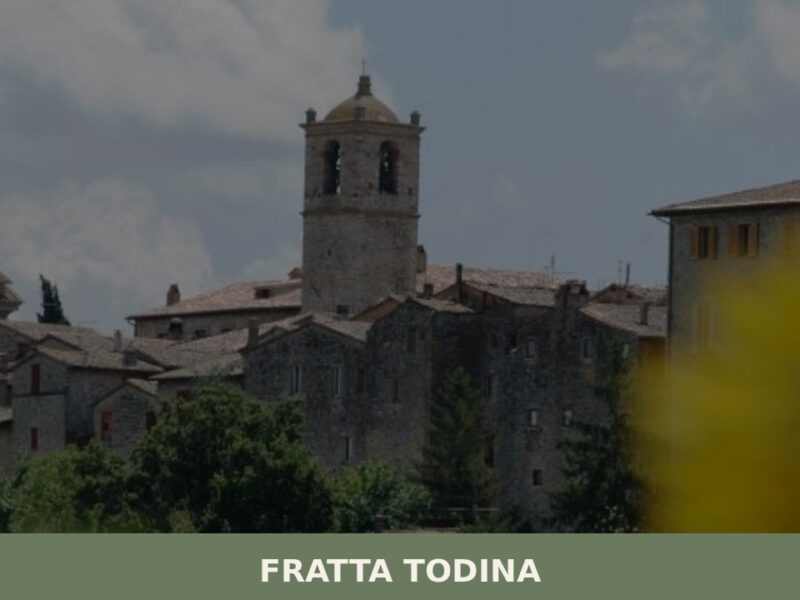
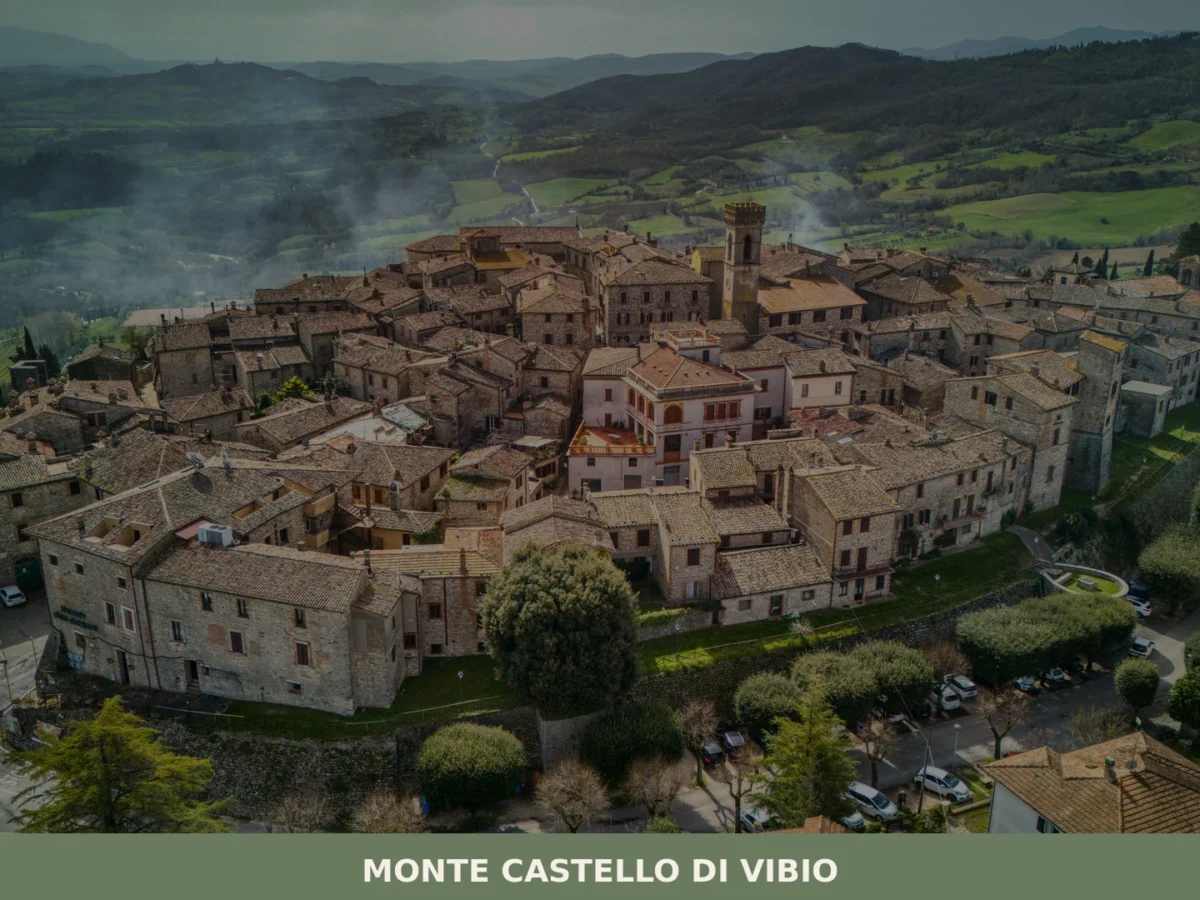
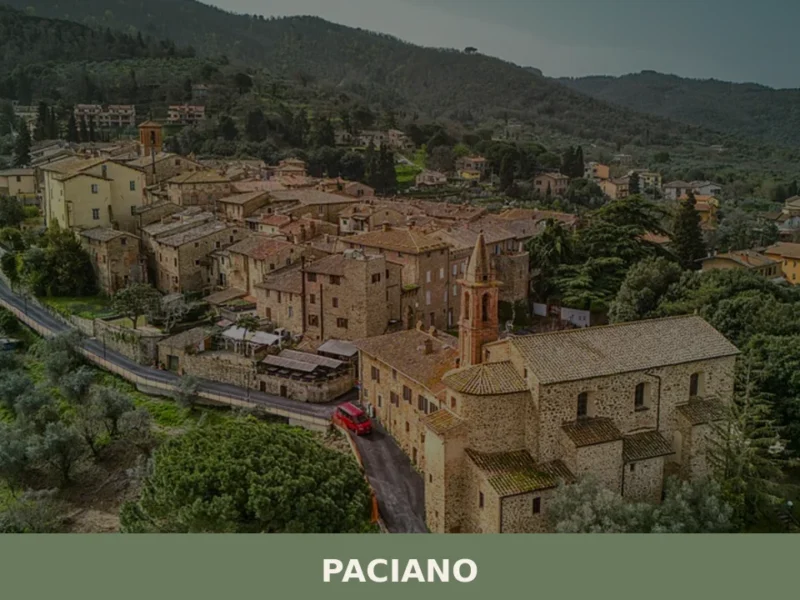
Nearby villages within reach by car include Monte Castello di Vibio, a tiny fortified hamlet with a single-nave Baroque chapel, and Fratta Todina, perched on an opposite ridge with views back toward Todi. The Bevagna plain to the north opens onto Bettona, another fortified hill town. Castel Ritaldi, south of Montefalco, sits at the edge of the Sagrantino wine region and offers both wine tastings and rural landscape. All are reachable in 30 to 50 minutes by car, making Todi a natural base for exploring the central Umbrian hill country.
 Mountain