


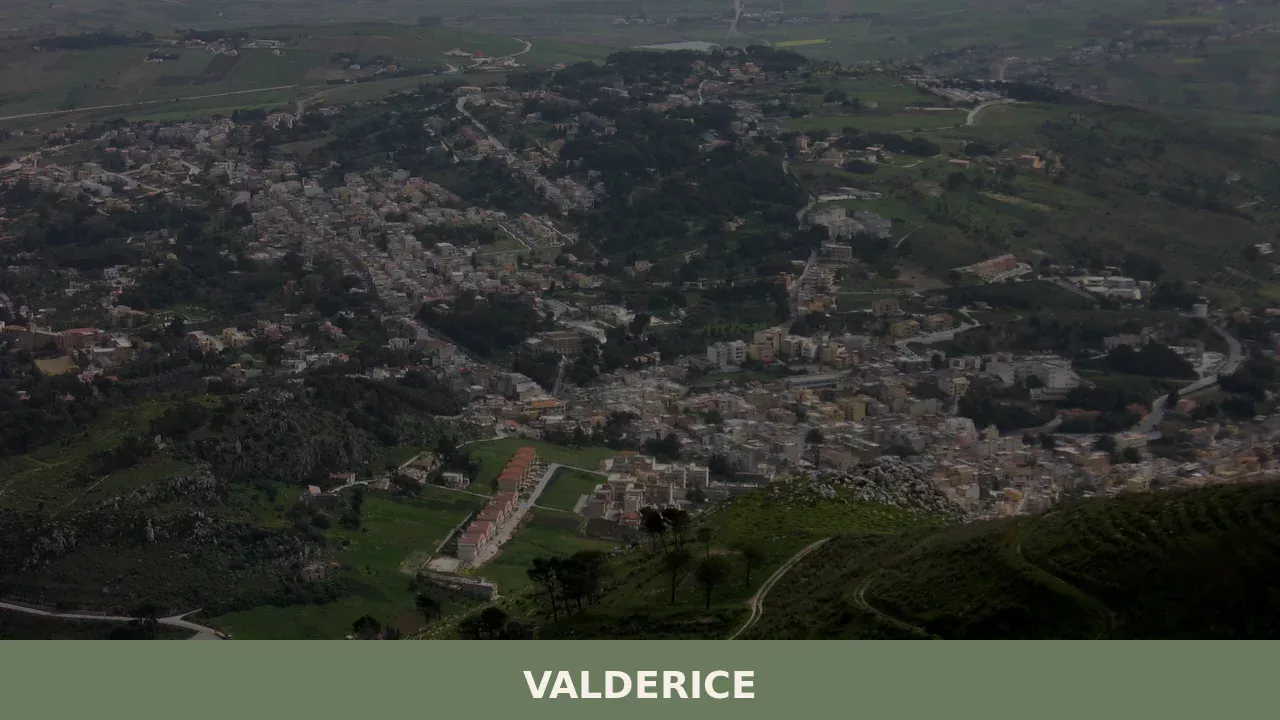

Valderice is a coastal-hill town near Trapani where olive groves, the Gulf of Bonagia and the farming culture of the Agroericino come together across 53 square kilometres of western Sicily.
Discover Valderice
Valderice village in Sicily: between the hills and the Gulf of Bonagia
Drive north from Trapani on a clear morning and the landscape shifts quickly: the flat salt pans give way to rising ground, olive groves take over the roadsides, and somewhere around the eight-kilometre mark the scattered houses of Valderice come into view, spread across a coastal hill at around 240 metres above sea level. Below, barely visible through the vegetation, the Gulf of Bonagia glints blue. The town sits in that particular Sicilian space where agriculture, sea, and rock coexist without ceremony — a working place that happens to face one of the western coast’s most composed stretches of water.
With 11,278 residents across a territory of about 52.92 square kilometres, Valderice is one of the more populous centres of the Agroericino — the farming district that spreads out from the base of Monte Erice. It is not a village you visit for a single monument. It is a place where the accumulated texture of Sicilian rural and coastal life becomes legible: the old tonnara (tuna-processing plant) by the water, the hilltop pines, the villas of former landowners half-hidden behind walls, the civic theatre carved out of a tufa quarry.
A town built by separation
Valderice’s story is inseparable from Erice, the walled medieval city on the summit above. For centuries, the fertile valley below Erice filled gradually with farming hamlets — Paparella, San Marco, Ragosia, Bonagia, Misericordia among them — as people chose the productive lowlands over the exposed hilltop. These scattered settlements remained administratively part of Erice well into the twentieth century, a situation that generated long-running tension over representation and resources.
The break came on 15 February 1955, when a regional law formally established an independent municipality, initially named Paparella San Marco after its two largest nuclei. Three years later, in 1958, the current name was adopted. Valderice was the last of several communities to split from Erice — Custonaci, Buseto Palizzolo, and San Vito Lo Capo had each gone their own way starting from 1948. The town’s identity, then, is relatively young, even if the land it occupies has been farmed and fished for much longer.
What to see
The religious architecture in Valderice spans a remarkable range of centuries. The Church of Sant’Andrea Apostolo, traditionally dated to 1164 and said to have been built at the behest of William II of Sicily, is among the oldest surviving structures; a stone inscription found inside dates to the third century AD, suggesting the site’s significance predates the Norman church by over a millennium. At the other end of the timeline, the Church of Cristo Re — the town’s largest and most frequented place of worship — was completed in 1950, commissioned by Father Francesco Sanclemente, and serves as the parish church at the centre of town.
The Sanctuary of Nostra Signora della Misericordia, built in 1640, draws local devotion around a painting of the Madonna dated 1654, attributed in the sources to Andrea Carreca. The Church of Maria Santissima della Purità stands in the San Marco quarter. The ruins of the Church of San Barnaba, though no longer intact, gave their name to the open-air theatre built in their surroundings.
That theatre — now officially the Teatro Nino Croce — is one of Valderice’s more unusual spaces: an outdoor amphitheatre seating over 1,000, constructed inside an old tufa quarry across roughly 1,860 square metres, with tiered stone seating arranged in concentric rings around a circular stage. It hosts the summer arts programme Valderice in Scena every year from July through September.
Scattered across the municipal territory, a series of aristocratic villas — Villa Adragna, Villa Elena (also known as Villa Barone Stabile), Villa Pilati, Villa Coppola Ragosia among others — testify to the landholding families who shaped the rural economy here. Some have changed use; Villa Pilati is now a hotel. The Molino Excelsior, a surviving mill building, represents a further layer of local industrial archaeology, while the Arco del Cavaliere in the Cavaliere district is a stone arch associated with a historic Marian pilgrimage route from Custonaci to Erice.
Coast, hills, and green spaces
Bonagia’s shoreline, along with the beaches of Cortigliolo and Rio Forgia, gives Valderice its maritime character despite its inland elevation. The Gulf of Bonagia is calm and relatively uncrowded compared to the more tourist-facing coasts further north, and the views from the Parco Urbano di Misericordia — an urban park on the hill — take in the full arc of that gulf. The park also serves as the setting for the town’s living nativity scene each winter.
A municipal pine forest extends across one of the surrounding hills, where several natural grottos have been documented. Another pine grove sits in the Ragosia hamlet. The town’s position — high enough for Mediterranean scrub and mild summer heat, close enough to the sea for a genuine coastal feel — gives the surrounding landscape a dual register that rewards both walking and swimming depending on the season.
An old tuna watchtower still stands at the water’s edge — a structure that once guarded against pirate raids and whose silhouette now appears on the town’s official coat of arms.
Food and local agriculture
The land around Valderice produces grain, olive oil, wine, and honey — the core of a Sicilian agricultural economy that has sustained these hillside communities for generations. The territory falls within a productive wine zone: the Erice DOC designation covers wines made in this part of the Trapani province, alongside the broader Alcamo and Delia Nivolelli DOC appellations from the surrounding area. The coastal hamlet of Bonagia is noted locally for its fish-based cooking, a natural result of its direct relationship with the sea.
Across the wider province, protected designations include the Sale Marino di Trapani IGP (Trapani sea salt), the Nocellara del Belice DOP olive, and the Pecorino Siciliano DOP cheese — products you will encounter throughout the Trapani table rather than exclusively here, but which reflect the agricultural character of the territory Valderice belongs to.
Traditions and festivals
The town’s patron is Cristo Re (Christ the King), celebrated on the first Sunday of August. Beyond this central feast, Valderice runs an unusually dense calendar of public events throughout the year. The Carnival — by some measures the largest in the province — fills the late winter weeks with floats built from polystyrene and papier-mâché by local artists, drawing visitors from across Sicily. A livestock fair at Ragosia on the first Sunday of September continues a rural tradition rooted in the area’s farming past. The living nativity at the Parco Urbano di Misericordia unfolds each December across a series of tableaux drawn from both Old and New Testament scenes. A May Day concert at the Lido Valderice seafront has, since 1999, grown to draw crowds of up to around 15,000.
Getting here
Valderice sits just 8 kilometres from Trapani, and is straightforwardly reached by car from the city via the scorrimento veloce (fast road) heading inland. From Trapani-Birgi Airport, the direct route passes through Trapani; journey time is under twenty minutes. From Palermo Falcone-Borsellino Airport, take the A29 motorway westbound, exit at Fulgatore, and follow signs for Erice or Valderice — around an hour’s drive in normal conditions. The town is also a natural base for visiting Erice, reachable by a winding road that climbs to the medieval summit above.
Frequently asked questions about Valderice
What is the best time to visit Valderice?
Summer is ideal for beach and coastal activities, with families drawn by the sea and warm weather. Autumn offers pleasant conditions with the distinctive scents of grape must and olive pressing, reflecting the harvest season. November 26 marks the Patron Saint feast of Cristo Re, featuring local celebrations. Spring provides mild temperatures and blooming landscapes. Winter is quieter but suitable for those seeking a peaceful, authentic Sicilian experience away from peak tourism.
How far is Valderice from Trapani, and how do I get there?
Valderice is located just 8 kilometres west of Trapani, making it easily accessible for day trips or short stays. By car, follow the road climbing west from Trapani city centre through olive groves and vineyards. Public buses connect the two towns regularly. The proximity to Trapani allows convenient access to the provincial capital's services, airport, and ferry connections while maintaining Valderice's distinct character.
What makes Valderice's coastal area special?
Valderice boasts the Gulf of Bonagia with views framed by Monte Erice's distinctive silhouette against the Sicilian sky. The coastal hamlet features an ancient tuna fishery reflecting centuries of maritime tradition. At 237 metres elevation, the town captures both sea light and hill winds. The territory spans approximately 53 square kilometres of varied landscape—green ridges, wild scrub, and parks offering some of the finest coastal views along this stretch of Sicily's northwest coast.
What is the population and character of Valderice?
With 11,278 residents spread across its territory, Valderice is a genuinely lived-in town rather than a tourist performance space. It maintains authentic rhythms throughout the year—summer brings families to the sea, autumn smells of harvest, and quieter seasons follow local life patterns. Located 8 kilometres from Trapani, it remains independent in character while remaining accessible, offering visitors a genuine Sicilian experience within a manageable-sized community.
📷 Photo Gallery — Valderice
Getting there
Via Antonino Valenti, 91019 Valderice (TP)
Nearby Villages near Valderice
In Sicily More villages to discover

San Michele di Ganzaria
 Hills
Hills
A village of 2,820 people shaped by a medieval Albanian settlement pact and a baroque parish church with neo-Gothic facade. History runs deep here.
Acate
 Sea
Sea
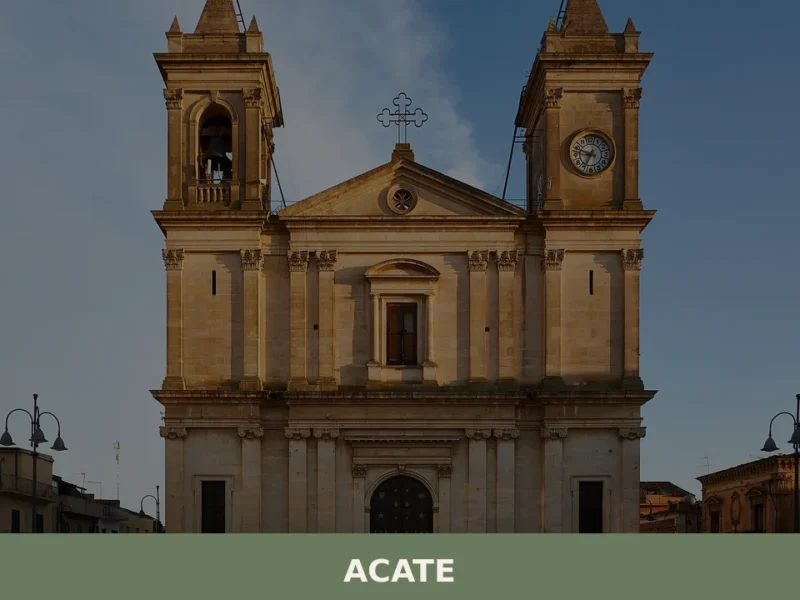
Discover what to see in Acate, the former Biscari in Ragusa province: Baroque history, Cerasuolo di Vittoria vineyards, castle and Iblean landscapes.
Messina
Sea
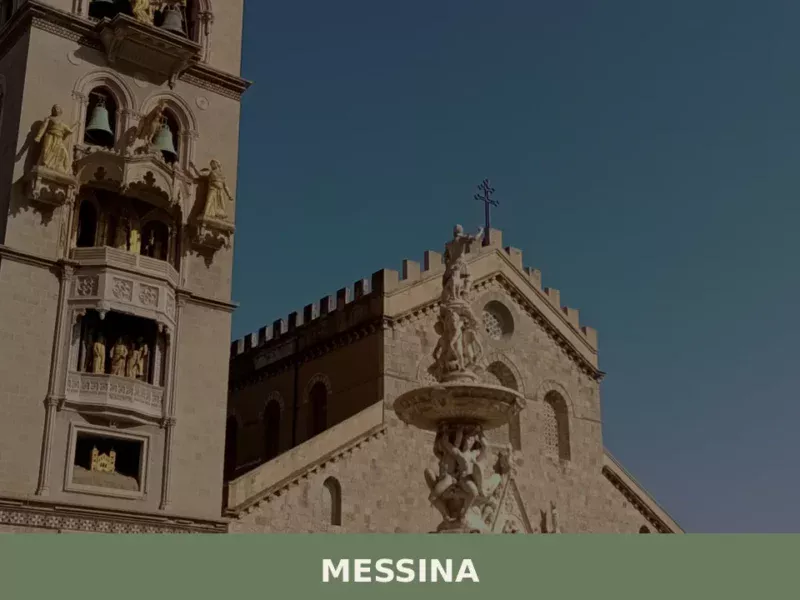
What to see in Messina: 242,267 inhabitants, the astronomical clock tower, two Caravaggios and the Norman Cathedral. Plan your visit and discover how to get there.

San Cataldo
Hills
With over 400 years of documented history and a remarkable archaeological zone, San Cataldo offers cultural depth that rewards curious visitors.
Catania
Sea
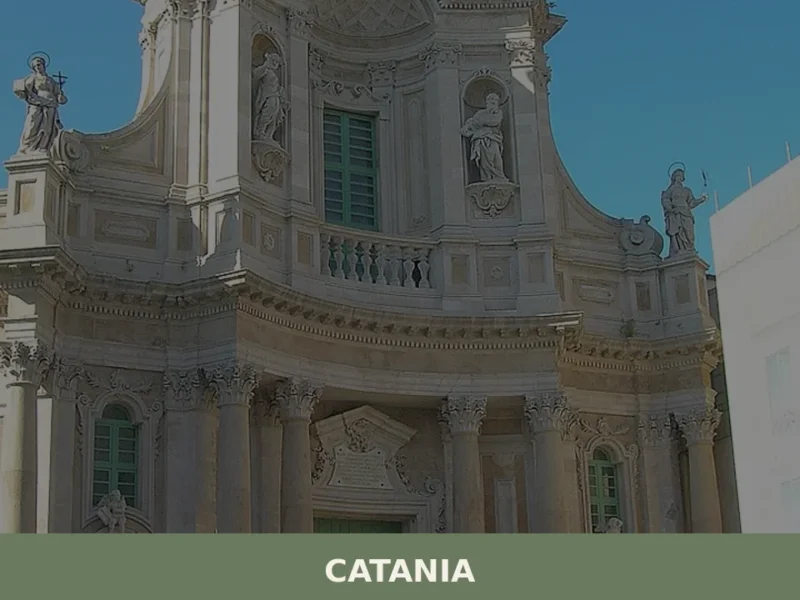
Discover Catania, a captivating village in Sicily, Italy. Explore its rich history, stunning architecture, local culture, and hidden gems waiting to be found.
Baucina
Hills
Nine historic churches and a 2013 archaeological museum make Baucina a compact but layered destination in the Palermo hinterland.
Isnello
Hills
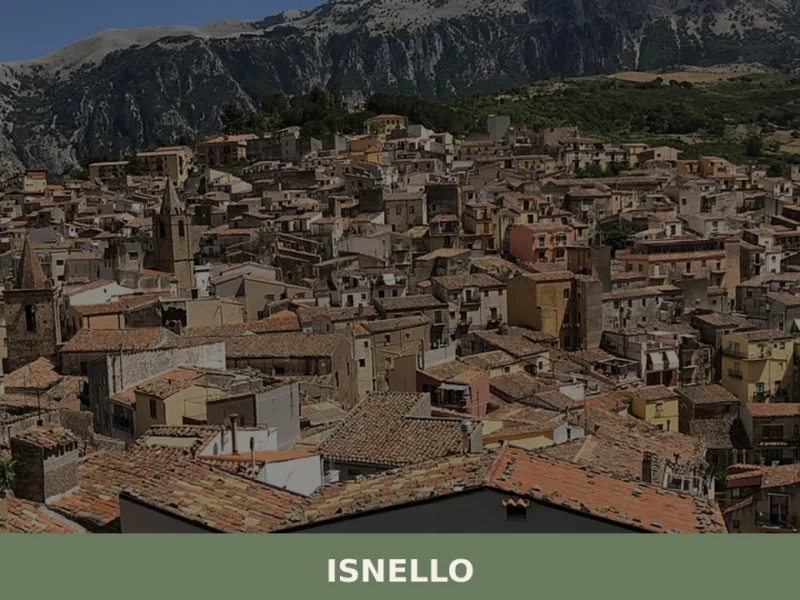
What to see in Isnello, Italy: Explore this 583 m (1,913 ft) altitude village near Palermo. Discover its historic center and panoramic views. Read our guide.
Bagheria
Sea
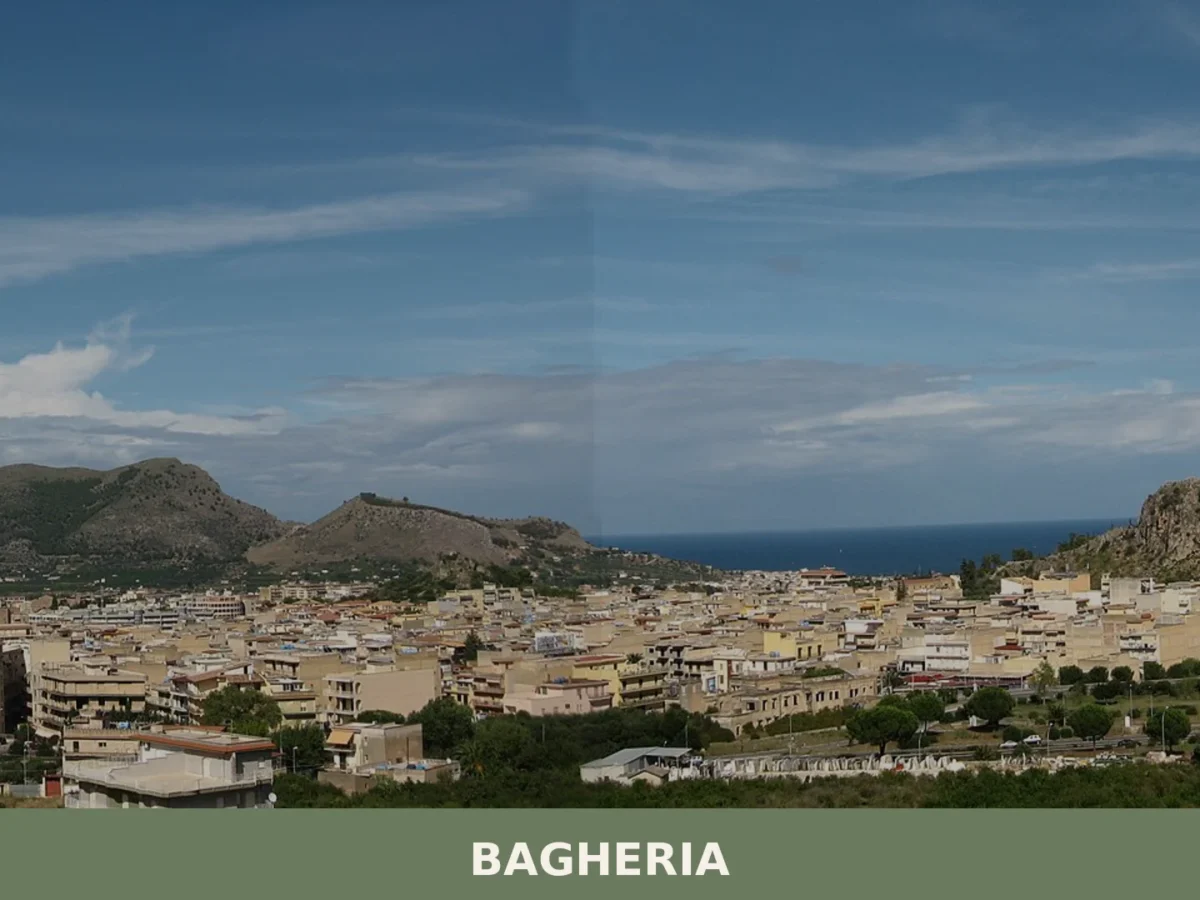
Bagheria is a town of around 53,000 people in the Metropolitan City of Palermo, facing the Tyrrhenian coast and famed for its baroque aristocratic villas, layered history and proximity to Palermo.
Godrano
 Mountain
What to see in Godrano: from the Bosco della Ficuzza Reserve to the Palazzina Reale, churches and cuisine of the Sicani hinterland at 693 m above sea level.
Aliminusa
Hills
Morning light hits the limestone facades along Corso Umberto at a low angle, turning the walls the colour of raw honey. A few voices carry across the piazza — unhurried, familiar. Aliminusa is a village of just over a thousand people, set at 450 metres above sea level in the hills of the Palermo province, […]
🏡 Know Valderice better than we do?
If you’re a local or have been there, your knowledge matters: add what’s missing or fix a detail on this page.