


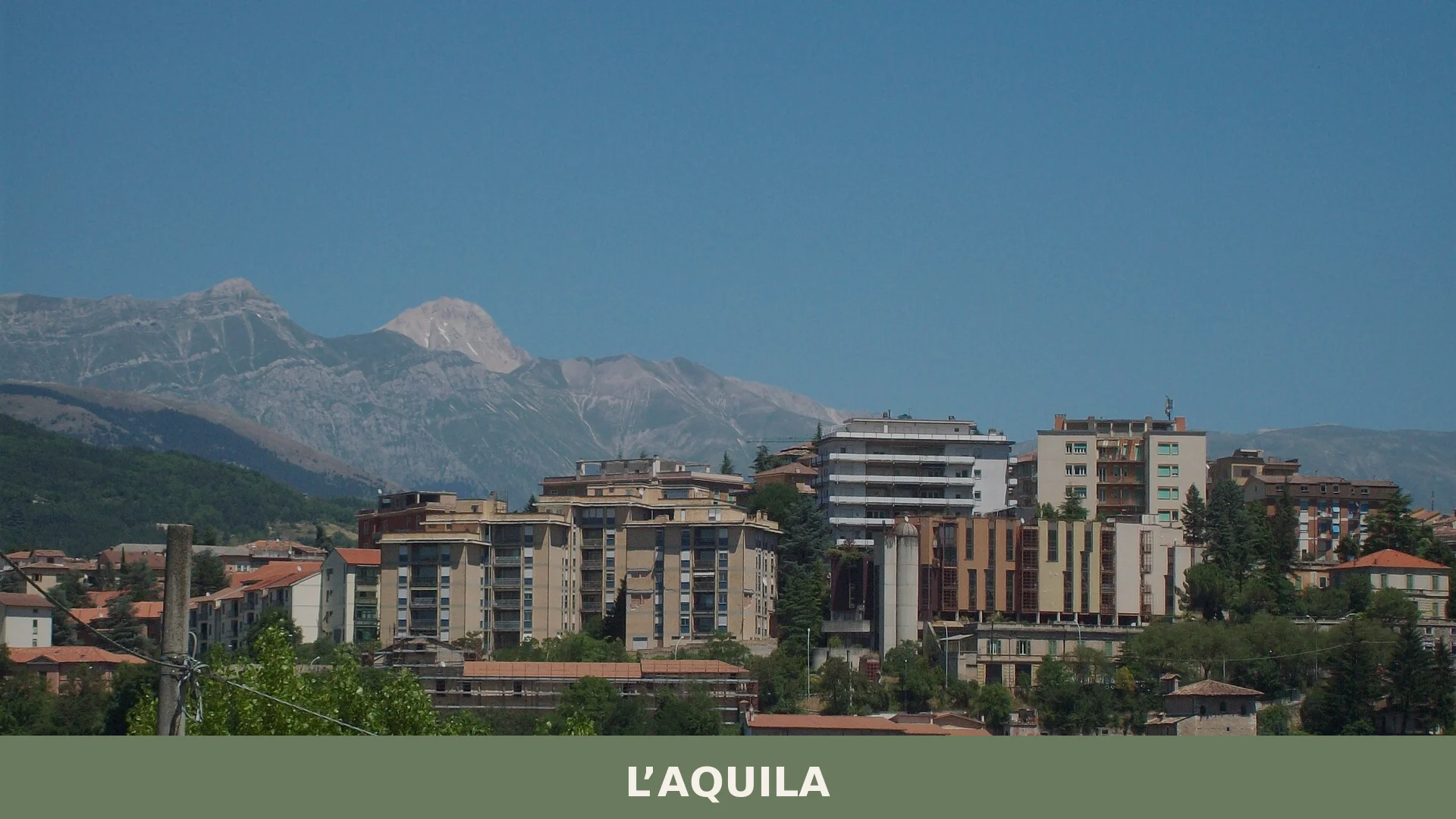

L’Aquila is the mountain capital of Abruzzo, a city of medieval origins, Roman heritage and the UNESCO-listed Perdonanza Celestiniana, set at 721 metres amid the Gran Sasso and Sirente-Velino peaks.
Discover L’Aquila
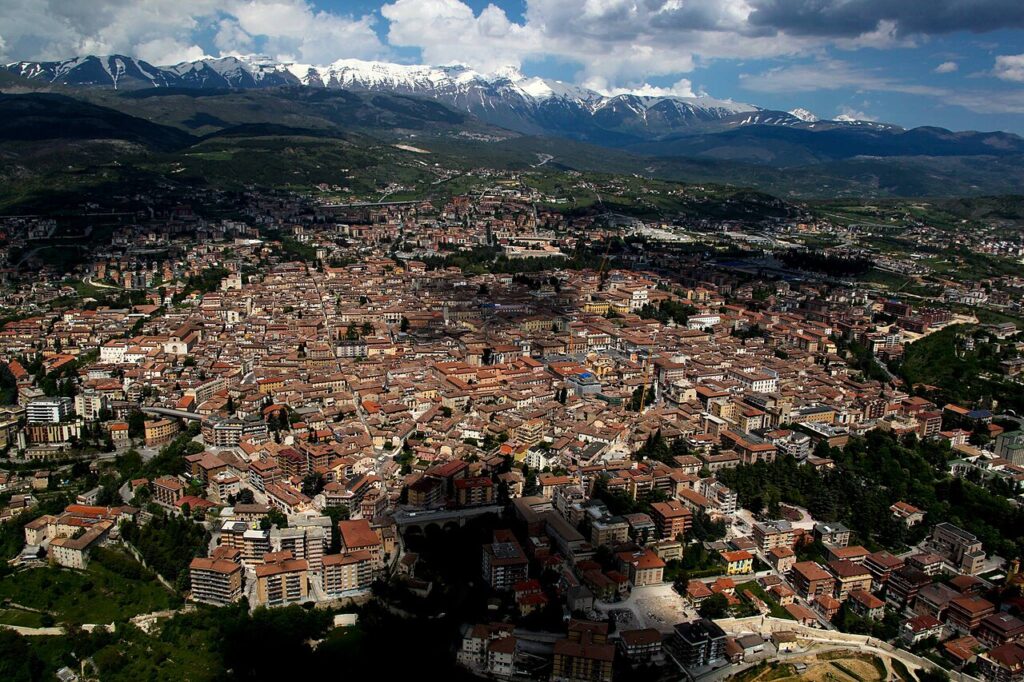
L’Aquila is the capital of both the province of L’Aquila and the region of Abruzzo, a city of around 70425 inhabitants whose historic centre stands on a hill at 714 metres above sea level, encircled by the Gran Sasso massif and the Sirente-Velino chain. It ranks as the second most populous municipality in Abruzzo after Pescara, and its territory — one of the largest in Italy by surface area — extends across landscapes where more than half the land lies above 714 metres, with a peak at Pizzo d’Intemesoli reaching 714 metres.
Visitors who come to the L’Aquila village in Abruzzo find a city that carries centuries of layered history: a medieval foundation born from the federation of local castle communities, a papal coronation that gave rise to one of the oldest jubilees in Christendom, and a resilience tested repeatedly by earthquake and reconstruction. The Fontana delle 99 Cannelle, the Romanesque basilica of Santa Maria di Collemaggio, and the ancient Roman remains at nearby Amiternum each stand as tangible markers of that long sequence — waiting to be read at walking pace through streets that rise and open onto mountain views at almost every turn.
L’Aquila village in Abruzzo: history and identity
L’Aquila was founded in 1254, when Emperor Conrad IV of Swabia issued a formal act permitting the construction of a new city called “Aquila” — a settlement born from the federation of local castle communities who had sought to break free from feudal rule. The valley of the Aterno river, where the city would take shape, had been inhabited long before that moment: first by the Sabini and the Vestini, then absorbed into the Roman world during the third century BC. Near the locality of San Vittorino stood the ancient city of Amiternum, birthplace of the historian Sallust and an episcopal seat, whose remains — a theatre and an amphitheatre — still mark the landscape today.
The path to foundation was not straightforward. As early as 1229, the inhabitants of the local castles had appealed to Pope Gregory IX for permission to establish a city, but the project came to nothing. Only with Conrad IV’s act of 20 May 1254 did the city begin to take form. In 1257, Pope Alexander IV transferred the episcopal seat from Forcona to Aquila, consolidating the city’s religious importance. Two years later, in 1259, Aquila paid a heavy price for its loyalty to the Church: Manfred of Sicily razed it to the ground. Reconstruction followed in 1266 under authorisation from Charles I of Anjou, and the city recovered its standing, going on to become, by the fifteenth century, the second most important city in the Kingdom of Naples after Naples itself.
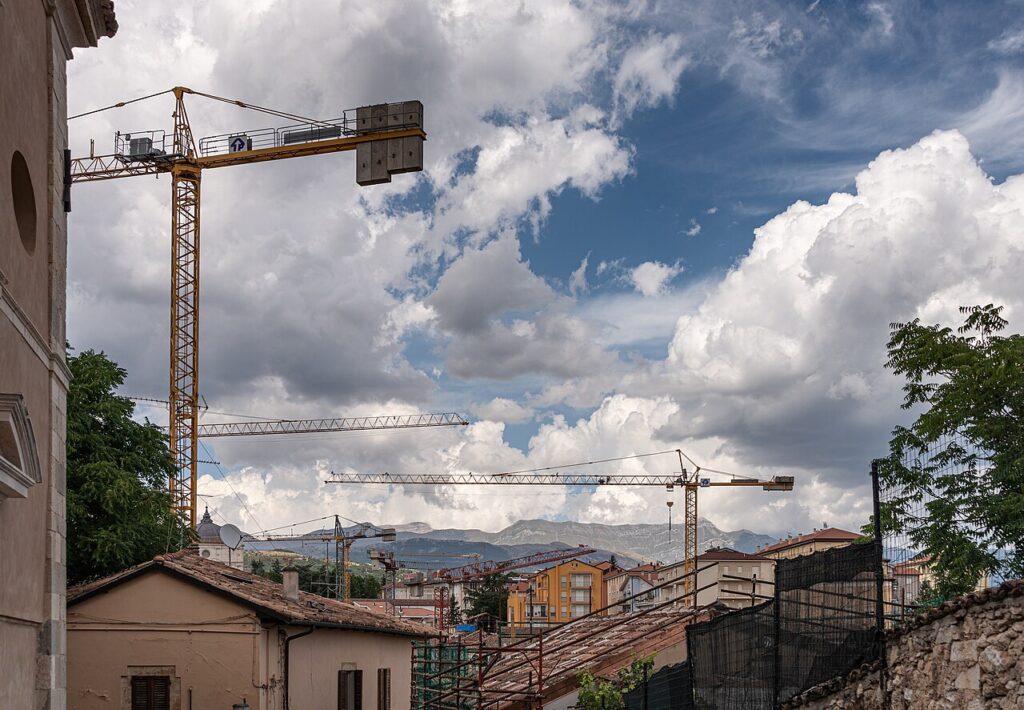
The centuries that followed brought both prosperity and catastrophe. Under Habsburg rule, between the sixteenth and seventeenth centuries, the city experienced uneven economic growth before the devastating earthquake of 1703 plunged it back into decline. Recovery came again in the nineteenth century, with renewed cultural and economic development. The seismic thread running through L’Aquila’s history — with significant earthquakes recorded in 1315, 1349, 1461, 1703 and again in 2009 — has shaped both the built fabric of the city and the resilience of its identity. The city’s chronicles were set down by Buccio di Ranallo in a rhyming account covering the years 1254 to 1362, while the eighteenth-century historian Anton Ludovico Antinori left extensive manuscript records of the city and the broader Abruzzo region.
One event stands apart in the city’s spiritual history: on 29 August 1294, the hermit Pietro da Morrone — who had commissioned the basilica of Santa Maria di Collemaggio in 1288 — was crowned pope there under the name Celestine V. That same year he issued the papal bull Inter sanctorum solemnia, granting a plenary indulgence and establishing what would become the annual Perdonanza Celestiniana, a jubilee that precedes by six years the introduction of the Holy Year by Pope Boniface VIII in 1300. Recognised as UNESCO Intangible Cultural Heritage in 2019, the Perdonanza remains the living expression of a history that L’Aquila has carried, and rebuilt, across eight centuries.
Basilicas, Fountains and Medieval Walls: L’Aquila’s Historic Monuments
L’Aquila preserves a layered historic patrimony that includes a Romanesque basilica, a medieval fountain, a walled perimeter, and the ruins of two ancient Roman cities — all within or immediately around the municipal territory.
Basilica di Santa Maria di Collemaggio
The basilica is the symbol of the city. Built from 1288 on the initiative of the hermit Pietro da Morrone, it is described in the sources as an example of Romanesque art. On 29 August 1294, Pietro da Morrone was crowned pope here under the name Celestino V. The basilica is also the site of the Perdonanza Celestiniana, the annual jubilee he instituted that same year: the faithful pass through the Porta di Celestino V, a holy door situated on the northern side of the building, between the evenings of 28 and 29 August each year.
Fontana delle 99 Cannelle
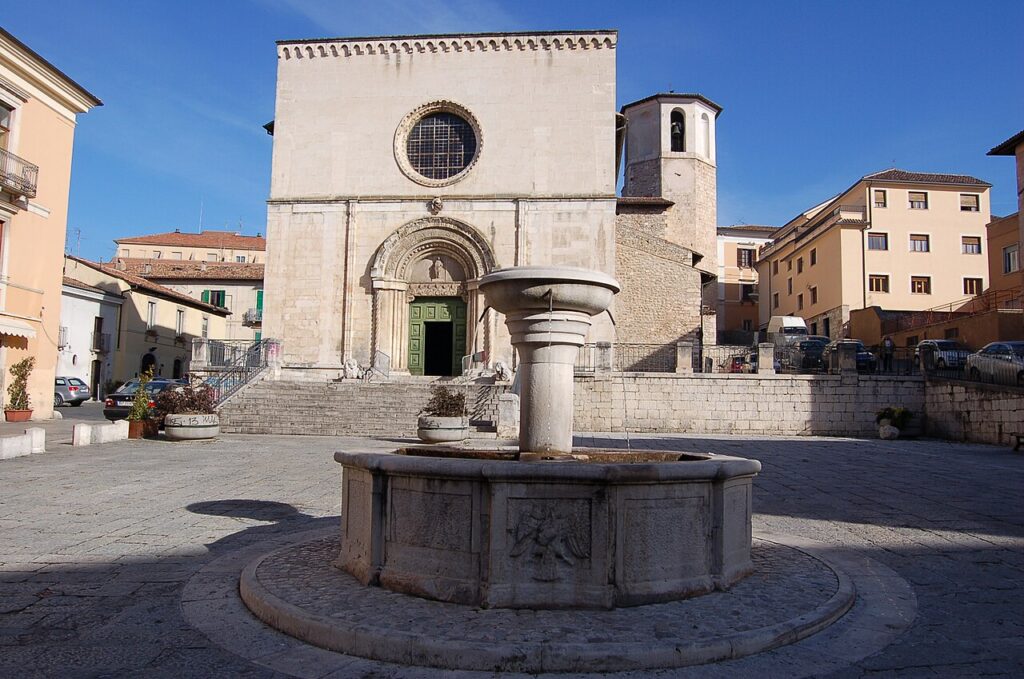
Located in the Borgo Rivera quarter — which corresponds to the ancient site known as Acculi — the Fontana delle 99 Cannelle is recorded as the first great monument of the city. Its name and form recall the 99 castles that came together to found L’Aquila.
Torre Civica
The tower’s bell strikes 99 times every day, marking the same founding tradition commemorated by the fountain.
Cinta Muraria
The medieval walled perimeter remains standing and is cited in the sources as the primary testimony to the medieval layer of L’Aquila’s historic heritage.
Amiternum and Forconium
Two ancient cities once stood in the area that is now L’Aquila. Amiternum, located in the district of San Vittorino, was a Roman-era settlement — birthplace of the historian Sallust and a former episcopal seat — and retains visible remains of a Roman theatre and amphitheatre. Forconium (also called Forcona) was the other ancient centre; the episcopal see was transferred from there to Aquila in 1257 by Pope Alexander IV. Both cities lost importance after the foundation of L’Aquila.
Food and Flavours of L’Aquila and the Conca Aquilana
The L’Aquila area sits within the Abruzzo culinary tradition, a mountain and valley cuisine built around locally grown produce, cured meats and legumes rather than any single certified product tied specifically to the city. Almond trees grow in the municipal territory, reflecting the varied agricultural character of the conca aquilana. For visitors looking for a certified point of reference, it is more accurate to describe L’Aquila within its regional culinary context: Abruzzo holds several DOP and IGP designations — including saffron from nearby Navelli — though none are recorded in the verified sources as belonging exclusively to the city’s own municipal production.
Getting to L’Aquila and Planning Your Stay
L’Aquila is reached most directly by road from Rome via the A24 motorway, approximately 140–145 km to the south-southwest, and from Pescara on the Adriatic coast, approximately 70 km away (around 1 hour by car via the A25). The city’s historic centre stands at 714 metres above sea level on a hill at the heart of the conca aquilana, and the surrounding territory climbs to 714 metres at Pizzo d’Intemesoli, meaning mountain conditions can set in rapidly at any time of year. The climate data for the area record 68 frost days annually, a July–August maximum historically reaching 40 °C, and winter minima well below −17 °C, so spring and early autumn offer the most comfortable conditions for walking the medieval streets and visiting monuments such as the Basilica di Santa Maria di Collemaggio.
The annual Perdonanza Celestiniana, held each year on the evenings of 28 and 29 August, draws visitors to the basilica for the UNESCO-recognised jubilee and gives late August a particular cultural weight in the calendar. Those arriving from the north or east will pass through valleys dotted with smaller settlements: Barisciano lies on the plateau between L’Aquila and Gran Sasso, while Barete sits in the hills to the north of the city. Further south in the province, Ateleta represents the quieter Abruzzo interior that contrasts with L’Aquila’s role as regional capital.
| Departure | Distance | Time |
|---|---|---|
| Roma | approx. 120 km | approx. 1 h 30 min (A24) |
| Pescara | approx. 70 km | approx. 1 h (A25) |
These practical references help organise the journey clearly, while the village itself is best understood slowly and on foot once you arrive.
Frequently asked questions about L’Aquila
What is the best time of year to visit L'Aquila?
Late spring (May–June) and early autumn (September–October) offer mild temperatures and clear mountain views ideal for exploring the historic centre and surrounding peaks. Summer can be warm at lower elevations, while winters are cold at 714 metres altitude. The feast of the patron saint San Massimo d'Aveia falls on 29 December, marking a significant local celebration. Avoid periods of heavy snow if planning mountain excursions.
How do I reach L'Aquila by car or train?
By car: Take the A24 motorway (Rome–Teramo direction) and exit at L'Aquila. The city lies approximately 120 km northeast of Rome, a journey of roughly two hours. By train: L'Aquila railway station connects to regional services via the Pescara–Sulmona line, though connections may require transfers. Journey times from major cities typically exceed three hours.
What outdoor activities are available around L'Aquila?
The Gran Sasso massif and Sirente-Velino chain offer extensive hiking and trekking routes maintained by CAI (Club Alpino Italiano). Mountain biking trails connect village communities across the high plateau. The territory's diverse elevation—from 714 metres to Pizzo d'Intemesoli at 2,635 metres—suits varied fitness levels. Summer and autumn provide optimal conditions for mountain pursuits.
How long should I plan to spend in L'Aquila?
Two to three days allow adequate time to explore the medieval historic centre, visit monuments like Fontana delle 99 Cannelle and Santa Maria di Collemaggio basilica, and enjoy local cuisine. An additional day or two enables day trips to Amiternum archaeological remains or hiking excursions into the surrounding mountains. Longer stays suit those combining cultural tourism with outdoor activities.
Where can I find parking in L'Aquila's historic centre?
Several paid car parks operate near the historic centre, including facilities adjacent to major monuments and in the lower city zones. Street parking is limited within medieval walls. Most visitors park in designated areas outside the historic quarter and proceed on foot, as many ancient streets are narrow and pedestrianised. Check local signage upon arrival for current rates and availability.
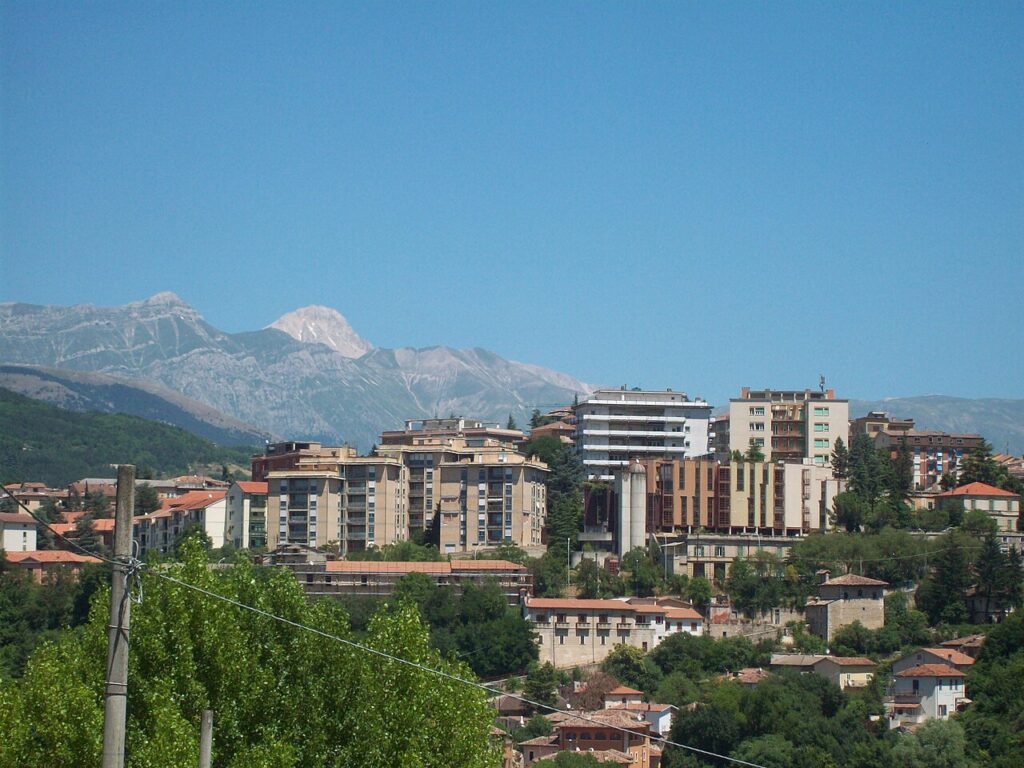
📷 Photo Gallery — L’Aquila
In Abruzzo More villages to discover
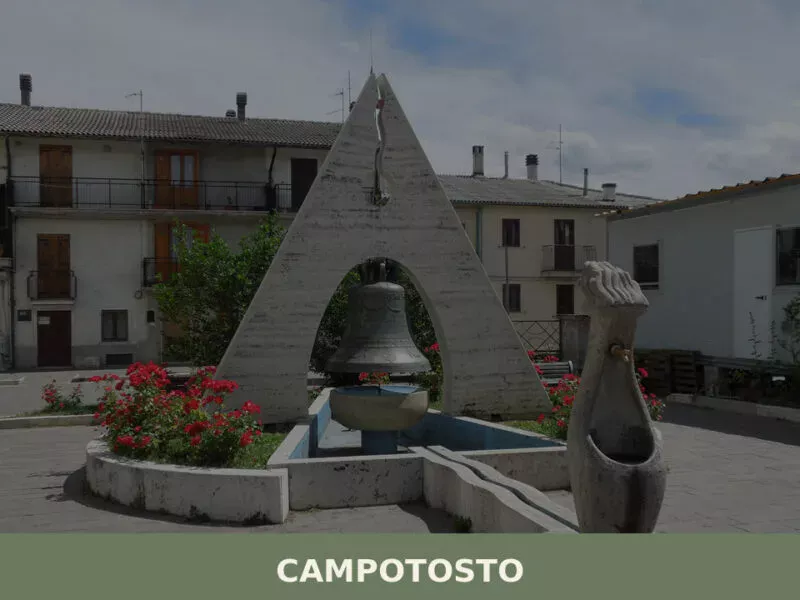
Campotosto
 Lake
Lake
 Mountain
At 1,420 metres beside one of Europe's largest artificial lakes, Campotosto offers wild Apennine landscapes, cured mortadella, and trails into the Gran Sasso National Park.
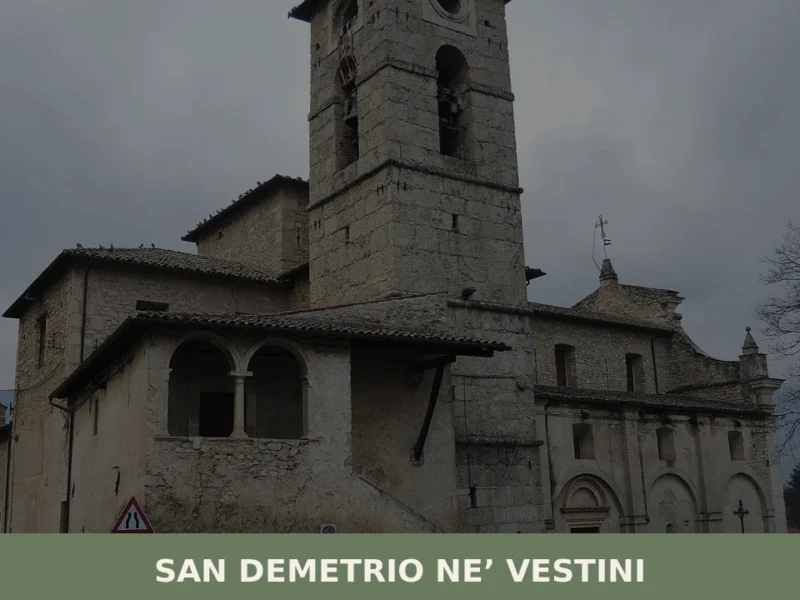
San Demetrio ne’ Vestini
Mountain
What to see in San Demetrio ne’ Vestini: discover the village, the historic center, and the main church. Plan your visit and unmissable attractions!
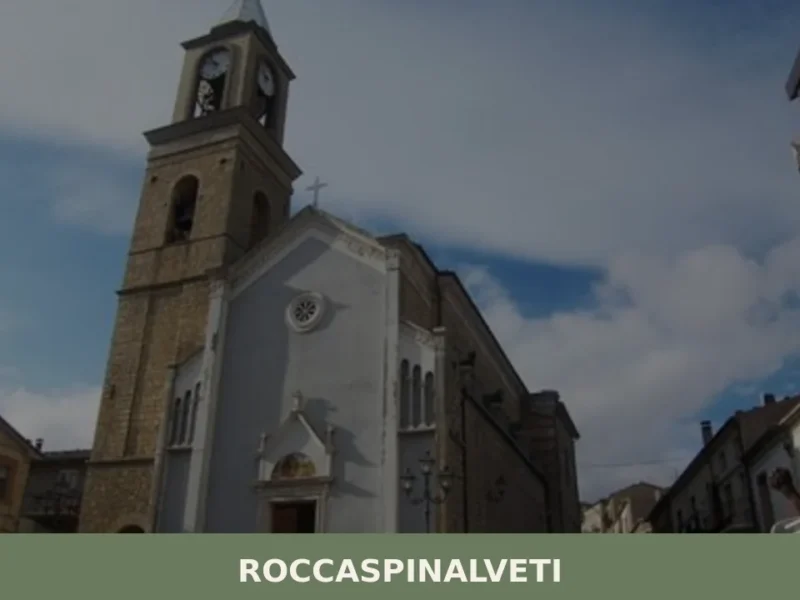
Roccaspinalveti
Mountain
Roccaspinalveti emerges in the Abruzzo landscape as a place of quiet resilience, its current form a testament to a community's determination to rebuild and thrive.
Castel Castagna
 Hills
Hills
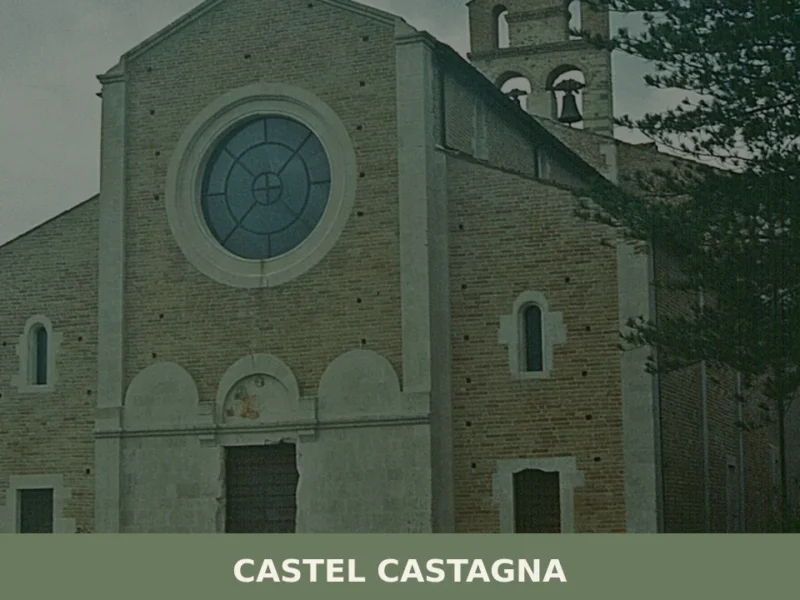
At 452 metres above sea level, on the eastern slope of the Gran Sasso, the municipality of Castel Castagna today counts 429 inhabitants spread between the main settlement and the hamlets scattered along the cultivated hillsides of the province of Teramo. Anyone wondering what to see in Castel Castagna will find answers in a territory […]
Rivisondoli
Mountain
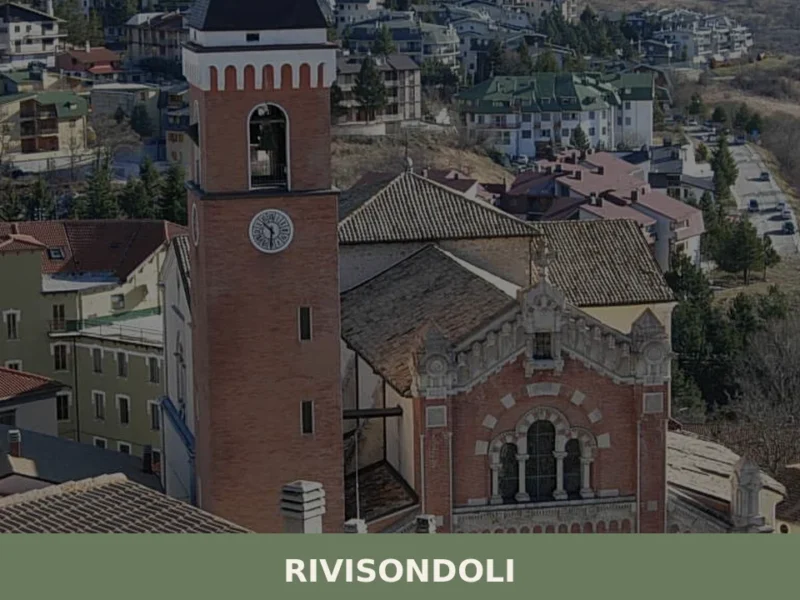
At 1,322 metres above sea level on the edge of the Cinque Miglia plain, Rivisondoli is one of Abruzzo's most striking high-mountain villages, where the Majella massif defines both horizon and daily li
Gagliano Aterno
Mountain
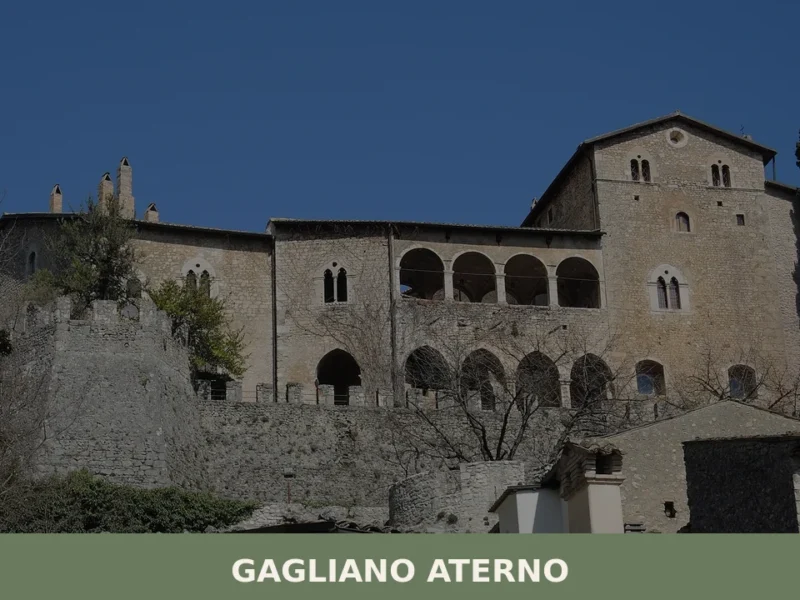
Gagliano Aterno is a compact medieval village at 653 metres in the Valle Subequana, province of L'Aquila, where a baronial castle and a Gothic church define a landscape shaped by centuries of mountain
Aielli
Mountain
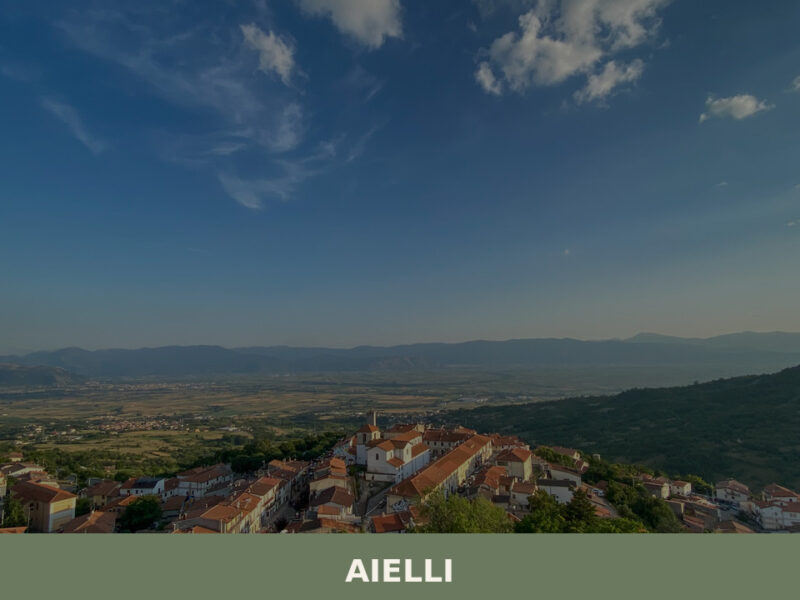
Morning light falls across a wall of painted figures three storeys tall, their colours sharp against old stone. A narrow street turns, and another mural appears — an astronomical chart, its constellations precise enough to navigate by. Aielli sits at over 1,000 metres on the Fucino plateau in the province of L’Aquila, a village of […]
Bugnara
Hills
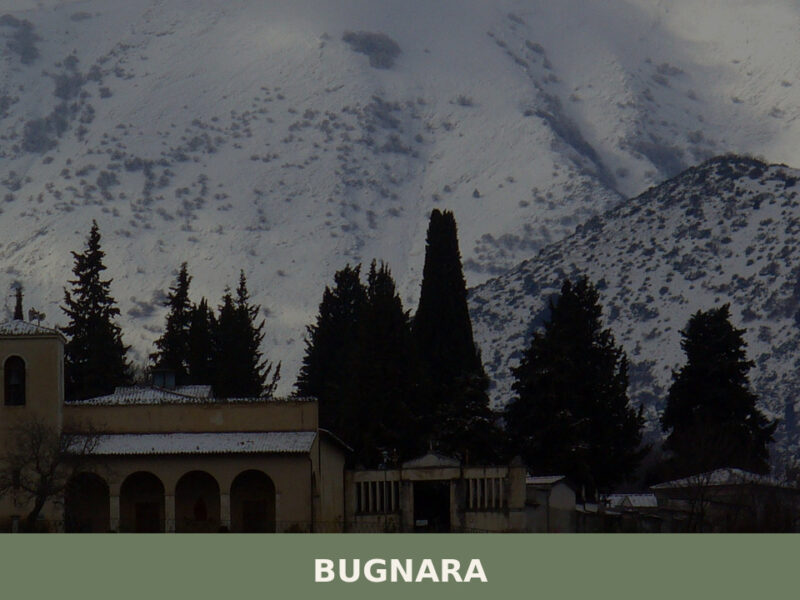
Morning light falls across the Sagittario valley in long, amber strokes, catching the limestone walls of a settlement that has watched over this corridor of central Abruzzo for the better part of a millennium. Bells from a church tower mark the hour, their sound flattening against the surrounding slopes before fading. The streets are narrow, […]
Lecce nei Marsi
Mountain
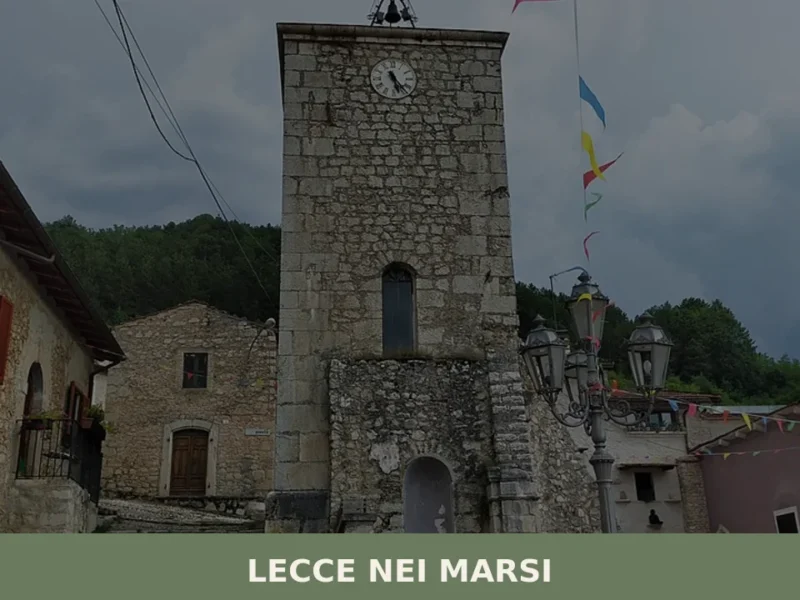
Lecce nei Marsi has 1,534 inhabitants spread between the main centre and outlying hamlets along the eastern slope of the Marsica area, at 740 metres above sea level. The municipal territory borders the Abruzzo, Lazio and Molise National Park and falls within the province of L’Aquila. Anyone looking into what to see in Lecce nei […]
Casalanguida
Hills
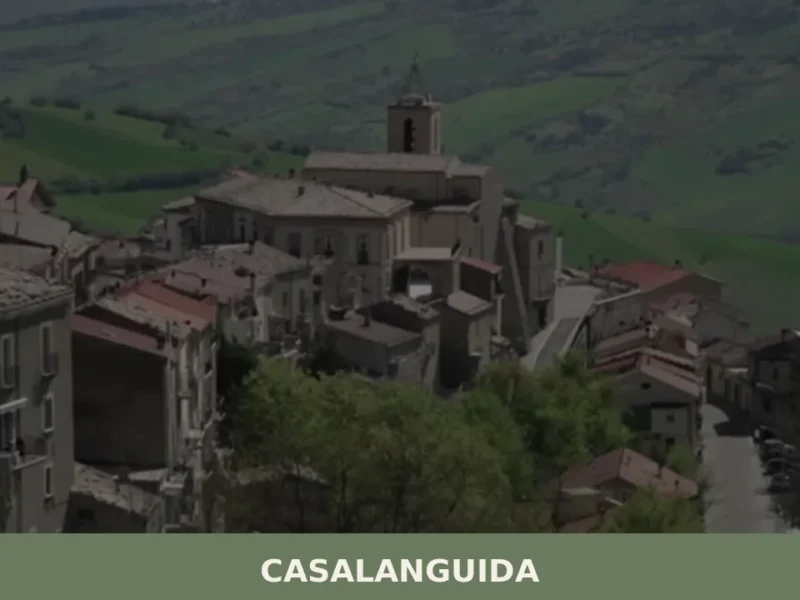
With its 818 registered inhabitants and an elevation of 470 metres above sea level, Casalanguida occupies a hilltop ridge in the middle Sinello valley, in the province of Chieti. The municipal territory extends across vineyards and olive groves that mark the landscape with regular geometric patterns, visible from the provincial road that climbs up from […]



🏡 Know L’Aquila better than we do?
If you’re a local or have been there, your knowledge matters: add what’s missing or fix a detail on this page.