


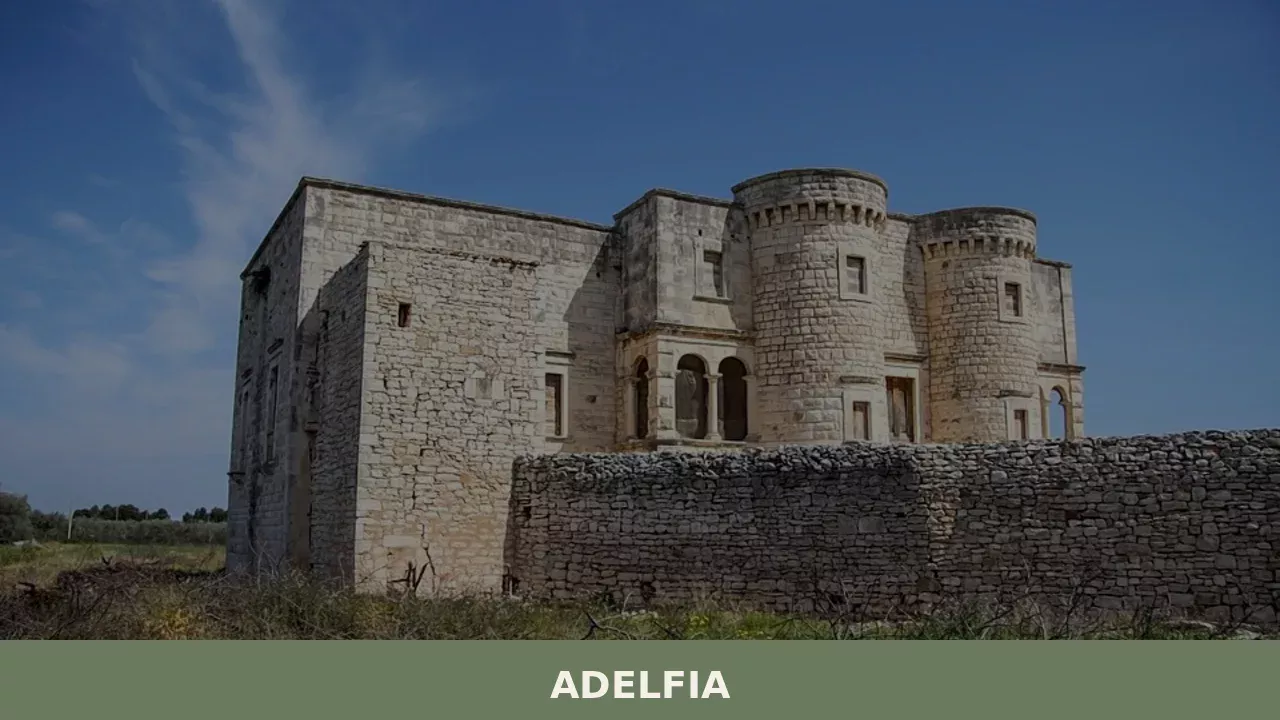
Adelfia
 Plains
In 1927, a royal decree unified two separate municipalities — Canneto di Bari and Montrone — into a single administrative entity given the name Adelfia, from the Greek adelphós, meaning brother. It was a political gesture that encapsulated centuries of coexistence between two settlements separated by less than a kilometre of countryside, yet each fiercely […]
Discover Adelfia
In 1927, a royal decree unified two separate municipalities — Canneto di Bari and Montrone — into a single administrative entity given the name Adelfia, from the Greek adelphós, meaning brother. It was a political gesture that encapsulated centuries of coexistence between two settlements separated by less than a kilometre of countryside, yet each fiercely protective of its own parish identity, its own festivals, its own bell towers.
Today, anyone wondering what to see in Adelfia encounters this dual character, still clearly recognisable: two historic centres, two mother churches, two main squares, and a population of 16,494 inhabitants spread across a plateau at 154 metres above sea level, in the middle of the Bari plain where olive groves give way to orderly expanses of cherry and almond trees.
History and origins of Adelfia
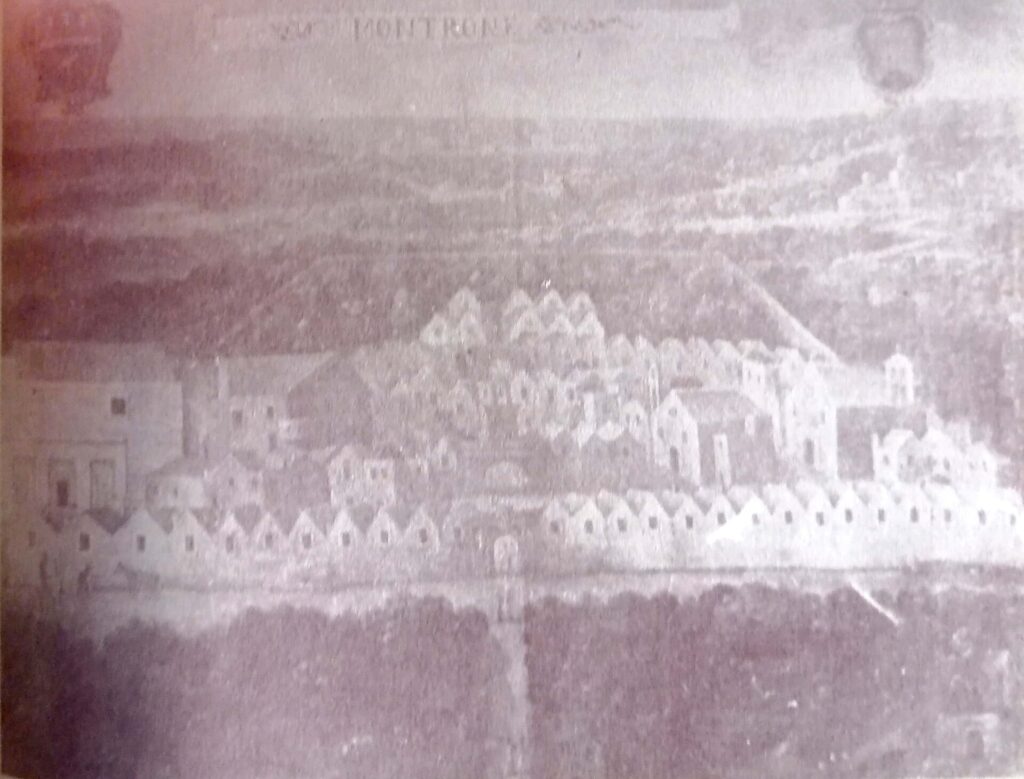
The 1927 merger has roots that reach much further back. The place name Canneto already appears in Norman documents from the 12th century, likely linked to the presence of reed beds along the drainage channels of the plain. Montrone, on the other hand, appears in Angevin records from the 13th century under the name Mons Tronus, a reference to a modest rise on which a watchtower stood. Both hamlets orbited within the feudal sphere of Bari and passed through Norman, Swabian, Angevin and Aragonese rule, following the fortunes of the Kingdom of Naples without ever achieving independent political significance.
This marginality, however, spared them from the destruction that struck more prominent centres.
The fief of Montrone passed in the 16th century to the Ferrante family, who built the baronial palace still visible in the historic core today. Canneto was instead held by the Grimaldi and later the De Gioia families. Economic life revolved entirely around agriculture: olive oil, almonds, cereals. In the 18th century, cherry cultivation began to establish itself as a local specialisation, a feature that still defines the agricultural identity of the area. The onciario land register of 1753 records approximately 1,200 inhabitants for Montrone and just under 900 for Canneto, a ratio that remained relatively stable until unification.
The act that gave birth to Adelfia was Royal Decree no. 1447 of 28 July 1927, part of the Fascist policy of merging small municipalities. The name was chosen specifically to defuse local rivalries, evoking a fraternal bond. It was not a painless process: for decades residents continued to identify themselves as Montronesei or Cannetesi, and even today the two districts maintain different patron saints — San Trifone for Montrone, the Madonna dell’Assunta for Canneto — and separate patron saint festivals.
Post-war demographic growth, fuelled by proximity to Bari (approximately 15 kilometres), brought the population from 8,000 in the 1950s to the current 16,494, transforming Adelfia into a residential centre without erasing its rural vocation.
What to see in Adelfia: 5 key attractions
1. Palazzo Ferrante-De Gioia (Castle of Montrone)
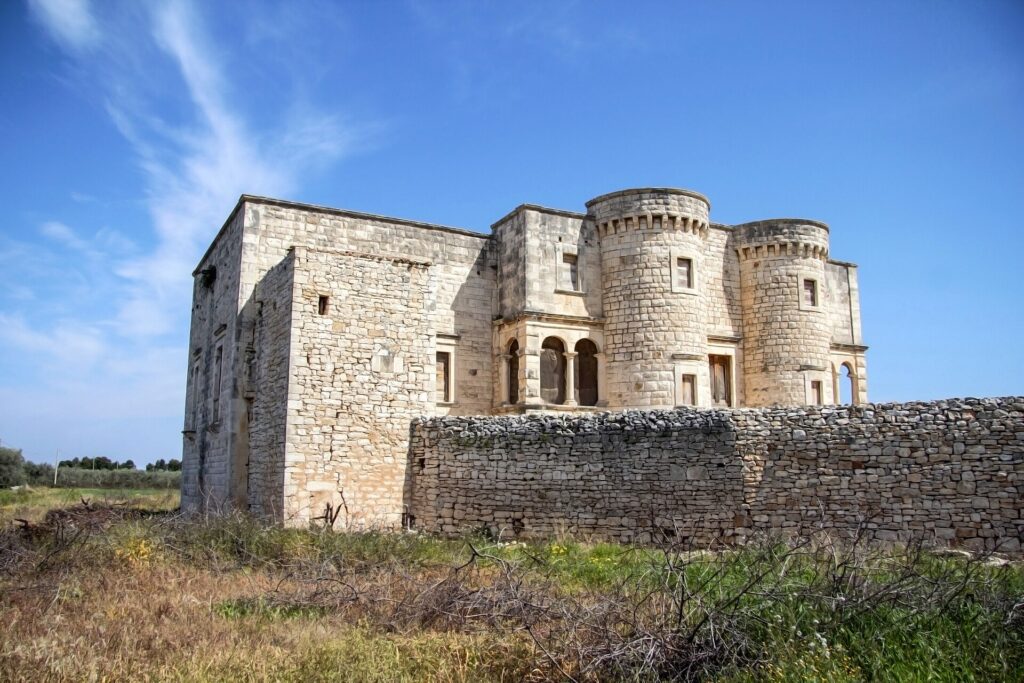
In the historic core of Montrone, along via Castello, stands the baronial palace built in the 16th century by the Ferrante family and later passed to the De Gioia. The structure retains a quadrangular tower of medieval origin, incorporated into Renaissance expansions, and a portal in local limestone with the noble coat of arms carved into the architrave. The inner courtyard, with a loggia on two levels, echoes the models of Apulian civic architecture of the period. Today the building hosts cultural events and temporary exhibitions. The main façade, visible from the small square in front, offers one of the most legible architectural fronts in the historic centre.
2. Chiesa Madre di San Nicola (Montrone)
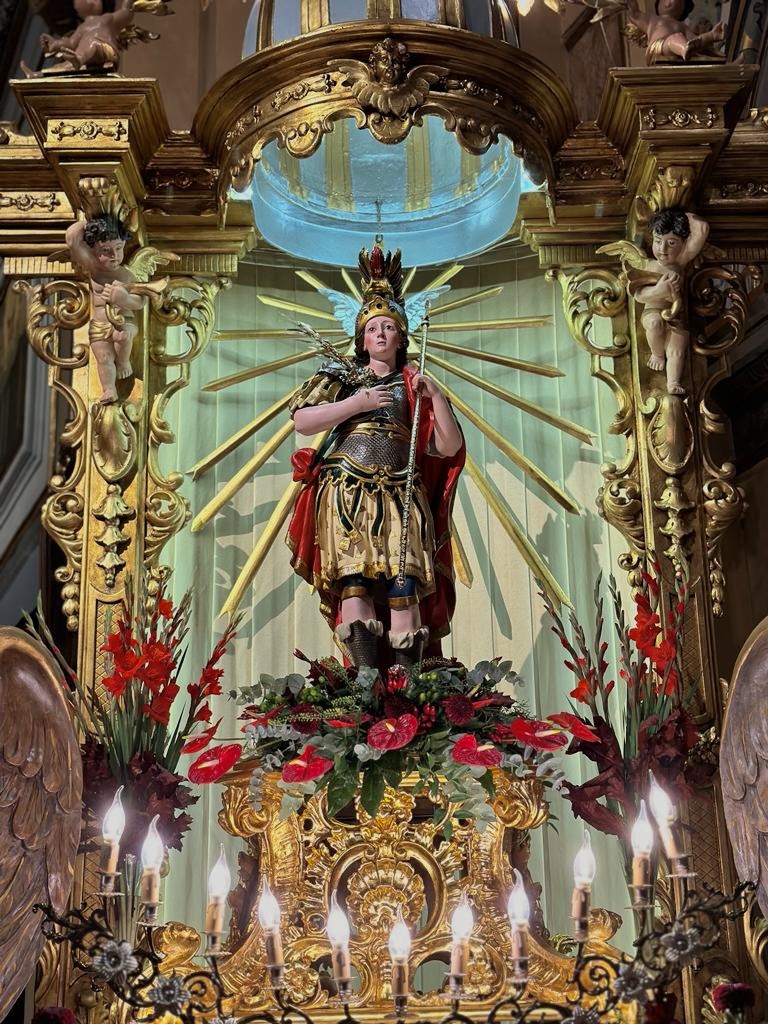
Dedicated to San Nicola di Bari, the mother church of Montrone dates in its current form to the 18th century, although the original layout is older. The three-nave interior holds lateral altars in carved stone and a wooden statue of San Trifone, patron saint of the district, carried in procession every 10 November. The square-based bell tower dominates the skyline of Montrone and is visible from several points across the surrounding countryside. The building stands on the main square of the district, where the historic streets of the village converge. The stone baptismal font, datable to the 17th century, deserves particular attention.
3. Chiesa Madre di Santa Maria dell’Assunta (Canneto)
The mother church of Canneto is dedicated to the Madonna dell’Assunta, patron saint of this district, and was rebuilt during the 18th century over an older structure. The façade features a decorated portal and a central rose window that illuminates the main nave. Inside there are canvases from the Neapolitan school and a historic organ in the choir loft. The building serves as the religious and social hub of Canneto, mirroring the church of San Nicola in Montrone. The square in front, with its stone benches and original paving, retains the appearance of a daily gathering place still in active use.
4. Clock Tower and historic centre of Canneto
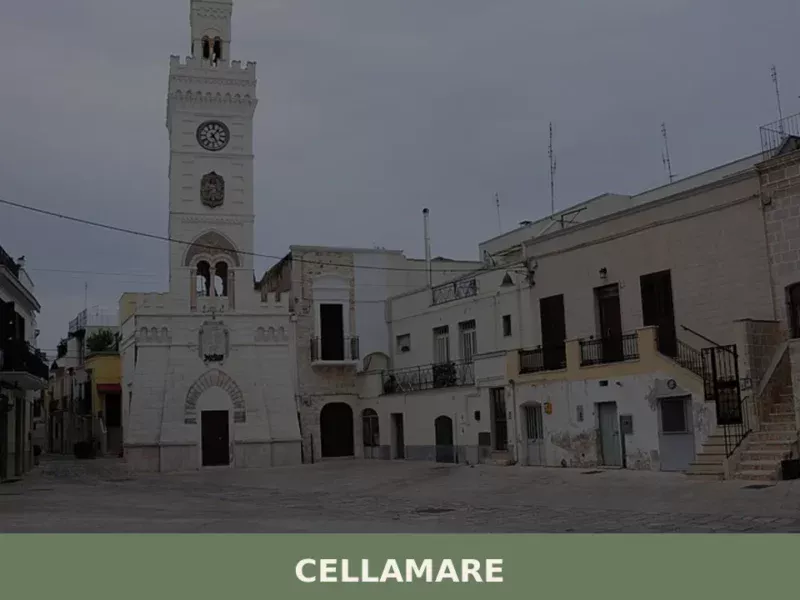
Walking through the historic centre of Canneto, visitors encounter the Clock Tower, a 19th-century structure marking the entrance to the oldest part of the district. The streets around the tower preserve the irregular layout of the medieval hamlet, with courtyard houses arranged along narrow alleys that open suddenly into small clearings. The local tuff dwellings, many with external staircases and balconies, document a rural architecture widespread across the Bari plain between the 17th and 19th centuries. A walk of approximately thirty minutes allows you to cross the entire historic core, observing dated portals, votive aedicules and communal wells still visible today.
5. Cherry countryside and Lama San Giorgio
Adelfia is renowned throughout the province of Bari for its cherry cultivation, and the agricultural landscape surrounding the two districts is itself an attraction. Between April and May, the blossoming transforms the fields into white expanses stretching as far as Lama San Giorgio, a natural erosion channel that crosses the municipal territory on its way towards the sea. The lama, with its spontaneous vegetation of lentisk, myrtle and kermes oak, forms an ecological corridor of naturalistic interest.
The unpaved paths along the rim allow excursions on foot or by bicycle, with views over the plain all the way to the Adriatic coast on clear days.
What to eat in Adelfia: traditional cuisine and local products
The cuisine of Adelfia belongs to the peasant tradition of the Terra di Bari, a gastronomy built around a few quality ingredients — durum wheat, extra virgin olive oil, seasonal vegetables, legumes — combined with slow preparation techniques and home preservation methods. The proximity to the sea, just fifteen kilometres away, has also introduced oily fish into the local repertoire, but the core of the table remains tied to the countryside. The oil produced from the olive trees of the plain, predominantly of the Coratina and Cima di Mola cultivars, is the universal cooking fat and dressing, present in every dish from breakfast to dinner.
Among the traditional local dishes, Acquasale (PAT) holds a central place: it is an ancient preparation based on stale bread soaked in water, seasoned with fresh tomatoes, raw onion, oregano and extra virgin olive oil. It was the field lunch of farmers, a dish requiring no cooking and making use of immediately available ingredients. In Adelfia households it is still prepared on the hottest summer days, when lighting the oven is unthinkable. Alongside acquasale, orecchiette with turnip tops is the Sunday first course, shaped by hand with a knife on a wooden board, each hollow designed to catch the sauce of the bitter greens.
The registry of products certified as Traditional Agri-Food Products of Puglia includes several preparations also found in the Adelfia area.
Oven-baked lamb with potatoes Lecce-style (PAT), also known as Auniceddhru allu furnu, involves slow-cooking lamb with potatoes, cherry tomatoes, onions and grated pecorino, a dish that marks Easter tables and family celebrations. Wild asparagus (PAT), gathered along the edges of the lame and the margins of olive groves between March and April, is eaten in frittata or sautéed in a pan with garlic and oil. Asparagus preserved in oil (PAT) is the conserved version, prepared to extend the spring harvest into winter. Also worth noting are the Africani (PAT), shortcrust pastry sweets filled with custard and coated in dark chocolate, found in pastry shops across the Bari area.
The gastronomic event that defines the Adelfia calendar is the Cherry Festival, traditionally held between late May and the first weeks of June, coinciding with the harvest. The local varieties — including the Ferrovia, large with firm flesh — are sold directly by producers from stalls along the main streets. The festival draws visitors from across the province and represents an economically significant moment for local agriculture. To buy typical products during the rest of the year, the Saturday weekly market offers stalls with vegetables, fresh cheeses and preserves prepared according to homemade recipes.
On the beverage side, the territory falls within the production area of several Apulian wines.
Primitivo, also cultivated in the vineyards of the Bari plain, accompanies meat dishes and aged cheeses. Anisetta (PAT), an aromatic anise-based liqueur, is the traditional after-meal digestif offered in homes throughout the area, still prepared in homemade versions following recipes handed down through generations. Amaro del Gargano (PAT), although originating from a different part of Puglia, is found in the bars and trattorias of the area as an alternative to northern grappas.
When to visit Adelfia: the best time of year
The time of year when Adelfia best expresses its identity is late spring, specifically between the second half of April and the first ten days of June. During this span of weeks the countryside is at the peak of cherry blossom season, temperatures range between 18 and 26 degrees, and the Cherry Festival brings life to the streets of both districts. 10 November, the feast of San Trifone, patron saint of Montrone, is the other key date: the procession winds through the streets of the historic centre carrying the statue of the saint, drawing back emigrated residents and visitors from across the province.
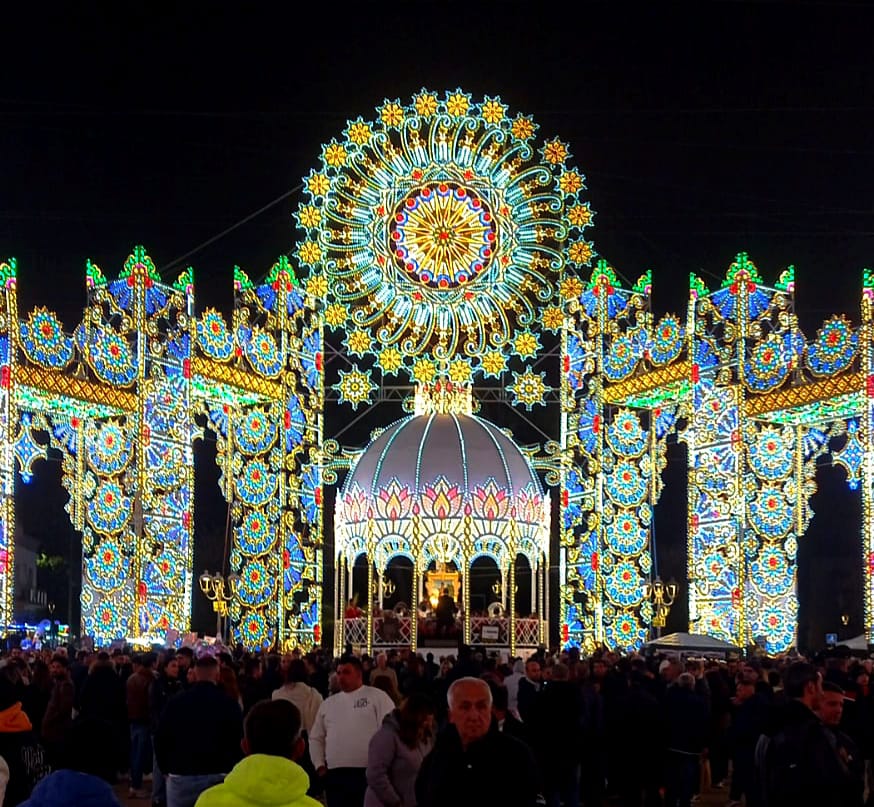
In Canneto, the feast of the Assumption on 15 August marks the height of summer with illuminated street decorations, brass band concerts and fireworks.
Winter in Adelfia is mild by northern Italian standards — temperatures rarely drop below 5 degrees — but the village empties of visitors and many accommodation facilities reduce their operations. Autumn, particularly October, is olive harvest season and offers an industrious, quiet landscape, ideal for those seeking a rural experience without crowds. Full summer, between July and August, brings temperatures that often exceed 35 degrees: visiting the historic centre is advisable during the morning or evening hours. Those wishing to combine the village with the seaside will find the beaches of the Bari coast less than twenty minutes away by car.
How to reach Adelfia
Adelfia can be reached from both north and south via the A14 Bologna-Taranto motorway, exiting at the Bari Sud toll station, from which the centre is approximately 10 kilometres away, drivable in fifteen minutes along provincial road 231. From Bari city the journey is 15 kilometres, covered in twenty minutes via the SS100 towards Taranto with a turn-off for Valenzano-Adelfia. Bari-Karol Wojtyła Airport is approximately 25 kilometres away, connected to the city centre by taxi and bus, from where you continue towards Adelfia by car.
The nearest railway station is Adelfia-Canneto on the Ferrovie del Sud Est (FSE) line, which connects Bari to Putignano with frequent services during the day.
The travel time from Bari Centrale is approximately 25 minutes, with a frequency of one train per hour during peak times. The provincial bus services of STP Bari run daily services from Bari and neighbouring municipalities. For those arriving by car from the Ionian side, the SS100 from Taranto reaches the Adelfia area in approximately one hour and twenty minutes.
Other villages to discover in Puglia
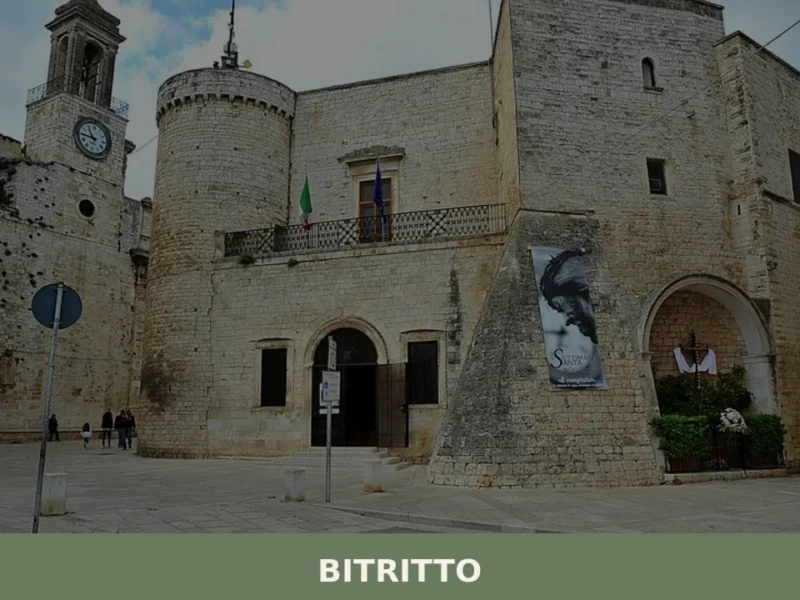
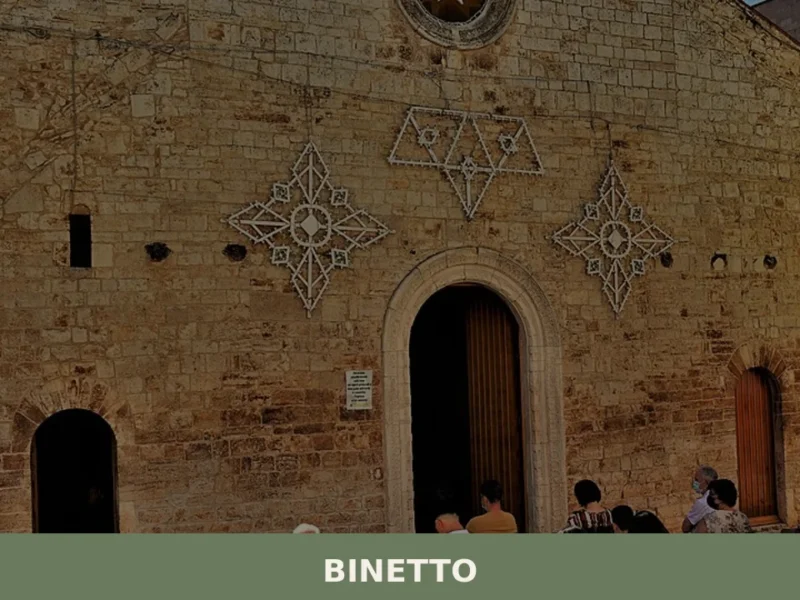
Approximately 8 kilometres from Adelfia, heading west along the provincial road, you reach Binetto, a small municipality on the Bari plain that shares Adelfia’s agricultural vocation and rural tuff architecture. Binetto retains a mother church with Romanesque elements and an even more compact historic centre, visitable in under an hour. The two villages can be combined in a single half-day, following an itinerary through olive and almond groves connecting the two main squares. It is a useful route for anyone wanting to understand the settlement structure of the hamlets of the Terra di Bari, small, closely-spaced nuclei that dotted the plain at regular intervals.
For a radical contrast in landscape, it is worth venturing as far as Biccari, in the Subappennino Dauno, approximately 170 kilometres from Adelfia to the north-west.
Biccari sits at over 400 metres altitude, amid beech forests and an artificial lake, and offers a mountain experience far removed from the Apulian coastal plain. The journey takes around two hours by car through the Foggia hinterland, but allows you to traverse in a single day two entirely different faces of Puglia: the cereal-growing countryside of the Bari plain and the forested hills of the Daunia. Those with more days available can build a circular itinerary also taking in the Gargano or the Murge plateau.
Frequently asked questions about Adelfia
What is the best time to visit Adelfia?
The ideal time to visit Adelfia is late spring, between late April and early June, when cherry trees are in full bloom and the Cherry Festival takes place along the main streets of the two historic centres. Autumn offers a quieter experience, culminating in the feast of San Trifone on 10 November, when the patron saint of Montrone is carried in procession from the Chiesa Madre di San Nicola. Summer is hot but suitable for exploring the lama trails at dawn or dusk. Winter is mild by northern European standards and the historic centres are uncrowded.
What are the historical origins of Adelfia?
Adelfia did not exist as a single entity until 1927, when Royal Decree no. 1447 of 28 July merged two separate municipalities — Canneto di Bari and Montrone — into one. Canneto is documented in Norman records from the 12th century; Montrone appears in 13th-century Angevin sources as Mons Tronus. Both settlements passed through Norman, Swabian, Angevin and Aragonese rule within the feudal orbit of Bari. The name Adelfia derives from the Greek adelphós, meaning brother, chosen deliberately to ease the rivalry between the two historically distinct communities.
What to see in Adelfia? Main monuments and landmarks
Adelfia offers five key sites across its two historic centres. In Montrone: Palazzo Ferrante-De Gioia (via Castello), a 16th-century baronial palace with a medieval tower and loggia courtyard, today used for cultural events; and the Chiesa Madre di San Nicola, an 18th-century three-nave church housing a wooden statue of San Trifone and a 17th-century baptismal font. In Canneto: the Chiesa Madre di Santa Maria dell'Assunta, with a rose window and Neapolitan-school canvases; and the 19th-century Clock Tower marking the entrance to the medieval district. Access to the historic centres is free and on foot.
What are the main natural or scenic attractions of Adelfia?
The most significant natural feature is Lama San Giorgio, a natural erosion channel crossing the municipal territory towards the Adriatic. Its banks support spontaneous Mediterranean vegetation — lentisk, myrtle and kermes oak — forming a documented ecological corridor. Unpaved paths along the rim allow walking or cycling excursions with views across the Bari plain and, on clear days, as far as the Adriatic coast. Between April and May, the cherry orchards surrounding both districts transform the agricultural landscape into a continuous white bloom, making the countryside itself a visual attraction worth exploring by bike or on foot.
Where to take the best photos in Adelfia?
The most photogenic spots in Adelfia are concentrated in two areas. In Montrone, the small square in front of Palazzo Ferrante-De Gioia frames the best view of the 16th-century baronial façade and the medieval tower. The square-based bell tower of San Nicola is visible from multiple points across the surrounding plain and makes a strong landscape subject. In Canneto, the Clock Tower and the stone-paved square in front of Santa Maria dell'Assunta offer clear architectural compositions. During cherry blossom season (April–May), the countryside roads between the two districts provide vivid rural panoramas with the plain stretching to the horizon.
Are there museums, churches or historic buildings to visit in Adelfia?
Adelfia has two mother churches open to visitors: San Nicola in Montrone, containing a 17th-century baptismal font and the processional statue of San Trifone; and Santa Maria dell'Assunta in Canneto, which preserves canvases from the Neapolitan school and a historic choir organ. Palazzo Ferrante-De Gioia, the 16th-century baronial palace in Montrone with a Renaissance loggia courtyard, hosts temporary exhibitions and cultural events — check the municipal website or local notice boards for current programming, as opening hours vary by season. Entry to the historic centres and church exteriors is unrestricted.
What can you do in Adelfia? Activities and experiences
Visitors can walk or cycle the unpaved trails along Lama San Giorgio, an ecological corridor with views across the Bari plain. A self-guided tour of both historic centres — completable in under two hours — takes in baronial architecture, mother churches and dated stone portals. Between late May and early June, the Cherry Festival allows direct purchase of local Ferrovia cherries from producer stalls. On Saturdays, a weekly market sells fresh cheeses, vegetables and homemade preserves. For wine, the surrounding territory falls within Apulian Primitivo production zones, and local farms occasionally offer direct sales and tastings.
Who is Adelfia suitable for?
Adelfia suits visitors who prefer authentic, uncrowded southern Italian towns over mass-tourism destinations. Couples and cultural travellers will appreciate the dual historic centres, the baronial architecture and the rural Apulian atmosphere. Families benefit from the flat terrain, easy walking distances and the festive Cherry Festival in late May and early June. Cyclists and nature enthusiasts find the Lama San Giorgio trails and cherry orchard roads genuinely rewarding. Food lovers are drawn by the PAT-certified local products and the peasant cuisine tradition. Its proximity to Bari (15 km) also makes it an accessible half-day excursion for visitors based in the provincial capital.
What to eat in Adelfia? Local products and specialties
The gastronomy of Adelfia belongs to the Terra di Bari peasant tradition. Acquasale (PAT) — stale bread soaked in water with tomatoes, raw onion, oregano and local extra virgin olive oil — is the defining summer dish. Orecchiette with turnip tops is the classic Sunday first course. Easter tables feature oven-baked lamb with potatoes (PAT). Wild asparagus (PAT), gathered along the lame in spring, appears in frittata or preserved in oil. Africani (PAT) are shortcrust sweets filled with custard and coated in dark chocolate, typical of local pastry shops. The local cherries — especially the large, firm-fleshed Ferrovia variety — are the most celebrated agricultural product.
📷 Photo Gallery — Adelfia
Nearby Villages near Adelfia
In Apulia More villages to discover
San Pietro Vernotico
 Sea
Sea
What to see in San Pietro Vernotico, Italy? Discover its 14th-century Torre Quadrata and the historic Chiesa Matrice. Explore this village, 36 m above sea level, for its rich past.
San Marco la Catola
 Mountain
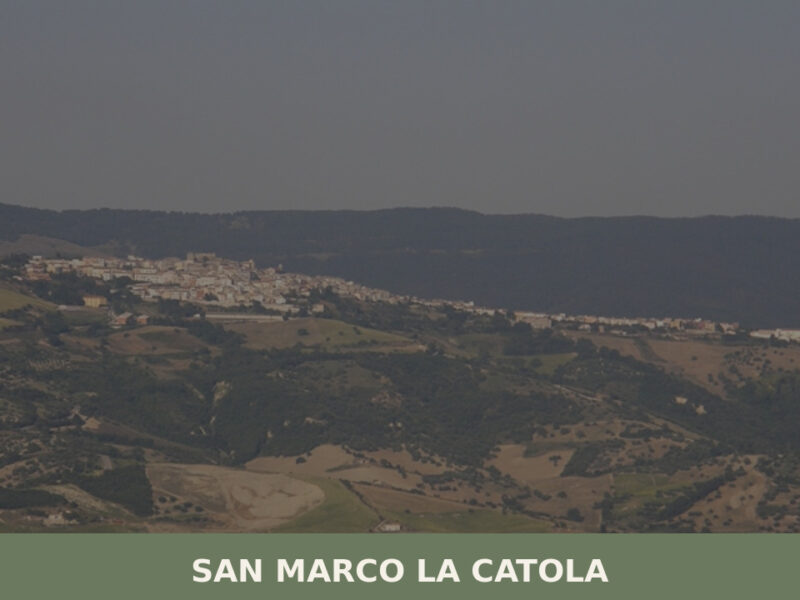
A quiet hill village at 683 metres in the Daunia mountains of Puglia. Discover what to see in San Marco la Catola, from its medieval core to the Fortore valley.
Maglie
Plains
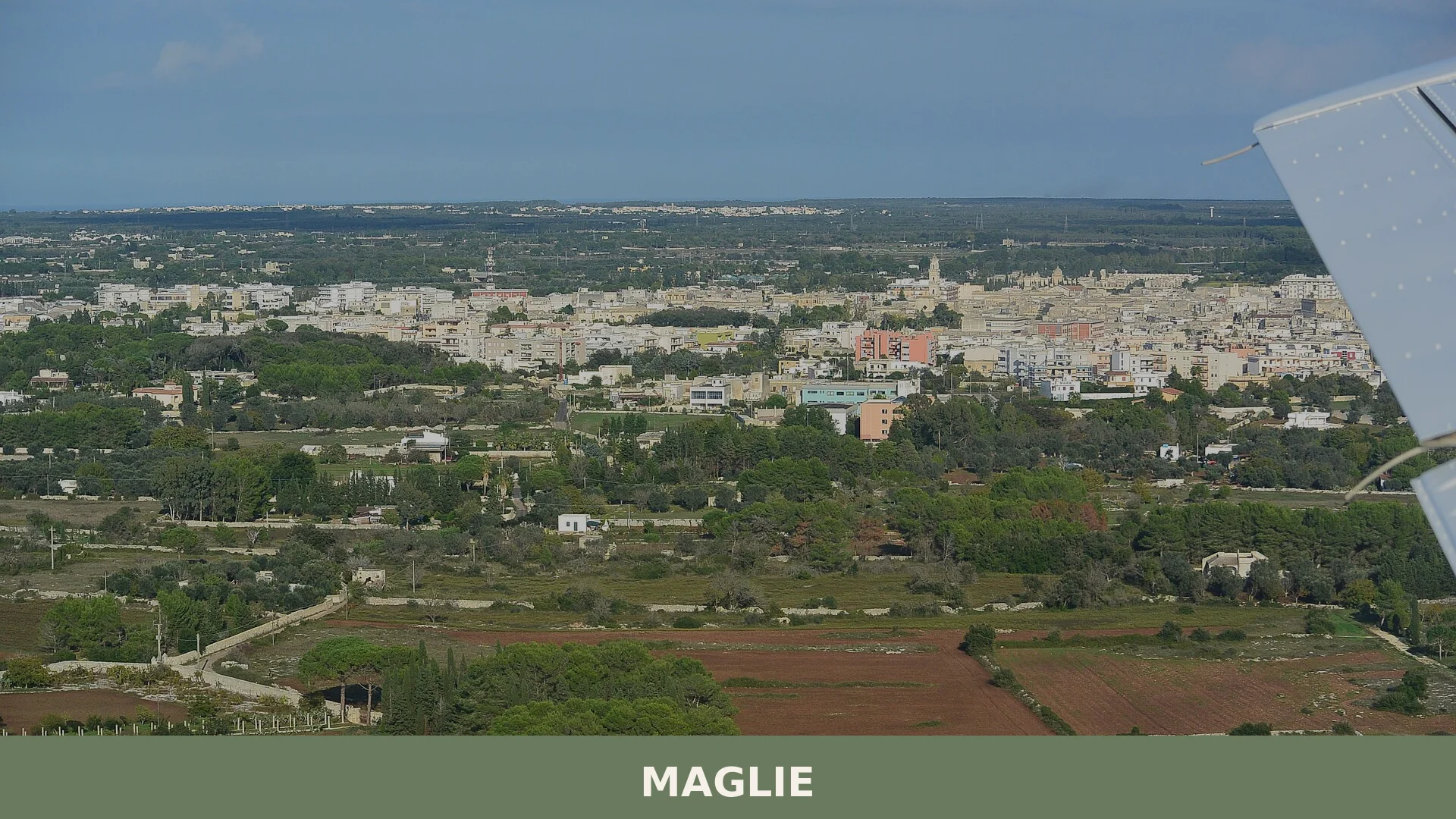
A town of 13,265 inhabitants rooted in medieval feudalism and Baroque art. Maglie sits at the crossroads of Salento's agricultural identity, anchored by its cathedral and a layer of history that reaches back to the Bronze Age.
Terlizzi
Plains
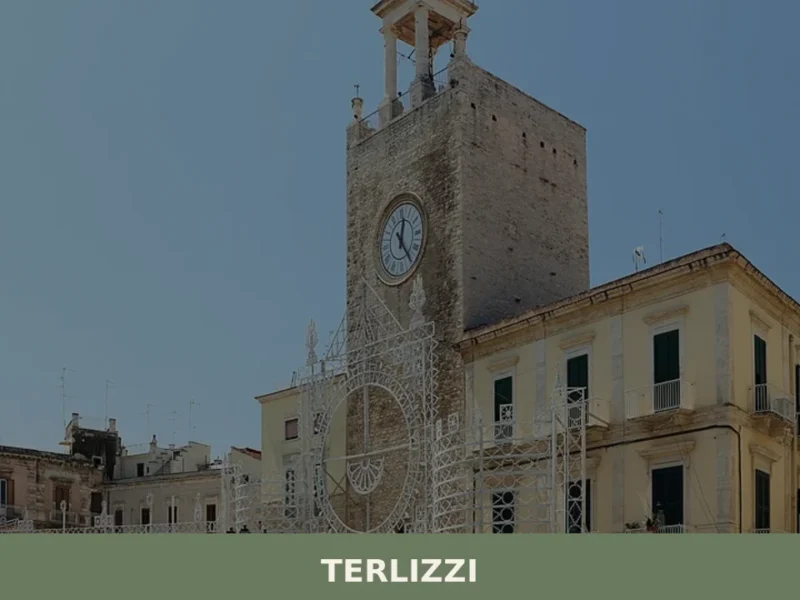
What to see in Terlizzi: discover the 5 top attractions, from the Cathedral to the Clock Tower. Plan your visit and taste the local specialities.
Alezio
Plains
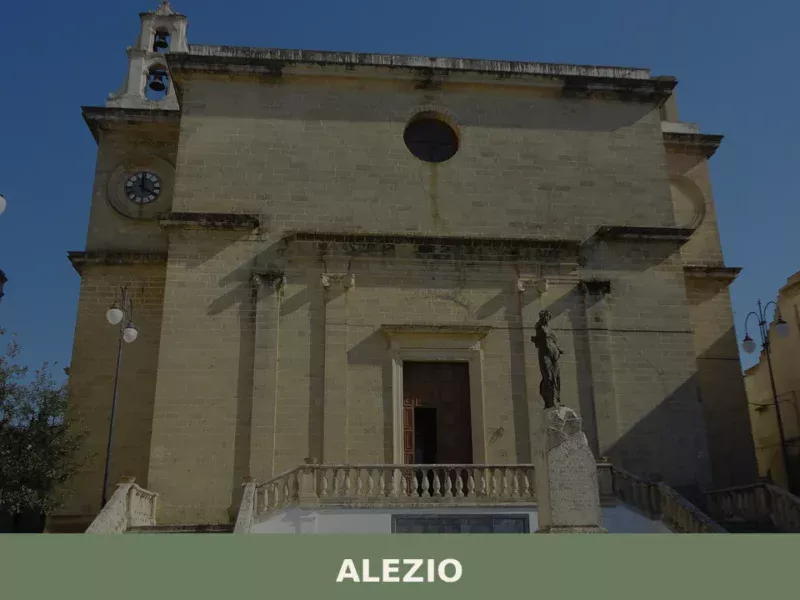
Discover what to see in Alezio, a Salento village with Messapian roots, a national archaeology museum, and ancient olive groves near Gallipoli in Puglia.
Castro
Sea
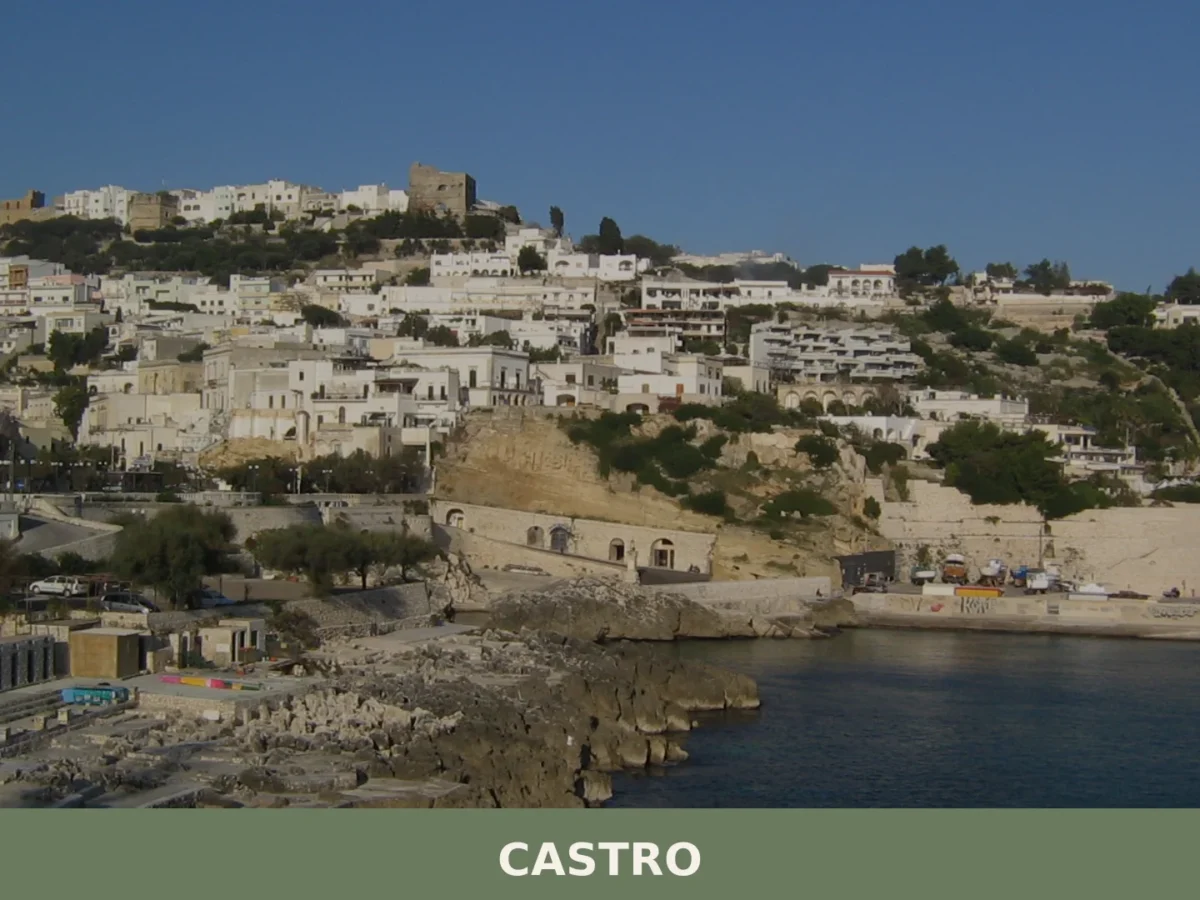
Population 2,318 on 4.44 km². Visit for the 12th-century castle, 11th-century church, and Byzantine remains overlooking the Canale d'Otranto.

Spinazzola
Mountain
What to see in Spinazzola, Puglia, Italy: birthplace of a Pope and a Jesuit sinologist, 70 km from Bari. Discover top attractions, local food and travel tips.
Gravina in Puglia
 Hills
Hills
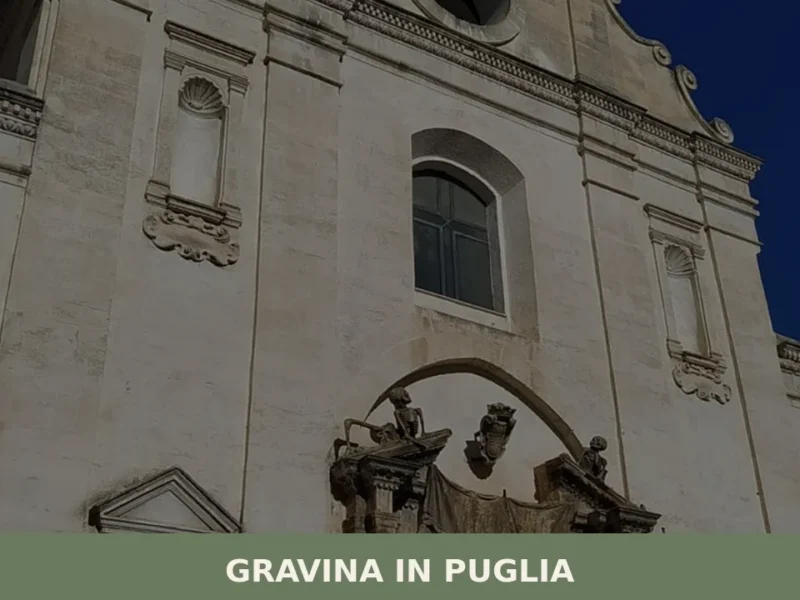
In 1092, Humfred of Hauteville confirmed the privileges of the cathedral dedicated to Santa Maria Assunta, a document that fixes in the historical record the ecclesiastical rank of Gravina in Puglia well before Frederick II chose it as an imperial hunting reserve. Today, anyone walking along the edge of the gravina — the karstic canyon […]
Sannicandro di Bari
Plains
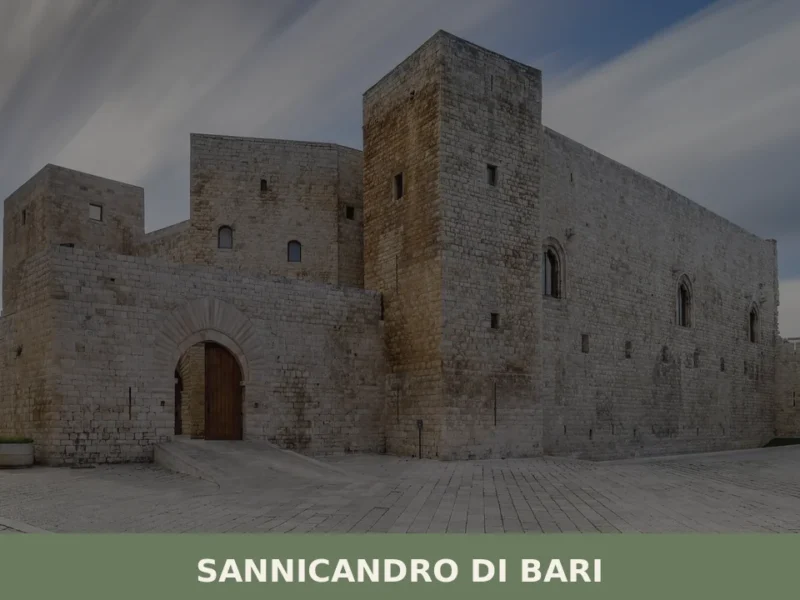
What to see in Sannicandro di Bari? Discover the Norman-Swabian Castle and 4 historic churches. A complete guide to exploring the village and the Bari plain.
Carosino
Plains
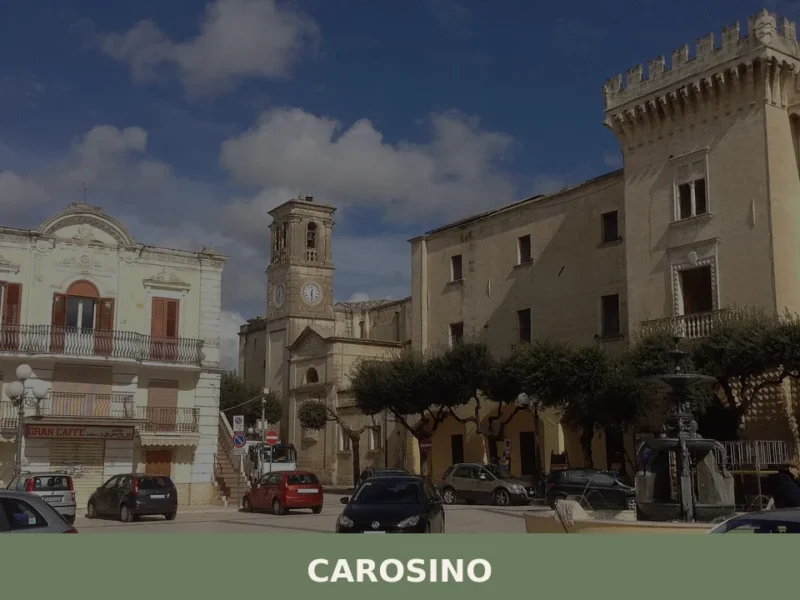
Carosino is a comune of 6,371 inhabitants in the province of Taranto, positioned in the Ionian arc of Puglia where the landscape flattens into olive groves and vineyards before reaching the coast. Known locally by its Salentine dialect name Carusinu, the town sits within a territorial context defined by centuries of agricultural production and the […]
🏡 Know Adelfia better than we do?
If you’re a local or have been there, your knowledge matters: add what’s missing or fix a detail on this page.