


Maglione
 Hills
Hills
406 inhabitants, 167 contemporary artworks and a September procession with ancient Celtic echoes: Maglione offers a concentrated, surprising cultural experience in the Torinese hills.
Maglione: Art on Every Wall, Deep Roots in Canavese Soil
A square tower rises above the village cemetery, sole surviving fragment of a castle the Masino lords built and lost — a quiet marker of centuries that passed more violently than the present calm suggests. Below the hilltop on which the old centre sits, small moraine lakes catch the light at the foot of the slope, and the vineyards on the surrounding terraces still yield the white wine that local tradition has cultivated here for generations.
Maglione, a village of 406 inhabitants in the province of Torino, draws visitors for two quite different reasons: a baroque parish church whose marble altar anchors a tight historic core, and an open-air contemporary art circuit that has turned ordinary house façades and public squares into a gallery without walls or admission fees.
From Imperial Donation to Napoleonic Department: Maglione Through the Centuries
The earliest written record of the settlement dates to 999, when Emperor Otto III granted the territory to the bishop of Vercelli in an act of donation. That document places the village firmly within the ecclesiastical and feudal networks of medieval northern Italy, long before it acquired its later political identity.
In the late twelfth century the territory passed to the counts of Valperga, and over the following decades the community repeatedly pledged loyalty to the commune of Vercelli — in 1229, and again in the 1230s and 1240s — a sign of how contested local authority remained across this part of Piedmont. In 1444, Giacomo di Valperga, taking the title of Giacomo I, founded what became the second dynasty of the counts of Masino, drawing Maglione deeper into that family’s orbit.
Military pressure came from several directions over the following two centuries. Savoy-aligned troops caused limited damage in the village in 1462; far worse destruction arrived between 1648 and 1657, when Spanish forces attacked and besieged the settlement repeatedly. In 1704 French troops passed through on their march toward Ivrea. During the Napoleonic reorganisation of northern Italy, Maglione was incorporated into the department of the Dora. The castle the Masino family had built was destroyed in 1650, leaving only the quadrangular tower that now serves as the bell tower of the cemetery. The village coat of arms and gonfalon were formally granted by decree of the President of the Republic on 11 September 2001. Since the early twentieth century, the resident population has roughly halved.
The matarilla worn by the young women in the patronal procession takes its name, most likely, from the Celtic matara — a short Gaulish lance mentioned by Julius Caesar in De bello Gallico — a linguistic trace that reaches back well before the first medieval documents.
Churches, Towers and Contemporary Art: Maglione’s Built Landscape
Parrocchiale di San Maurizio
The parish church dedicated to San Maurizio represents one of the clearest examples of baroque architecture in this part of the Torinese hills. Inside, four altars occupy the nave, and the high altar together with its balustrade are executed in marble — a material choice that signals the ambition of whoever commissioned the interior. The church also gives its name to the village’s most important annual celebration, held each September.
The Quadrangular Tower
When the castle built by the Masino lords was pulled down in 1650, only this compact square tower survived. Repurposed over time, it now functions as the bell tower of the village cemetery. Standing at the edge of the historic centre, it reads as a compressed summary of Maglione’s feudal past: substantial enough to have endured, isolated enough to underline what was lost around it.
MACAM — Museo d’Arte Contemporanea all’Aperto di Maglione
In 1985 the filmmaker Maurizio Corgnati proposed something unusual to the inhabitants: invite artists to work directly on the walls and squares of the village, free of institutional constraints, timetables or entrance fees. The idea took hold. Over the following decades, Italian and international artists were welcomed to fresco building exteriors and install sculptures in public spaces. By 2022 the circuit comprised 167 works. Among them: the geometric rhythms of Roberto Caracciolo’s Muro ad acqua, the expressionist colour of Bert van Zelm, the monochrome fields of Piero Ruggeri, brushwork by Francesco Tabusso and Ugo Nespolo, the stone-slab sculptures of Klaus Munch, and a sculpture by Giò Pomodoro in Piazza XX Settembre. Piero Gilardi’s Monumento al contadino, built with the participation of elderly farmers from Maglione using old agricultural tools, stands as one of the most layered pieces in the collection.
Chesetta di San Grato and Cappella di San Maurizio
Two smaller religious buildings complement the parish church in the village’s devotional geography. The chesetta dedicated to San Grato and the chapel of San Maurizio are modest structures, but their presence traces the pattern of local faith across different corners of the settlement — each serving a community that measured its calendar by feast days and agricultural seasons alike.
The Palazzo Comunale and Canonica Loggias
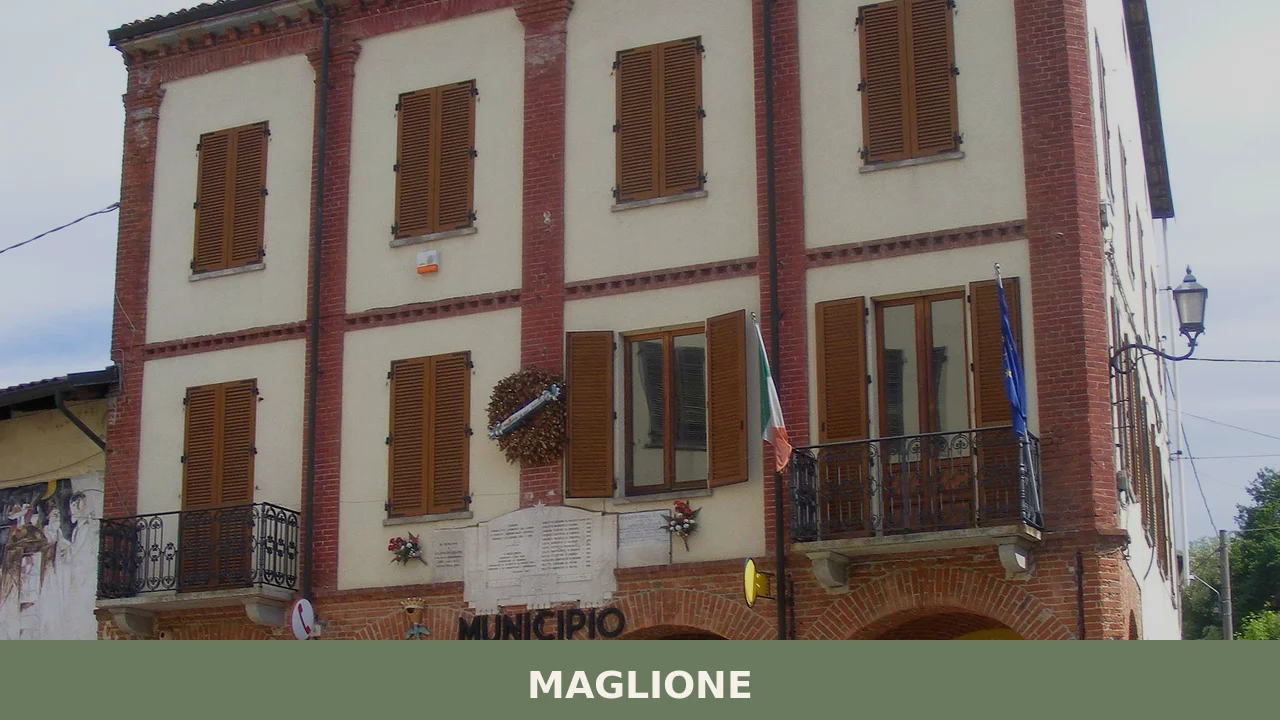
Within the oldest part of the village, the Palazzo Comunale and the arcaded loggias of the canonica punctuate the fabric of historic civil and ecclesiastical architecture. Several patrician houses survive nearby, their proportions reflecting the modest prosperity of a rural community tied to vines, cereals and fruit cultivation.
Vineyards, Peaches and the Rhythm of the Agricultural Year
Agriculture has always been the economic foundation of Maglione. Cereals and fodder crops remain the principal cultivation, but viticulture holds a particular place: the vineyards on the surrounding slopes produce Erbaluce di Caluso DOCG, a white wine with a long-standing reputation in the Canavese area. This is not an exclusively local product — the Erbaluce appellation covers a wider territory — but the vines around Maglione contribute to it, and the grape’s presence in the landscape is visible from the road.
More recently, fruit growing — especially peach orchards — has added a seasonal rhythm to village life. A permanent peach market runs from 15 May to 30 September, and the last Sunday of July brings the Sagra delle pesche, a community celebration built around the harvest. For visitors, this offers a direct and unpretentious way to engage with local production during the summer months.
Visiting Maglione: Season, Access and Nearby Villages
The most eventful time to visit falls around 22 September, when the patronal feast of San Maurizio animates the village with a procession that is difficult to find replicated elsewhere in the province. Eight young women carry the matarille — conical structures 120 centimetres tall, placed on the head and decorated as flowering trees, symbolising fertility and the propitiation of harvests — while eight young men accompany them bearing the limbarda, Maglione’s version of the halberd, composed of a shaft topped with a sharp blade, a half-moon and a point, reproducing the weapon of early German and Swiss infantry. The combination of Celtic-rooted symbolism and medieval military imagery makes this procession one of the more compelling local rituals in the Torinese hills.
Summer visitors planning around the peach sagra in late July will find the village in full agricultural season, with the market active and the landscape at its most productive. The open-air art circuit requires no advance booking and no fixed schedule — a walk through the streets at any hour suffices. The moraine lakes of Maglione and nearby Moncrivello, visible below the hilltop, add a natural element to any visit without requiring significant detours.
Maglione sits within a network of Canavese villages worth combining into a single itinerary. The communities of Borgomasino, Caravino and Azeglio lie in the same general territory, while Candia Canavese and Albiano d’Ivrea extend the circuit toward the Ivrea basin. The table below gives approximate travel times from the main regional hubs.
| Departure | Approximate Distance | Approximate Time by Road |
|---|---|---|
| Torino | around 50 km | around 50 minutes |
| Ivrea | around 15 km | around 20 minutes |
| Vercelli | around 40 km | around 40 minutes |
If you arrive by car, the provincial roads through the moraine amphitheatre are well signed from Ivrea. Public transport connections are limited, so a private vehicle gives the most flexibility, particularly if you intend to visit the art circuit thoroughly or combine Maglione with the surrounding villages in a single day.
Frequently asked questions about Maglione
What is the best time to visit Maglione?
September is ideal, when the Patronal Feast of San Maurizio Martire (September 22) transforms the village into a celebration featuring the distinctive cone-shaped headdresses worn by young women—a tradition with Celtic Gallic roots. The mild autumn weather suits exploring the contemporary art murals and sculptures that cover the village streets. Spring and early summer also offer pleasant conditions for visiting the glacial lakes below.
How do I reach Maglione from Turin?
Maglione lies in the Torinese hinterland, roughly between Ivrea and Vercelli in the Canavese region. From Turin, drive northeast toward Ivrea (approximately 40 km). The village sits at 313 metres elevation on the moraine amphitheatre. For exact directions and public transport options, consult regional mobility services or contact the local comune office for current bus and train connections to nearby stations.
What can I see in Maglione's art scene?
Maglione features a nationally recognized open-air contemporary art museum with murals and sculptures integrated throughout the village streets. This unexpected artistic transformation has become central to how the commune presents itself internationally. The art complements the medieval tower and baroque parish church in the old centre, creating a distinctive blend of historical and contemporary cultural experiences in this 415-resident village.
Are there natural attractions near Maglione?
Two glacial moraine lakes lie directly below the village—the laghetti morenici di Maglione e Moncrivello—offering serene natural landscapes. The surrounding Canavese hills provide opportunities for walking and exploring the countryside. These lakes, formed by ancient glacial activity, reflect the regional geology and provide peaceful outdoor spaces for visitors interested in natural heritage and gentle hillside walks.
📷 Photo Gallery — Maglione
In Piedmont More villages to discover
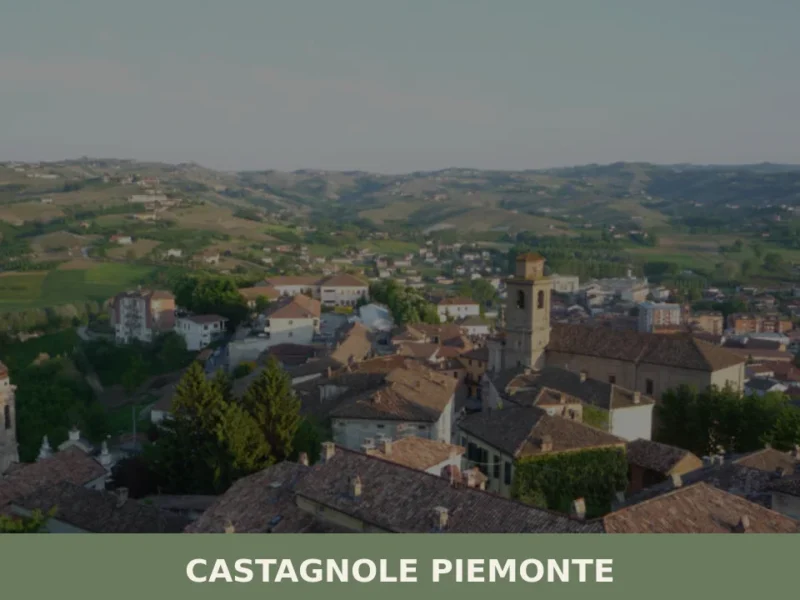
Castagnole Piemonte
 Plains
What to see in Castagnole Piemonte, Italy — 20 km from Turin. Explore 5 top attractions, local food traditions and practical travel tips. Discover Piemonte.
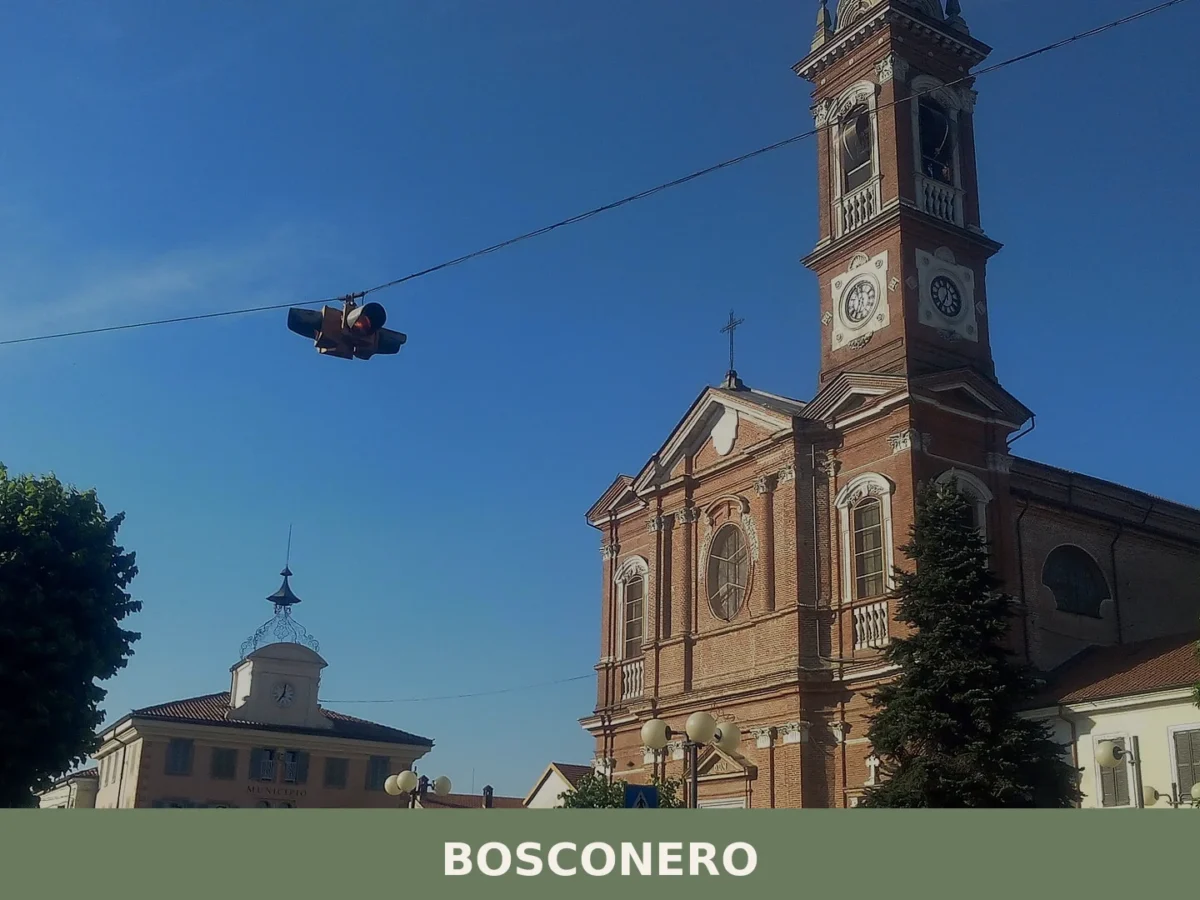
Bosconero
Plains
A comune of 3,075 people in Turin's metropolitan area, Bosconero preserves the story of forest clearance, medieval expansion and 20th-century growth along the banks of the Orco.
Azeglio
Hills
Azeglio, a small Piedmontese village on Lake Viverone: history, what to see and how to get there. Discover everything to plan your visit.
Piverone
Hills
Piverone is a comune of 1,225 inhabitants in the Metropolitan City of Turin, sitting in the Canavese district of Piemonte at the foot of the Monferrato hills. Its Piedmontese name, Pivron, pronounced /pɪw’rʊŋ/, signals a linguistic heritage rooted deep in the region’s Franco-Provençal and Occitan-influenced dialects. For anyone researching what to see in Piverone, the […]

Brandizzo
Plains
A plains settlement shaped by centuries of feudal rule and 20th-century industry. Discover baroque architecture, carnival traditions, and the Po river landscape.
Airasca
Hills
Arriving in Airasca along the provincial road that connects Pinerolo to Turin, the first thing you notice is the bell tower of the parish church of San Bartolomeo, a vertical landmark in a horizontal landscape of cultivated fields and rows of poplars. The municipality, home to 3,842 inhabitants at 257 metres above sea level, occupies […]

Acceglio
 Mountain
Discover what to see in Acceglio, a 170-resident mountain village at the head of Valle Maira in Cuneo, Piemonte — trails, churches, alpine pastures and local food.
Caselette
Hills
At the foot of Monte Musinè, where the plain of Turin gives way to the first folds of the Val di Susa, a mass of rock the size of a house sits in open ground. The Pietra Alta, one of the largest glacial erratics in the whole of Piedmont, was deposited here by glacial movement […]
Mezzenile
Mountain
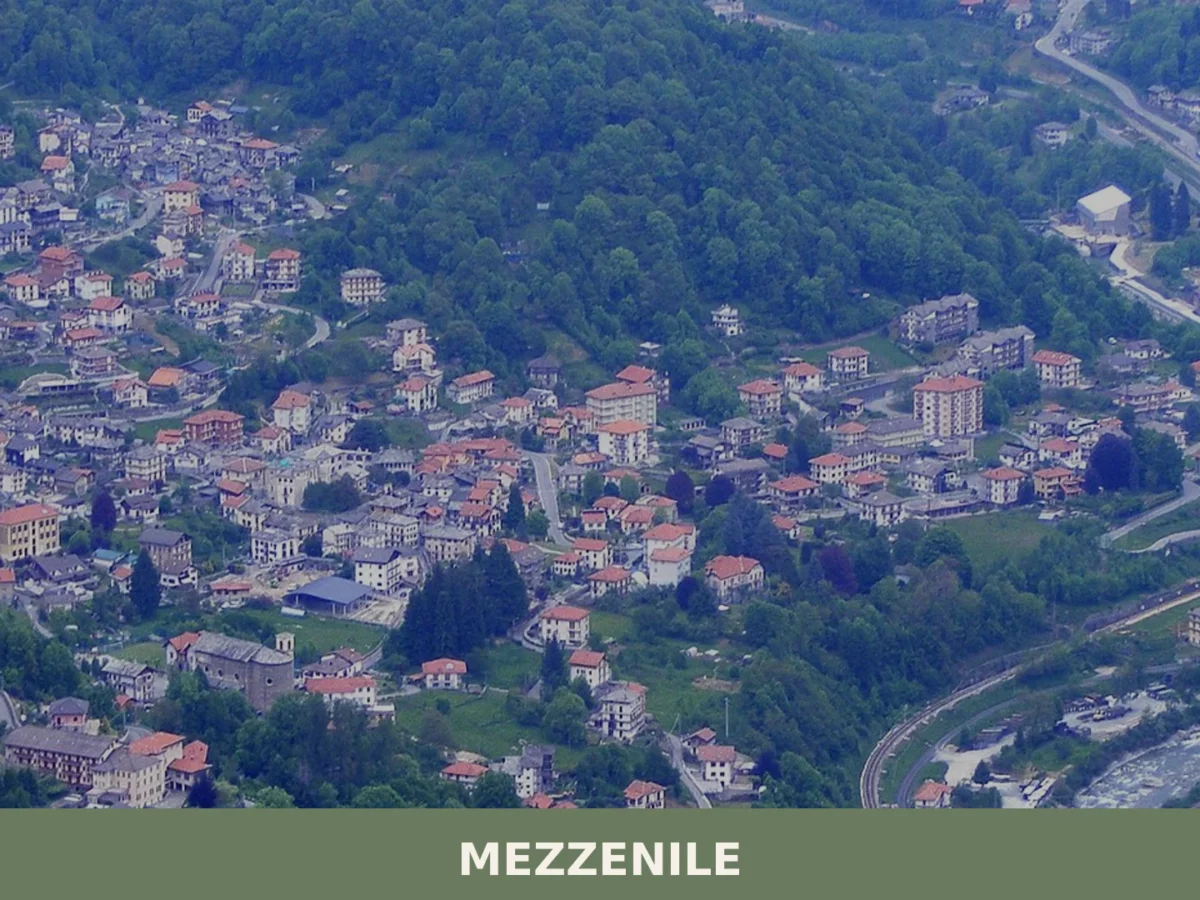
734 residents, one river bank, and a territory stretching from valley floor to high ridge. Mezzenile rewards visitors with cave systems, mountain lakes and a craftsmen's ecomuseum.
Almese
Hills
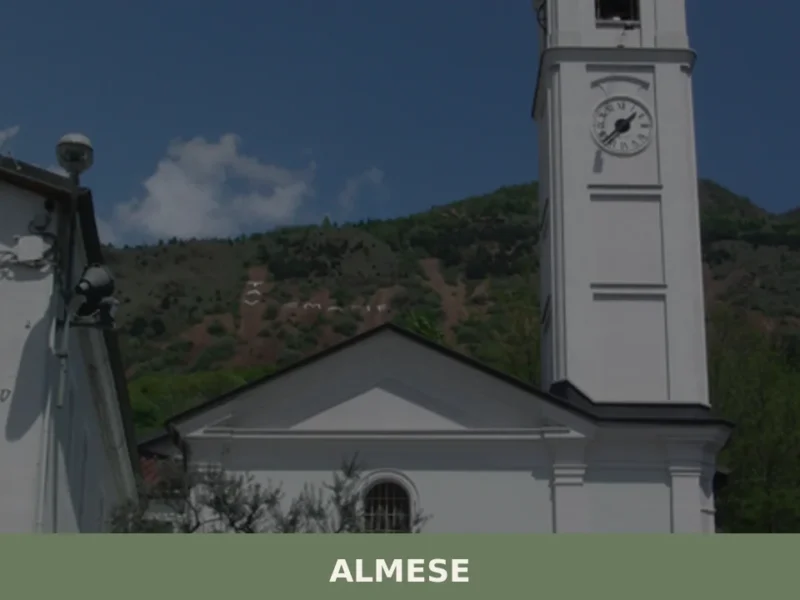
In 1029, a document from the Abbey of Novalesa recorded the name Almese for the first time, linked to a series of land holdings in the lower Val di Susa. That place name — probably derived from a Celtic or pre-Latin word connected to alpine pastures — appears in a territory that already served as […]


🏡 Know Maglione better than we do?
If you’re a local or have been there, your knowledge matters: add what’s missing or fix a detail on this page.