 Mountain
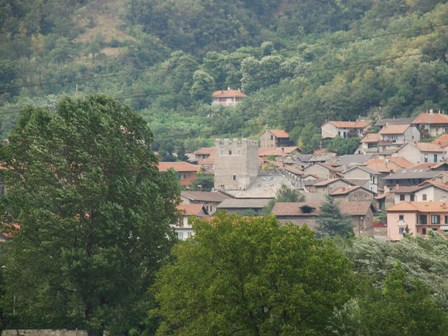
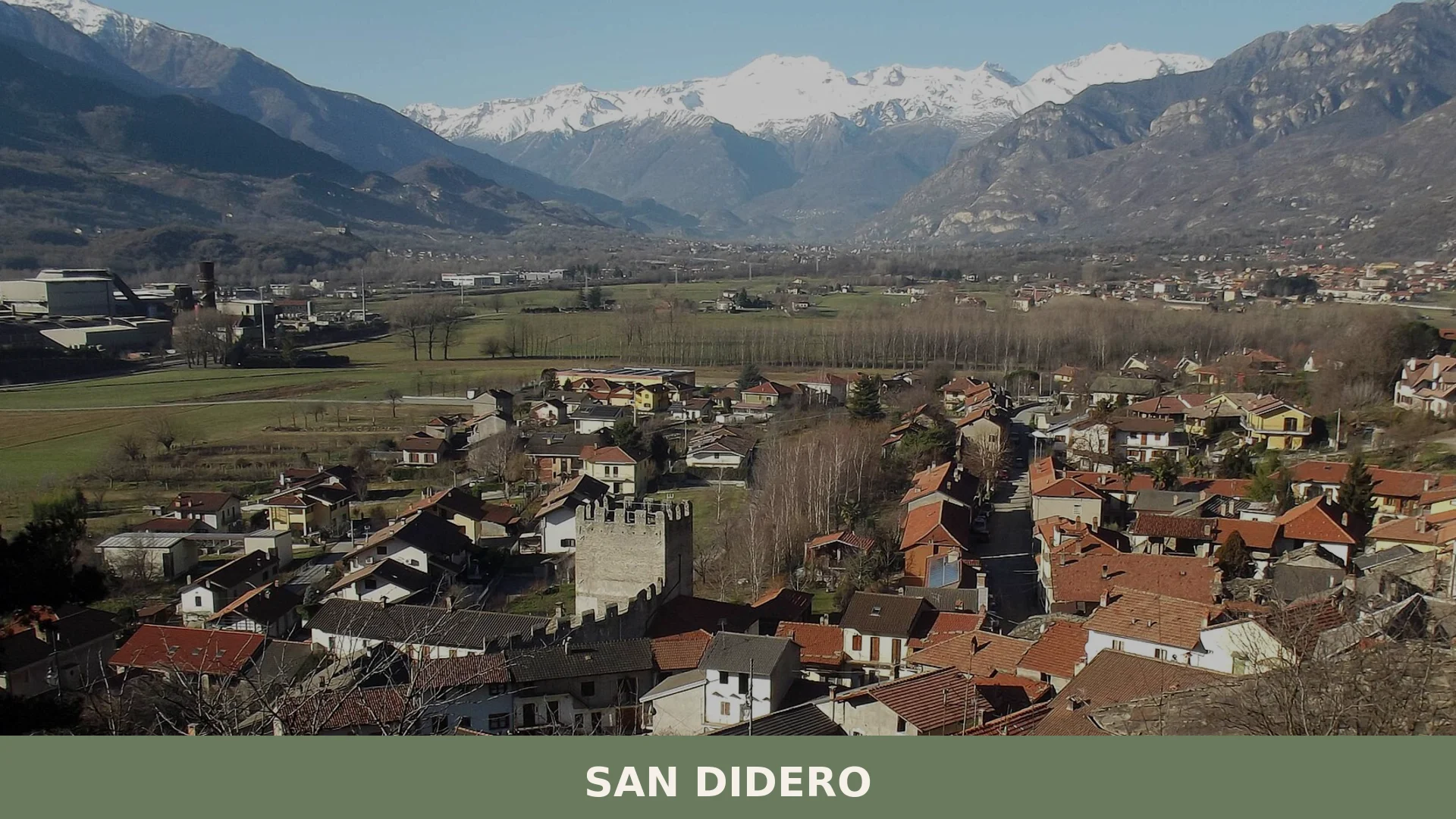
 Stone houses cluster on a gentle slope above the Dora Riparia, their grey facades catching the afternoon light that filters through the Alpine valley. San Didero is a village where the rhythm of seasons follows the contours of the land, where the church bell marks time in a place of 494 inhabitants.
San Didero village in Piedmont occupies a modest but significant position in the Susa Valley, one of the main arteries connecting the Turin metropolitan area to the mountain passes toward France. The village draws visitors who follow the Via Francigena pilgrimage route and those seeking to understand how rural Alpine communities have organized themselves across centuries.
From Roman Waystation to Medieval Feud
The name San Didero derives from the Ecclesia Sancti Desiderii—the Church of Saint Desiderius—which has stood as the spiritual heart of the settlement since medieval times. During the Roman period, this location may have hosted a waystation called Mutatio ad Duodecimum on the via Cozia, a stopping point documented in the Itinerarium burdigalense, un resoconto di viaggio da Bordeaux a Gerusalemme. No monumental remains mark this ancient presence; the landscape itself is the only surviving witness.
In the medieval period, San Didero became a feud administered by noble families of the region, including the Bertrandi and the Grosso di Bruzolo. These families controlled the economic and legal life of the settlement through their rights to land and resources. The village remained part of these feudal networks until broader changes in governance and landownership reshaped the valley’s structure. The administrative identity of the village solidified over subsequent centuries, reflecting its role as a minor but recognized centro within the Susa Valley system.
The Medieval Church and Public Casaforte
Church of San Desiderio
The Church of San Desiderio dominates the village’s skyline with a profile that has survived since the medieval period—a rarity in the Susa Valley. Its single nave is lit by simple lancet windows carved from stone blocks, their geometric purity a signature of medieval Alpine architecture. The church remains in active use and serves as a focal point for the community’s religious calendar, anchoring daily life to the liturgical year and the feast of its patron saint, San Desiderio.
Casaforte of San Didero
The medieval casaforte—a fortified house combining defensive and residential functions—rises on the slope where the village clusters. Unlike most fortified structures in the lower Susa Valley, this one remains public property, now the subject of restoration and conversion into a bed and breakfast. The project represents an attempt to breathe new life into medieval architecture while preserving its original character. The casaforte’s image appears on the village coat of arms, formally granted by presidential decree in April 2024, symbolizing the settlement’s medieval roots.
The Via Francigena and Pilgrimage
The Via Francigena, one of Europe’s oldest pilgrimage routes, passes through San Didero along its Monceniso branch. This pathway has carried pilgrims and travelers for centuries toward Rome and toward the Alpine passes toward France. The presence of the route links San Didero to a vast spiritual and cultural network extending across the continent. For modern visitors, walking these same paths connects them directly to centuries of human movement and intention, making the village a waypoint on a journey that transcends tourism.
The Flavors of Alpine Agriculture
The village’s coat of arms tells the story of its relationship with the land: a basket overflows with grapes, chestnuts, and wheat stalks climbing the sides of the casaforte. This heraldic summary captures the agricultural foundation that has sustained the settlement. The Marrone della Valle di Susa, a chestnut variety with protected geographical indication status, grows in the surrounding valley, as do traditional crops reflected in Piedmont’s roster of protected regional products.
Local traditions preserve knowledge of cured meats, preserved vegetables, and grain-based dishes rooted in Alpine farming cycles. The Susa Valley produces prosciutto crudo dell’alta Val Susa, a cured ham protected as a traditional product, and supports the cultivation of grain and legumes that feed both local kitchens and regional markets. These products emerge not as tourist attractions but as the ordinary substance of daily eating, tied directly to the rhythm of seasons and the terrain.
Planning Your Visit to San Didero
San Didero is accessible by car from Turin via the SS24 toward Bardonecchia, a drive of approximately 45 minutes through the Susa Valley. The road follows the Dora Riparia upstream, passing through a series of modest villages and industrial valleys before reaching the quieter settlements near the foot of the Alps. Public transport connects the village to larger centers, though a personal vehicle offers greater flexibility for exploring the surrounding territory and nearby comuni like Almese and Avigliana.
| Departure Point | Distance | Approximate Time |
|---|---|---|
| Turin (city center) | 55 km | 50 minutes by car |
| Borgone Susa | 5 km | 8 minutes by car |
| Avigliana | 20 km | 25 minutes by car |
The village sits at 430 meters above sea level, placing it in the transitional zone between the Turin plain and the true Alps. Spring and early autumn offer mild temperatures and lower crowds; summer brings warmth and peak trail traffic along the Via Francigena; winter transforms the landscape but may present access challenges. Visitors interested in pilgrimage routes should plan for a multi-day trek across the valley; those seeking a quieter half-day visit can focus on the village core, the church, and the surrounding footpaths. The comune maintains basic services; accommodation within the village remains limited, making nearby Borgone Susa a practical alternative for longer stays.
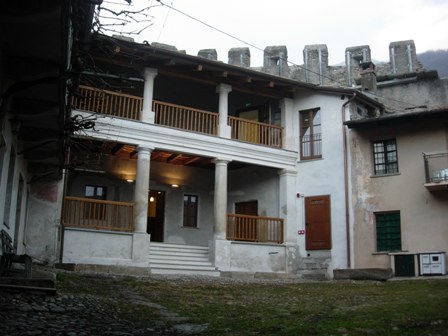
The village reveals itself best on foot. A walk through the narrow streets leads past restored and semi-restored stone houses, revealing the slow pace at which change occurs here. The view across the valley toward the opposite slopes rewards the short climb above the village center. Those following the Via Francigena will find San Didero a natural rest point—quiet, real, and rooted in the landscape rather than shaped by tourism.