


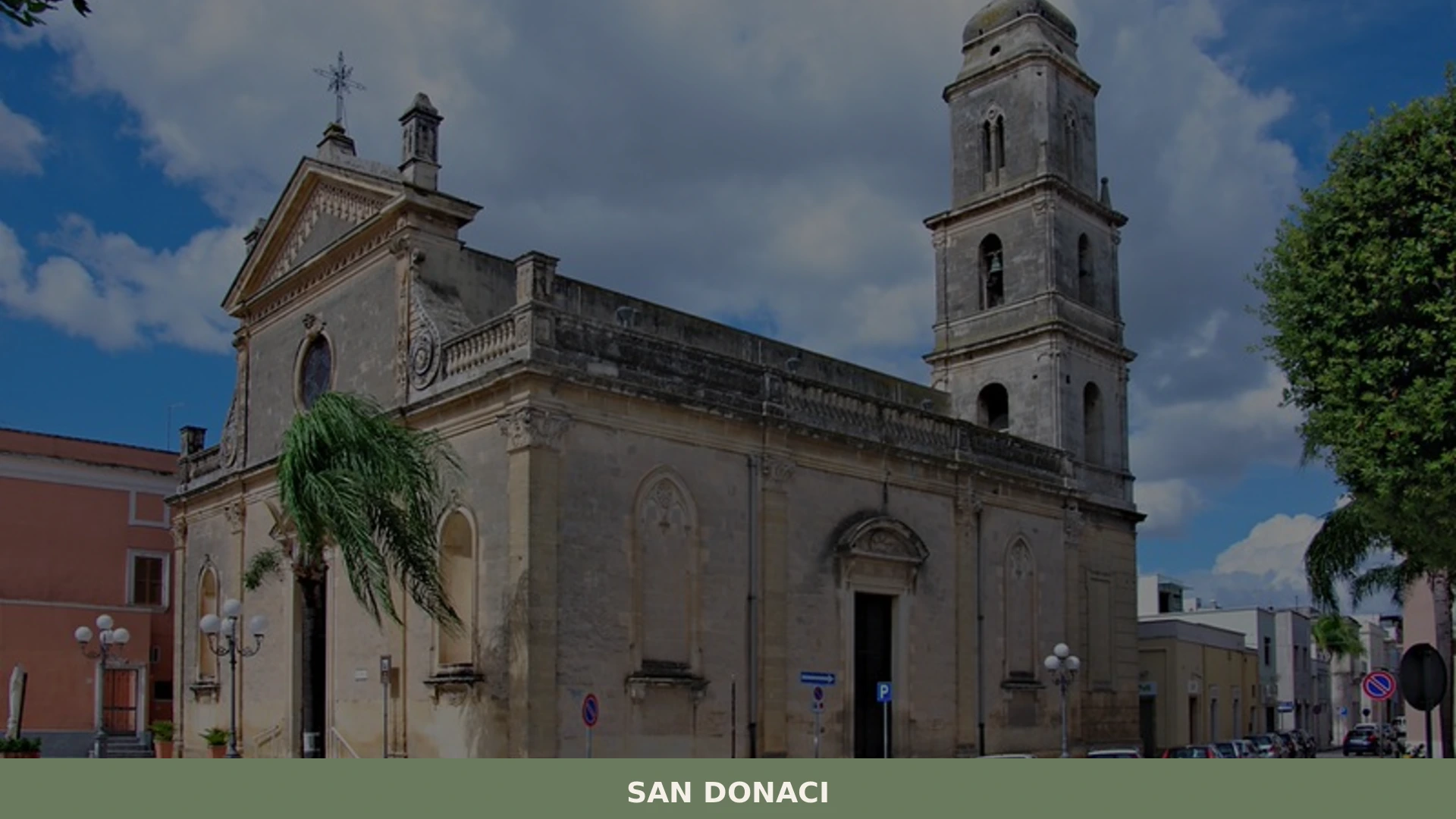

What to see in San Donaci? Discover the 5 must-see attractions of this Puglian village. Plan your perfect visit with our complete guide!
Discover San Donaci
Along the state road that cuts through Salento from Lecce to Taranto, at a certain point the landscape shifts its tone: the olive groves grow denser, dry-stone walls mark out low and orderly plots of land, and a bell tower rises above the flat rooftops of the town centre.
San Donaci appears just like this, without warning, with its 6,046 inhabitants spread across a flat stretch of territory in the province of Brindisi, where the afternoon light strikes horizontally across limestone facades and carob trees mark the boundaries between one plot and the next.
Those wondering what to see in San Donaci will find an authentic Salentine centre, positioned along one of the most travelled road axes in southern Puglia, just a few kilometres from both Brindisi and Lecce.
The main attractions include the mother church with its Baroque layout, the urban fabric of the historic centre, the traces of widespread rural settlement, and the food and wine tradition rooted in the peasant culture of the inland Salento.
Even on a first visit, it becomes clear that San Donaci works as a gateway to a rich territory, where every kilometre has something specific to offer.
History and origins of San Donaci
The roots of San Donaci stretch back to the medieval period, when the Salentine territory was traversed by complex feudal dynamics involving the great noble families of the Norman and Angevin South. The name of the town most likely refers to the cult of San Donato, a martyr figure widespread across the Adriatic area and in the Apulian ecclesiastical tradition, which has left onomastic traces in several municipalities across the region.
The geographical position of the village, along the natural route between Lecce and Taranto, determined from the very beginning its role as a junction between the lower Adriatic Salento and the Ionian side.
During the sixteenth and seventeenth centuries, the territory of San Donaci fell within the orbit of the great feudal lordships that controlled the Brindisi area of Salento.
Like many centres of the Salentine plain, the settlement developed around the ecclesiastical nucleus and the system of fortified farmhouses that dotted the agrarian landscape.
These rural structures, some of which are still visible within the municipal territory, document a settlement model based on intensive agricultural management — vines, olives, cereals — which shaped the economic and social profile of San Donaci for centuries.
Its position along the transit route between two major cities ensured regular commercial exchange and a flow of people that contributed to the vitality of the village even during periods of demographic stagnation.
Between the nineteenth and twentieth centuries, San Donaci followed the transformations common to rural centres of the South: Italian unification brought changes to local administration, while the first half of the twentieth century marked a period of emigration towards northern Italy and abroad.
Agriculture nonetheless remained the main economic pillar, with viticulture taking on a growing role in the municipal economy during the twentieth century, placing San Donaci within the productive context of wine-producing Salento.
The municipality belongs today to the province of Brindisi and maintains a demographic structure of around 6,000 inhabitants, confirming a settlement stability that has resisted the pressures of rural depopulation typical of other inland areas of Puglia.
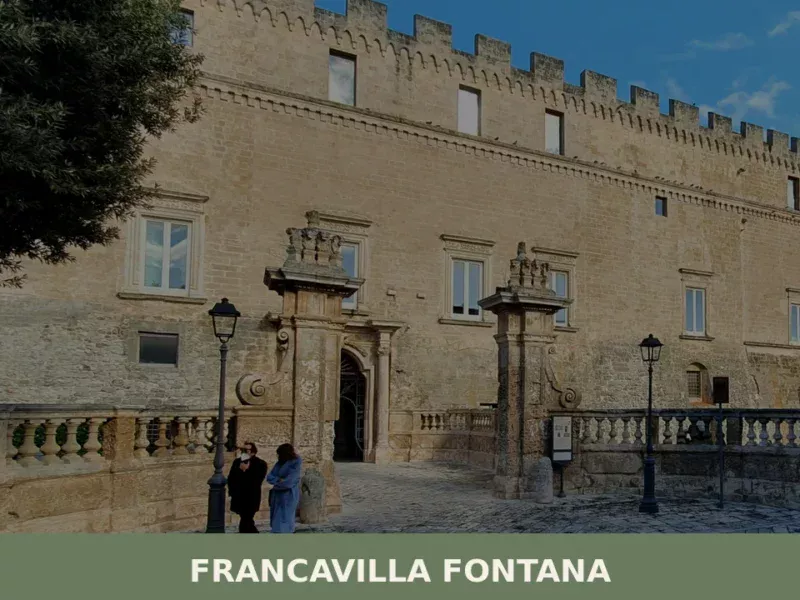
Those visiting the area around Francavilla Fontana, the Baroque centre of the Brindisi province just a few kilometres away, will immediately recognise the affinities in feudal history and architectural imprint that unite the villages of this part of northern Salento.
What to See in San Donaci: Main Attractions
Mother Church of San Donato Martire
The façade of the Mother Church of San Donato Martire dominates the central square of San Donaci with a front in worked Lecce stone following the canons of Salento Baroque: the string courses, the pilaster capitals and the entrance portal display that preference for ornamental detail which characterises the religious architecture of the 17th and 18th centuries in the lower Tavoliere di Lecce.
The single-nave interior preserves side altars and a decorative apparatus that documents centuries of local patronage, with canvases and sculptures datable between the 17th and 19th centuries.
The bell tower, visible from a considerable distance thanks to the plain that presents no visual obstacles, marks the hourly rhythm of the village with a regularity that residents consider part of the daily soundscape.
Those who enter the church during the morning hours, when light filters through the side windows and illuminates the gilded surfaces of the altars, can grasp the devotional layering of a community that has invested significant resources in its own liturgical space for generations.
Historic Centre and Traditional Urban Layout
The streets of San Donaci’s historic centre follow a grid that reflects the gradual expansion of the settlement around the original ecclesiastical nucleus, with an alternation of enclosed courtyards, limestone portals and low façades that rarely exceed two storeys.
The local stone, quarried from outcroppings in the Salento plain, is the dominant material: in the perimeter walls of the oldest houses, hand-squared blocks can be identified, with the coarse grain typical of quarries in the Brindisi area.
Walking through the network of inner lanes, one notices how traditional urban planning responded to precise logic: the orientation of entrances, the management of shade during the hottest hours, the connection between private and public space through entrance halls opening onto the alleyways.
Some buildings preserve architectural elements datable to the 17th–18th centuries, such as sculpted corbels, arched windows and relief coats of arms on the keystones of portal arches.
Historic Masserie of the Territory
The agricultural land surrounding San Donaci preserves a system of historic masserie that represent the economic and settlement structure of rural Salento between the 16th and 19th centuries.
These buildings, characterised by compact building bodies, corner towers and internal courtyards, were designed to house men, animals and produce, functioning as self-sufficient productive units during agricultural cycles. The plain around the municipality, lacking significant elevations and cultivated with vineyards and olive groves, makes it possible to spot the silhouettes of the masserie from considerable distances, thanks to the absence of visual obstacles that characterises this stretch of central Salento.
Some masserie within the municipal territory still retain their original masonry structure, with walls over a metre thick that provided thermal insulation during the summer months and food preservation in the semi-underground cellars.
Visiting the territory of San Donaci on foot or by bicycle along the rural drove roads allows one to observe these buildings in their agricultural context, with the vineyards developing their foliage in summer until it covers the boundary walls.
Main Square and Civic Space
The central square of San Donaci functions as a convergence point for local public life, with a layout that connects the mother church, the town hall and the main civic buildings in an open stone-paved space.
The architecture of the palazzi facing the square reflects the administrative history of the municipality: the oldest building bodies date back to the Bourbon period, while the 20th-century additions document the construction layers that followed Italian unification.
In the evening, when the heat of the day gives way to milder temperatures, the square once again becomes the centre of local social life, with a slow and steady movement that follows the rhythms of southern Italian life.
Those who wish to observe the village in its daily functioning — the weekly market, people leaving the churches, the opening of historic bars — should plan their visit during the central morning hours or in the late afternoon, when activity is at its most intense and the light enhances the limestone surfaces.
Viticultural Landscape of the Salento Plain
The territory of San Donaci extends across a viticultural plain that forms part of one of the most productive wine-producing areas in southern Puglia.
The vineyards trained in the alberello pugliese style — the traditional Salento training method, with low, branched vines that do not exceed 60–70 centimetres in height — cover large portions of the municipal territory and the surrounding municipalities, creating a recognisable agricultural landscape that turns an intense green in summer and shifts towards ochre and red in autumn.
Viticulture in this area is documented at least from part
Traditional cuisine and products of San Donaci
The cuisine of San Donaci belongs to the gastronomic tradition of the Salento brindisino, a food system built over the centuries around local agricultural produce: olive oil, wheat, legumes, vegetables and grapes. The geographical position of the municipality, at the centre of a flat territory with a strong agricultural vocation, has given rise to an essentially peasant cuisine, where the skilful use of seasonal raw materials makes up for the simplicity of the ingredients.
The cultural influences that passed through the Salento over the centuries — Norman, Aragonese, Bourbon — have left traces in the local gastronomic repertoire without overturning its basic structure, which remains anchored to the Mediterranean diet in its most direct expressions.
Among the dishes that characterise the Salentine table in this area, ciceri e tria hold a place of distinction: this is a home-made pasta made with durum wheat semolina, partly fried in olive oil and partly boiled, served with chickpeas slow-cooked with bay leaf and onion.
The contrast between the crispy fried pasta and the soft boiled pasta is a technique documented in Salentine cuisine since at least the medieval period, with precedents that some scholars link to Arab-Norman influence in the South.
Fave e fogghie — a purée of peeled dried broad beans with boiled wild chicory dressed with raw oil — represent another pillar of local gastronomy, with a technical simplicity that nonetheless requires precisely selected quality ingredients: the broad beans must be dried from the previous year’s harvest, and the chicory must be gathered before flowering to avoid excessive bitterness.
Baked pasta dishes with meat ragù, typical of the Sunday lunch, are also part of the traditional repertoire of the province of Brindisi.
The territory of San Donaci does not have any DOP, IGP or DOC certified products registered exclusively for the municipality, but it fits within the wine-producing context of the Salento, where the production of wines based on Negroamaro and Primitivo grapes has a documented history and significant commercial relevance.
Extra virgin olive oil, produced from local cultivars such as Cellina di Nardò and Ogliarola salentina, is a fundamental element of the area’s agricultural economy and can be found regularly at local markets during the pressing season, between November and December.
Summer festivals and village celebrations represent the most direct opportunity to taste local cuisine prepared according to traditional recipes.
During the summer events, which are concentrated between July and August, it is common to find stalls offering fried Adriatic fish, marinated vegetables, fresh local cheeses and sweets such as cartellate — strips of thin fried pastry dressed with vincotto or honey — which in the Salento are prepared mainly during the Christmas period but are also present at summer festivals as a nod to tradition.
Festivals, events and traditions of San Donaci
The patron saint’s feast dedicated to San Donato Martire represents the most important liturgical and civic event in the local calendar.
San Donato is venerated in the Salento and in some areas of the province of Brindisi as the protector against nervous diseases and epilepsy, a devotion with deep roots in Southern popular piety.
The celebration includes religious rites with a solemn procession through the streets of the town centre, with the statue of the saint carried on the shoulders of the faithful according to Salentine custom, accompanied by a brass band and illuminations that transform the centre of the village for several consecutive days.
Alongside the patron saint’s feast, the annual calendar of what to see in San Donaci includes events linked to the agricultural cycle and the rural traditions of the Salento.
The summer celebrations, concentrated between June and August, offer opportunities for social gathering with music, tastings of local products and folk re-enactments.
For the exact times of religious ceremonies and the updated programme of events, it is always useful to check the official communications of the Municipality of San Donaci, which publishes the events calendar well in advance of the dates.
When to Visit San Donaci and How to Get There
The best time to visit San Donaci falls between April and June and then between September and October.
In spring, the surrounding agricultural landscape is in full bloom, with vineyards regaining vigour and olive groves showing their blossoms, while temperatures — ranging between 18 and 25 degrees — make visiting the historic centre and exploring the surrounding countryside comfortable.
September is the month of the grape harvest: the wine-growing landscape changes colour rapidly and activity in the area’s wineries reaches its most intense peak, with an authentic rural atmosphere that is rarely found during the height of summer.
July and August remain valid months for those wishing to take part in festivals and local fairs, but temperatures frequently exceed 35 degrees during the central hours of the day.
San Donaci is easily reached by car along the Strada Statale 7 Appia, which connects Taranto to Brindisi passing through the heart of Salento.
Those arriving via the A14 motorway can exit at the Taranto or Brindisi Nord toll gates depending on their direction of travel, with a road journey of approximately 20–30 minutes from the toll gate to the centre of San Donaci. The nearest railway station is Tuturano, on the Brindisi–Lecce line operated by Trenitalia, just a few kilometres from the town centre.
The main airport is Brindisi-Casale, approximately 15 kilometres from the village, with domestic and international connections throughout the year.
Those who prefer to travel without a car may consider using the local public transport services of the Province of Brindisi, checking updated timetables and stops through the official channels of the regional transport company.
| Departure Point | Distance | Estimated Time |
|---|---|---|
| Brindisi (city centre) | approximately 15 km | 20 minutes by car |
| Lecce (city centre) | approximately 25 km | 30 minutes by car |
| Taranto (city centre) | approximately 50 km | 45 minutes by car |
| Brindisi Airport | approximately 15 km | 20 minutes by car |
Those planning a broader itinerary through northern Salento can include what to see in San Donaci as part of a route that also takes in villages of northern Puglia: Serracapriola, in the Foggia area, offers an interesting contrast with a different type of hilltop settlement in Puglia, useful for those wishing to understand the variety of the regional landscape through diversified stops.
Likewise, those coming from northern Puglia who want to understand the roots of the Apulian agricultural landscape may consider a visit to Casalnuovo Monterotaro, in the Subappennino Dauno, before heading south towards Salento and reaching San Donaci along the Ionian route.
Frequently asked questions about San Donaci
What is the best time to visit San Donaci?
The best time to visit San Donaci is during spring (April-May) or early autumn (September-October) when the weather is mild and pleasant for exploring the historic centre, cycling among the masserie, and enjoying the viticultural landscape. Summers (June-August) can be hot, but the village comes alive, especially on August 5th for the Festa Patronale della Madonna delle Grazie, a significant local event. Evenings in summer are ideal for experiencing the vibrant main square, which becomes the hub of local social life as temperatures cool.
What to see in San Donaci? Main monuments and landmarks
San Donaci offers an authentic glimpse into Salentine life. Key attractions include the impressive Mother Church of San Donato Martire, a beautiful example of Salento Baroque architecture with its ornate facade and historic bell tower dominating the central square. Explore the charming Historic Centre, a maze of narrow lanes, limestone portals, and traditional two-story houses. Don't miss the opportunity to discover the Historic Masserie scattered across the flat viticultural landscape, ideal for scenic walks or bike rides. The Main Square serves as the vibrant heart of the village, perfect for observing local life and architecture.
What are the main natural or scenic attractions of San Donaci?
The primary natural and scenic attraction of San Donaci is its expansive Viticultural Landscape, part of a highly productive wine-producing area in southern Puglia. The flat Salento plain, cultivated with vineyards trained in the traditional 'alberello pugliese' style, offers picturesque views that transform from vibrant green in summer to warm ochre and red in autumn. This landscape is perfect for leisurely walks or bicycle rides along rural roads, allowing visitors to appreciate the agricultural heritage and the silhouettes of historic masserie against the horizon, with no visual obstacles.
Where to take the best photos in San Donaci?
For captivating photos in San Donaci, focus on the Mother Church of San Donato Martire, particularly its Baroque facade dominating the central square, best captured in the morning light. The historic bell tower, visible from afar due to the flat landscape, makes for striking distant shots. Explore the narrow lanes of the Historic Centre for charming details like limestone portals, sculpted corbels, and traditional architecture. The expansive Viticultural Landscape, with its 'alberello' vineyards and distant masserie, offers beautiful rural scenes, especially at sunrise or sunset when the light enhances the colours of the plain.
Are there museums, churches or historic buildings to visit in San Donaci?
Yes, San Donaci offers several significant historic buildings. The main one is the Mother Church of San Donato Martire, a splendid example of Salento Baroque from the 17th-18th centuries, which is generally open to visitors during morning and late afternoon hours. The entire Historic Centre functions as an open-air museum, with its traditional urban layout, ancient portals, and buildings preserving 17th-18th century architectural elements. Additionally, the surrounding territory is dotted with Historic Masserie, fortified farmhouses from the 16th-19th centuries, many of which can be admired from rural roads and paths.
What can you do in San Donaci? Activities and experiences
In San Donaci, you can immerse yourself in authentic Salentine life. Explore the historic centre on foot, discovering its hidden courtyards and architectural details. Cycle or walk along the rural roads to admire the Viticultural Landscape and the impressive Historic Masserie. Experience local culture by visiting the main square during the weekly market or in the late afternoon to observe the village's social rhythms. Indulge in the rich food and wine tradition, with opportunities for wine tastings at local producers, given San Donaci's strong viticultural identity within the productive wine-producing area of Salento.
Who is San Donaci suitable for? Families, couples, hikers, solo travelers?
San Donaci is ideal for travelers seeking an authentic, unhurried Salentine experience away from crowded tourist hubs. It appeals to culture enthusiasts interested in Baroque architecture, historic urban layouts, and rural heritage. Food and wine lovers will appreciate its strong peasant culinary traditions and viticultural landscape, with opportunities for tastings. Hikers and cyclists will enjoy exploring the flat plains dotted with historic masserie and vineyards. It's also suitable for solo travelers or couples looking for a tranquil base to discover the wider Salento region, offering a genuine insight into local life and traditions.
What to eat in San Donaci? Local products and specialties
San Donaci's cuisine is deeply rooted in the peasant traditions of the Salento brindisino, emphasizing fresh, seasonal agricultural products like olive oil, wheat, legumes, vegetables, and grapes. A must-try specialty is u0022ciceri e tria,u0022 a traditional homemade pasta dish with chickpeas. Given the village's strong viticultural identity, you should also sample the local wines, which are a significant part of the area's agricultural production. Look for other typical Salentine dishes that reflect the Mediterranean diet and the simple, yet flavourful, use of local ingredients, celebrating the region's rich gastronomic heritage.
📷 Photo Gallery — San Donaci
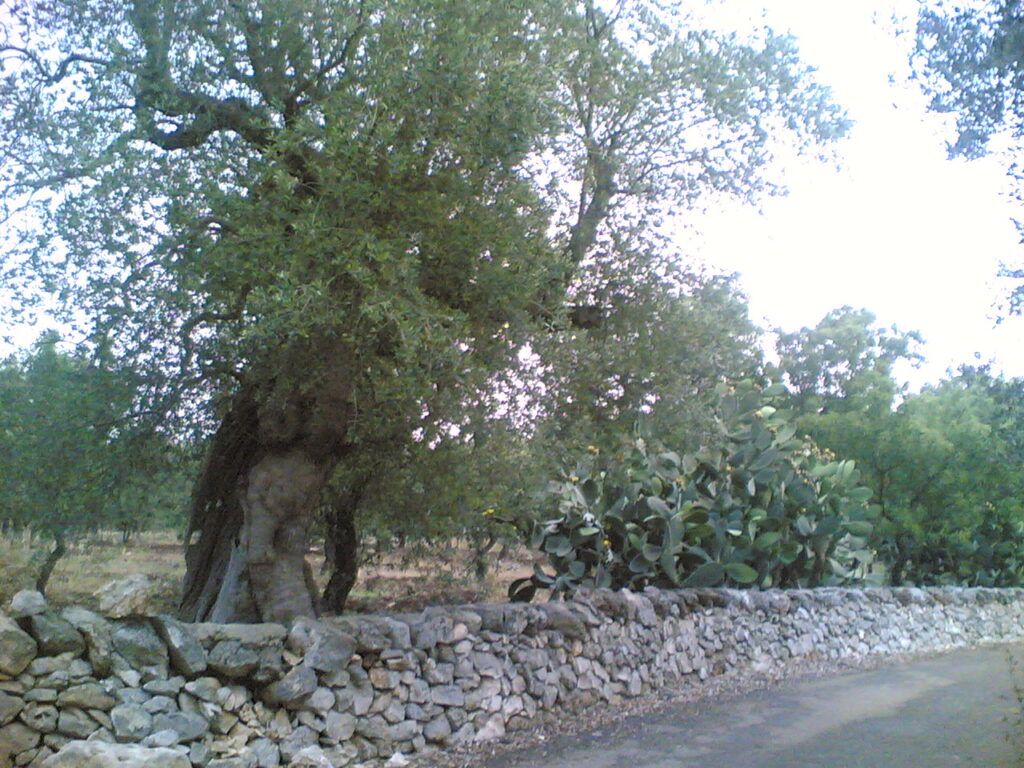
Getting there
Piazza Pompilio Faggiano, 72025 San Donaci (BR)
Nearby Villages near San Donaci
In Apulia More villages to discover
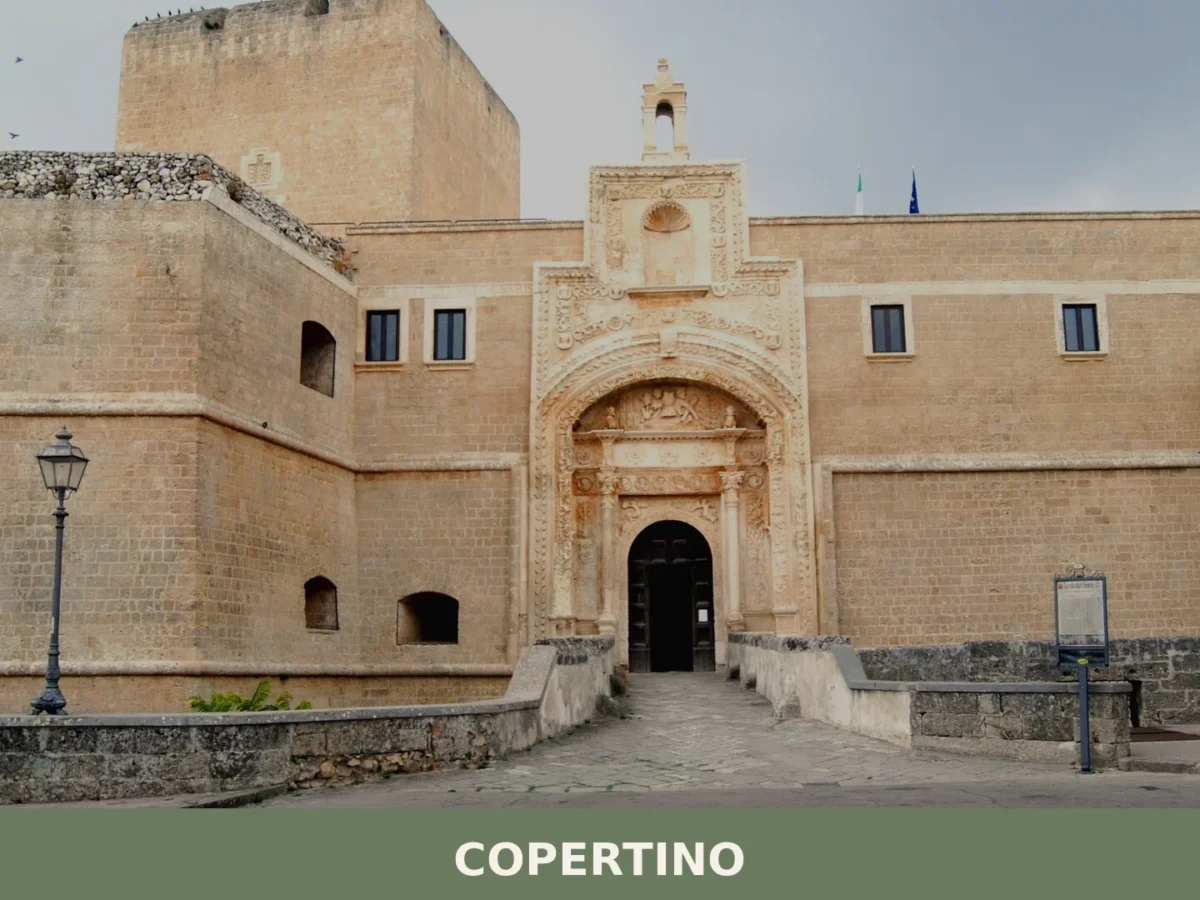
Copertino
 Plains
Population 22,827. A fortified medieval settlement transformed by Renaissance merchant wealth, with six convents and the birthplace of a Franciscan mystic.
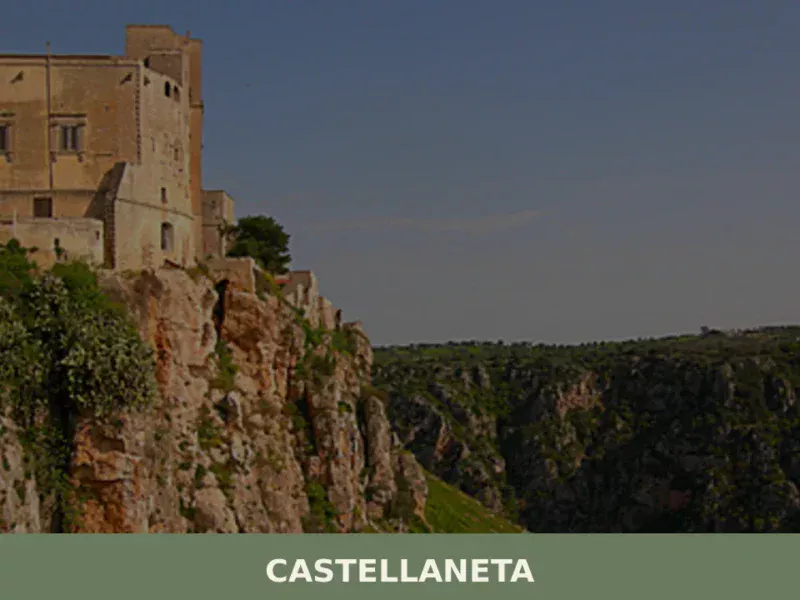
Castellaneta
 Sea
Sea
Castellaneta, a comune of around 15,784 inhabitants in the province of Taranto, sits above a dramatic ravine system carved into the Apulian plateau — a geological fact that has determined the town’s layout, its defensive logic, and the views that define it today. Visitors drawn to this corner of southern Puglia often arrive expecting little […]
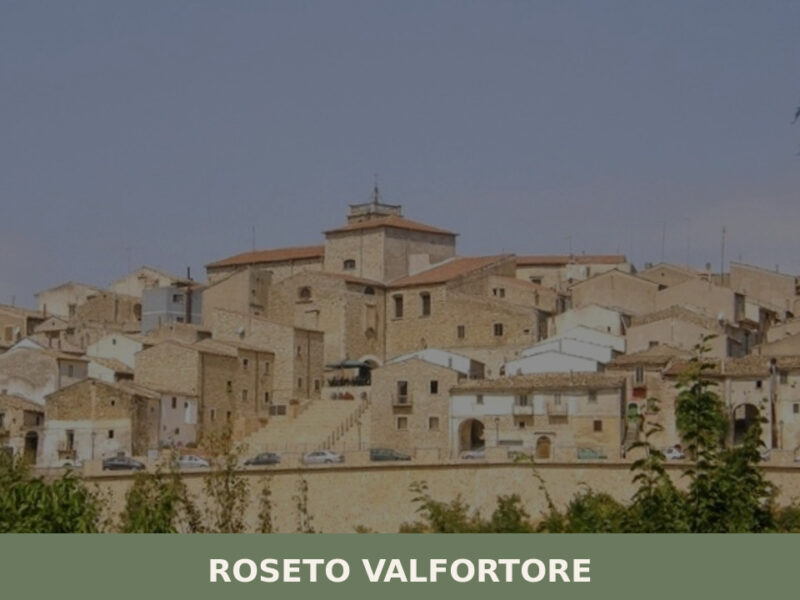
Roseto Valfortore
 Mountain
A stone village of 993 inhabitants at 658 metres in the Fortore valley. Roseto Valfortore preserves medieval architecture, mountain cooking traditions, and the quiet of inland Puglia.
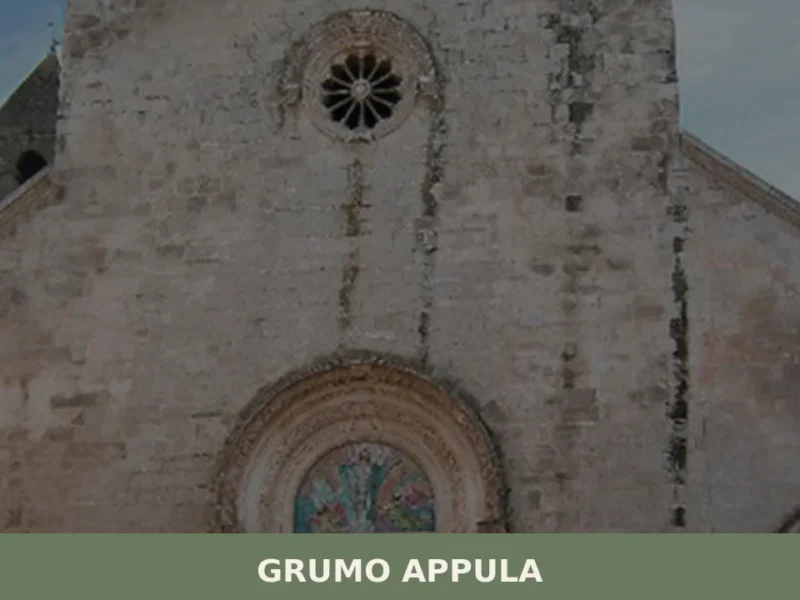
Grumo Appula
Plains
What to see in Grumo Appula, Italy: Discover its 181 m altitude and explore ancient history, the Lagopetto pine forest, and local IGP products. Read our guide.
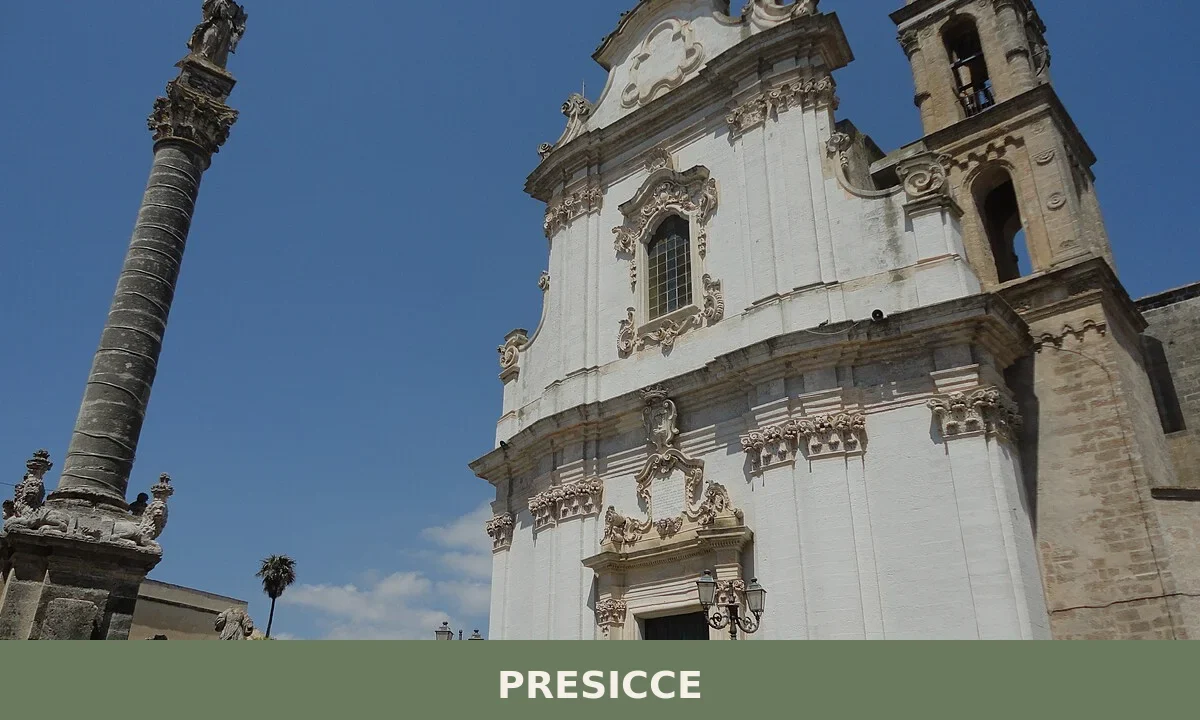
Presicce
Plains
Population 5,552. A low-altitude village built around an abundant water source, with medieval ruins, baroque religious architecture and a peasant culture museum in the ducal palazzo.
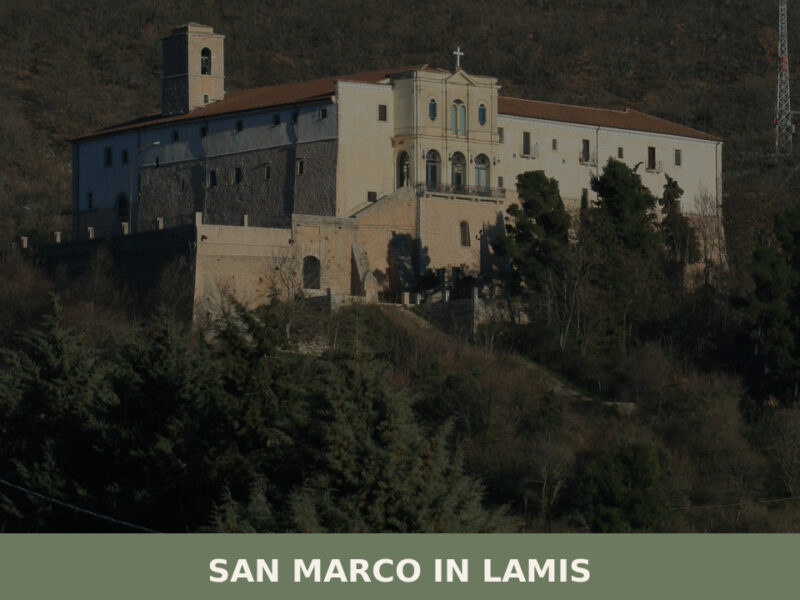
San Marco in Lamis
 Hills
Hills
A highland town on the western Gargano, San Marco in Lamis holds ancient monasteries, a dramatic Good Friday fire procession, and the quiet intensity of inland Puglia.
Vico del Gargano
Sea
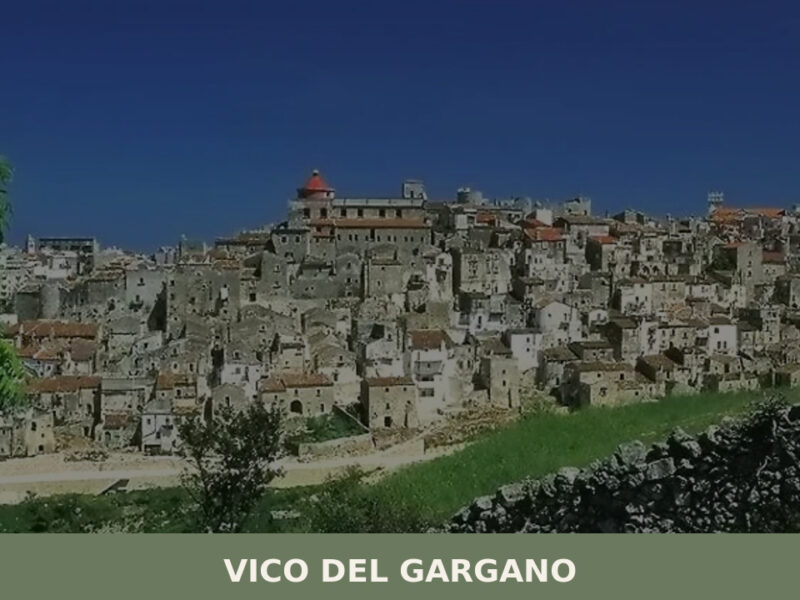
A hilltop village at 445 metres on the Gargano promontory, Vico del Gargano rewards slow exploration — medieval alleys, underground olive presses, and ancient forest at its edge.
Cellamare
Plains
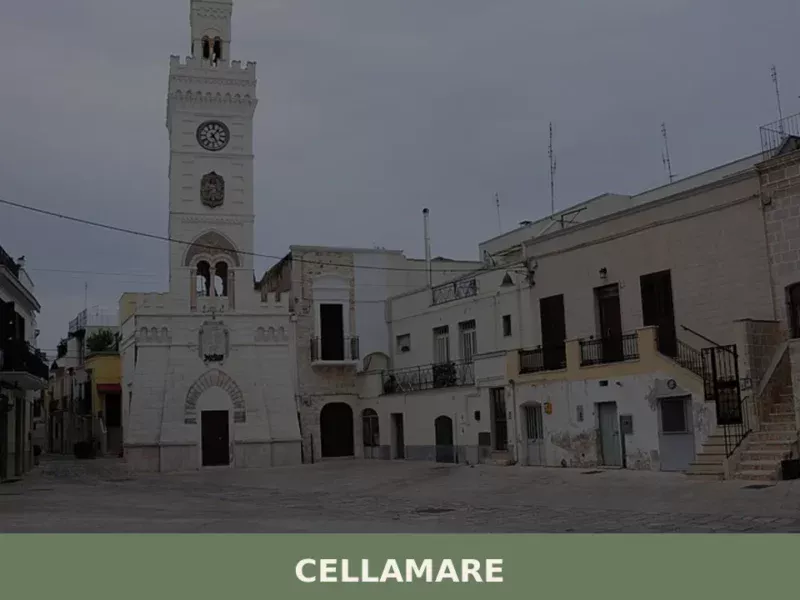
What to see in Cellamare, Italy: Explore this historic village, founded in 1171, located 110 m (361 ft) above sea level. Discover its grape industry and ancient origins.
Casamassima
Hills
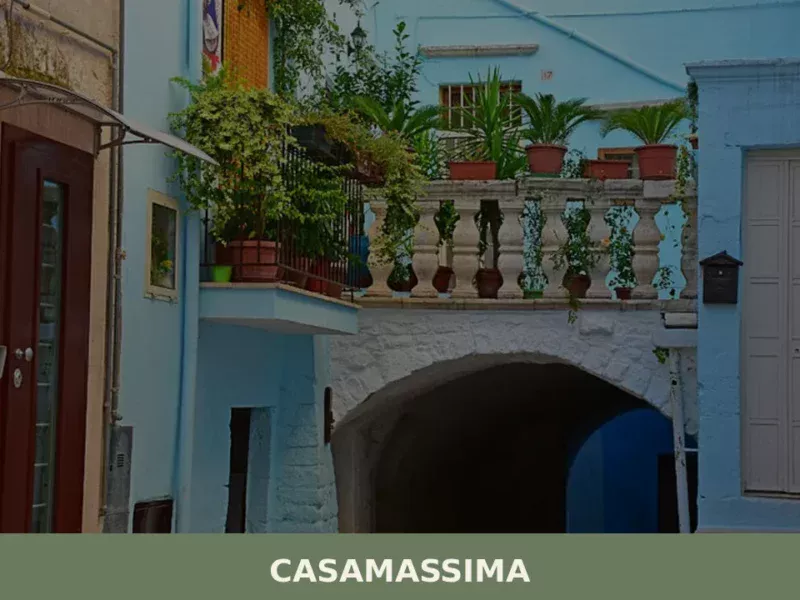
The façades painted with blue limewash in the historic centre earned Casamassima the nickname “Blue Village” — a unique case among Apulian villages and one of very few in Europe. This tradition, documented from the 19th century onward and linked according to local belief to a vow made to the Virgin Mary during a plague […]
Calimera
Plains
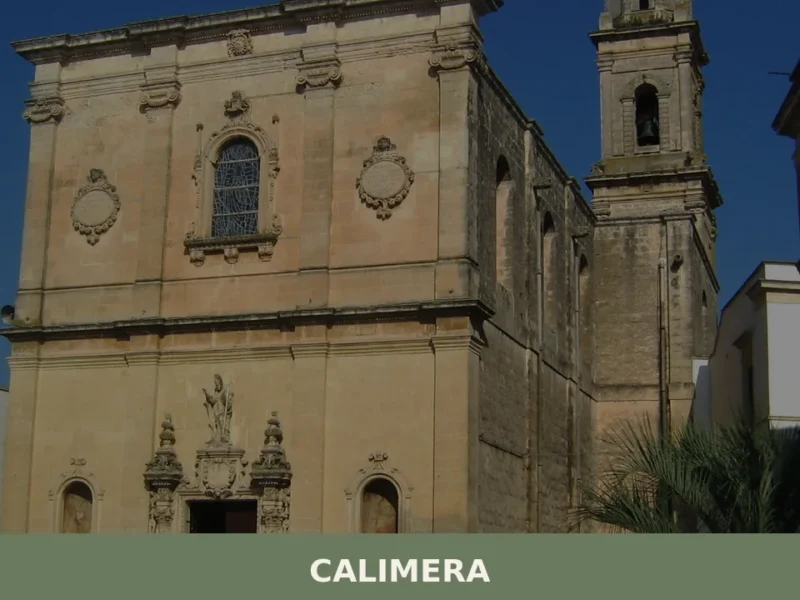
Discover what to see in Calimera, the Puglia village at the heart of the Grecu00eca Salentina u2014 Griko culture, historic architecture, olive oil and local festivals.



🏡 Know San Donaci better than we do?
If you’re a local or have been there, your knowledge matters: add what’s missing or fix a detail on this page.