


San Ferdinando di Puglia
 Plains
What to see in San Ferdinando di Puglia: 5 must-visit attractions, from the historic centre to the churches. Discover the complete guide and plan your visit.
Discover San Ferdinando di Puglia
An urban centre that carries a dynasty’s signature in its very name: San Ferdinando di Puglia was born under the Bourbons of Naples, at a time when the land reclamation of the southern Tavoliere demanded the establishment of new, planned settlements.
Until 1862 the municipality was known simply as San Ferdinando; the regional reference was then added to distinguish it from other Italian towns sharing the same name.
The street layout still follows the regular grid that Bourbon planners drew on flat ground, with well-defined blocks and roads that intersect at right angles — a design that remains clearly legible even as you walk among the buildings of the historic centre.
What to see in San Ferdinando di Puglia concerns a municipality of 13,822 inhabitants located in the province of Barletta-Andria-Trani, in a flat position that makes it easy to reach the Gargano and the coastal cities of northern Puglia.
Visitors arriving here find a nineteenth-century urban fabric of churches, squares and civic buildings that document the Bourbon era of agricultural colonisation of the Tavoliere.
Local cuisine reflects the peasant tradition of inland Puglia, with fresh pasta, pulses and wild vegetables still appearing on the menus of restaurants in the town centre.
History and origins of San Ferdinando di Puglia
The founding of San Ferdinando di Puglia forms part of the Bourbon project to populate the Apulian plains — a programme that in the nineteenth century transformed sections of the Tavoliere from land used for seasonal pastoral activity into permanent settlements. The name refers directly to Ferdinand II of Bourbon, King of the Two Sicilies, under whose reign the municipality took shape. The planned urban layout sets San Ferdinando di Puglia apart from many Apulian towns that grew spontaneously on headlands or hilltops: here everything responds to a functional logic, both agricultural and administrative at once.
Until 1862 the municipality appeared in official records simply as San Ferdinando.
With the Unification of Italy and the administrative reorganisation of the new kingdom, it became necessary to add the geographical specification “di Puglia” to avoid confusion with other Italian municipalities bearing the same name.
This change was not merely bureaucratic: it also marked the transition of the municipality from the administrative system of the Kingdom of the Two Sicilies to that of the unified state, with all the consequences this entailed for the management of the territory and for the life of the local community.
The local dialect, which calls the town Sanferedenènde in the phonetic transcription [saɱbərdˈnɛːndə], preserves a trace of this identity layered over time.
During the twentieth century San Ferdinando di Puglia consolidated its role as an agricultural centre within the provincial context — first that of Foggia, and then, following the territorial reorganisation of 2004, that of Barletta-Andria-Trani. The establishment of this new province, the most recently created in Italy, placed the municipality within a different administrative framework, bringing it closer to the towns of the central-southern Adriatic coast and to the urban system centred on Barletta.
Those visiting San Ferdinando di Puglia today find a municipality that has preserved the structure of its nineteenth-century layout while adapting to the changes of modern agriculture and the demographic shifts of contemporary Italy.
What to See in San Ferdinando di Puglia: Main Attractions
Chiesa Madre di San Ferdinando Re
The façade of the main church in the historic centre displays the forms of southern nineteenth-century Neoclassicism, with a front articulated by pilasters and a cornice framing the entrance portal.
The building was constructed at the same time as the founding of the municipality, as was customary in Bourbon planned settlements where the church represented the fulcrum of the urban layout and the visual reference point for the established community.
The dedication to San Ferdinando Re reflects the desire to anchor the identity of the new settlement to the figure of the reigning sovereign at the time of its foundation. Inside, the single-nave structure and the lateral marble altars bear witness to nineteenth-century local patronage.
The church overlooks the main square and serves as the natural starting point for exploring the historic centre of San Ferdinando di Puglia on foot.
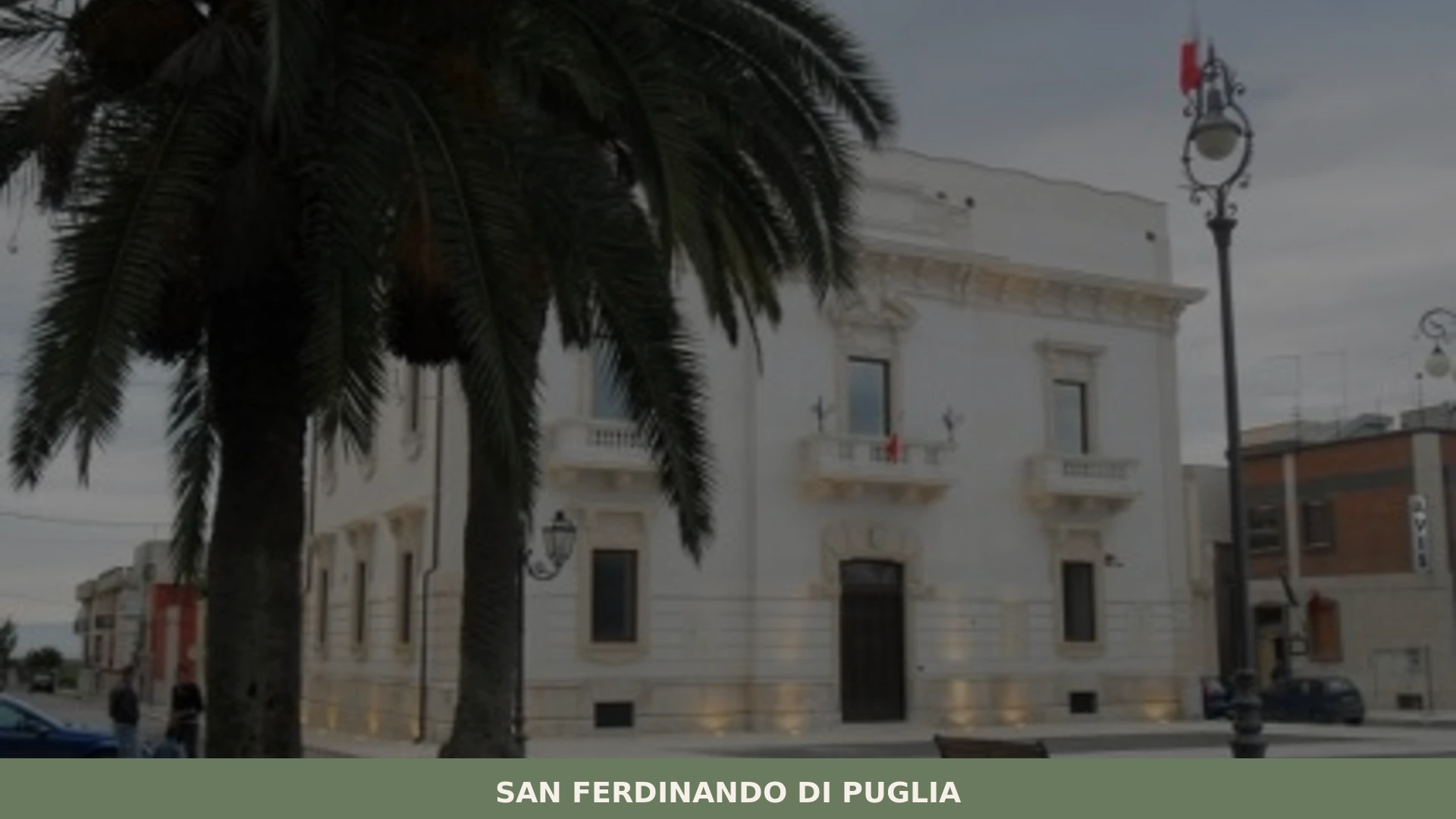
Piazza Municipale and Palazzo Comunale
The central square of San Ferdinando di Puglia occupies the geometric heart of the nineteenth-century urban layout and clearly reveals its planning logic: the road axes converge on this open space, lending it a civic function that goes beyond the merely representative.
The Palazzo Comunale faces the square with a façade that reflects the architectural taste of the Bourbon administration and, later, that of the post-unification period, with modifications and extensions that followed the administrative needs of the municipality throughout the nineteenth and twentieth centuries.
Walking across the square means reading the history of the settlement directly: the proportions of the buildings, the width of the perpendicular streets, and the presence of public buildings arranged according to a precise plan all tell of a foundation by decree, not a spontaneous growth.
For up-to-date information on office hours and cultural initiatives promoted by the municipality, the official website of the Municipality of San Ferdinando di Puglia is the most current reference.
The Nineteenth-Century Grid Urban Layout
Walking through the streets of San Ferdinando di Puglia means traversing one of the most legible examples of Bourbon planned urban design in Puglia: the roads intersect at right angles, the city blocks maintain regular dimensions, and the hierarchy between main axes and secondary streets is still recognisable despite the transformations of the twentieth century.
This type of urban layout was adopted in the nineteenth century for newly founded settlements in the land reclamation and agricultural colonisation areas of southern Italy, where the objective was to rapidly house populations of agricultural workers with dwellings, churches, squares, and services arranged according to functional criteria.
In San Ferdinando di Puglia the grid extends across the oldest nucleus of the municipality, while the expansions of the second half of the twentieth century develop along different criteria on the outskirts of the historic centre.
Those who walk along the main axes can still notice today the volumetric coherence of the buildings lining the oldest streets, with low façades and doorways in local stone. An interesting geographical and historical comparison can be found at Stornarella, another municipality of the Tavoliere pugliese that shares with San Ferdinando di Puglia its agricultural roots and the flat landscape of the Capitanata.
The Landscape of the Southern Tavoliere
San Ferdinando di Puglia rises on the plain of the Tavoliere delle Puglie, a few kilometres from the Adriatic coast and in a central position relative to the system of agricultural centres that characterise this part of the province of Barletta-Andria-Trani.
The surrounding landscape is that of vast expanses cultivated with cereals and vegetables, interrupted by rows of trees and drainage canals that recall the land reclamation history that has transformed this plain over the last two centuries.
From San Ferdinando di Puglia the Adriatic coast can be reached in less than 30 minutes by car, while to the north the profile of the Gargano stands out on the horizon on clear days.
The surrounding territory allows for cycling excursions along flat rural roads, with an almost negligible change in elevation that makes these routes accessible to any level of physical fitness. Those wishing to extend their trip towards the sacred mountain of the Gargano can reach Monte Sant’Angelo, approximately 70 km away, where the Sanctuary of Saint Michael the Archangel has been a UNESCO World Heritage Site since 1999.
The Churches and Oratories of the Historic Centre
In addition to the Chiesa Madre, the historic centre of San Ferdinando di Puglia preserves several minor religious buildings that document the local devotion which developed nel corso dell’Ottocento e del Novecento.
Gli oratori e le cappelle private, alcune delle quali inglobate in palazzi residenziali, segnano i quartieri del centro con facciate sobrie e portali in pietra lavorata.
La presenza di questi edifici di culto minore testimonia la vitalità delle confraternite locali, istituzioni che nel Meridione ottocentesco svolgevano funzioni insieme religiose, assistenziali e sociali, organizzando processioni, funerali e attività di mutuo soccorso per i propri iscritti. Visitando il centro storico con attenzione si individuano nicchie votive, lapidi commemorative e decorazioni in stucco che completano il quadro dell’architettura religiosa popolare del comune. Il periodo della Settimana Santa è quello in cui questi edifici aprono più frequentemente al pubblico in occasione delle celebrazioni liturgiche.
Traditional cuisine and products of San Ferdinando di Puglia
The cuisine of San Ferdinando di Puglia belongs to the tradition of peasant gastronomy of the Tavoliere, a geographical area that for centuries based its economy on cereal farming and transhumant shepherding.
These two productive pillars are directly reflected in traditional preparations: durum wheat is the raw material for fresh pasta and bread, while sheep and goat meat appears in soups and celebratory main courses.
The flat nature of the territory, with its deep and fertile soils, also encouraged the cultivation of vegetables and legumes that regularly feature in everyday cooking.
Among the dishes of local tradition, orecchiette with lamb ragù stand out, where fresh durum wheat semolina pasta is hand-shaped by pressing the thumb down to achieve the concave form typical of Puglia, then dressed with a slow-cooked sauce made from sheep meat.
Fave e cicorie (broad beans and chicory) represent one of the oldest dishes in Puglian cuisine: dried broad beans are boiled at length until they form a thick purée, served with boiled wild chicory and extra virgin olive oil. Durum wheat bread, baked in a wood-fired oven using locally milled flours, retains a thick crust and a compact crumb that make it well suited to preservation.
In peasant households this bread would last four or five days, softened with water and dressed with oil and salt as it began to dry out.
The territory of the province of Barletta-Andria-Trani does not present, for San Ferdinando di Puglia, any products with PDO, PGI or PAT certification documented in the available official databases.
Local cuisine therefore relies on ingredients that, while not formally certified, are deeply rooted in the agricultural tradition of the Tavoliere: extra virgin olive oil produced from native Puglian cultivars, long-keeping tomatoes used for summer preserves, and sun-dried cruschi peppers.
Those exploring what to see in San Ferdinando di Puglia during the summer will find these products at local neighbourhood markets, available for purchase directly from local producers.
A similar gastronomy, tied to the Gargano and to transhumance, can also be found in San Giovanni Rotondo, where the recipes of the Gargano mountains share with those of the plain the same cereal and sheep-based raw materials.
Festivals, events and traditions of San Ferdinando di Puglia
The patron saint’s feast of San Ferdinando Re is celebrated on 30 May, a date that in the liturgical calendar commemorates the Castilian king canonised in the thirteenth century.
The celebrations include a solemn Mass in the Chiesa Madre, a procession through the streets of the historic centre with the statue of the patron saint carried on the shoulders of the faithful, and the traditional luminarie that decorate the main streets of the town for several days.
Local brass bands accompany the processional route, and on the evening of the fireworks display the celebration closes with pyrotechnics visible from the surrounding plain.
Holy Week represents the other liturgical moment of greatest significance in the civic and religious calendar of the municipality.
Local confraternities organise nocturnal processions in their traditional white or coloured robes according to the colour of the confraternity to which they belong, re-enacting a rite that throughout northern Puglia has deep roots in popular devotion dating back to the early modern period.
The summer months also bring events connected to local gastronomy, with food festivals dedicated to the products of the territory that enliven the town’s squares on the evenings of July and August, when the temperatures make outdoor life the focal point of village socialising.
When to Visit San Ferdinando di Puglia and How to Get There
The period between April and June offers the most favourable conditions for what to see in San Ferdinando di Puglia: temperatures are mild, the fields of the Tavoliere show crops in full growth, and the streets of the historic centre have not yet been affected by the summer heat that discourages walking during the central hours of the day.
September and October represent a second ideal window, with fresher air after summer and the countryside still active during harvest. Summer, although hot, allows you to enjoy evenings outdoors and events linked to local food festivals. Winter is mild compared to northern Italian standards but can be windy due to the flat, exposed position open to the tramontane wind.
By car, San Ferdinando di Puglia is reached from the A14 Adriatic motorway by exiting at the Cerignola Est toll gate, approximately 15 km from the town centre.
From Bari the distance is around 80 km, covered in just over an hour.
The nearest train station with frequent connections is Cerignola Campagna, on the Bari–Foggia line, approximately 10 km from the town.
For those arriving by plane, Bari Karol Wojtyla Airport is approximately 85 km away and has connections to the main Italian and European cities; Foggia Airport is closer, at around 50 km, but with a more limited network of destinations. For up-to-date rail connections, it is advisable to consult Trenitalia before planning your journey.
| Starting Point | Distance | Estimated Time |
|---|---|---|
| Bari (A14 + SS93) | approximately 80 km | approximately 1 hour and 10 minutes |
| Foggia (SS16 + SP) | approximately 45 km | approximately 45 minutes |
| Bari Karol Wojtyla Airport | approximately 85 km | approximately 1 hour and 15 minutes |
| Cerignola Campagna Railway Station | approximately 10 km | approximately 15 minutes by car |
Those planning a broader itinerary through northern Puglia can include the Gargano coast in their route, reaching Mattinata in approximately one hour — a Gargano village overlooking the Adriatic with limestone cliffs and small coves accessible from the coastal road. The connection between the Tavoliere plain and the Gargano promontory constitutes one of the most varied itineraries in northern Puglia, with a radical change of landscape in less than 80 km.
📷 Photo Gallery — San Ferdinando di Puglia
Getting there
Via Isonzo, 76017 San Ferdinando di Puglia (BT)
Nearby Villages near San Ferdinando di Puglia
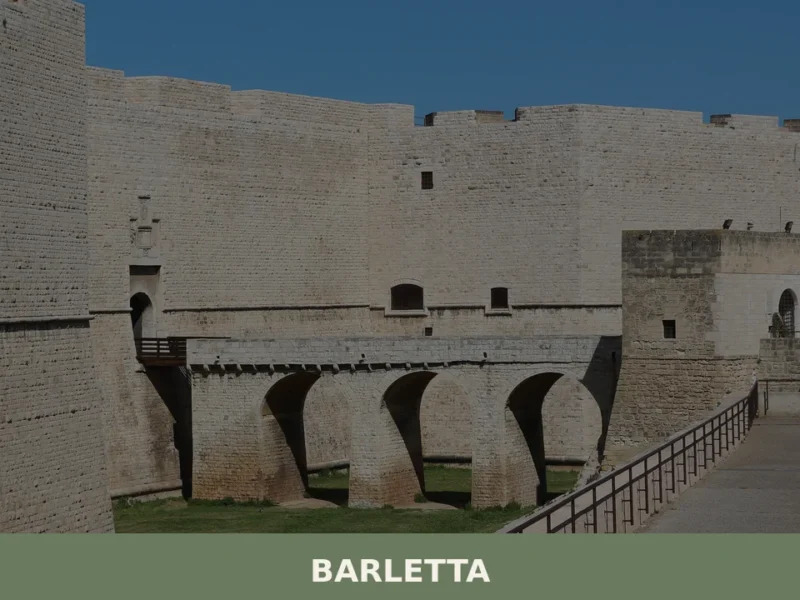
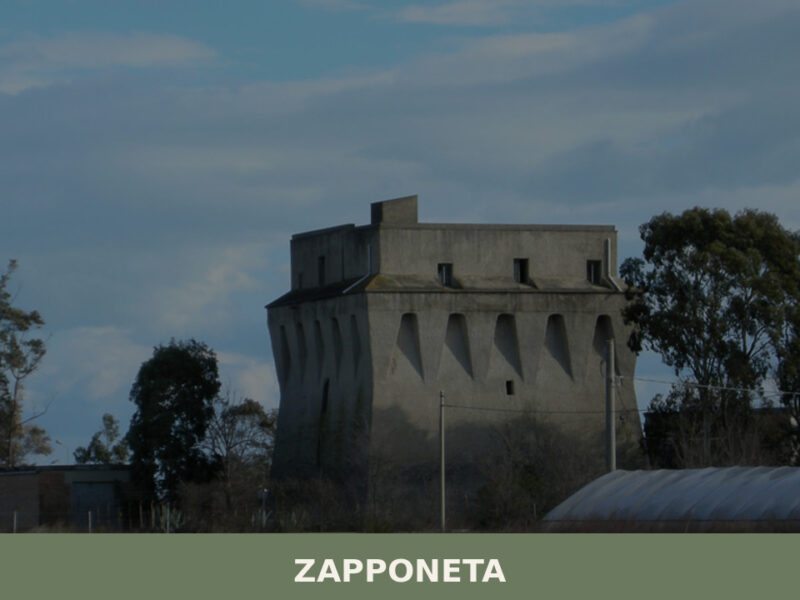
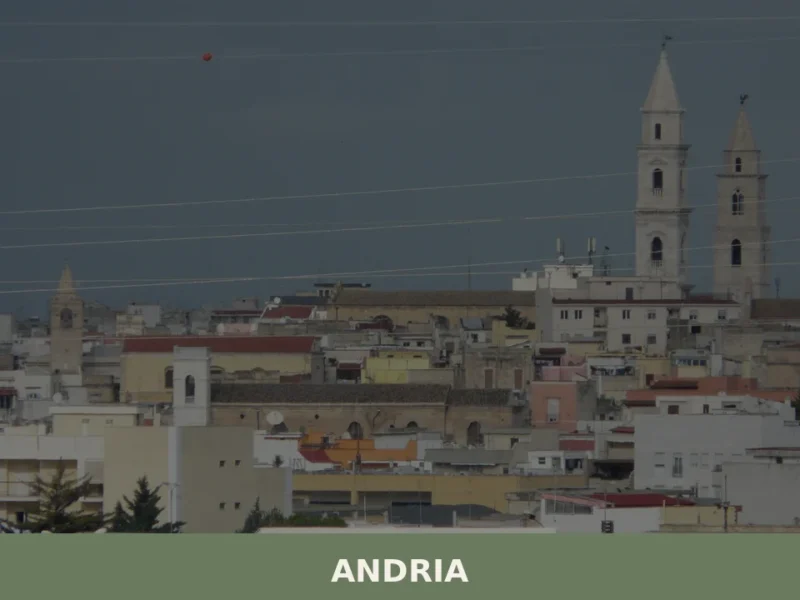
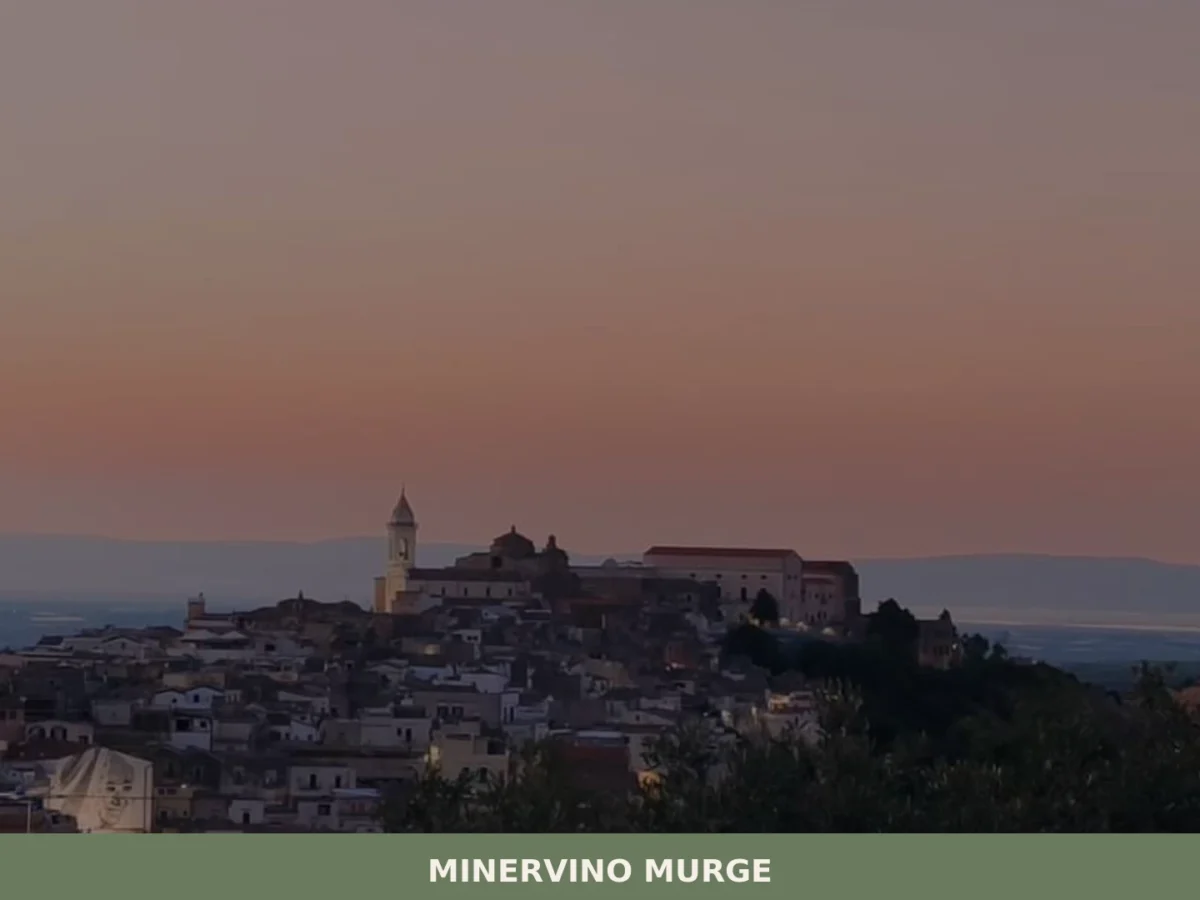
In Apulia More villages to discover
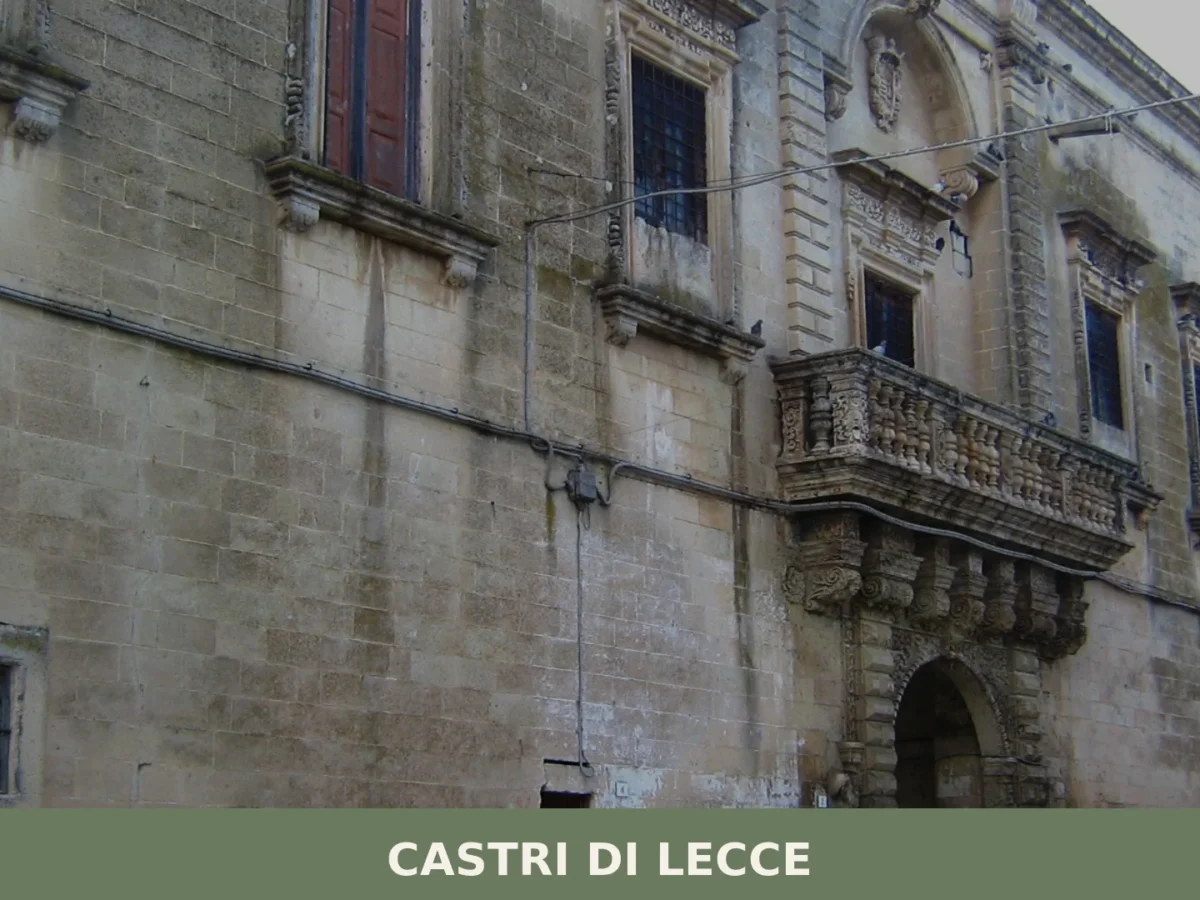
Castri di Lecce
Plains
Population 2,721. A limestone plateau village born from the union of two distinct feudal estates, held together by baroque chapels and standing menhirs from the Bronze Age.
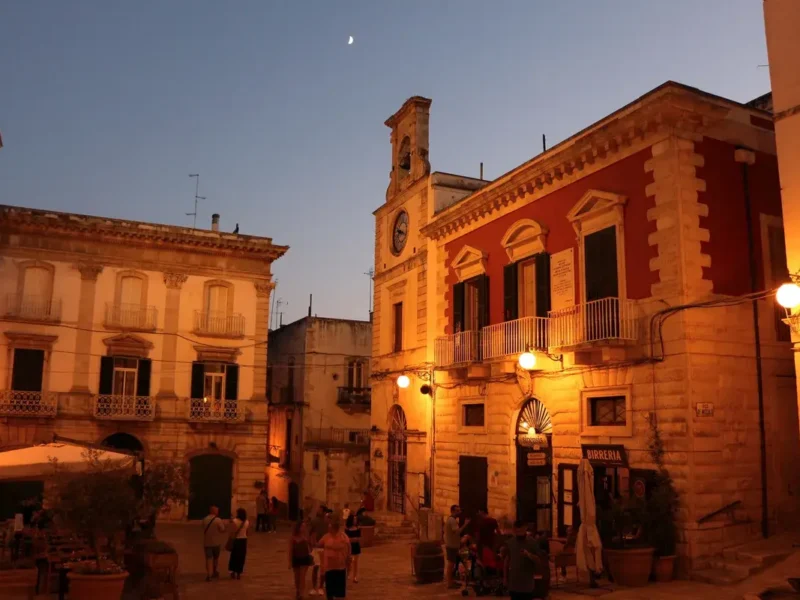
Putignano
 Hills
Hills
What to see in Putignano: hilltop town at 372m in the Murgia Barese. Grotta del Trullo, 6-century-old Carnival, PAT cuisine. Plan your visit now.
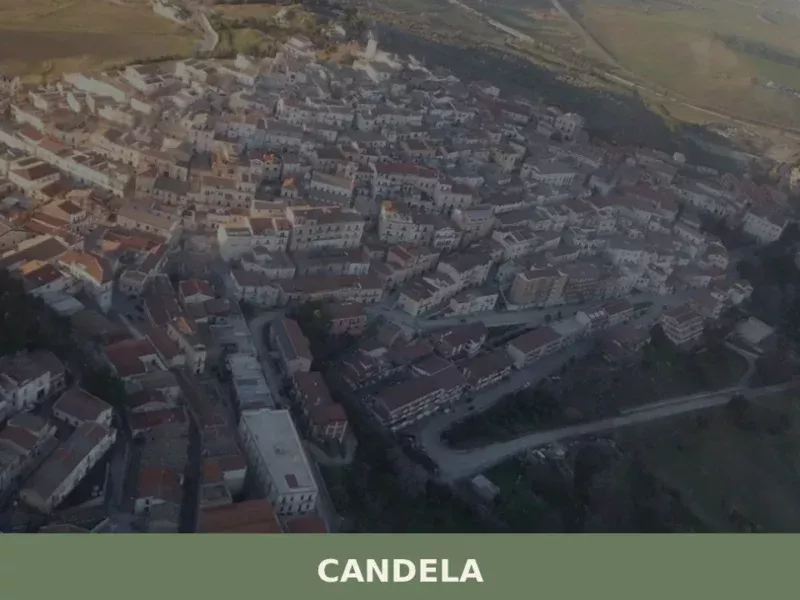
Candela
Hills
What to see in Candela, Puglia, Italy: explore a hilltop village at 474 m with Roman-era roots, the Feast of San Rocco and local wheat traditions. Discover it now.
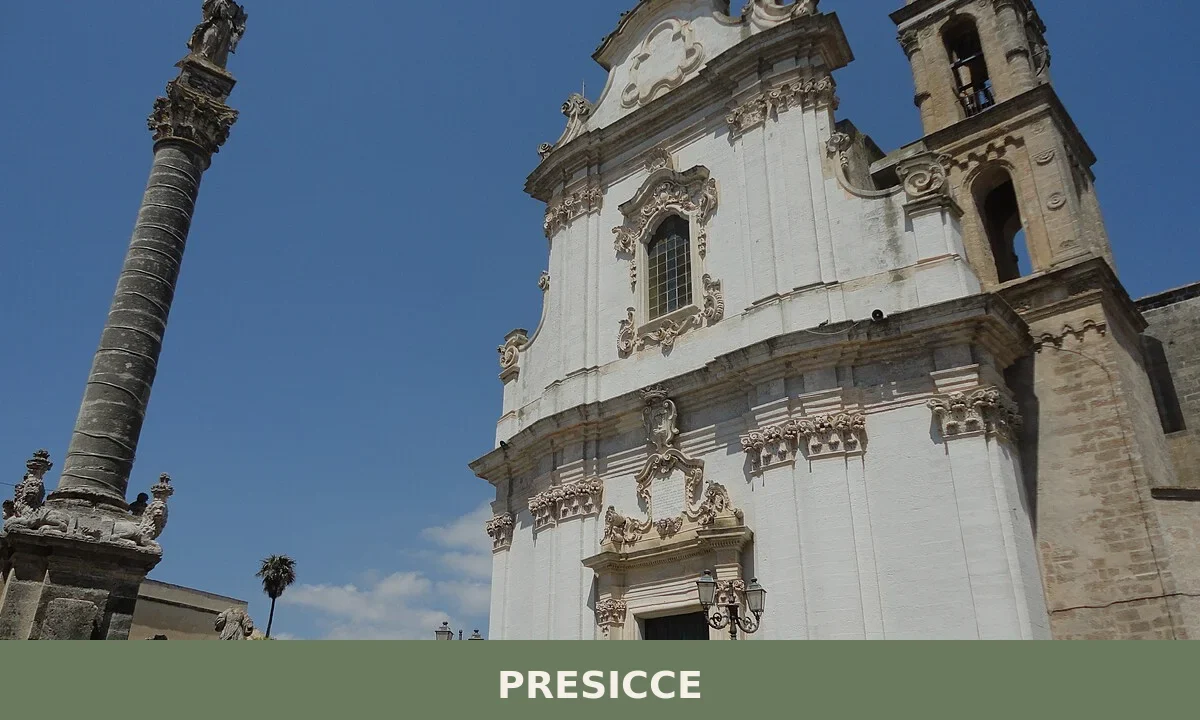
Presicce
Plains
Population 5,552. A low-altitude village built around an abundant water source, with medieval ruins, baroque religious architecture and a peasant culture museum in the ducal palazzo.
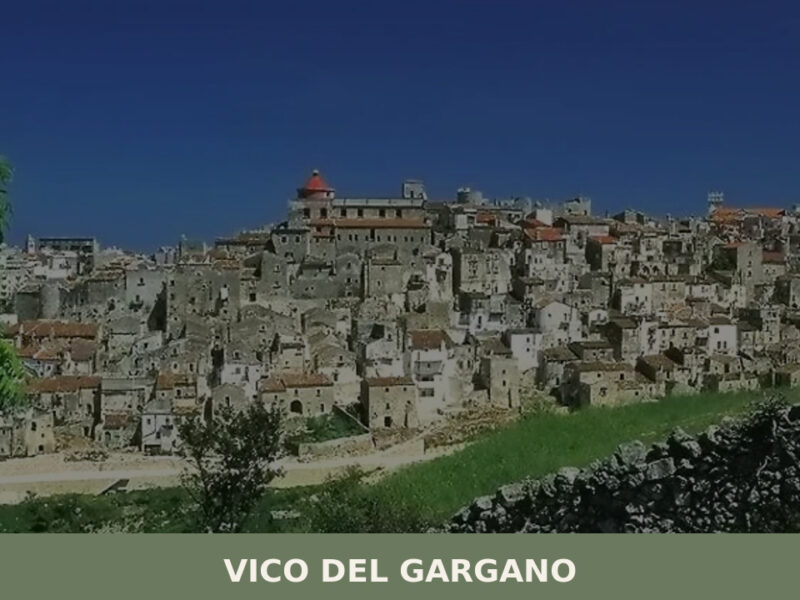
Vico del Gargano
 Sea
Sea
A hilltop village at 445 metres on the Gargano promontory, Vico del Gargano rewards slow exploration — medieval alleys, underground olive presses, and ancient forest at its edge.
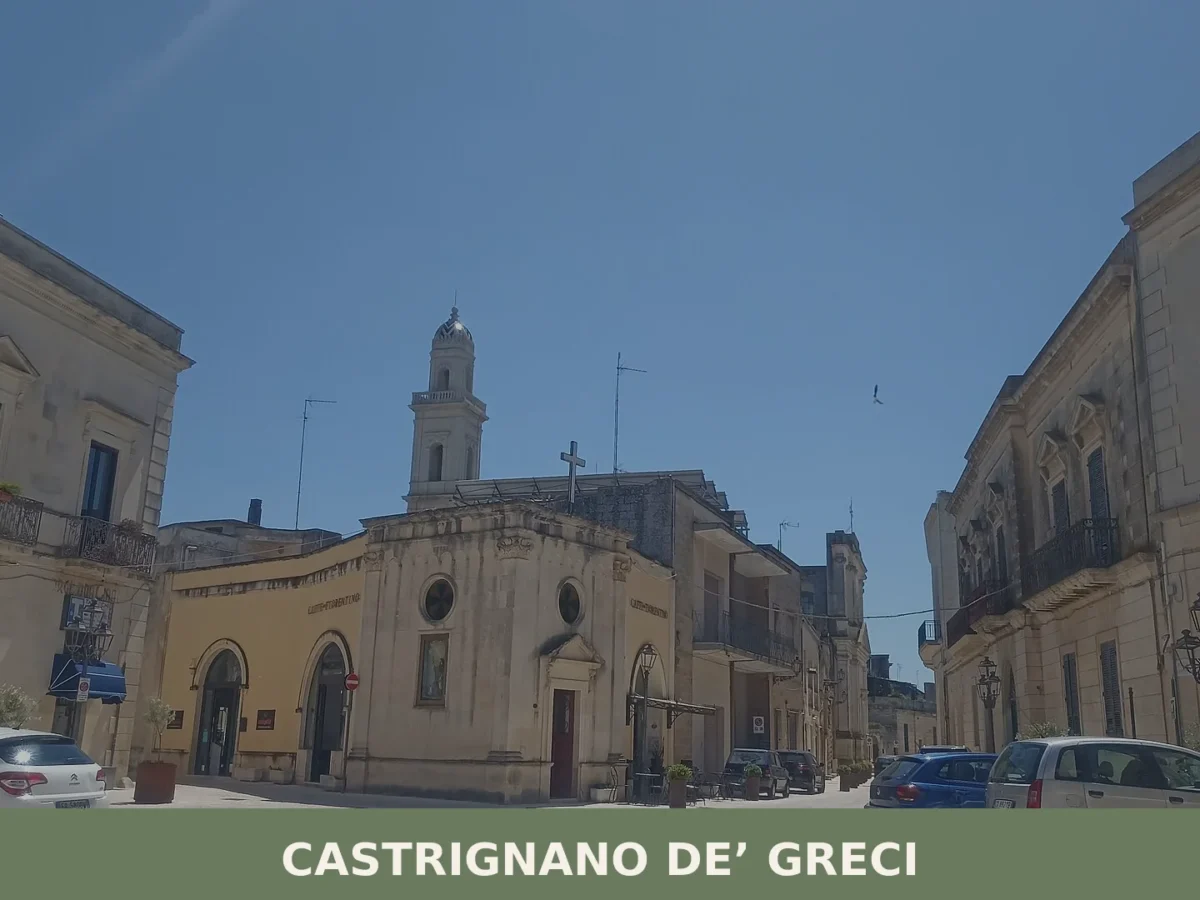
Castrignano de’ Greci
Plains
A village of 3,631 people where ancient Greek language persists and Byzantine crypts breathe beneath baroque facades. Medieval roots and baroque innovation define its character.
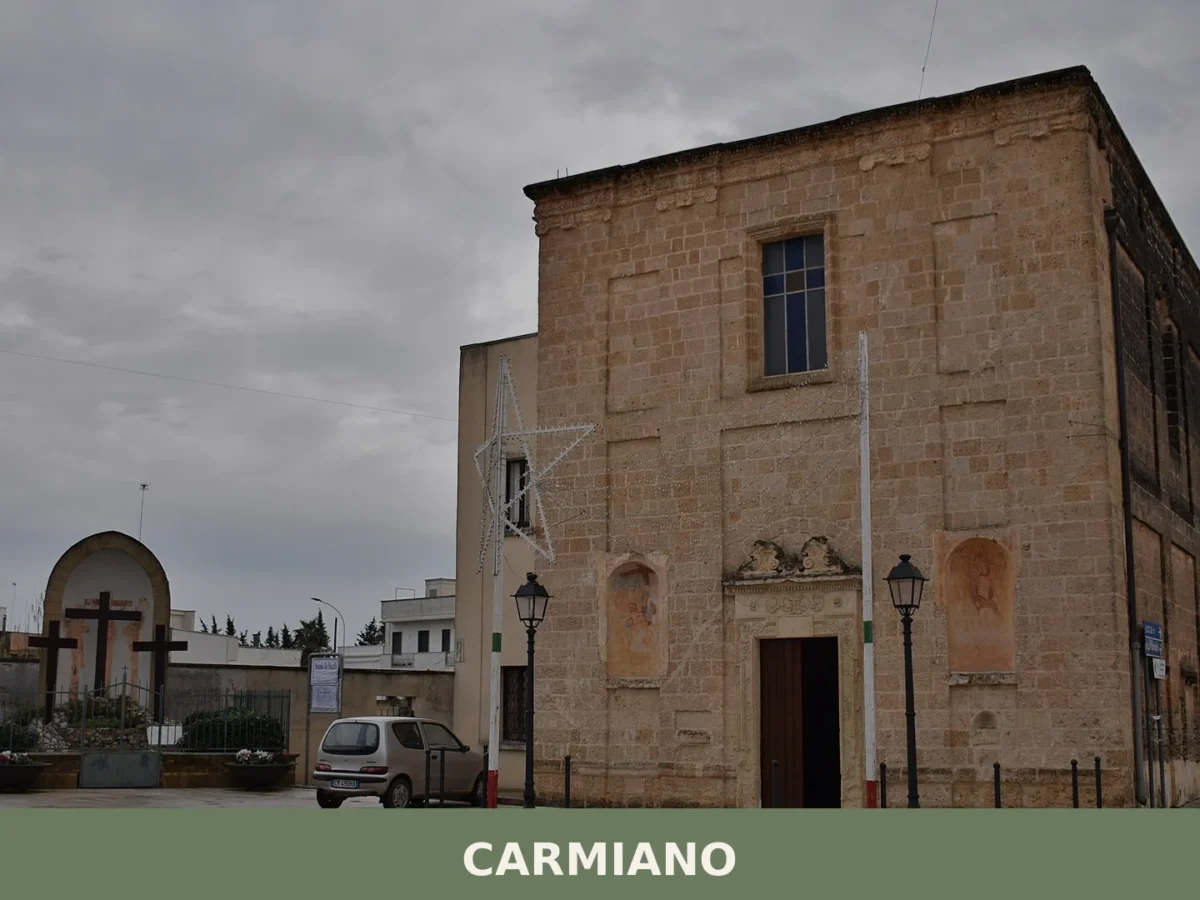
Carmiano
Plains
A comune of 11,660 souls in the northern Lecce province, Carmiano anchors its identity in medieval palaces, baroque altars, and the veneration of Maria Immacolata.
Crispiano
Plains
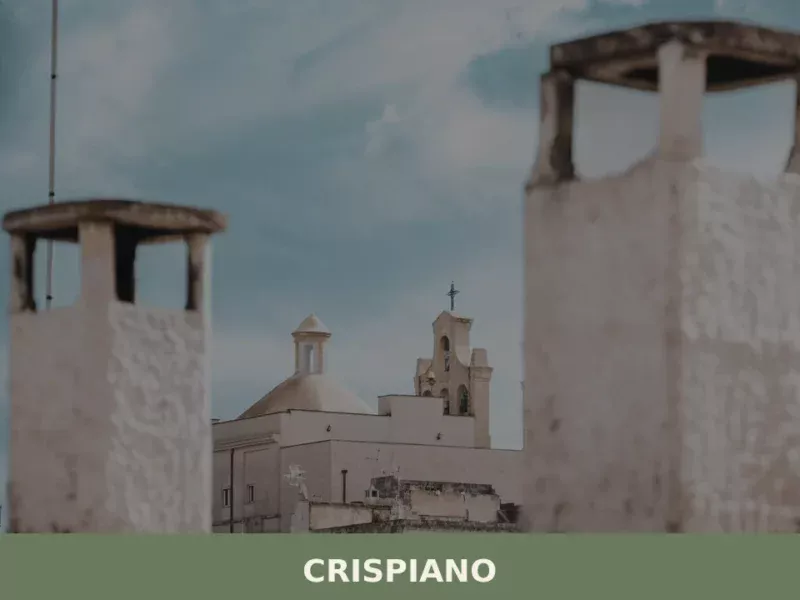
Discover what to see in Crispiano, a 12,800-person comune near Taranto built around a prehistoric karst ravine, a medieval abbey, and a living farming economy.
Gallipoli
Sea
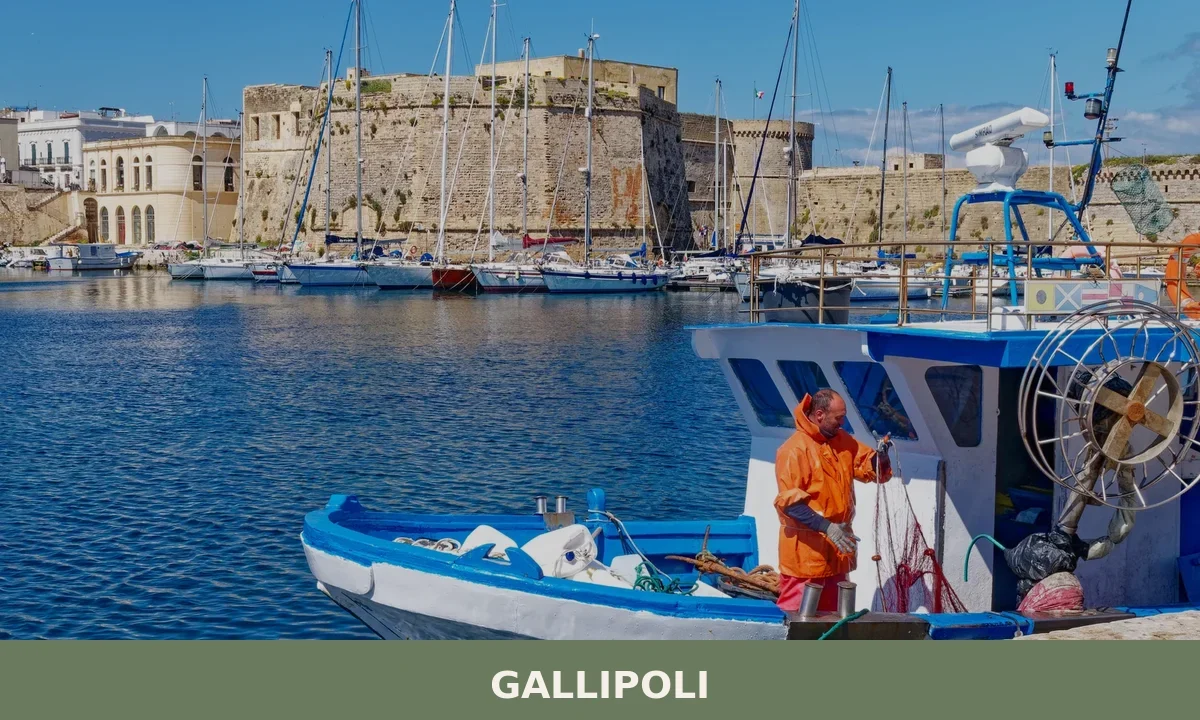
A seaside comune of 18,934 inhabitants where a Greek-named limestone island opens onto the southern Salento shore. History and archaeology anchor every corner.
Casamassima
Hills
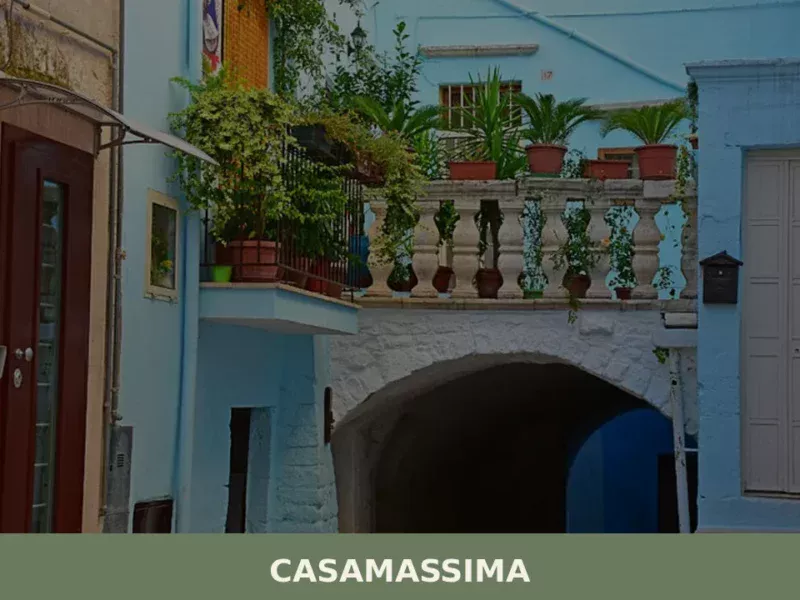
The façades painted with blue limewash in the historic centre earned Casamassima the nickname “Blue Village” — a unique case among Apulian villages and one of very few in Europe. This tradition, documented from the 19th century onward and linked according to local belief to a vow made to the Virgin Mary during a plague […]




🏡 Know San Ferdinando di Puglia better than we do?
If you’re a local or have been there, your knowledge matters: add what’s missing or fix a detail on this page.