


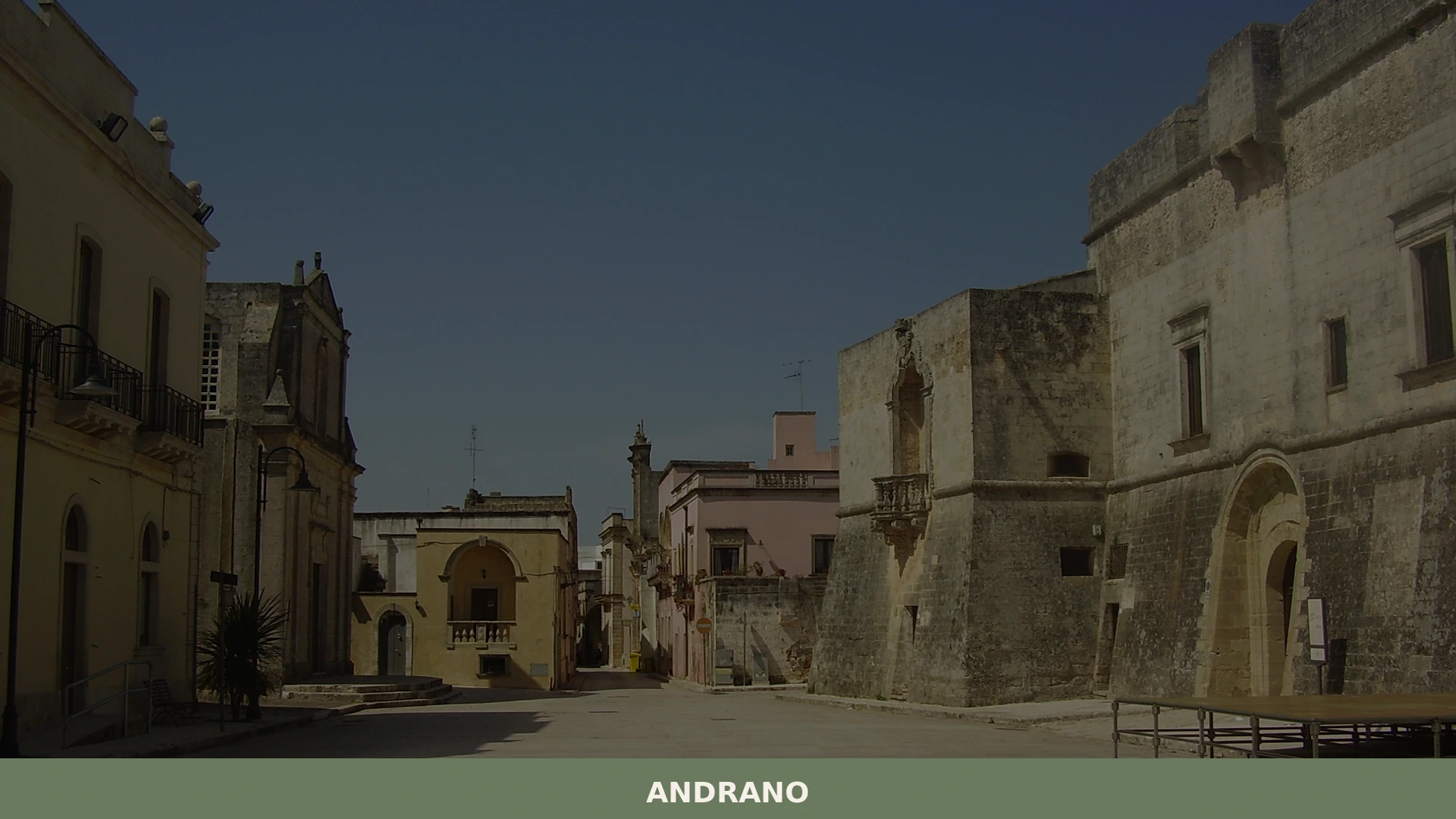

Discover what to see in Andrano, a Lecce province comune with a medieval castello, Adriatic coastline and the hamlet of Castiglione d’Otranto. Complete travel guide.
Discover Andrano
Andrano is a comune of approximately 4,400 inhabitants in the province of Lecce, positioned along the south-eastern flank of the Salento peninsula where a short stretch of Adriatic coastline meets the dry interior plateau. Knowing what to see in Andrano means understanding a place that operates on at least three distinct registers: the medieval hill settlement, the coastal locality of Marina di Andrano, and the satellite hamlet of Castiglione d’Otranto.
Together they form a municipality of modest size but genuine geographic variety, drawing visitors who come for the limestone cliffs, the feudal architecture, and the particular quality of light that the low Salento casts across its olive groves in every season.
History of Andrano
The settlement’s name derives — through the Salentine dialect form ‘Ndranu — from the Latin Andrium or possibly from a Messapian root, reflecting the pre-Roman occupation of this part of the Salento that left place names across the entire heel of Italy. The Messapians, an Italic people who inhabited the region before Greek and Roman colonisation, built dry-stone enclosures and settlements across the limestone plateau, and archaeological finds in the broader Otranto area confirm long human continuity on this stretch of the Adriatic coast. The toponym itself is one of the more reliable documentary threads connecting Andrano to pre-medieval habitation.
During the Norman and Angevin periods, Andrano — like the majority of Salentine towns — functioned as a feudal possession subject to the shifting allegiances of southern Italian noble families. The castello that dominates the historic centre was built and progressively modified between the medieval period and the sixteenth century, serving the dual function of baronial residence and defensive stronghold.
Feudal control of Andrano passed through several noble hands over the centuries, a pattern common to the Terra d’Otranto, the historical administrative designation for this part of the heel that remained under Aragonese and later Spanish viceregal authority until the Bourbon unification of southern Italy.
The hamlet of Castiglione d’Otranto, now a frazione of the municipality, carries its own layered history in its name: the castrum element signals a fortified origin, and its proximity to Otranto — the city sacked by Ottoman forces in 1480, an event that sent shockwaves through the entire lower Salento — places Castiglione within a defensive geography shaped by centuries of coastal threat. Marina di Andrano, by contrast, is a more recent development, a product of the twentieth-century transformation of Puglia’s Adriatic coast from working fishing shore into seasonal resort, a shift that altered the economic rhythm of dozens of small comuni along this coastline.
What to see in Andrano: 5 must-visit attractions
Castello di Andrano
The castello at the centre of the historic village is the most structurally prominent building in the comune. Originally a medieval defensive tower, it was expanded into a proper baronial residence during the sixteenth century and features the characteristic square layout and corner towers typical of Salentine feudal architecture built in local pietra leccese limestone.
Its elevated position commands views across the olive groves toward the coast.
Marina di Andrano and the Adriatic Coastline
The coastal locality of Marina di Andrano offers a short but geologically distinctive stretch of Adriatic shoreline characterised by the low limestone cliffs and rocky inlets — locally called grotte — that define the low Salento seaboard. The water here is clear, the floor rocky rather than sandy, and the cliffs are worn into platforms and small sea caves by centuries of wave action. Access paths descend directly from the road above.
Castiglione d’Otranto
The frazione of Castiglione d’Otranto retains the compact stone fabric of a fortified agricultural settlement. Its chiesa madre — the principal parish church — is built in the local Baroque tradition that spread across the Terra d’Otranto during the seventeenth and eighteenth centuries, characterised by facades in carved limestone with floral and figural decoration.
The hamlet sits within a landscape of dry-stone walls and ancient olive trees that define the agricultural identity of the area.
The Historic Centre and Salentine Street Plan
Andrano’s centro storico follows the irregular organic layout of a medieval Salentine settlement: narrow vicoli in pietra leccese, external staircases, and low barrel-vaulted passages between adjoining buildings. Several of the older residential structures retain the archi di passaggio — load-bearing arches spanning the lane — a structural solution common in the lower Salento where lateral reinforcement was needed in soft limestone construction. Walking the central grid offers a precise record of vernacular building methods.
The Rural Landscape and Olive Groves
The territory of Andrano is part of the vast olive cultivation zone of the Salento, where some trees date back several centuries and have trunk circumferences exceeding three metres. The landscape between the village centre and the coast is structured entirely by dry-stone walls (muretti a secco), a UNESCO-recognised practice of rural construction, and by the grid of olive groves that has defined land use in this part of Puglia since at least the sixteenth century.
Local food and typical products
Andrano sits within one of the most coherent food-producing zones of southern Italy.
The Salento’s culinary identity rests on a small number of ingredients used with great consistency: extra virgin olive oil produced from Ogliarola Salentina and Cellina di Nardò olives, dried pasta formats including sagne ‘ncannulate — long, hand-twisted ribbons served with tomato and ricotta — and ciceri e tria, a dish of chickpeas with half-boiled, half-fried pasta strips that appears on tables across the province of Lecce. Vegetables dominate the daily diet: friselle soaked in oil and topped with fresh tomatoes, wild chicory (cicoria selvatica) blanched and dressed with oil, and pittule, small fried dough fritters eaten as a street food during winter festivals. The olive oil of the broader Lecce province carries the DOP designation recognised by the Italian Ministry of Agricultural Policies, anchoring local production within a protected framework.
For eating in and around Andrano, the most reliable options are the small family-run trattorie in the village centre and along the road connecting the historic centre to Marina di Andrano, where fish caught along the Adriatic coast — sea bass, red mullet, sea bream — is typically prepared simply, grilled or baked with oil, capers, and tomato. The masserie and agriturismo structures in the surrounding countryside often serve meals built almost entirely from their own production: olive oil, vegetables, preserved foods, and local cheeses including ricotta forte, the sharp, pungent aged ricotta that is specific to this part of Puglia and appears in both savoury and sweet preparations.
Best time to visit Andrano
The most practical window for visiting Andrano runs from late April through June, and again through September and into October.
The temperatures during these months — typically between 18°C and 28°C — allow for both walking the interior village and using the Adriatic coast without the intensity of the July and August heat, which regularly reaches 35°C or above and brings the coastal localities of the lower Salento to peak occupancy. The Adriatic here is among the warmest swimming water in Italy by late August, with sea temperatures frequently above 26°C, but the road and beach infrastructure along the Marina di Andrano shoreline becomes congested from mid-July. The official Puglia tourism board provides updated seasonal event calendars for the province.
The winter months bring a different but equally valid experience of the Salento: the villages empty of visitors, the masserie operate on reduced schedules, and the light flattens to a pale silver that makes the limestone architecture and the olive groves appear almost monochrome.
Religious festivals — including the observances around the feast days of local patron saints — take place in summer and early autumn and are documented on the official website of the Comune di Andrano. For travellers interested in the agricultural cycle, October and November mark the olive harvest, when the countryside around the village is actively worked and the mills press the season’s first oil.
How to get to Andrano
Andrano is located in the deep south of the Salento peninsula, within the province of Lecce. The nearest major city and provincial capital is Lecce, approximately 50 kilometres to the north-west, reachable by car in around 50 minutes via the SP361 and connecting provincial roads. The nearest significant town to the south is Tricase, roughly 10 kilometres away, which serves as a local commercial and transport hub for the lower Salento.
- By car: From Lecce, take the SP361 toward Maglie, then continue south on the SP358 or connecting provincial roads toward Tricase and Andrano. No motorway serves the lower Salento directly; the road network is entirely provincial.
- By train: The nearest railway station is served by the Ferrovie del Sud Est regional network, which connects Lecce to Maglie and Gagliano del Capo. From Maglie (approximately 25 km from Andrano), local buses or taxis complete the journey. Travel time from Lecce by train and connection is approximately 1.5 to 2 hours.
- By air: The closest airport is Brindisi (Aeroporto del Salento), approximately 80 kilometres north of Andrano, with connections to major Italian and European cities. Lecce is the logical base for car hire or onward travel.
Bari Karol Wojtyła Airport is approximately 200 kilometres north and better suited to longer Puglia itineraries.
- From Lecce city centre: Approximately 50 km, 50 minutes by car.
- From Brindisi Airport: Approximately 80 km, 1 hour by car.
- From Bari Airport: Approximately 200 km, 2 hours by car via the SS16 and SS101.
Where to stay in Andrano
Accommodation in Andrano itself is limited in volume but covers the main formats available across the rural Salento. The village centre offers a small number of B&B and holiday apartment options, typically installed in restored stone buildings within the historic fabric — a format common across the lower Salento where ground-floor trulli-style or barrel-vaulted spaces have been converted into rental accommodation. Marina di Andrano provides a seasonal alternative, with holiday homes and small guesthouses oriented toward the summer coastal market, most operating from June through September. The hamlet of Castiglione d’Otranto has a more rural character and occasional agriturismo options in the surrounding masseria landscape.
Travellers who want the most complete access to the area — including day trips to Otranto (roughly 20 km north), Tricase, and the coast in both directions — will find it practical to stay either in the Andrano centro storico or in one of the agriturismo properties in the countryside between the village and the sea. Booking well in advance is essential for any stay between 15 July and 20 August, when the lower Salento operates at full capacity and last-minute availability essentially disappears. For shoulder season visits, booking two to three weeks ahead is generally sufficient.
More villages to discover in Puglia
Puglia’s geography is long and varied enough that moving even a few hundred kilometres north along the Adriatic changes the landscape, architecture, and culinary register completely.
On the Gargano promontory — the spur of the Italian boot — Mattinata sits above a stretch of coastline characterised by white cliffs and cobalt water that is geologically distinct from the low Salento shore around Andrano. Inland in the province of Foggia, the hill village of Celenza Valfortore occupies a position in the Apennine foothills where the landscape shifts entirely from the flat limestone plate of the Salento to dense forest and river valleys — a different Italy in everything from climate to building material.
For travellers moving through northern Puglia, San Paolo di Civitate offers a window into the agricultural plain of the Tavoliere delle Puglie, one of the largest cereal-growing zones in southern Italy.
And for those who want to understand the urban ambitions of Puglia’s medieval merchant class, the cathedral city of Trani — on the Adriatic coast north of Bari — presents its Romanesque cathedral built directly over the sea, a structure that has no true equivalent elsewhere on the Adriatic. Each of these places extends and complicates any picture of Puglia formed from a single zone of the region.
Frequently asked questions about Andrano
What is the best time to visit Andrano?
The ideal time to visit Andrano is during the shoulder seasons: late April to June, and September to October. Temperatures are pleasantly mild (18-28°C), perfect for exploring the historic center and enjoying the Adriatic coast without the intense summer heat and crowds. July and August see peak occupancy and temperatures often exceeding 35°C. For a unique cultural experience, consider the patron saint festivals: Madonna delle Grazie on August 5th and Sant'Andrea Apostolo on November 30th. Autumn (October-November) also offers the fascinating olive harvest, allowing insight into the region's agricultural traditions.
What to see in Andrano? Main monuments and landmarks
Andrano offers a blend of historic charm and natural beauty. Explore the Castello di Andrano, a prominent feudal castle dominating the village, best appreciated for its architecture and views. Discover the atmospheric Historic Centre with its narrow vicoli, external staircases, and unique 'archi di passaggio'. Venture to Marina di Andrano to experience the distinctive limestone cliffs, rocky inlets (grotte), and clear Adriatic waters, accessible via direct paths from the road. Don't miss the hamlet of Castiglione d'Otranto, home to a beautiful Baroque 'chiesa madre' and surrounded by ancient olive groves and dry-stone walls.
What are the main natural or scenic attractions of Andrano?
Andrano's natural beauty shines along its Adriatic coastline at Marina di Andrano, characterized by low limestone cliffs, rocky platforms, and charming sea caves (grotte) sculpted by centuries of waves, offering crystal-clear waters for swimming. Inland, the Rural Landscape and Olive Groves are a defining feature. Vast stretches of ancient olive trees, some centuries old, are interspersed with traditional dry-stone walls (muretti a secco), a UNESCO-recognized practice, creating a quintessential Salento panorama perfect for scenic walks and appreciating the region's agricultural heritage.
Where to take the best photos in Andrano?
For captivating photographs in Andrano, start at the Castello, whose elevated position offers panoramic views across the olive groves towards the Adriatic coast. The dramatic limestone cliffs, rocky inlets, and clear waters of Marina di Andrano provide stunning coastal shots, especially at dawn or dusk. Capture the timeless charm of the Historic Centre by exploring its narrow 'vicoli', ancient stone buildings, and unique 'archi di passaggio'. Finally, the vast olive groves, crisscrossed by dry-stone walls, offer iconic Salento landscapes, particularly during the golden hours.
Are there museums, churches or historic buildings to visit in Andrano?
While Andrano doesn't host museums, it boasts significant historic architecture. The Castello di Andrano, a former medieval defensive tower expanded into a baronial residence, is the village's most prominent historic building, showcasing typical Salentine feudal architecture. In the frazione of Castiglione d'Otranto, visit the 'chiesa madre' (principal parish church), a fine example of local Baroque tradition with its intricately carved limestone facade. Exploring Andrano's historic center also reveals vernacular building methods, including ancient residential structures and 'archi di passaggio' that are historically significant.
What can you do in Andrano? Activities and experiences
In Andrano, visitors can immerse themselves in authentic Salento experiences. Explore the village's Historic Centre on foot, discovering its medieval layout and traditional architecture. Head to Marina di Andrano for swimming in the clear Adriatic waters, exploring sea caves, or simply relaxing on the rocky platforms. Indulge in the rich local gastronomy at family-run trattorie or agriturismi, sampling DOP olive oil, traditional pasta like 'sagne 'ncannulate', and 'ricotta forte'. Depending on the season, you can attend local religious festivals or witness the olive harvest in October and November.
Who is Andrano suitable for? Families, couples, hikers, solo travelers?
Andrano is ideal for travelers seeking an authentic Salento experience away from mass tourism. It appeals to **culture and history enthusiasts** drawn to its feudal architecture and medieval street plan. **Nature lovers and hikers** will appreciate the scenic limestone coastline of Marina di Andrano and the tranquil olive groves crisscrossed by dry-stone walls. **Foodies** will delight in the local cuisine, from DOP olive oil to unique pasta dishes and cheeses. It's also suitable for **couples** seeking a romantic escape and **families** looking for a blend of cultural exploration and coastal relaxation, especially during the quieter shoulder seasons.
What to eat in Andrano? Local products and specialties
Andrano, nestled in the Salento, offers a rich culinary tradition. Taste the renowned Extra Virgin Olive Oil, with DOP designation, produced from Ogliarola Salentina and Cellina di Nardò olives. Savor traditional pasta dishes like 'sagne 'ncannulate' (hand-twisted ribbons with tomato and ricotta) and 'ciceri e tria' (chickpeas with fried pasta). Enjoy 'friselle' topped with fresh tomatoes, wild chicory, and 'pittule' (fried dough fritters). Don't miss 'ricotta forte', a pungent aged ricotta specific to Puglia, and freshly caught Adriatic fish prepared simply in local trattorie.
📷 Photo Gallery — Andrano
Nearby Villages near Andrano
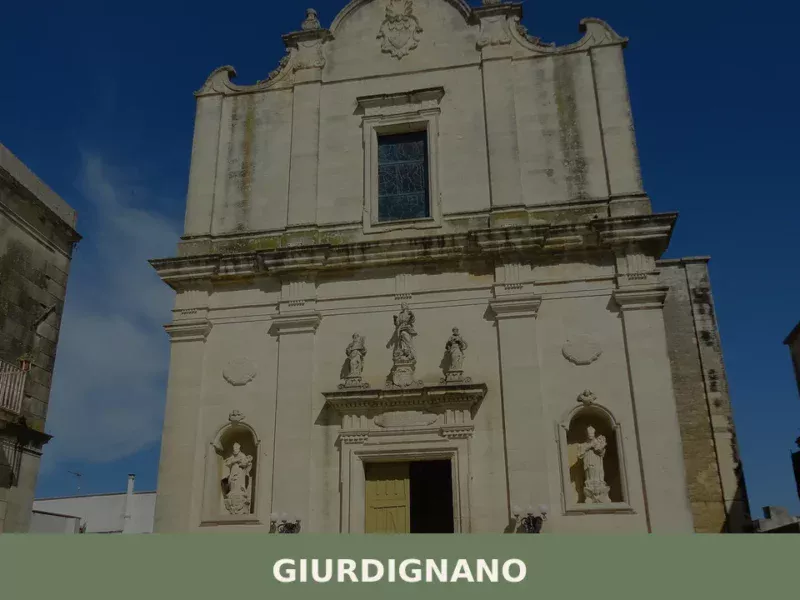
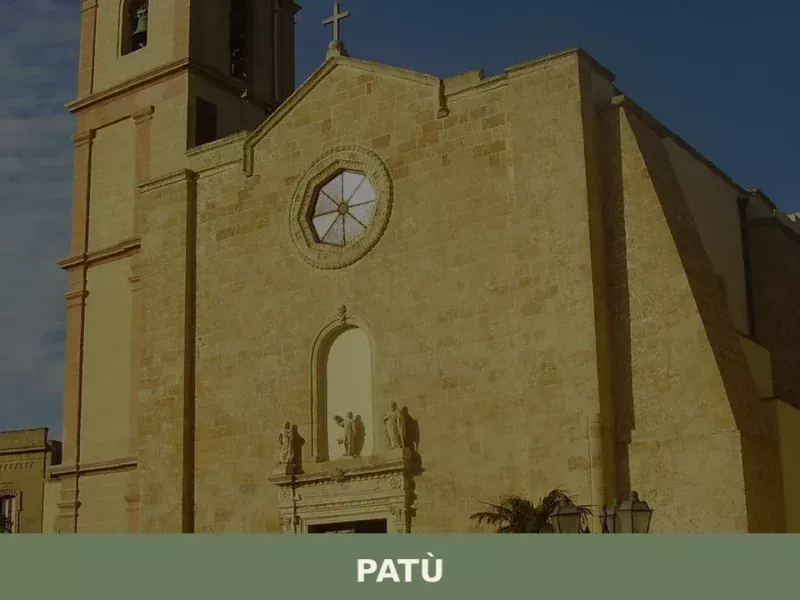
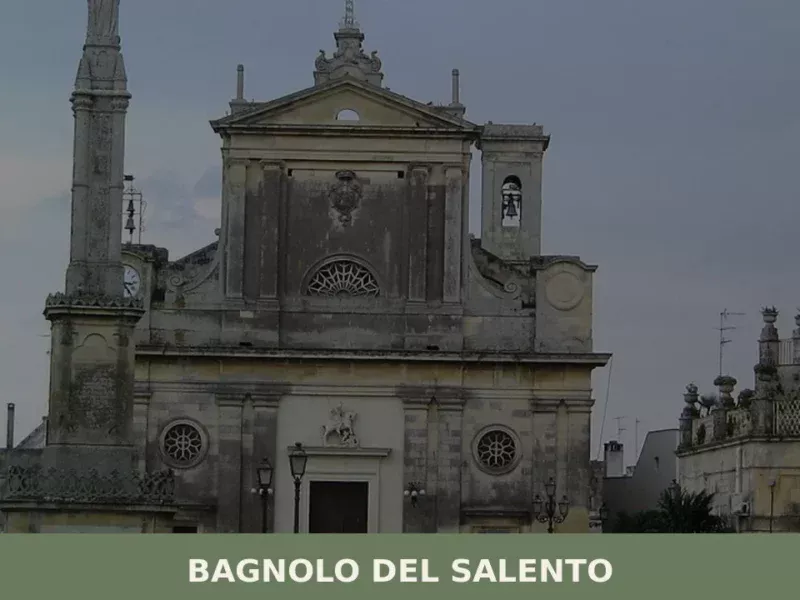
In Apulia More villages to discover
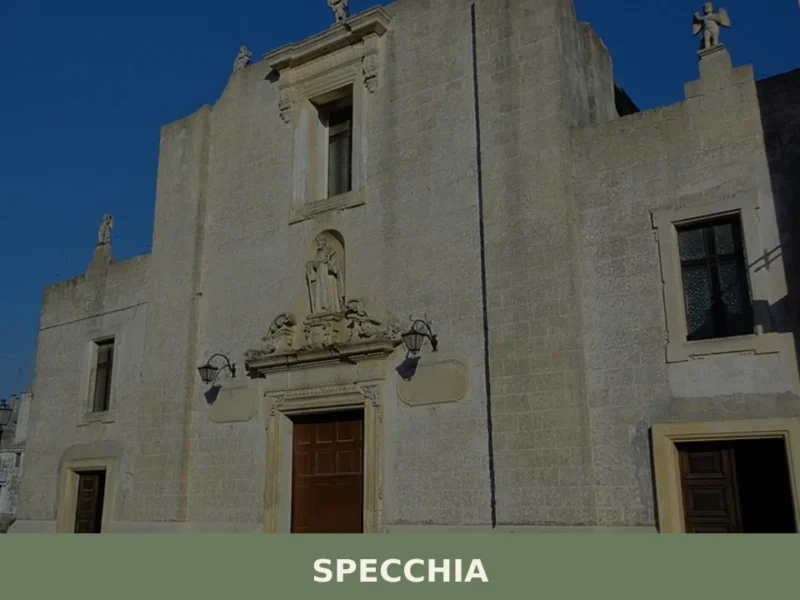
Specchia
 Plains
What to see in Specchia: a medieval village at 131m in Salento with 4,569 residents. Explore Castello Risolo, the historic centre and PAT-certified local food. Plan your visit.
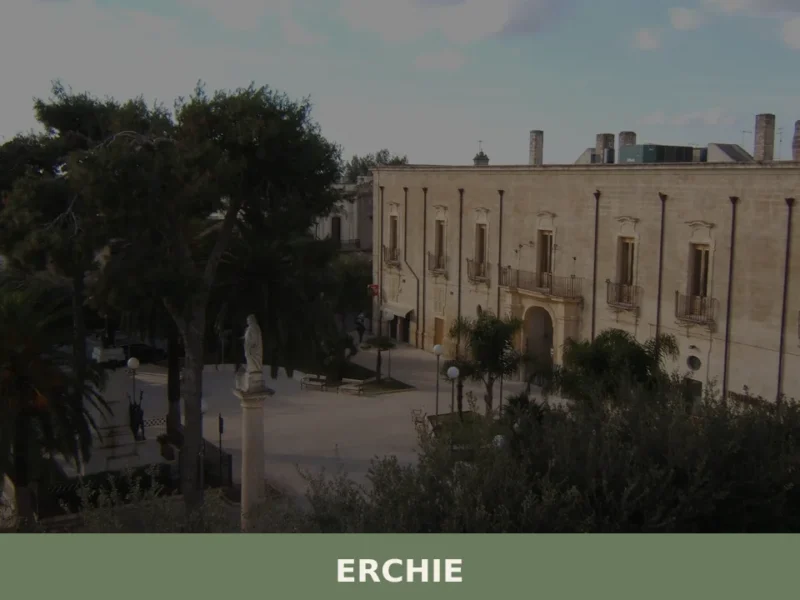
Erchie
Plains
Discover what to see in Erchie, Puglia u2014 a village at the crossroads of three provinces, with Baroque churches, masserie, and authentic Salento cuisine.

Cagnano Varano
 Sea
Sea
6,579 residents live between a brackish lagoon and the Gargano hills. Stone lanes, patron saints Michele and Cataldo, and a shoreline unlike anywhere else in Foggia province.
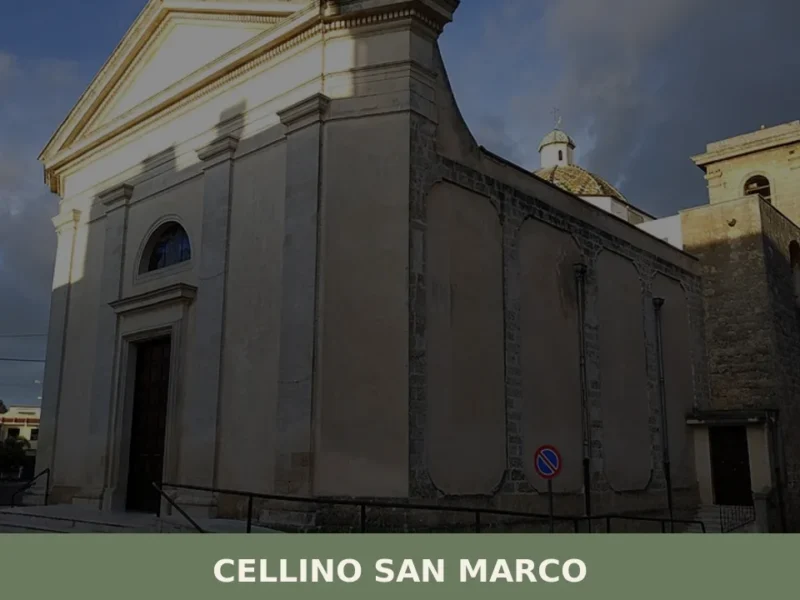
Cellino San Marco
Plains
Scopri Cosa vedere a Cellino San Marco: un borgo agricolo ricco di storia e tradizioni in Puglia. Pianifica la tua visita e assapora l'autenticità del Salento.
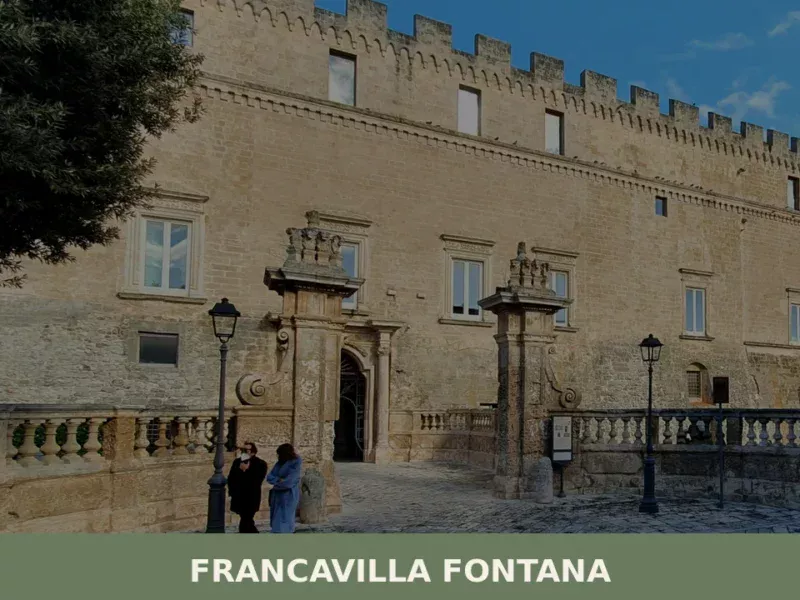
Francavilla Fontana
Plains
Discover what to see in Francavilla Fontana, Puglia: Baroque palaces, the medieval basilica, local food, travel tips and how to get there.
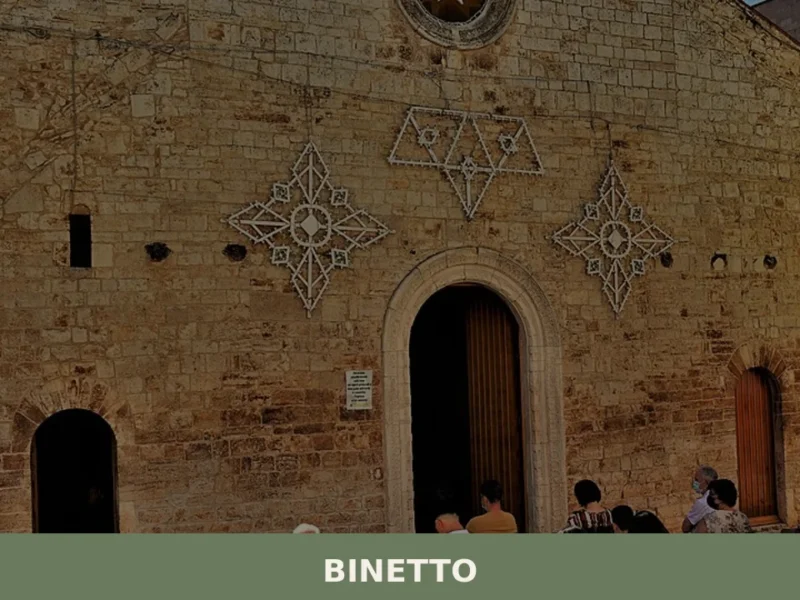
Binetto
Plains
At 170 meters above sea level, with a population of 2,128 inhabitants (most recent ISTAT data), Binetto is located on the Bari plain, a geographical context that has shaped its history and economy. This village, whose origin may date back to Roman settlements linked to vine cultivation, offers a careful discovery experience, away from the […]

Spinazzola
 Mountain
What to see in Spinazzola, Puglia, Italy: birthplace of a Pope and a Jesuit sinologist, 70 km from Bari. Discover top attractions, local food and travel tips.
Palmariggi
Plains
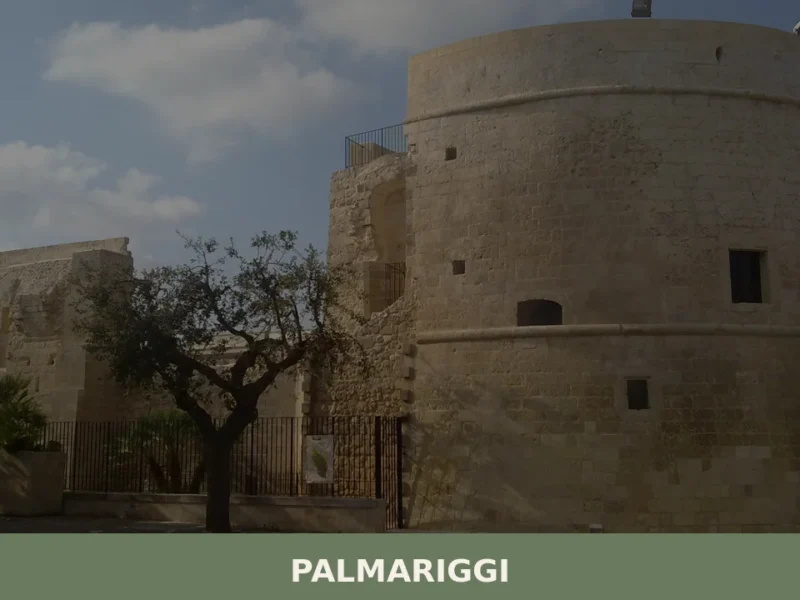
Palmariggi is a small comune in the province of Lecce, Puglia, with medieval origins, Byzantine rock-cut churches, prehistoric standing stones, and a patronal feast dedicated to Maria Vergine della Pa
Adelfia
Plains
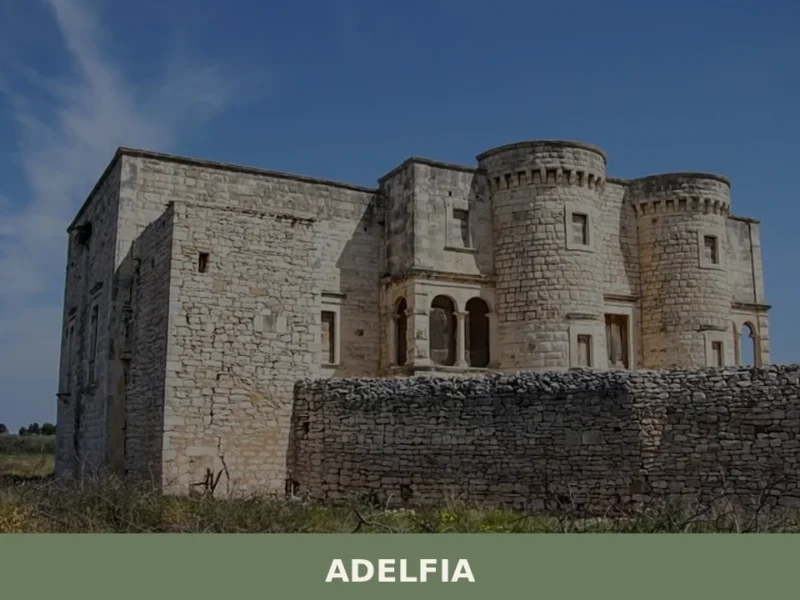
In 1927, a royal decree unified two separate municipalities — Canneto di Bari and Montrone — into a single administrative entity given the name Adelfia, from the Greek adelphós, meaning brother. It was a political gesture that encapsulated centuries of coexistence between two settlements separated by less than a kilometre of countryside, yet each fiercely […]
Alezio
Plains
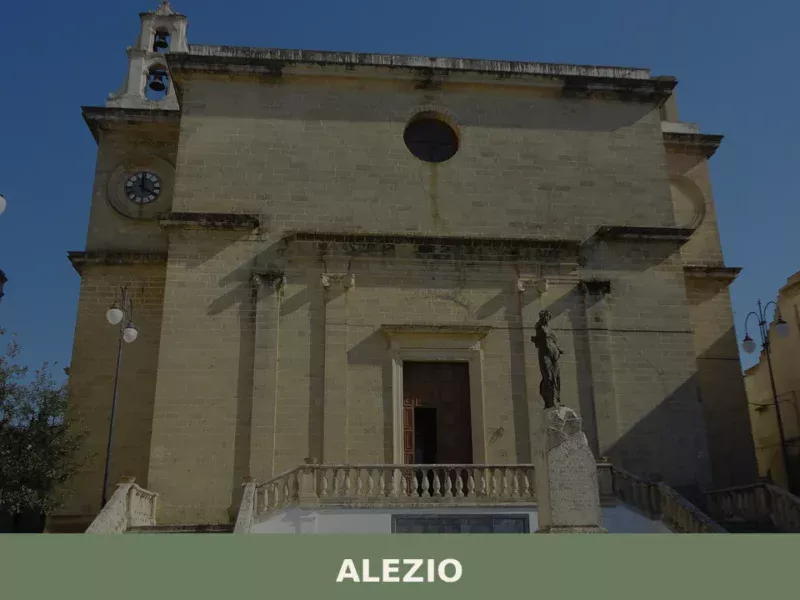
Discover what to see in Alezio, a Salento village with Messapian roots, a national archaeology museum, and ancient olive groves near Gallipoli in Puglia.




🏡 Know Andrano better than we do?
If you’re a local or have been there, your knowledge matters: add what’s missing or fix a detail on this page.