



What to see in Atessa, Abruzzo, Italy: explore the Cathedral of San Leucio, the Pallanum archaeological park, and a 17th-century historic centre spanning 11,003 hectares. Discover it all.
Discover Atessa
A crescent-shaped ridge rises from the Sangro valley floor, its highest point sitting at 473 m (1,552 ft) above sea level, where the Villa Comunale now occupies ground once defined by ocher-yellow sandstone outcrops.
The subsoil beneath Atessa records, in visible strata of sandy sediment resting on blue-gray clays, the moment when this stretch of south-eastern Abruzzo was still a coastline — somewhere between the close of the Pliocene and the opening of the Quaternary.
That geological memory surfaces in every escarpment that edges the town’s promontories.
Deciding what to see in Atessa means working through the Province of Chieti’s largest municipality by area: 11,003 hectares that take in river valleys, medieval urban gates, and a sequence of churches and palaces built between the 13th and the 17th centuries. Visitors to Atessa find a historic centre divided into two distinct sections — the older nucleus anchored by the Cathedral of San Leucio, and a second quarter running along the Corso Vittorio Emanuele — alongside an archaeological park at the Pallanum site whose cyclopean walls were restored as recently as the 1990s.
The combination of verifiable architectural history and a specific natural landscape makes Atessa, Abruzzo, Italy a logical base for exploring the Val di Sangro.
History of Atessa
The earliest documented origins of Atessa are placed in the fifth century AD, in the decades that followed the fall of the Western Roman Empire. The settlement appears to have taken shape on this elevated ridge precisely because the valley floor offered both agricultural land and exposure to the watercourses — the Sangro to the west and the Osento to the east — that drain the surrounding territory. The local dialect name, L’Atésse, preserves a phonetic layer that differs from the Italianised form, though no single etymology is confirmed by available records.
Through the Middle Ages, Atessa passed between a succession of feudal lords whose names reflect the broader political currents of southern Italy. Among those documented are the Courtenay family (also recorded as Cortinaccio), Philip I of Flanders, the Maramonte, and the Counts of Monteodorisio.
Later, control shifted to Ferdinand I of Naples and eventually to the Colonna. Each of these transitions left its mark on the urban fabric: the medieval walls, whose remnants survive in the gates of San Michele, San Giuseppe, San Nicola, and Santa Margherita, date from this period of repeated lordship and fortification.
The Arco ‘Ndriano — a large 13th-century gate with enough internal thickness to house an upper apartment for guards — is among the clearest physical records of that defensive logic. Villages throughout the Val di Sangro share comparable histories of feudal transfer; travellers who also visit Fresagrandinaria, further south in the Chieti province, will recognise the same pattern of contested territorial control that defined the region through the medieval period.
The abolition of feudalism in the Kingdom of the Two Sicilies at the start of the 19th century did not bring immediate improvement. The land, by the accounts of that period, was in a state of misery. A brief recovery was cut short by a cholera epidemic that struck the area between 1816 and 1817, eliminating whatever economic gains had been made. The 17th-century urban layout that defines the historic centre today — the late Renaissance streetscape along Corso Vittorio Emanuele, the sequence of Baroque church interiors — reflects an earlier, more prosperous phase of construction that preceded this collapse.
The city’s architectural coherence is therefore the product of a relatively concentrated building period, not of continuous accumulation across many centuries.
What to See in Atessa, Abruzzo: Top Attractions
Cathedral of San Leucio
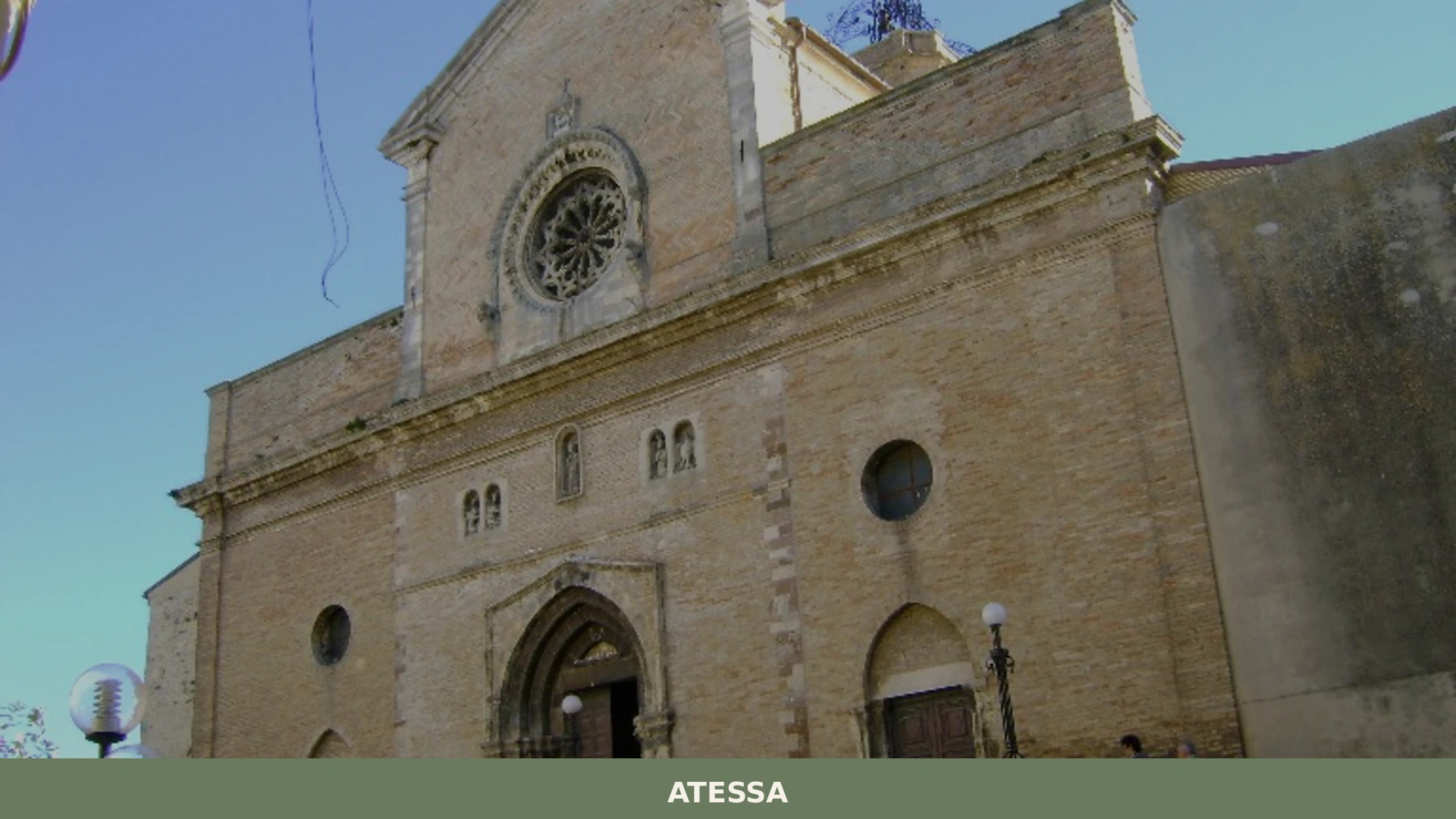
The exterior of the Cathedral of San Leucio presents a Gothic-style facade whose pointed portal and beamed rosette have defined the oldest section of Atessa since the 13th century.
Inside, the decorative register shifts entirely: the Baroque interior holds documented works by Nicola da Guardiagrele, the Abruzzo goldsmith and sculptor whose output in the 15th century is among the most closely studied in the region. The cathedral also preserves a relic described in local tradition as a “rib of the Dragon,” said to have been killed by the saint whose name it bears — a detail that speaks to the way hagiographic legend became embedded in civic identity across medieval Italian towns. The building occupies the bulk of the older of Atessa’s two urban sections, and its scale dominates the ridge from the valley below.
Plan to arrive in the morning when the light through the rosette falls directly on the nave.
Cyclopean Walls of the Pallanum Archaeological Site
At the Pallanum site, the cyclopean walls — built from large, irregular stone blocks fitted without mortar — were restored in the 1990s and are now incorporated into an archaeological park. The construction technique is consistent with pre-Roman Italic defensive building, and the site’s position within Atessa’s 11,003-hectare municipal territory places it within the series of promontories that reach toward the Sangro plain. Standing at the wall line, the relationship between the ridge topography and the strategic logic of the original construction becomes immediately readable. The archaeological park format means access is structured, and the site repays a visit of at least an hour if you want to follow the wall perimeter at a measured pace.
Arco ‘Ndriano and the Medieval Gates
The Arco ‘Ndriano, originally called Porta San Nicola, is a 13th-century gate of unusual depth: its thickness is sufficient to contain an upper apartment that once served as accommodation for guards.
It marks the transition point along Corso Vittorio Emanuele between Piazza Garibaldi and the hill of San Cristoforo, and its scale gives a concrete sense of how seriously this ridge settlement was fortified during the medieval period.
Three other urban gates survive in various states: Porta San Michele (a simple arched door), Porta Santa Margherita (a stone arch dated to the 6th century, positioned near its namesake church), and Porta San Giuseppe. Together, the four gates define the original perimeter of the walled town, and walking between them in sequence — a circuit of roughly 20 minutes — traces the outline of medieval Atessa more clearly than any map.
Church of Santa Croce
The Church of Santa Croce stands at the end of the older urban section, toward the plain of the Sangro, where it functions as a fortified boundary marker as much as a place of worship. Its origins go back to at least the 14th century, though the structure is documented as already existing in Lombard times.
Restoration work carried out in the 18th century gave it the Gothic-style pointed portal and sturdy bell tower visible today, while the interior follows a basilica plan with stuccoed walls.
The combination of a fortified exterior and a regularised interior is typical of churches in this part of Abruzzo that served defensive as well as religious functions. It is worth walking around the exterior before entering, as the transition from the fortified stone shell to the interior articulation is more legible from outside.
Casa De Marco and the Ethnographic Museum
Casa De Marco dates from the 14th century and is identified in local records as the site of the medieval castle, later expanded and converted into a noble residence during the 18th century. The building retains a fortified exterior alongside Renaissance mullioned windows — a combination that reflects its layered construction history rather than a single design intention.
Today it houses the Ethnographic Museum, which makes it the primary site for understanding the material culture of the Val di Sangro beyond its religious architecture.
The museum’s collection covers the domestic and agricultural life of the area, grounding the broader historical narrative in objects rather than dates. The Renaissance mullioned windows on the upper levels are among the most detailed surviving decorative elements in the historic centre and reward close inspection.
Local Food and Typical Products of Atessa
The food culture of Atessa reflects the dual character of its territory: a hill town with access to both the Sangro valley’s agricultural floor and the grazing land of the surrounding promontories. The area sits within the broader culinary zone of the Frentani, the pre-Roman population whose territory covered much of the Chieti hinterland, and whose pastoral economy left a lasting imprint on the local diet.
Pork-based preservation, lamb, and legumes grown on the clay-rich hill soils are the structural elements of the table here, supplemented by pasta shapes made without egg — a technique common across inland Abruzzo that reflects the relative scarcity of dairy resources in upland farming communities.
Among the dishes associated with this part of the Chieti province, sagne ‘ndruocchele — a wide, hand-cut pasta cooked with beans and pork fat — represents the pairing of field crops and cured meat that defines the local kitchen.
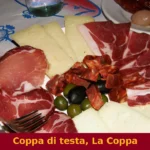
Agnello alla brace, lamb grilled over wood embers, draws on the sheep farming tradition of the Val di Sangro slopes. Ventricina, a coarsely ground pork salume seasoned with dried sweet and hot peppers and fennel seeds, is produced in the broader Vasto-Chieti corridor and appears in Atessa’s markets and restaurants as a central element of antipasto.
The fat content is deliberately high — typically 30 to 40 percent — giving the product a spreadable texture at room temperature that distinguishes it from firmer salami styles produced further north in Italy.
No PDO or PGI certified products are specifically registered to Atessa alone based on available records. The territory does, however, fall within production zones for Olio extravergine di oliva Colline Teatine (a PGI olive oil tied to the Chieti hills) and within the broader Abruzzo wine production area.
Travellers interested in certified products should note that the olive oil tradition of the Chieti province is closely linked to the hill municipalities of the interior, where the combination of clay soils and a mild continental climate produces oils with a relatively high polyphenol content and a distinctly bitter finish.
Local markets in the Val di Sangro area operate on a weekly cycle, typically in the morning hours, and offer direct access to seasonal vegetables, cured meats, and local cheeses.
The spring and early summer months — April through June — bring the best selection of fresh legumes and early-season lamb. If you plan to buy Ventricina or olive oil to take home, check that packaging meets the airline carry-on rules for liquids and cured goods before purchasing.
Festivals, Events and Traditions of Atessa
The civic and religious calendar of Atessa is anchored by the feast of San Leucio, the patron saint whose name the cathedral bears. The celebration takes place annually and includes a procession through the historic centre, with the relic of the “rib of the Dragon” central to the ritual. The procession moves through the urban gates and along the Corso Vittorio Emanuele, following a route that effectively traces the two sections of the old town.
The Column of San Cristoforo, raised on the hill of the same name in 1657, marks the upper boundary of this civic-religious itinerary and frames the event within a landscape that has remained largely unchanged since the 17th century.
The hill town’s position within the Val di Sangro mountain community means that seasonal agricultural fairs and sagre — traditional local food festivals tied to a specific ingredient or product — punctuate the calendar from spring through autumn.
These events are community-organised and follow a format of outdoor cooking, local music, and direct sale of cured meats, cheeses, and wine from the surrounding area. Specific dates vary from year to year and are published on the municipal website; checking in advance is advisable if attending a particular event is a priority for your visit.
When to Visit Atessa, Italy and How to Get There
The best time to visit Atessa for those focused on the historic centre and outdoor walking is the period between late April and early June, and again from mid-September to the end of October. Summer temperatures in the Sangro valley can be high, and the exposed ridge position offers limited shade along the main streets.
Spring brings the surrounding agricultural landscape into its most productive phase, with the clay-soil hills showing the full rotation of cereal crops and legumes that give the terrain its characteristic patchwork appearance.
Autumn is preferable for those whose priority is the food calendar — the cured meat and olive oil production season begins in October and runs through December. International visitors should note that English is not widely spoken in smaller shops and restaurants in Atessa; carrying euros in cash is practical, as card acceptance is inconsistent outside the main commercial street.
Atessa sits in the lower Sangro valley, roughly 80 km (50 mi) south-east of Pescara and approximately 210 km (130 mi) east of Rome, making it a realistic day trip from either city with a car. The nearest railway station is Atessa Vasto-S.
Salvo train station, located 3.2 km (2 mi) from the town centre; the station sits on the Adriatic coastal line and is served by regional connections from Pescara and Termoli.
The nearest airport is Abruzzo Airport in Pescara, 66 km (41 mi) away, which receives direct flights from several northern European cities, making Atessa accessible without a transit through Rome for travellers from the UK, Germany, and the Netherlands. If you arrive by car from the north on the A14 Adriatic motorway, the Lanciano exit brings you onto the SS652 Val di Sangro road, from which Atessa is signed at approximately 20 km (12.4 mi). Parking is available along the approaches to the historic centre.
Travellers with an interest in the hill towns of the Chieti interior can extend their itinerary logically along the ridge system north of Atessa. The village of Pretoro, in the Maiella foothills, offers a comparable combination of medieval architecture and elevated landscape and is reachable from Atessa in under an hour by car.
Those drawn to the Apennine interior further west may consider Caporciano, a small municipality in the L’Aquila province, whose position near the Navelli plateau provides a different but complementary perspective on Abruzzo’s inland geography.
For those continuing north along the Adriatic hinterland, Castellafiume in the Marsica area rounds out a multi-day route through the region’s less-trafficked interior municipalities.
What to see in Atessa rewards a structured visit of at least a full day, and the combination of the archaeological park at Pallanum, the seven surviving churches in the historic centre, and the medieval gate sequence along Corso Vittorio Emanuele means that a single afternoon is not sufficient to cover the main sites at a considered pace. The town’s position as the largest municipality by area in the Province of Chieti, combined with its road and rail connections through the Sangro valley, makes it a practical anchor point for a broader exploration of this part of Abruzzo.
Frequently asked questions about Atessa
What is the best time to visit Atessa?
Spring (April–June) and early autumn (September–October) offer the most comfortable temperatures for exploring Atessa's hilltop historic centre at 435 m elevation. The town's most significant civic and religious event is the Feast of San Leucio d'Alessandria on 11 January, when the patron saint of Atessa is celebrated — a winter visit around that date offers an authentic local experience. Summer is warm but manageable given the altitude, and the surrounding Val di Sangro is greener in spring, making the landscape views from the ridge particularly rewarding.
What are the historical origins of Atessa?
Atessa's earliest documented origins date to the fifth century AD, in the decades following the fall of the Western Roman Empire. The settlement developed on an elevated ridge above the Sangro valley, offering both agricultural access and defensive advantage. Through the Middle Ages it passed between feudal lords including the Courtenay family, Philip I of Flanders, the Maramonte, the Counts of Monteodorisio, Ferdinand I of Naples, and the Colonna. The local dialect name, L'Atésse, preserves a phonetic layer distinct from the Italianised form, though no confirmed etymology exists.
What to see in Atessa? Main monuments and landmarks
The Cathedral of San Leucio, with its 13th-century Gothic facade and Baroque interior housing works by goldsmith Nicola da Guardiagrele, is the town's centrepiece. The Pallanum Archaeological Site features pre-Roman cyclopean walls restored in the 1990s within a structured archaeological park — allow at least an hour. The Arco 'Ndriano, a 13th-century gate deep enough to house a guard apartment, anchors Corso Vittorio Emanuele. Three further medieval gates (San Michele, Santa Margherita, San Giuseppe) can be walked in a 20-minute circuit. Casa De Marco (14th century) houses the Ethnographic Museum.
What are the main natural or scenic attractions of Atessa?
Atessa sits on a crescent-shaped ridge at 435–473 m above the Sangro valley, within the largest municipality by area in the Province of Chieti at 11,003 hectares. The territory takes in the Sangro river valley to the west and the Osento to the east, with visible geological strata — sandy sediment over blue-gray clays — recording a Pliocene-era coastline. The Villa Comunale occupies the ridge's highest point and offers open views across the Val di Sangro. The Pallanum promontory, within the municipal area, adds an archaeological dimension to the natural landscape.
Where to take the best photos in Atessa?
The Villa Comunale at the ridge's highest point (473 m) provides the broadest views over the Val di Sangro and is the most documented scenic vantage in Atessa. The Cathedral of San Leucio is best photographed in the morning, when natural light passes through the facade's beamed rosette and falls directly on the nave interior. The Arco 'Ndriano along Corso Vittorio Emanuele, framed against the hill of San Cristoforo, offers the clearest architectural shot of Atessa's medieval streetscape. The cyclopean wall line at Pallanum is striking at any time of day.
Are there museums, churches or historic buildings to visit in Atessa?
Casa De Marco (14th century), originally the site of the medieval castle and later a noble residence, today houses the Ethnographic Museum dedicated to the material culture of the Val di Sangro — agricultural tools, domestic objects, and local craft traditions. The Cathedral of San Leucio preserves goldsmith works by Nicola da Guardiagrele and a Baroque interior behind a 13th-century Gothic facade. The Church of Santa Croce, with documented origins in the Lombard period and an 18th-century restoration, features a basilica interior with stuccoed walls and a fortified exterior. Specific opening hours are best confirmed locally.
What can you do in Atessa? Activities and experiences
Atessa suits visitors interested in layered historic itineraries: the medieval gate circuit (Arco 'Ndriano, Porta San Michele, Porta Santa Margherita, Porta San Giuseppe) takes roughly 20 minutes on foot and traces the original walled perimeter. The Pallanum Archaeological Park allows a structured walk along restored cyclopean walls. The town also functions as a practical base for the broader Val di Sangro, with the Sangro and Osento river valleys accessible within the 11,003-hectare municipal territory. The 11 January feast of patron San Leucio d'Alessandria provides a specific cultural event for winter visits.
Who is Atessa suitable for? Families, couples, hikers, solo travelers?
Atessa suits culturally motivated travellers — couples, solo visitors, and adults with an interest in medieval architecture, archaeology, and Abruzzo's material history. The Pallanum Archaeological Park and the Ethnographic Museum at Casa De Marco make it particularly rewarding for visitors who engage with historical context rather than pure scenery. Families with older children will find the medieval gate circuit and cyclopean walls accessible and engaging. It is less oriented toward beach tourism or intensive hiking, but works well as a hill-town base for exploring the wider Val di Sangro and the Chieti province interior.
What to eat in Atessa? Local products and specialties
The local kitchen reflects the pastoral and agricultural economy of the Val di Sangro hills. Sagne 'ndruocchele — wide hand-cut pasta cooked with beans and pork fat — is the area's most characteristic pasta dish. Agnello alla brace, lamb grilled over wood embers, draws on the sheep farming tradition of the surrounding slopes. Ventricina, a coarsely ground pork salume seasoned with dried sweet and hot peppers and fennel seeds, is produced in the Vasto-Chieti corridor and present in Atessa. Pasta is traditionally made without egg, consistent with the broader inland Abruzzo approach to upland farming cuisine.
📷 Photo Gallery — Atessa
Nearby Villages near Atessa
In Abruzzo More villages to discover
Morino
 Mountain
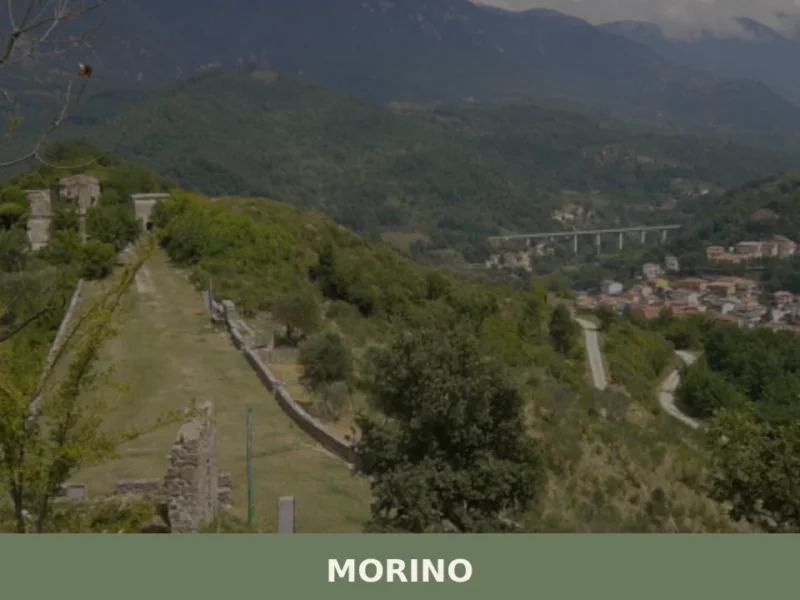
Morino, a mountain village in the province of L'Aquila, is located in the heart of the Roveto Valley, in Abruzzo.
Aielli
Mountain
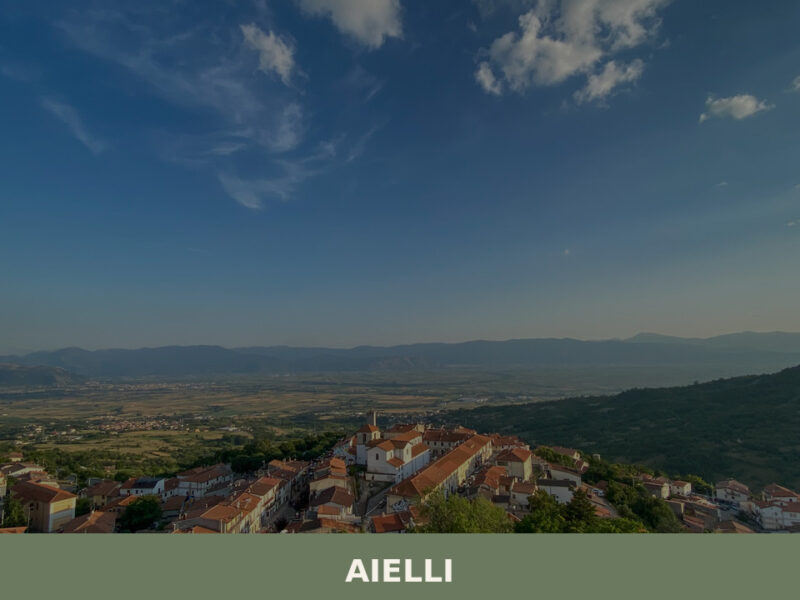
Morning light falls across a wall of painted figures three storeys tall, their colours sharp against old stone. A narrow street turns, and another mural appears — an astronomical chart, its constellations precise enough to navigate by. Aielli sits at over 1,000 metres on the Fucino plateau in the province of L’Aquila, a village of […]
Collelongo
Mountain
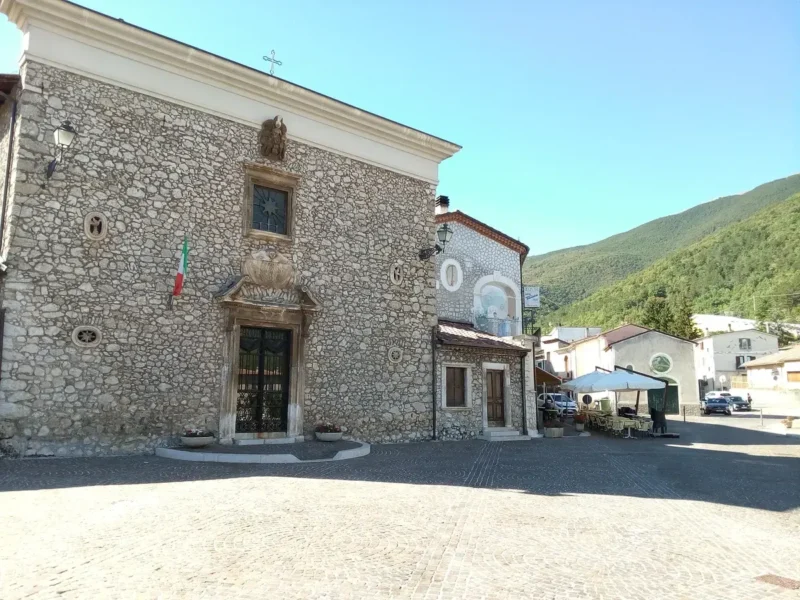
At 915 metres above sea level, in the innermost stretch of the Valle Roveto, Collelongo has 1,108 inhabitants and a position that keeps it close to the Apennine ridges of the province of L’Aquila. In this article History and origins of Collelongo What to See in Collelongo: Main Attractions Traditional cuisine and products of Collelongo […]
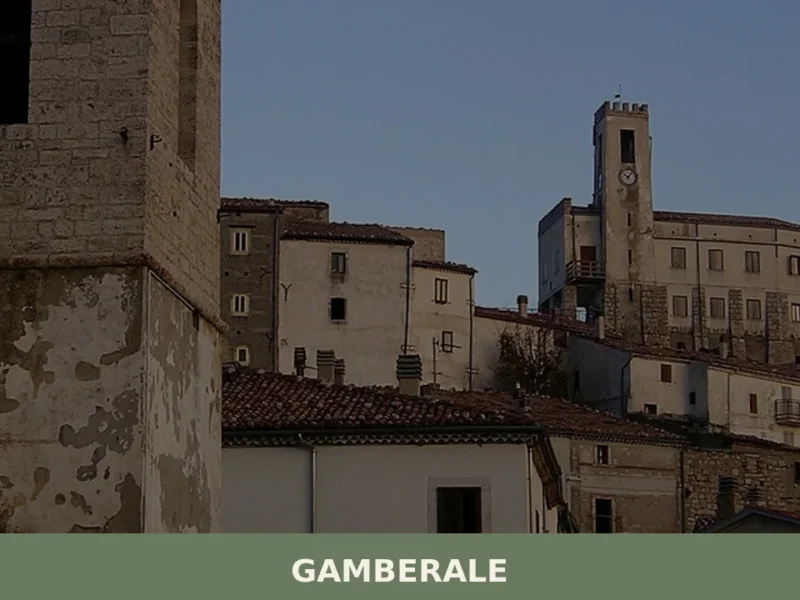
Gamberale
Mountain
At 1,343 metres above sea level, along the eastern ridge of the Majella mountains where the slopes descend towards the Sangro valleys, 277 residents keep alive a settlement that the catasto onciario of the Kingdom of Naples already recorded in the eighteenth century as a community of shepherds and charcoal burners. Visitors arriving in Gamberale […]

Casoli
 Hills
Hills
What to see in Casoli, Abruzzo, Italy: explore Castello Masciantonio, Lake Casoli 4 mi away, and a medieval town listed among Italy's most beautiful villages. Discover it now.
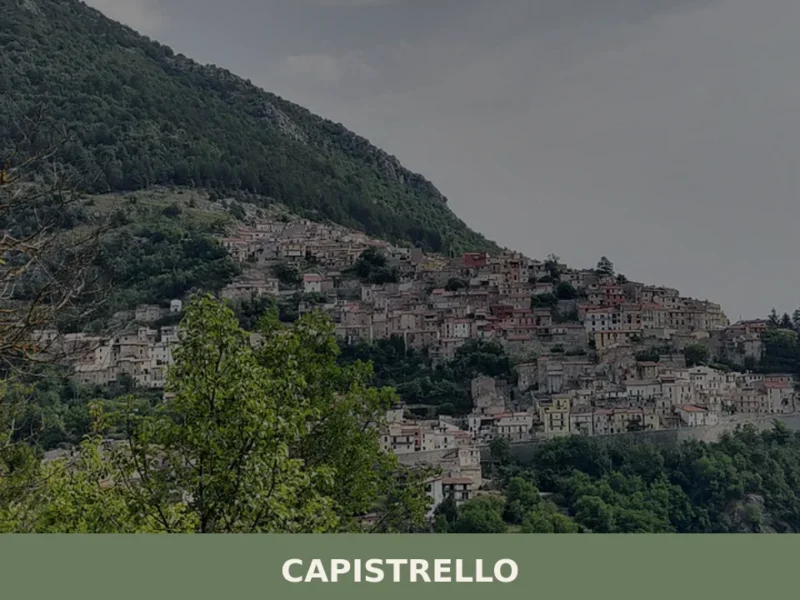
Capistrello
Mountain
In 1902, a flood of the River Liri devastated the town and forced its inhabitants to rebuild entire neighbourhoods in the upper part of the settlement: that wound redrew the map of Capistrello, a village of 5,309 residents in the Marsica area, standing at 734 metres above sea level in the province of L’Aquila. Anyone […]
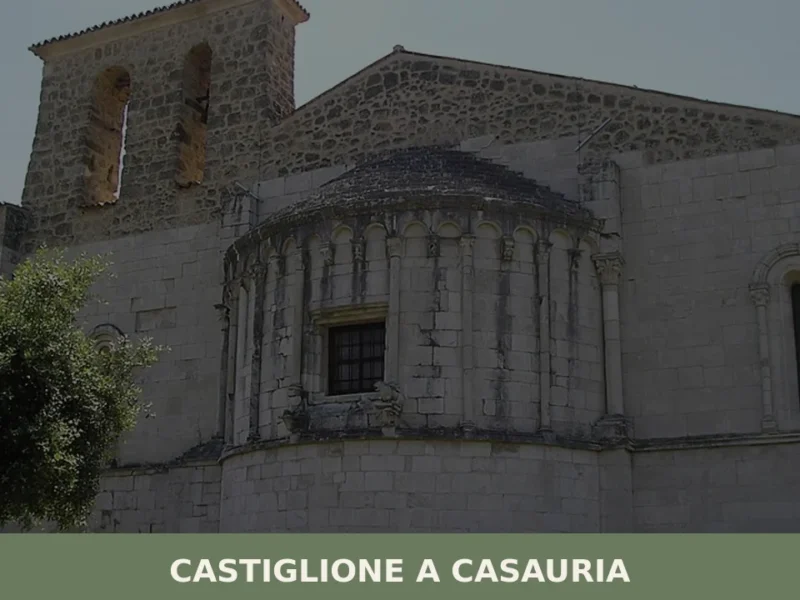
Castiglione a Casauria
Hills
The Abbey of San Clemente a Casauria, founded in 871 by Emperor Louis II, stands just a few hundred metres from the town centre and ranks among the most important Romanesque monuments in central Italy. It is this monastic presence that defines the identity of Castiglione a Casauria, a village of 701 inhabitants in the […]
Giuliano Teatino
Hills
Giuliano Teatino is a small village in Abruzzo, in the province of Chieti. Discover its origins, monuments and how to visit: a practical guide to plan your trip.
Fraine
Mountain
At 751 meters above sea level, in the Chieti area, lies Fraine, a municipality with a population of 261 inhabitants. This village, whose history dates back to the 10th-11th century, serves as an observation point over the Alto Vastese territory. For those wondering what to see in fraine, the town offers a journey through the […]
Santo Stefano di Sessanio
Mountain
What to see in Santo Stefano di Sessanio, Italy: Discover this medieval hill town at 1,250 m (4,101 ft) altitude. Explore its restored Sextantio Albergo Diffuso and taste the renowned gourmet lentils.
🏡 Know Atessa better than we do?
If you’re a local or have been there, your knowledge matters: add what’s missing or fix a detail on this page.