


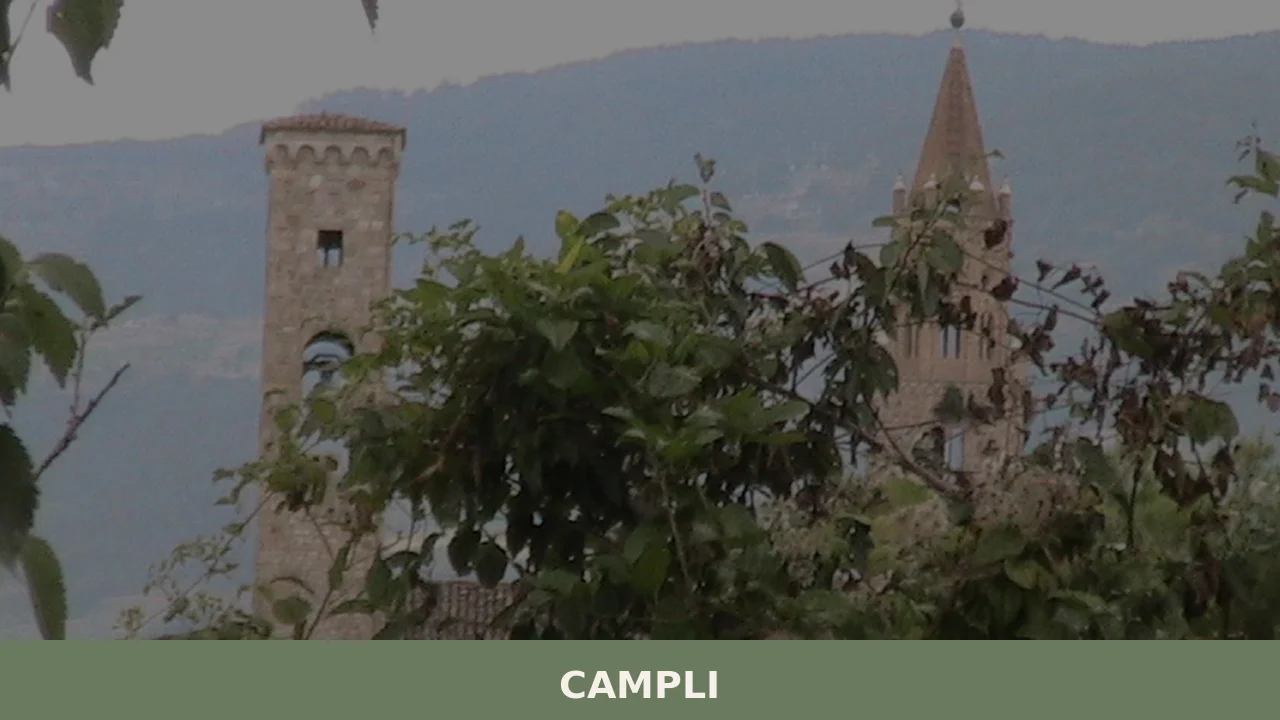
Campli
 Hills
Hills
What to see in Campli, Abruzzo, Italy: explore the Scala Santa, the Farnese archaeological museum, and the August porchetta festival in this village of 7,167 inhabitants. Discover it all.
Discover Campli
Twenty-eight wooden steps, polished smooth by the knees of pilgrims over centuries, rise inside a sanctuary behind the Farnese palace in a hill town at 393 m (1,289 ft) above sea level. The portal through which visitors enter was carved with diamond-point rustication and transported from the suppressed convent of Sant’Onofrio. Above the staircase, frescoes attributed to the Teramo painter Vincenzo Baldati cover every vault and lunette with scenes of the Passion of Christ, the colours still readable in the subdued interior light.
Deciding what to see in Campli is straightforward once the five principal monuments are mapped: the Scala Santa sanctuary, the Museo Nazionale Archeologico inside the 14th-century Farnese palace, the Church of San Pietro, the Church of San Paolo, and the historic centre itself, listed among I Borghi più belli d’Italia, the national register of Italy’s most beautiful villages.
The town sits at 393 m (1,289 ft) in the province of Teramo, Abruzzo, inside the territory of the Gran Sasso e Monti della Laga National Park, and counts approximately 7,167 inhabitants. Visitors to Campli find a compact hill settlement where documented history, religious architecture, and a food tradition stretching back to 1964 occupy a walkable area.
History of Campli
The earliest documented layer of Campli’s history emerges from its landscape: the walls of the Church of San Pietro incorporate Ancient Roman stone fragments alongside High Medieval carved pieces, indicating a continuous presence on the site well before any medieval foundation. The town’s position in the Teramo hill belt, close to the Adriatic piedmont routes, made it a natural point of settlement and later a contested asset between the competing powers that shaped central Italy’s interior during the medieval period.
By the 14th century Campli had become part of the holdings of the Farnese family, one of the most powerful dynasties in Renaissance Italy.
The Farnese palace, built in that same century, still stands today and houses the Museo Nazionale Archeologico. It was during this period that the composer Nicolaus Ricii de Nucella Campli was born in or near the town, leaving his name as one of the earliest documented cultural figures connected to the settlement. The Farnese connection gave Campli a degree of political protection and architectural investment visible in the construction programme that produced both the palace and the fourteenth-century Church of San Paolo adjacent to the Scala Santa sanctuary.
The 16th century brought military disruption. In 1557, French forces under François de Guise captured the town during his campaign against Spanish control of the Kingdom of Naples. That campaign ultimately failed, and Campli passed back into the orbit of Spanish-controlled southern Italy. The town survived the episode without losing its main buildings, and the Farnese legacy in the urban fabric remained intact through subsequent centuries. In the modern period, Campli gained recognition on the national register of beautiful villages and became the administrative seat for a municipality that includes several surrounding hamlets within the Gran Sasso e Monti della Laga National Park territory.
What to see in Campli, Abruzzo: top attractions
Scala Santa — Sanctuary of the Holy Staircase
The staircase consists of 28 steps of smoothed, polished wood enclosed within a sanctuary built directly behind Palazzo Farnese, adjoining the fourteenth-century Church of San Paolo.
The religious significance of the site rests on a papal grant: in 1772, Pope Clement XIV extended to this staircase the same indulgences already attached to the famous Scala Santa in Rome, a concession that drew pilgrims from across the Teramo diocese and beyond. Pope John Paul II later extended those benefits to cover all Fridays of Lent, broadening the calendar of active pilgrimage. The interior walls carry a full cycle of frescoes depicting the Passion of Christ — on the right wall, Christ in the Garden of Olives, the Flagellation, and Christ Carrying the Cross; on the left, the Capture, Ecce Homo, and the Crucifixion. The ceiling is decorated with angels bearing the instruments of the Passion, and the entire decorative programme, including the ceiling, is attributed to Vincenzo Baldati (1759–1825). The entrance portal, worked with diamond-point rustication, came from the dismantled convent of Sant’Onofrio and dates to the 16th century. Devotees ascend the staircase on their knees; observers who prefer not to participate in the ritual can still view the frescoes from the base of the climb.
Museo Nazionale Archeologico — National Archaeological Museum
The museum occupies the ground floor and upper rooms of the 14th-century Farnese palace, the most imposing civic structure in the historic centre of Campli. The building’s exterior stonework reflects the construction standards of Farnese patronage in the Abruzzo hill towns: regular ashlar courses, deep window reveals, and a courtyard arrangement that originally served both administrative and residential functions. The collections document the pre-Roman and Roman-era populations of the Teramo territory, providing a material record that complements the fragmentary stone inscriptions embedded in the walls of the nearby Church of San Pietro.
For visitors organising a day in Campli, the museum and the church together offer a coherent reading of the area’s ancient occupation. The Gran Sasso e Monti della Laga National Park provides a broader geographical context for understanding how this territory was settled and used across millennia. Check current opening hours directly with the museum before visiting, as seasonal schedules apply.
Church of San Pietro
The walls of San Pietro function as a physical archive: Ancient Roman carved stones and High Medieval fragments have been incorporated directly into the masonry, visible to anyone who examines the exterior surfaces at close range. This practice of reuse was common in central Italian hill towns where dressed stone from earlier structures was too valuable to leave unused, but the density of spolia in San Pietro’s fabric is notable.
The church predates the Farnese period in the town’s history and represents the earliest standing religious structure in Campli. Inside, the spatial organisation follows the pattern of a Romanesque hall church, though subsequent interventions have modified the original arrangement. The building sits within the historic centre at a short walk from the Farnese palace, making it a logical first stop before moving to the museum and the Scala Santa. Those with an interest in medieval architectural reuse will find the exterior walls worth a slow circuit.
Palazzo Farnese and the Historic Centre
The Farnese palace gives the upper town its primary visual reference point: a 14th-century structure that housed the administrative reach of one of central Italy’s dominant dynasties and today contains the national archaeological collections. The historic centre around it reflects the town’s inclusion in I Borghi più belli d’Italia, a designation based on criteria including the integrity of the built fabric, the quality of the public spaces, and the maintenance of historic streetscapes. Campli’s centre is compact enough to cover on foot in a single morning, with the palace, the two churches — San Paolo and San Pietro — and the Scala Santa sanctuary forming a connected circuit of less than 500 m (0.3 mi).
The fourteenth-century Church of San Paolo stands directly next to the Scala Santa, and its exterior provides a visual anchor for the whole religious complex. For those arriving from the nearby village of Civitella del Tronto — a fortified settlement approximately 10 km (6.2 mi) to the north — Campli’s lower-lying historic centre offers a complementary perspective on Farnese-era architecture in the Teramo hills.
Church of San Paolo and Its Setting
San Paolo is a fourteenth-century church that forms the immediate architectural frame for the Scala Santa sanctuary, positioned on the same plot and sharing a common access path from the main square. Its age places it in the same construction phase as the Farnese palace, suggesting a coordinated programme of religious and civic building under Farnese patronage during the 1300s. The church’s exterior is relatively austere compared to the ornamented portal of the Scala Santa beside it, which heightens the visual impact of that portal’s diamond-point carving when approached from the street.
Inside San Paolo, the spatial relationship with the adjacent sanctuary is evident: the two buildings share a wall, and the religious geography of the site — palace, church, and pilgrimage staircase within metres of each other — reflects the way Farnese patronage integrated secular power and devotional infrastructure. Visitors who arrive early in the morning, before group tours from Teramo reach the town, will find the complex considerably quieter.
Local food and typical products of Campli
The food culture of the Teramo hill zone, where Campli sits at 393 m (1,289 ft), draws on the pastoral and agricultural traditions of the Gran Sasso piedmont. Pork, grain, and legumes have historically defined the diet of these hill settlements, with techniques oriented toward preservation — salting, smoking, and slow roasting — that suited both the climate and the economics of a self-sufficient agricultural community. The Farnese period brought some degree of urban provisioning to Campli, but the surrounding territory continued to supply the bulk of what was eaten, a pattern that persists in the approach to local cooking today.
The dish that has given Campli its clearest culinary identity is porchetta italica, a whole roasted pig prepared with a specific technique that involves seasoning the interior cavity before slow-roasting the entire animal until the skin achieves a uniform crackling.
The pork is carved and served in thick slices, typically between two pieces of bread — the sandwich format that forms the centrepiece of the town’s annual festival competition. The result is a combination of fat, lean meat, and crisped skin in each portion, with the seasoning absorbed into the flesh during the roasting process. This preparation distinguishes itself from the porchetta styles of Lazio or Umbria through the choice of spicing and the sourcing of the pig from local breeds raised in the Abruzzo hills.
No certified PDO or PGI product is documented in the available sources specifically for Campli, but the porchetta italica as prepared and promoted in the town has been the subject of organised promotion since 1964, when the Sagra della porchetta italica was established — the first such festival in the Abruzzo region and one of the earliest food festivals of its kind in Italy. The festival founder, Fernando Aurini, used the event deliberately to publicise the town and its food tradition, publishing a practical tourist guide each year to accompany the celebration.
The August festival remains the single most important occasion to encounter the full range of local pork preparations in one place.
Crowds of up to 10,000 people attended in the mid-1960s, and the event has continued annually without interruption since its founding. For visitors travelling through the Teramo province in late summer, the festival provides a concrete reason to schedule a stop in Campli rather than passing through. Local trattorie and market stalls in the surrounding area also carry porchetta during the summer months outside the festival dates, though availability is more variable in winter.
Festivals, events and traditions of Campli
The Sagra della porchetta italica — a traditional local food festival dedicated to Italian-style roast pork — takes place every August in Campli and has done so continuously since 1964, making it the oldest such event in Abruzzo. The festival was founded by Fernando Aurini with the stated aim of attracting visitors and disseminating information about a town that had formed part of the Farnese family’s territorial holdings. One of its defining competitive elements is a pork sandwich cookoff, in which local producers and preparers compete on the quality of their porchetta served between bread.
The event drew crowds of up to 10,000 people in the mid-1960s, a figure that reflects the speed with which it established itself as a regional reference point.
The Scala Santa sanctuary draws thousands of devotees annually, particularly during Lent, when the papal indulgences granted by Pope Clement XIV in 1772 — and extended by Pope John Paul II to all Fridays of Lent — make the pilgrimage climb spiritually significant for practising Catholics. This religious calendar gives Campli a second distinct season of activity, concentrated in spring, that runs parallel to the summer food festival. Together, the August sagra and the Lenten pilgrimage season define the two main periods of external visitor concentration in the town each year, with the shoulder months of May, June, and September offering quieter conditions for those interested primarily in the architectural and archaeological sites.
When to visit Campli, Italy and how to get there
The question of the best time to visit Abruzzo’s hill villages depends largely on what a visitor wants to prioritise. For Campli specifically, August brings the Sagra della porchetta italica and the fullest calendar of local activity, but also the highest visitor numbers in the province. Spring — particularly the weeks of Lent — activates the pilgrimage calendar at the Scala Santa and sees the surrounding Gran Sasso landscape at its greenest, with temperatures at 393 m (1,289 ft) remaining moderate even when the Adriatic coast below is already warm. September and October offer stable weather, reduced visitor pressure, and the added advantage of the autumn harvest cycle in the Teramo countryside. Winter is quiet; some smaller sites may have restricted hours.
Getting to Campli from the nearest major city is straightforward. Teramo lies approximately 15 km (9.3 mi) to the southwest and is the natural base for a day trip to Campli. From Teramo, the drive follows the provincial road network and takes roughly 20 to 25 minutes by car.
Those travelling from Rome — approximately 200 km (124 mi) to the south — can reach Teramo via the A24 motorway (exit Teramo) in around two hours, then continue by car to Campli. Pescara, the main Adriatic hub with the nearest commercial airport, sits approximately 65 km (40 mi) from Campli; transfer time by car is around one hour depending on traffic on the A25 and connecting roads. Travellers arriving by rail can use Trenitalia services to Teramo station, then continue to Campli by taxi or rental car, as no direct bus service between Teramo station and Campli is documented in the available sources. If you arrive by car, parking is available at the edge of the historic centre; the streets within the medieval perimeter are narrow and in places restricted. International visitors should note that English is rarely spoken in smaller local shops and restaurants in Campli, and carrying cash in euros is advisable, as card payment terminals are not universally available in the hill villages of the Teramo interior.
Travellers with time for more than a single stop in the Teramo hills can combine Campli with Barete, a smaller village within the Gran Sasso park territory that shares the same upland landscape context, or extend southward through Abruzzo toward villages in the Chieti and Pescara provinces.
The villages of Bomba and Altino, further south in the region, offer additional examples of Abruzzo’s hill settlement pattern for visitors building a longer itinerary across the region. Campli, Abruzzo, Italy sits at the northern end of this geographic arc, making it a logical first or last stop on any circuit of the region’s inland comuni.
Frequently asked questions about Campli
What is the best time to visit Campli?
Spring and early autumn are the most rewarding seasons. May is particularly special: on 12 May the town celebrates its patron saint San Pancrazio with religious ceremonies and local festivities. Spring also brings mild temperatures ideal for exploring the historic centre on foot. The period around Easter and Lent carries added significance for pilgrims, as Pope John Paul II extended indulgences to all Fridays of Lent at the Scala Santa. Summer weekday mornings are quieter, before group tours arrive from Teramo. Winter visits are possible but check museum opening hours in advance as seasonal schedules apply.
What are the historical origins of Campli?
Campli's documented history spans pre-Roman, Roman, and medieval layers. Ancient Roman stone fragments incorporated into the walls of the Church of San Pietro confirm a continuous presence on the site before any medieval foundation. By the 14th century the town was part of Farnese family holdings, who built the palace that still anchors the historic centre. In 1557, French forces under François de Guise captured the town during the campaign against Spanish control of the Kingdom of Naples, though the main buildings survived intact. The town later gained recognition in the national register I Borghi più belli d'Italia.
What to see in Campli? Main monuments and landmarks
The five principal sites form a walkable circuit of under 500 m in the historic centre: the Scala Santa sanctuary with its 28 pilgrimage steps and Passion frescoes by Vincenzo Baldati; the Museo Nazionale Archeologico inside the 14th-century Farnese palace; the Church of San Pietro, whose exterior walls contain Roman and medieval spolia; the 14th-century Church of San Paolo adjoining the Scala Santa; and the historic centre itself, listed among I Borghi più belli d'Italia. Verify museum opening hours directly before visiting as seasonal schedules apply.
What are the main natural or scenic attractions of Campli?
Campli sits within the territory of the Gran Sasso e Monti della Laga National Park, one of Italy's largest protected areas. The park provides a dramatic natural backdrop of Apennine ridges and the Gran Sasso massif visible from the surrounding hills. The Teramo piedmont landscape around Campli, at 393 m above sea level, offers a gentle hill terrain characteristic of inland Abruzzo. For detailed hiking trails and park access points, consult the Gran Sasso e Monti della Laga National Park official website directly.
Are there museums, churches or historic buildings to visit in Campli?
Yes. The Museo Nazionale Archeologico occupies the 14th-century Farnese palace and documents pre-Roman and Roman-era populations of the Teramo territory. The Scala Santa sanctuary houses frescoes attributed to Vincenzo Baldati (1759–1825) and a 16th-century diamond-point portal from the dismantled convent of Sant'Onofrio. The Church of San Pietro contains visible Roman spolia in its exterior masonry. The 14th-century Church of San Paolo stands adjacent to the Scala Santa. Check current opening hours and admission fees for the museum directly with the venue, as seasonal schedules apply.
What can you do in Campli? Activities and experiences
Visitors can follow the pilgrimage ritual at the Scala Santa, ascending all 28 wooden steps on their knees as devotees have done since Pope Clement XIV granted indulgences in 1772. Those who prefer observation can view the Baldati fresco cycle from the base. The compact historic centre rewards slow walking and architectural study, particularly the spolia-rich exterior of San Pietro. The Gran Sasso e Monti della Laga National Park surrounding the municipality provides a natural context for hiking. The feast of San Pancrazio on 12 May offers a direct encounter with local religious and civic tradition.
Who is Campli suitable for? Families, couples, hikers, solo travelers?
Campli suits travellers with an interest in religious history, medieval architecture, and archaeology. The Scala Santa pilgrimage site appeals to those with a devotional or cultural curiosity about sacred itineraries. The Museo Nazionale Archeologico and the spolia-embedded Church of San Pietro offer material for architecture and history enthusiasts. Couples and solo travellers who enjoy unhurried exploration of small Italian hill towns will appreciate the compact, walkable centre. The Gran Sasso e Monti della Laga National Park setting makes Campli a practical base for hikers exploring the Abruzzo Apennines.
What to eat in Campli? Local products and specialties
Campli's food culture belongs to the Teramo hill zone tradition, rooted in pork, grain, and legumes shaped by pastoral and agricultural life on the Gran Sasso piedmont. Slow-roasting, salting, and smoking are characteristic preservation techniques of these hill settlements. The broader Teramo province is recognised for products including maccheroni alla chitarra, arrosticini (grilled lamb skewers), and cured pork specialties typical of Abruzzo's interior. The town's food identity, documented since at least 1964, remains closely tied to the agricultural output of the surrounding territory within the national park.
Getting there
Piazza Vittorio Emanuele II, 64012 Campli (TE)
Nearby Villages near Campli
In Abruzzo More villages to discover
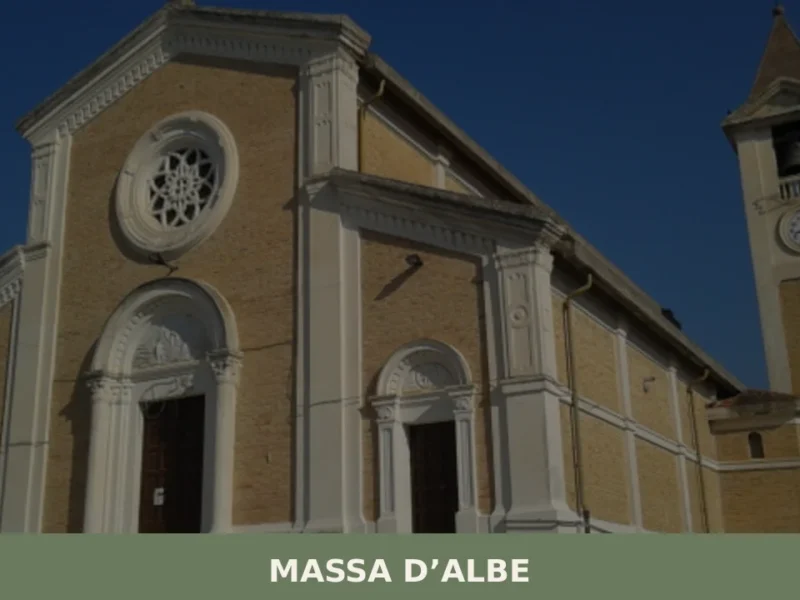
Massa d’Albe
 Mountain
What to see in Massa d'Albe: 5 attractions including Roman ruins, medieval churches and views over Fucino. Complete guide to visiting this Abruzzo village.
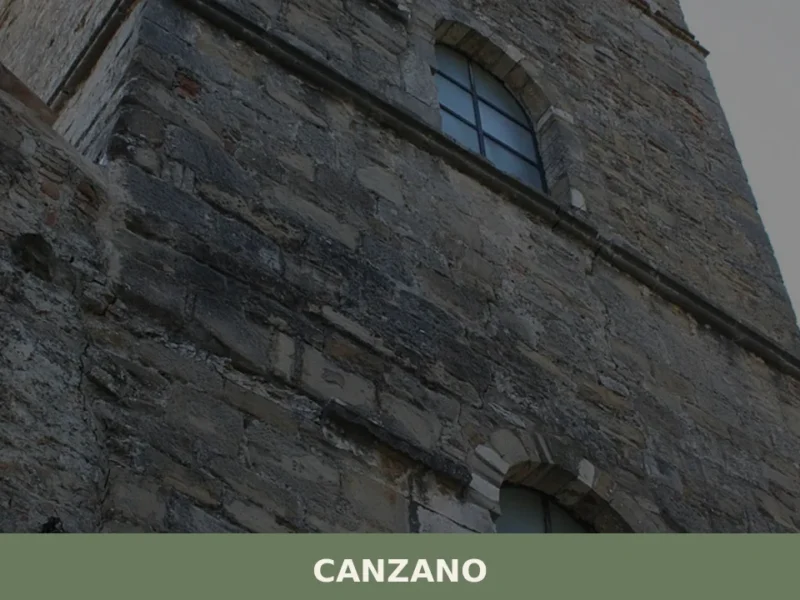
Canzano
Hills
Canzano has 1,786 inhabitants and stands at 448 metres above sea level on a hill in the province of Teramo, along the foothill belt separating the Vomano valley from the first Apennine ridges. Anyone wondering what to see in Canzano will find an urban core where the fortified medieval layout coexists with a precise and […]
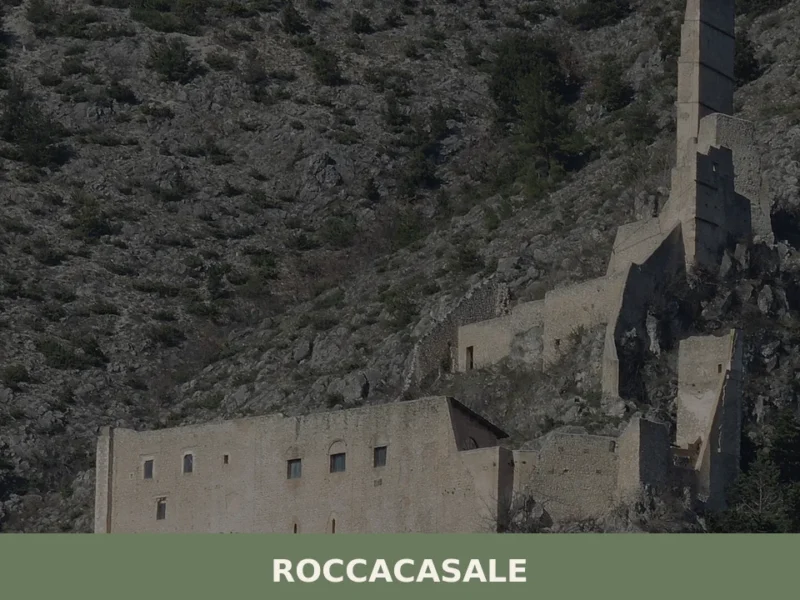
Roccacasale
Mountain
What to see in Roccacasale, Italy: a medieval village of 712 inhabitants above the Peligna Valley. Discover the 1579 church, castle ruins and local cuisine.
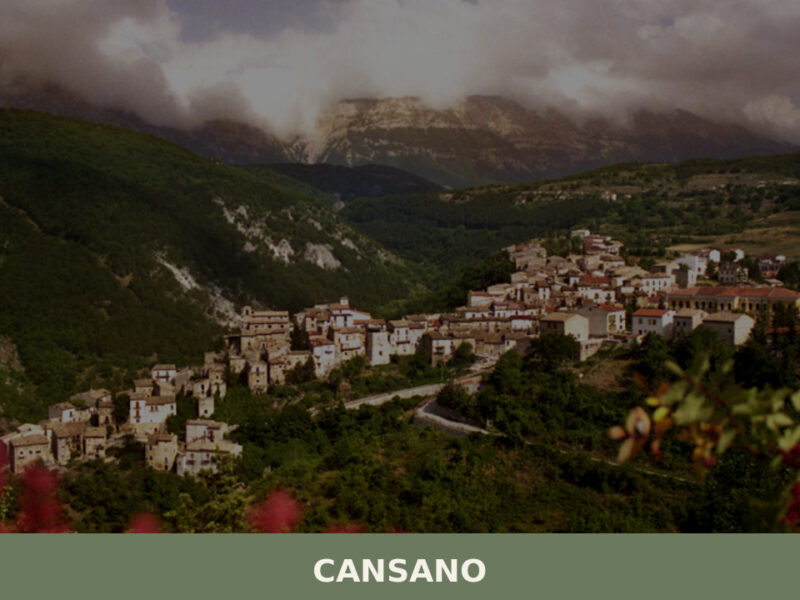
Cansano
Mountain
A guide to Cansano in Abruzzo — its Roman archaeological site of Ocriticum, medieval stone centre, Majella trails, and pastoral food traditions at 835 metres.
Ofena
Mountain
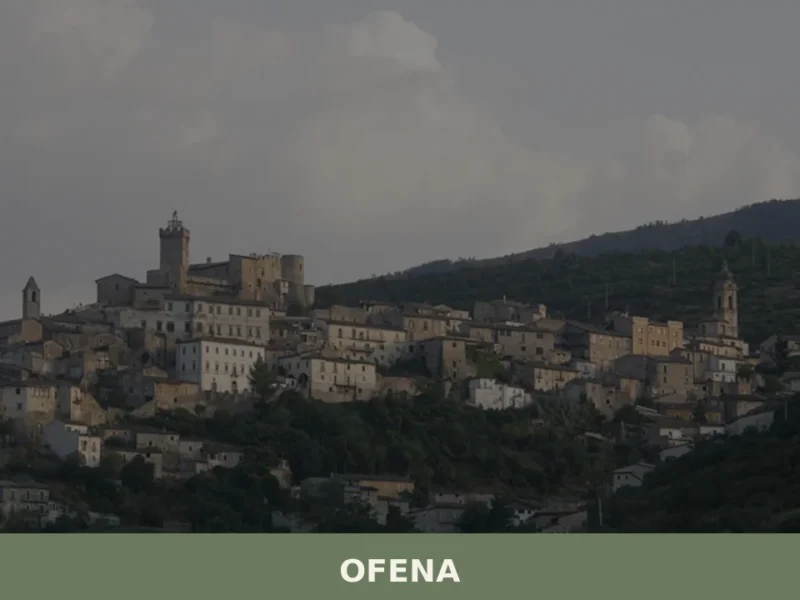
What to see in Ofena, Italy: Explore its historical significance as Aufinium and the Gran Sasso e Monti della Laga National Park. This village of 517 inhabitants offers a journey into Abruzzo's past. Read our guide.
Montebello sul Sangro
Mountain
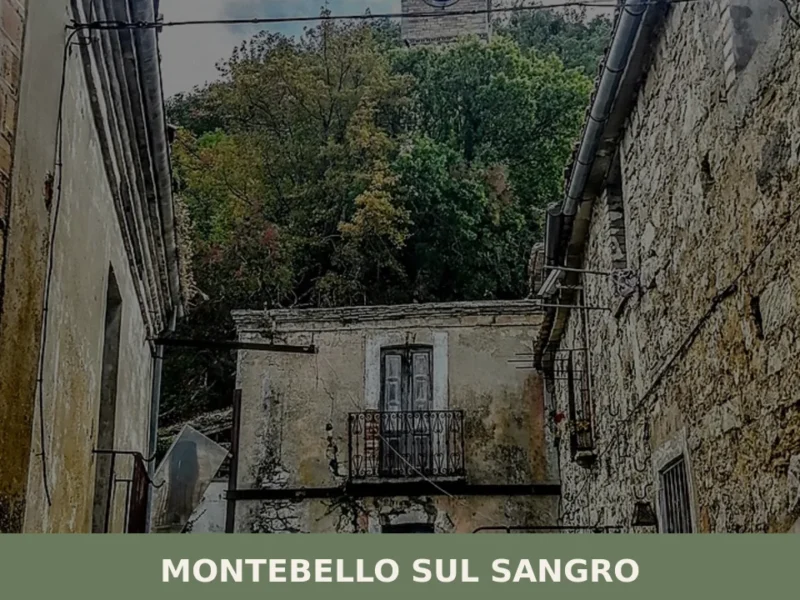
what to see in montebello sul sangro? Discover 5 attractions: Church of San Ciriaco and scenic vistas. With 81 inhabitants, explore this mountain village.
Pettorano sul Gizio
Mountain
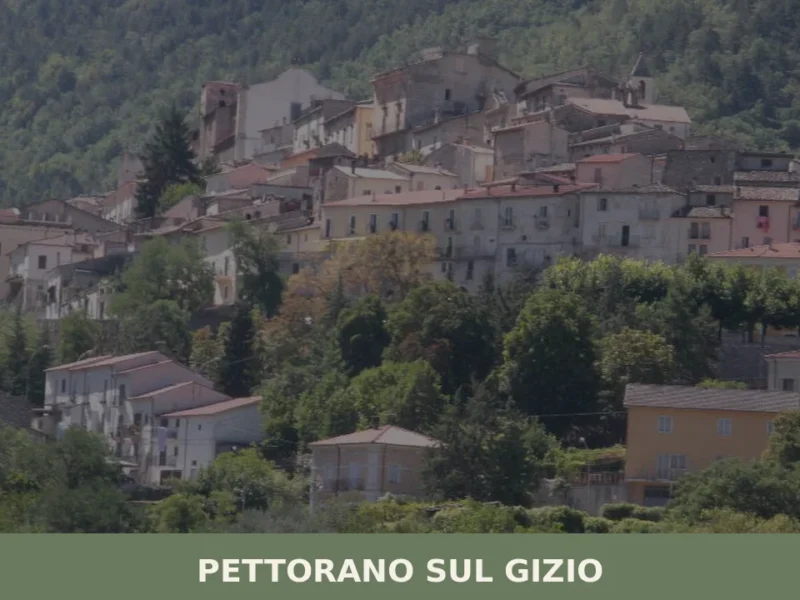
what to see in pettorano sul gizio, Italy. Explore Cantelmo Castle and the Gizio River, home to Baron Michele Leone (1909-1988). Discover this beautiful Abruzzese village.
Rosello
Mountain
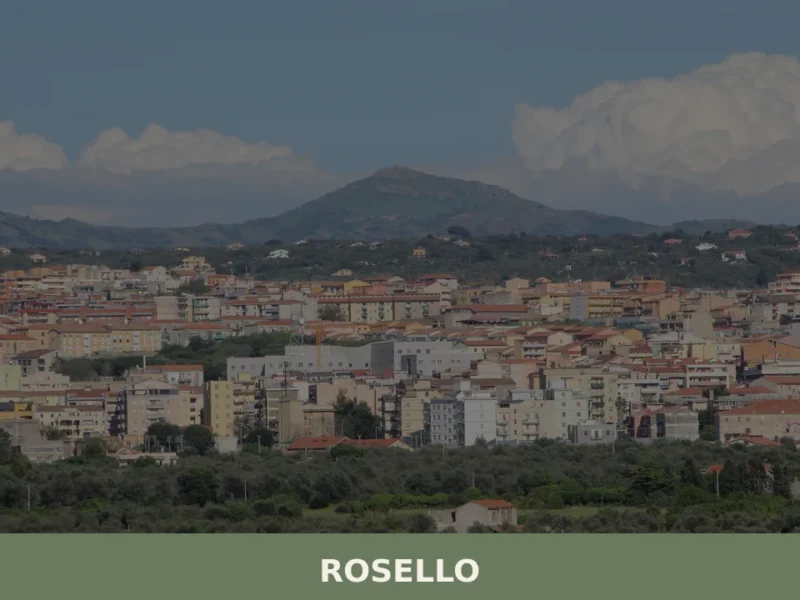
what to see in rosello: Explore Rosello, Italy, a village founded in the 11th century, with its historic chapel and artistic legacy. Discover its WWII history and Abruzzese charm.
Roccamontepiano
Hills
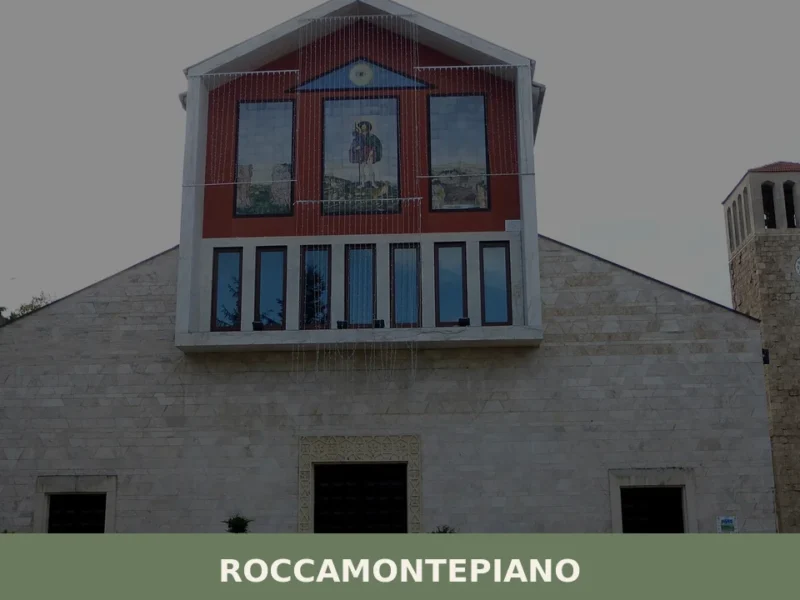
What to see in Roccamontepiano, Abruzzo, Italy: explore a hilltop village at 450 m with a 1765 landslide history. Discover the Saint Roch festival and more.
Borrello
Mountain
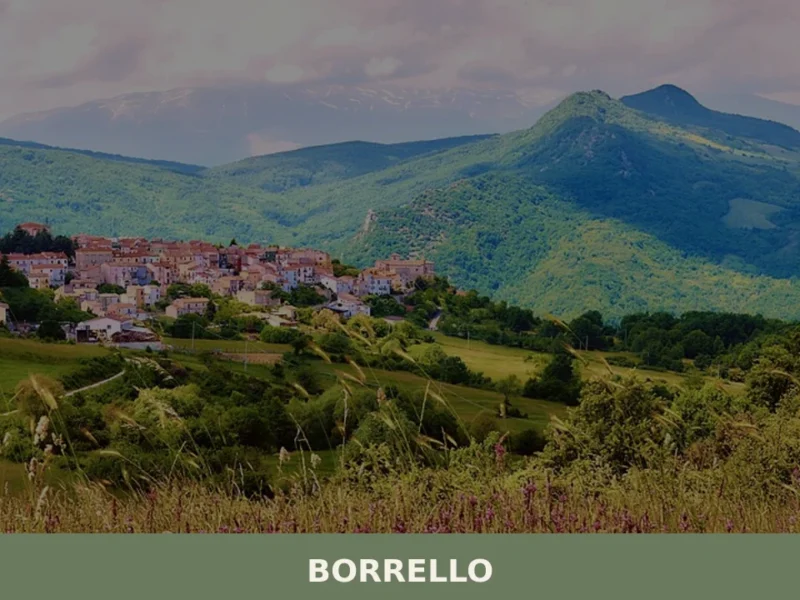
At 804 metres above sea level, on the eastern slope of the Majella massif, 338 inhabitants watch over a settlement that in the eighteenth century counted more than two thousand residents. Anyone looking into what to see in Borrello will find a territory shaped more by geology than by human hands: the Cascate del Verde, […]
🏡 Know Campli better than we do?
If you’re a local or have been there, your knowledge matters: add what’s missing or fix a detail on this page.